REVIEW · HO CHI MINH CITY
Saigon History & Cu Chi Tunnels with War Museum 1-Day Tour
Book on GetYourGuide →Operated by Joy_Journeys · Bookable on GetYourGuide
Cu Chi tells a story you can feel in your body. This small-group day trip mixes English-guided tunnel history with the War Remnants Museum, then finishes with a taste of central Saigon landmarks. The hardest part isn’t the facts. It’s the cramped spaces.
I love how hands-on this feels. You get a guided look at the tunnels system, including booby-trap setups, plus the chance to crawl into a tunnel area described as up to 100 meters. You also get a proper museum-style context at the War Remnants Museum and the secret Hidden Weapon Bunker, which helps the morning make sense.
One consideration: the tunnel and bunker sections are physically tight. Even if you’re up for it, a taller frame may find climbs and crawling more difficult—so go in expecting a workout, not a stroll.
In This Review
- Key highlights worth planning for
- Cu Chi Tunnels: the day you crawl through the war
- The 100-meter crawl and secret entrances: expect a tight fit
- Booby traps and how the guide makes them make sense
- War Remnants Museum and the Hidden Weapon Bunker: context after the crawl
- Touching the ex-US Army tank: simple, memorable, and a little surreal
- Tasting locally grown tapioca by the tunnels
- Ho Chi Minh City landmarks after Cu Chi: a practical city finale
- Guides, group size, and why the pacing feels right
- Price and value: why $54 can make sense for a full-day plan
- Who should book this Cu Chi and War Remnants day
- Should you book this tour?
- FAQ
- How long is the tour?
- What’s included in the price?
- Is lunch included, and what do I get?
- How big is the group?
- Where does pickup and drop-off happen?
- Do I skip the ticket line?
Key highlights worth planning for
- Up to 100-meter tunnel crawl with a guided walkthrough of how the system worked
- Booby traps explained so you understand what you’re seeing, not just where you’re walking
- War Remnants Museum + Hidden Weapon Bunker for stronger historical context
- Guides with real command of English, including Logan and Nhia (ask for Nhia if you can)
- Landmarks in central Saigon: Post Office and Notre-Dame Cathedral Church
- Lunch + snacks + water included, with pho or vegetarian lunch on request
Cu Chi Tunnels: the day you crawl through the war
Cu Chi isn’t a “look at it from a distance” kind of place. From the start, the tone is practical: this was a survival system built for people who needed to move, hide, and keep fighting while staying out of sight. In a small group (max 10), the guide can pace you and explain what matters as you go.
The morning begins with travel from the city in an air-conditioned vehicle. There are pickup options around District 1 and District 4, and the tour can also pick up in District 3. If you’re outside the pickup zone, you’ll likely meet up near Notre-Dame Cathedral Church. Either way, the idea is the same: you spend less time negotiating the city and more time getting to Cu Chi while you’re still fresh.
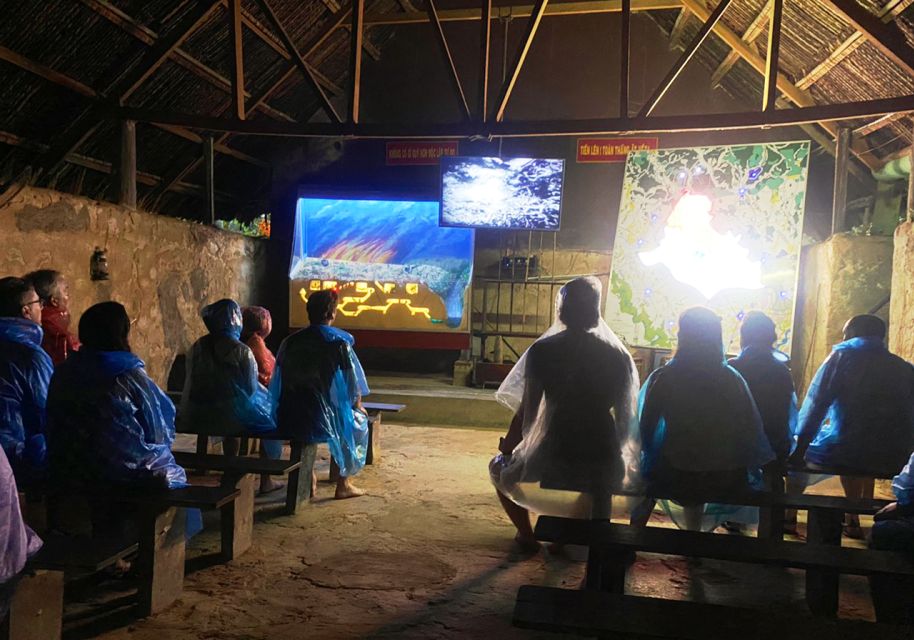
Once you arrive, you’ll get the guided tunnel portion built around a few key learning moments. First, there’s a stop where you can see crafts and watch a propaganda documentary connected to the Cu Chi story. I find this step useful because it shows how the narrative was shaped and why the site is presented the way it is today. Even if you’re skeptical of any propaganda, it gives you context before you go underground.
Then the focus shifts to the tunnels themselves. You’ll learn about how the underground network functioned and what the defenses looked like on the ground. The guide explains things like bobby traps and how they were set up in the area. This matters because tunnels alone can feel like a random maze. With the defense context, you start understanding the logic behind placement, routes, and hiding places.
You can also read our reviews of more historical tours in Ho Chi Minh City



The 100-meter crawl and secret entrances: expect a tight fit
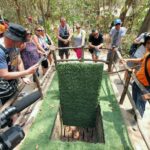
The most memorable part is the tunnel experience. You’ll hear about the tunnels system, then you’ll get the chance to crawl through areas described as around a 100-meter tunnel system, including a secret entrance. This is where the tour earns its keep. Seeing underground photos is one thing. Trying it in real space is another.
You’ll be guided through what to do and where to go, so you’re not left guessing. But you should still mentally prepare for discomfort: low ceilings, narrow turns, and a physical “go now, don’t overthink it” vibe. If you’re used to walking tours with open air and bright views, this will feel different—in a good way.
From a practical standpoint, this is also the part where you’ll learn quickly who in your group is comfortable in small spaces. One of the reviews mentioned a taller person found entering the bunkers and climbing more difficult, while a shorter person had an easier time. That lines up with what you’d expect in cramped tunnel environments. If you’re tall, claustrophobic, or you don’t like crawling, you may want to adjust your expectations before you book.
Still, the fact that you can actually crawl is the point. This isn’t just “standing near tunnels.” It’s feeling how limited movement is when everything above you is gone and your world becomes walls, dust, and careful breathing.
Booby traps and how the guide makes them make sense
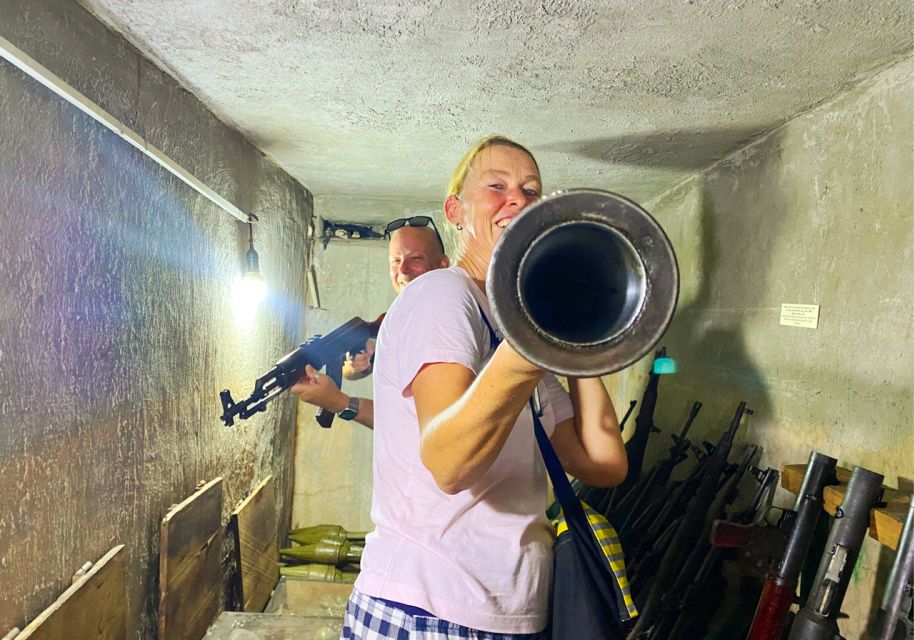
The war part isn’t just dramatic storytelling. The guide connects the tunnel experience to the defensive measures around it, including booby-trap setups. That’s a crucial difference between a generic tour and a tour that helps you interpret what you see.
Here’s how I’d frame it for you: once you understand that the tunnels weren’t only for shelter, but for protecting routes and delaying enemies, the site starts turning into a system rather than a collection of exhibits. The guide’s explanations help you connect the dots between underground movement and the danger above ground.
And because the group is small, you can ask questions without feeling like you’re holding up a conveyor belt. You’ll also hear the guide’s English clearly, which makes a huge difference in places where the details are the whole point. Reviews specifically praised guides like Logan and Nhia, and both names come up as standout English-speaking guides. If you can request a guide, it’s worth asking for Nhia.
War Remnants Museum and the Hidden Weapon Bunker: context after the crawl
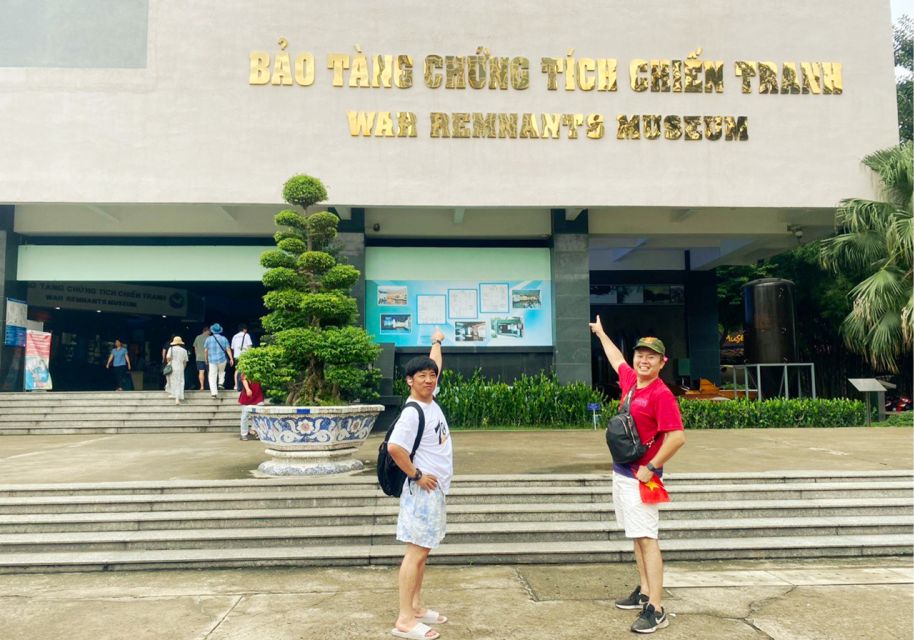
If the tunnels are the body experience, the museum is where your brain gets organized. After the underground segment, you’ll go to the War Remnants Museum and also visit the secret Hidden Weapon Bunker. Doing this after crawling is smart because it helps you shift from “I survived the space” to “Now I understand what that space was for.”
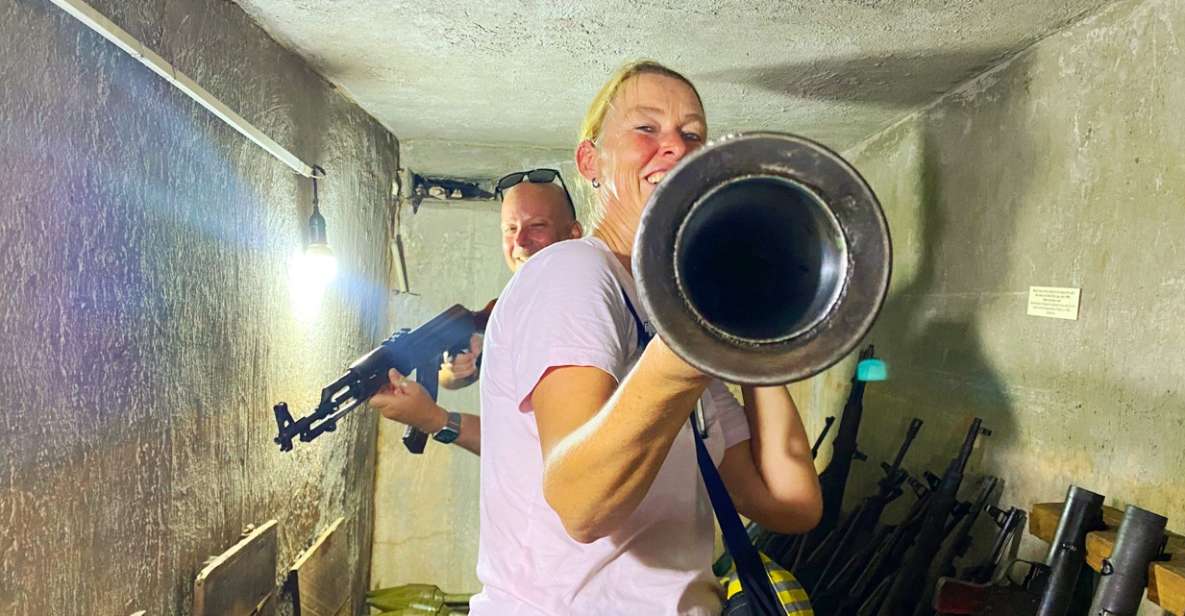
The Hidden Weapon Bunker adds a different kind of understanding. Instead of just learning about general war history, you see how guerrilla tactics worked in a very specific way: hiding equipment, controlling access, and keeping capabilities alive under pressure. In other words, it’s not just about being underground. It’s about using underground space to sustain a fight.
At the War Remnants Museum, expect to get a broader view of the war’s impact and the wider historical picture. The museum stop is one of the strongest reasons to pick a guided tour rather than going on your own. A good guide helps you connect exhibits to the morning’s tunnel logic.
Touching the ex-US Army tank: simple, memorable, and a little surreal
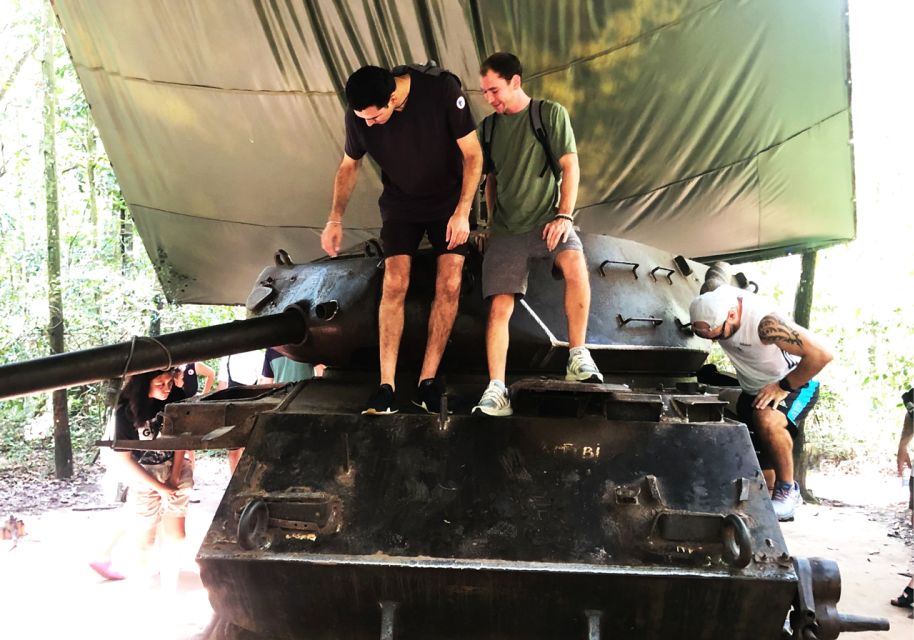
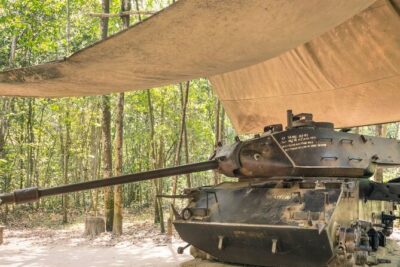
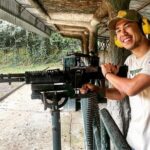
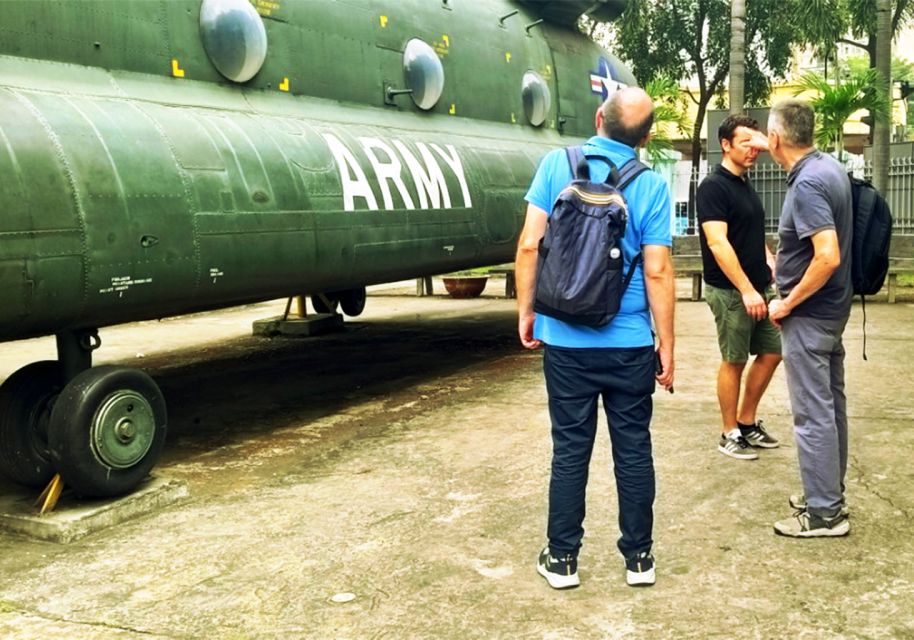
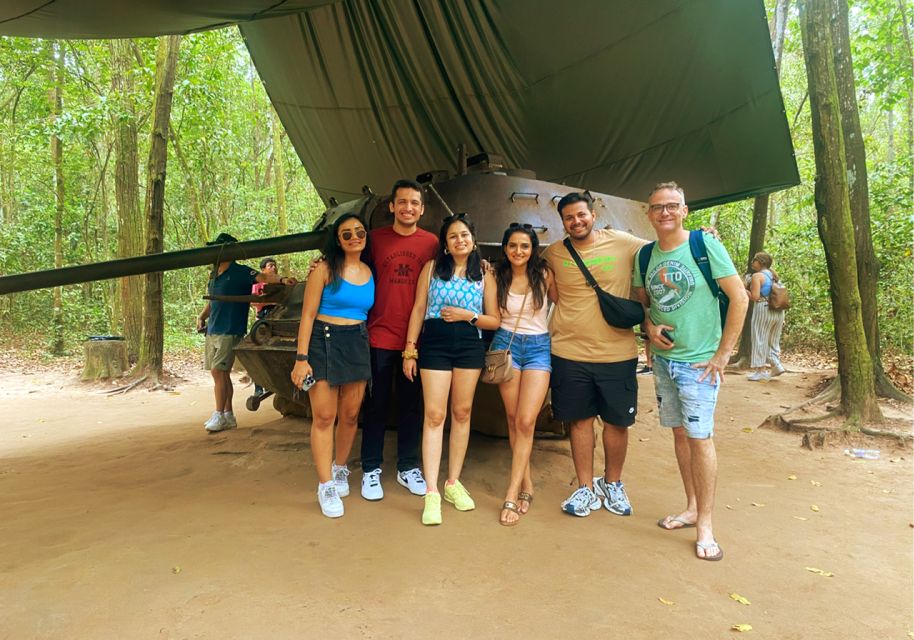
One detail that really sticks: you’ll have a chance to see an ex-US Army tank from the Vietnam War and even touch it. I like this kind of moment because it turns an abstract conflict into something physical and specific. A tank is massive, heavy, and hard to ignore. Once you put your hand on it (with the rules of the site, of course), the scale stops being theoretical.
It’s also a nice rhythm shift. After the tight crawling and heavy defenses, touching something like a tank gives you air—literally and mentally. It’s the kind of stop that makes the day feel varied instead of one long underground slog.
You can also read our reviews of more museum experiences in Ho Chi Minh City



Tasting locally grown tapioca by the tunnels
Food is more than a break here. You’ll taste tapioca next to the tunnels—described as locally grown Viet Cong food. This is a small moment, but it adds a human layer: people ate, rested, and planned survival around real daily life.
I like eating something simple in the same setting where survival decisions were made. It helps you picture the war not as a timeline, but as a daily grind. And because this is built into the flow of the day, you don’t lose time hunting for snacks.
Ho Chi Minh City landmarks after Cu Chi: a practical city finale
Back in the city, the tour includes time for a break and lunch. Lunch is pho (beef or chicken) or vegetarian lunch on request. You’ll also have snacks and two bottles of water per guest included, which I strongly recommend you treat like fuel—Cu Chi takes it out of you.
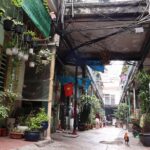
Then you’ll visit key central landmarks: the Post Office and Notre-Dame Cathedral Church. This part is a contrast to the morning. Instead of tight spaces and defense tactics, you get recognizable Saigon architecture and the feeling of moving back into the city’s daily rhythm.
Even if churches and post offices aren’t your main interest, these stops are useful for two reasons. First, they anchor your day in real city geography. Second, they prevent the tour from ending in a flat, “all war, all day” feeling. You leave with war context and then a sense of where Saigon grew afterward.
Guides, group size, and why the pacing feels right
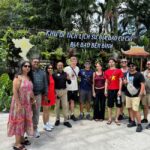
This is a small-group experience with a maximum of 10 guests. That size changes everything. You’re not fighting for attention, and it’s easier for the guide to manage timing when you’re dealing with crawling sections and photo stops.
The guide is English-speaking, and guides are often noted for good communication. Reviews singled out Logan and Nhia as particularly strong, with one review saying to ask for Nhia. That’s not just praise—it’s a sign that the tour explanation is a core part of the value.
You’ll also see the guide wearing a Joy Journeys t-shirt. I mention this because it reduces stress at pickup and at the start of each segment. When you’re meeting in a city with lots of pickup points, small clarity wins.
Price and value: why $54 can make sense for a full-day plan
At $54 per person for an 8.5 to 9 hour day, the big question is what you’re really paying for. This isn’t only transportation and entry. You’re buying:
- a guided tunnel experience that’s timed and explained
- museum context plus the Hidden Weapon Bunker
- included lunch (pho or vegetarian on request)
- water and snacks
- air-conditioned vehicle and “skip the ticket line” convenience
For me, the value comes from reducing friction. Cu Chi logistics can be a headache if you’re doing it yourself—getting the right timing, figuring out what to see first, and getting coherent explanations while you’re inside tight spaces. A guided format turns “random stops” into a story you can follow.
You also get the benefit of small-group pacing. That’s harder to price directly, but it’s real. If you’ve ever been stuck in a large group where you can’t ask questions, you already know why that matters.
Who should book this Cu Chi and War Remnants day
This tour fits best if you want a guided, structured day that balances underground survival with museum-level context. It’s ideal for:
- first-timers in Saigon who want a single-day war history add-on
- people who learn best through clear storytelling and practical explanation
- anyone who’s okay with crawling and tight spaces
It may be less ideal if you have mobility limitations or you know you struggle with claustrophobic situations. Even without guessing anything medical, the crawl and bunker parts are physically demanding. Based on real feedback, taller visitors can find entry/climbing more difficult.
Should you book this tour?
If you want more than a quick photo stop at Cu Chi, I think this one’s a strong choice. The combination of tunnel crawling, booby-trap explanation, and then War Remnants Museum + Hidden Weapon Bunker is the right sequence. You’ll leave with a clearer picture of how the underground system and guerrilla tactics fit together.
Book it if you like guided days with time-saving convenience and if you’re prepared for a hands-on, cramped experience. If you dislike crawling or tight spaces, consider whether you can handle that part without turning the day into stress.
FAQ
How long is the tour?
The tour lasts about 8.5 to 9 hours. Starting times depend on availability.
What’s included in the price?
The price includes an air-conditioned vehicle, lunch (pho or vegetarian lunch on request), two bottles of water per guest, snacks, all fees and taxes, and a live English-speaking guide.
Is lunch included, and what do I get?
Yes. You’ll get pho (Vietnamese beef or chicken noodles soup). A vegetarian lunch is available if you request it.
How big is the group?
It’s a small-group tour with a maximum of 10 guests.
Where does pickup and drop-off happen?
Pickup and drop-off are available in District 1 and District 4, and pickup may also be available in District 3. If you’re not in the pickup zone, you might see the group at Notre-Dame Cathedral Church.
Do I skip the ticket line?
Yes, the tour includes skipping the ticket line.