REVIEW · HO CHI MINH CITY
War Remnants Museum – Ho Chi Minh City Half Day Tours
Book on Viator →Operated by Asia Travel Legend · Bookable on Viator
Cold facts, real artifacts, fast pace.
This half-day tour is a smart way to get your bearings fast in Ho Chi Minh City. You’ll pair the War Remnants Museum with classic landmarks like Reunification (Independence) Palace, plus French-era sights such as Notre Dame Cathedral and the Central Post Office—so your morning turns into one long, meaningful walk through the city’s story. I also like that it’s small-group style with a guide you can actually hear, and hotel transfers are included for district 1. One possible drawback: the museum can be hot, and there’s no air-con in the galleries.
If you only have a few hours, this tour is built for that. It’s priced at $39 with admission tied to the museum stop, and it keeps the logistics simple. Still, it’s emotional subject matter, and you’ll want a bit of patience for crowds at major stops and inside the museum.
In This Review
- Key takeaways before you go
- A half-day plan that fits a tight schedule
- First stop: War Remnants Museum’s photo-heavy war story
- Independence Palace (Reunification Palace): history you can stand inside
- French colonial landmarks: Notre Dame Cathedral and Central Post Office
- How the small-group format changes the day
- Timing and comfort: what to wear for a hot museum morning
- Extra stops and shopping time: don’t miss the small print
- Who this tour suits best (and who should choose another plan)
- Should you book the War Remnants Museum half-day tour?
- FAQ
- How long is the Ho Chi Minh City half-day tour?
- What does the tour include?
- Are drinks included?
- What time does the tour start?
- How large is the group?
- Do I need to print tickets?
Key takeaways before you go
- Small-group cap (max 15) means less waiting around and more chance to ask questions
- Hotel pickup/drop-off in District 1 saves time versus figuring out taxis on your own
- War Remnants Museum is photo-heavy and can run longer than you think if you actually look
- Independence Palace includes the famous tank detail connected to 1975
- Expect heat inside—plan clothing and hydration like it’s part of the itinerary
A half-day plan that fits a tight schedule
This tour is designed for one thing: helping you see major Ho Chi Minh City sights without burning half a day on transportation. It runs about 6 hours, starting at 7:30am. You’ll cover a mix of war history, national symbolism, and French colonial architecture—without having to stitch together multiple tickets and rides.
The small-group size matters. When a guide is leading 10–15 people, you don’t get lost in a herd. You can hear explanations, and you’re less likely to waste time waiting at the curb while someone argues with a map app. Also, it’s run by Asia Travel Legend, and the format feels like a “morning circuit” rather than a long, wandering tour with lots of empty time.
Let’s talk about value. The price is $39 per person, and the museum admission ticket is included at the War Remnants Museum stop. Add in hotel pickup/drop-off (District 1 only), and the cost starts to look fair if you’d otherwise pay for rides and tickets separately. Drinks aren’t included, so if you want bottled water with lunch, you’ll pay out of pocket.
The emotional weight is real here. The War Remnants Museum doesn’t treat the topic lightly—it leans hard into photos and documentation. If you get overwhelmed easily, go with a plan: slow down, take breaks in quieter sections, and don’t feel guilty if you need a breather.
You can also read our reviews of more city tours in Ho Chi Minh City


First stop: War Remnants Museum’s photo-heavy war story
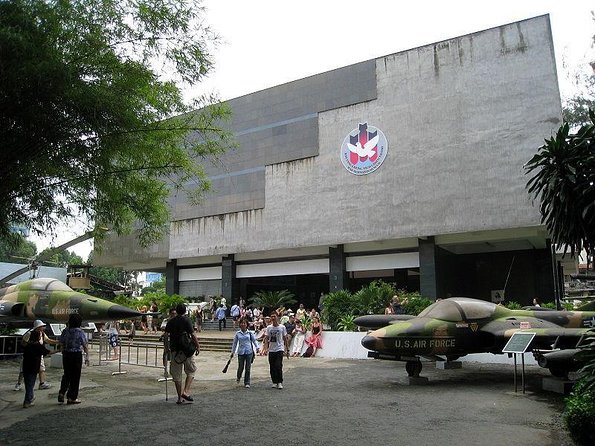
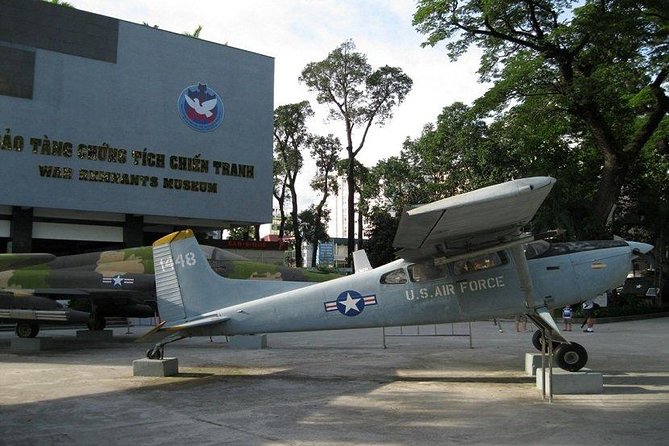
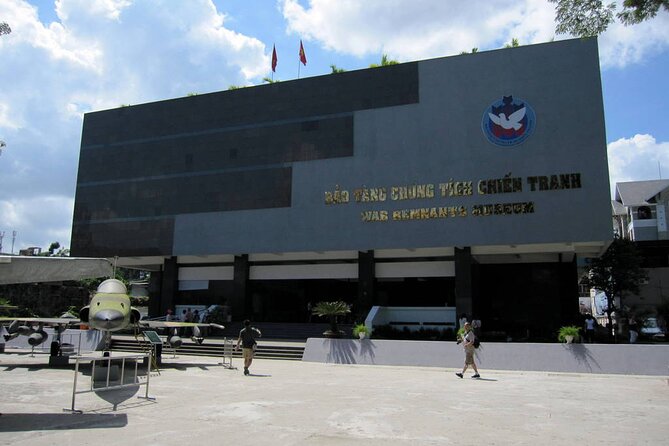
The War Remnants Museum is the heart of this tour, and it’s not subtle. You’ll spend a substantial chunk of time here (the museum stop is listed at 4 hours with an admission ticket included, though your actual time will depend on how fast you move).
What you’ll see is mostly visual storytelling: large photo displays, detailed captions, and sections that confront war crimes and the aftermath. People describe it as moving and shocking, and I’d file it under a “look carefully” museum rather than a “walk-through and move on” museum. There are multiple levels, and it’s set up so you can roam at your own pace once you’re inside.
Two practical notes that really matter:
- Heat can be intense. One common complaint is that galleries don’t have air conditioning. Fans help, but expect to feel warm, especially midday.
- It’s worth reading the labels. Even if you’re tempted to skim, the museum’s captions are part of the story. If you want extra context, audio is available in the museum setting (some visitors found it useful, even if it’s not required).
You’ll also run into the museum’s setup details: there’s a shop at the entrance, and lockers/services can be helpful if you’re carrying bags. If you’re the type who likes to buy a small print or book afterward, this is a good time.
How to make it comfortable:
- Wear breathable clothes, and bring a hat.
- Plan your pace. You don’t have to force the entire experience in one go.
- Bring water if you tend to get dizzy in heat. The tour only says drinks can be purchased separately, so don’t assume refreshments are included.
Independence Palace (Reunification Palace): history you can stand inside
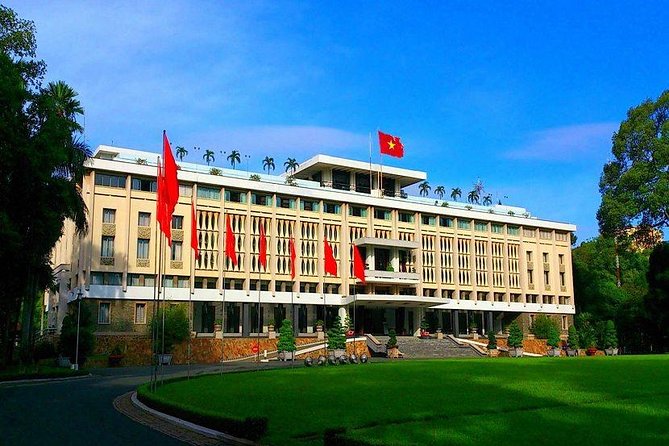
After the museum, the tour shifts from wartime documentation to a place where history happened in the open. The stop here is Independence Palace, also known as Reunification Palace.
This site is dramatic not just because of what it represents, but because of what physically remains. The palace was built on the site of the former Norodom Palace and designed by Ngo Viet Thu. In 1975, it became the scene of the end of the Vietnam War, when a North Vietnamese army tank crashed through the gates. That tank is still on the grounds, and it turns the story into something you can see from every angle.
What I like about this stop is the contrast. At the War Remnants Museum, you absorb history through images and documentation. At Independence Palace, you experience it through space—rooms, corridors, and the scale of the complex. Even if you’re not a history buff, it helps you picture the final days of the war as a lived moment rather than a timeline on a page.
Practical tip: give yourself enough time here to actually slow down. With a morning schedule, it’s easy to rush. But this is one of those places where the building layout helps you understand why the site mattered.
French colonial landmarks: Notre Dame Cathedral and Central Post Office
Once you move away from the palace complex, the tour gives you the architectural side of Ho Chi Minh City. This part of the day connects the city to its French colonial era—and it’s also a chance to walk through landmarks you’ll see on postcards and in guidebooks.
Two stops stand out in the tour outline:
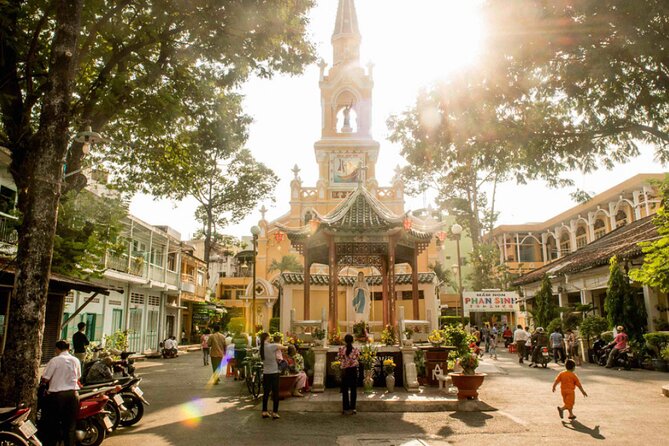
- Notre Dame Cathedral
- The Central Post Office
The cathedral is a visual anchor: it’s the kind of landmark that instantly tells you what era you’re looking at. The Central Post Office complements it nicely because it’s functional architecture—part public square, part historic building you can actually stand inside. The tour route also weaves in the idea that French-era structures shape the city’s look even today.
Here’s the catch: it can be crowded around these big names, and morning timing doesn’t magically remove peak-hour pressure. If you enjoy photos, plan to step back from the front edges and look for better angles rather than fighting for the “perfect” shot right at street level.
How the small-group format changes the day
A group of up to 15 sounds like a small detail, but it affects everything: speed, comfort, and attention. On a tour like this, you want a guide who can manage the whole flow—getting everyone from one landmark to the next without constant backtracking.
This is especially important at the War Remnants Museum, where the experience can expand depending on how you react to the exhibits. When people move at different speeds, a larger group gets stretched thin. With a smaller cap, the rhythm stays more controlled.
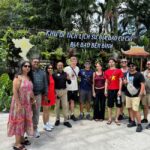
I also like that the guide is close enough for you to hear. In a city where road noise is constant, that matters. You’re not just collecting photos; you’re getting context that makes the photos and rooms make more sense.
And then there’s the practical win: hotel transfers. Pickup and drop-off apply to selected hotels in District 1 only. If you’re staying there, you’re saving time versus arranging a ride for each stop. If you’re farther out, double-check where pickup is available before you commit—this tour isn’t designed to cover every neighborhood.
You can also read our reviews of more museum experiences in Ho Chi Minh City




Timing and comfort: what to wear for a hot museum morning
This tour starts at 7:30am, which is your friend. Early morning light and slightly cooler air help. But don’t let the early start fool you—inside the War Remnants Museum, heat can become the main story.
Plan for:
- Warm indoor spaces: fans are mentioned, but air conditioning isn’t.
- Walking breaks you might need: the subject matter is heavy, so you’ll move slower when something hits.
- Sun protection outside: you’ll still step out between stops like the cathedral and post office.
For clothing, think practical: breathable tops, comfortable shoes with good grip, and a layer you can tolerate. If you’re carrying a small bag, use the museum lockers/services so you’re not stuck holding your stuff while trying to focus on exhibits.
One more comfort point: there’s lunch time built into a half-day circuit, but lunch/drinks aren’t included. That means you’ll likely want water and snacks that you can buy separately.
Extra stops and shopping time: don’t miss the small print
The tour includes a set of major sites, but it may also include time at stores along the route. In the same style of “sightseeing plus stops,” you could encounter a lacquer shop or other retail stops.
If you do get time inside a lacquer shop, here’s a useful detail to keep in mind: one visitor specifically advised checking the upper floor. It’s the kind of advice that saves you from thinking you saw everything after just a quick look.
Shops aren’t the main event here, so treat them like a bonus window into local crafts—not the reason you booked.
Who this tour suits best (and who should choose another plan)
This is a good fit if:
- You want a high-impact morning with major HCMC sights in one go
- You like guided context, not just walking solo with a phone
- You’re okay with emotionally heavy museum content and want the story told clearly
It’s not ideal if:
- You’re sensitive to heat inside museums (air-con isn’t mentioned, and the heat complaint is repeated)
- You want lots of free time to roam slowly—this tour keeps a schedule
- You prefer museum time with no group pacing at all
Also, note the subject matter is not a casual museum stop. If you’re going with kids or anyone who finds war images difficult, you’ll want to manage the visit carefully and be ready to step out.
Should you book the War Remnants Museum half-day tour?
If your goal is to see the War Remnants Museum plus HCMC highlights without doing the routing yourself, this tour is a strong choice. The combination of small-group guidance, included museum admission, and pickup in District 1 gives it real value for a short stay.
My rule of thumb: book it if you want structure and explanation. Skip it if you’d rather go at your own pace, especially if you’re picky about museum timing or hate hot indoor environments.
One last reality check: the booking terms are non-refundable and not flexible for changes. If your schedule is uncertain, think twice before locking it in.
FAQ
How long is the Ho Chi Minh City half-day tour?
It’s listed as about 6 hours (approx.) from the start time in the morning to returning to the meeting point.
What does the tour include?
The tour includes hotel pickup and drop-off for selected hotels in District 1, plus an admission ticket at the War Remnants Museum stop.
Are drinks included?
No. Drinks are not included, and the information indicates lunch/drinks can be purchased separately.
What time does the tour start?
The start time is 7:30am. The tour ends back at the meeting point.
How large is the group?
The experience has a maximum group size of 15 travelers, keeping it in a small-group format.
Do I need to print tickets?
You get a mobile ticket, so you don’t need to print anything. Confirmation is also received at booking.