REVIEW · HO CHI MINH CITY
Saigon Street Photography Experience
Book on Viator →Operated by Secret Experiences · Bookable on Viator
Saigon teaches the camera faster than any classroom. This 2.5-hour street photo walk in Ho Chi Minh City brings you face-to-face with local life and pro photo coaching in the middle of real neighborhoods. You start with coffee or tea, then move through alleyways and architecture while your host shares how to get stronger shots without turning into a tourist statue.
I especially love the non-touristy locations you reach on foot, including French colonial and war-era apartment buildings, a local hardware market, and a Buddhist temple. The second big win is how they coach your approach to people, so you can photograph daily routines more respectfully and with more confidence.
One thing to consider: you start early at 7:00am and you’re walking around in daylight traffic, so plan for comfy shoes and watch the weather.
In This Review
- Key points at a glance
- Where this Saigon photo walk starts (and why morning matters)
- Your hosts: Frederik Wissink and Kevin Lee’s very practical style
- The “how to approach people” lesson that actually changes your photos
- French colonial and war-era apartment buildings: getting architecture to tell a story
- The local hardware market: hands, tools, and motion without the tourist filter
- The Buddhist temple stop: shooting with calm, not chaos
- Walking route and pace: close stops, steady practice, no marathon
- Photo tips you’ll actually use after the walk
- Price and value: what $73 buys you in real terms
- Who should book this Saigon street photo walk
- Should you book it? My practical answer
- FAQ
- FAQ
- What is the price of the Saigon Street Photography Experience?
- How long is the experience?
- Where does the tour start, and what time does it begin?
- Where does the tour end?
- Who hosts the photography experience?
- What type of places will we visit during the walk?
- What is the group size limit?
- Do I need a weather-dependent plan?
- How do I get my ticket?
- Is there free cancellation?
Key points at a glance
- Coffee-and-camera start in District 1 near public transit
- Small group (max 10) for easier feedback while you shoot
- Practical street skills: angles, exposure, light, and how to compose fast
- Access to photo-worthy places like apartment buildings, a hardware market, and a temple
- Respect-first approach to people so you get candid shots without drama
Where this Saigon photo walk starts (and why morning matters)
The meet point is Cafe Linh77 at Hàm Nghi in District 1, starting at 7:00am. Even before you lift your camera, you’ll begin with coffee or tea while your host sets the tone: how to look, how to ask, and how to keep moving with purpose.
I like mornings for street photography because the light is softer and people are still settling into their day. It also gives you more room to practice your habits while the streets feel less chaotic than later in the morning. If you can choose, a weekend run can be easier for photos since traffic can be lighter.
You’ll finish back at the meeting point, keeping things simple. The full experience runs about 2 hours 30 minutes, so it’s long enough to improve but short enough that it won’t hijack your whole day.
You can also read our reviews of more photography tours in Ho Chi Minh City

Your hosts: Frederik Wissink and Kevin Lee’s very practical style
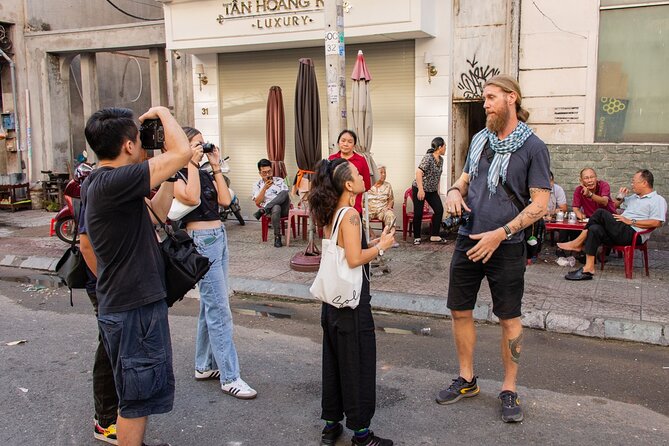
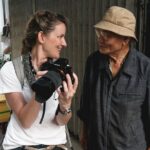
This experience is created with professional photographer Frederik Wissink and hosted by either Fred or Kevin Lee. Fred is originally from Canada and has lived in Vietnam for 17 years, working commercially for major hospitality brands like Accor, Hyatt, and Four Seasons, plus tech companies like Google and Samsung. His editorial credits include work for The New York Times, The Guardian, USA Today, and Discovery Channel, and his photos have appeared on magazine covers such as Condé Nast Traveller and Car & Driver.
Kevin brings a different angle: he’s specialized in commercial photography and also takes the producer role for photo projects. He’s hosted street photography meetups and walks in Singapore, and he’s used to managing real-world shooting moments with a focus on candid scenes and strong production flow.
In practice, what you feel is this: the hosts don’t just point out where to stand. They teach you what to look for in the street—then they help you turn that into pictures with angles, light, and composition that you can repeat later.
The “how to approach people” lesson that actually changes your photos
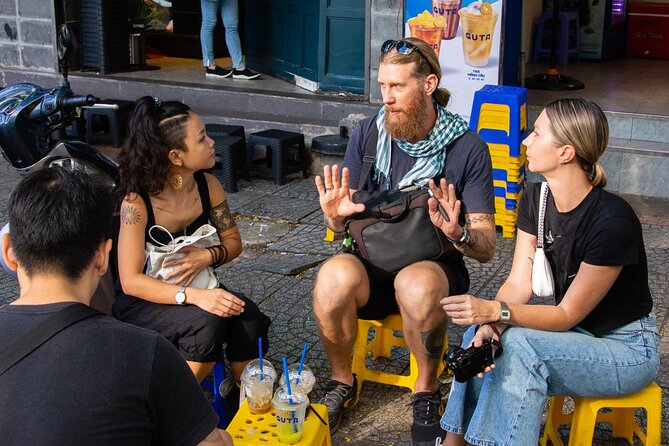
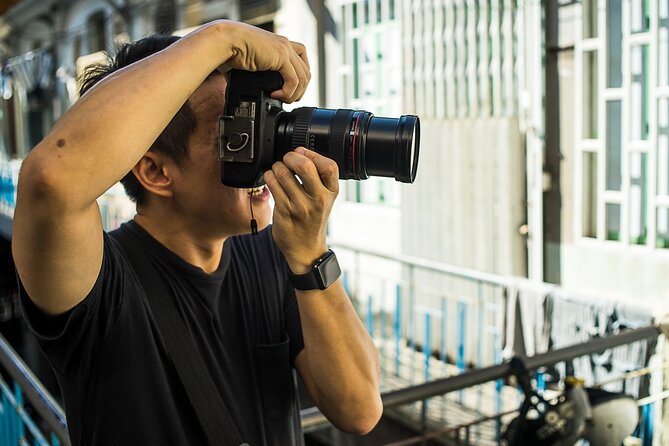
Street photography gets harder when you freeze up. The coaching here aims to fix that. Right at the start, your host shares practical ways to approach locals, what tone to use, and what details to watch so your camera feels like part of your walk—not a disruption.
This is the kind of instruction that matters even if you’re using a smartphone. People worry about permission, language, or timing. Instead of stressing, you learn a simple mindset: slow down, look first, then make a respectful move when the moment makes sense.
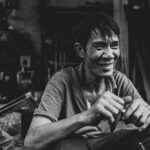
I also like that they frame candid street shooting as observation, not hunting. You’re not chasing a single perfect subject. You’re learning how to notice the little visual stories already happening—hands at work, clothing and color, the geometry of alleys, and how people move through their neighborhood routines.
French colonial and war-era apartment buildings: getting architecture to tell a story
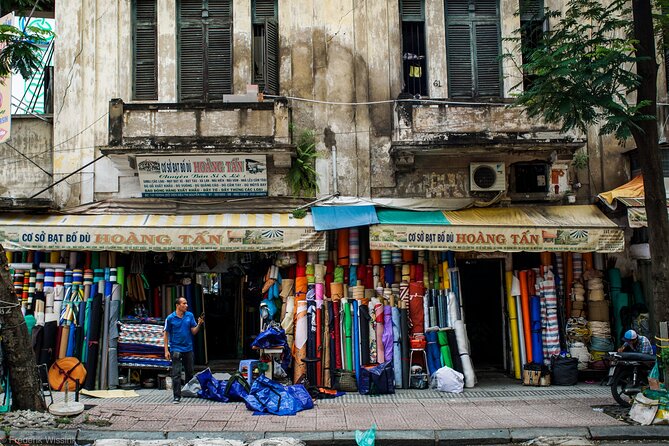
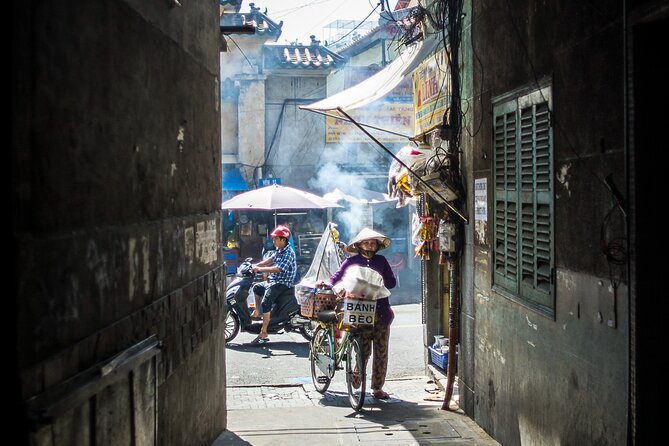
One of your stops is in the zone of French colonial and war-era apartment buildings. This is where street photography in Saigon becomes more than people-watching. The buildings give you lines, textures, and layers that make it easier to compose images with depth.
Here’s what you can expect from this kind of stop: you’ll spot recurring visual patterns—balconies, windows, stairwells, corridors, and the way daily life spills into shared spaces. Instead of shooting “a building,” you’ll shoot interaction between architecture and routines.
Some groups also get the chance to photograph inside apartment-building spaces, which is a huge deal for photos. It turns a street scene into something more specific: a slice of how families move through their homes. You’ll still be respectful, but the access makes your images feel more lived-in.
If you’re a beginner, this stop is also a confidence builder. Architectural scenes are easier to frame, and your host can help you practice quick exposure choices and angle changes without waiting forever for a candid moment.
The local hardware market: hands, tools, and motion without the tourist filter
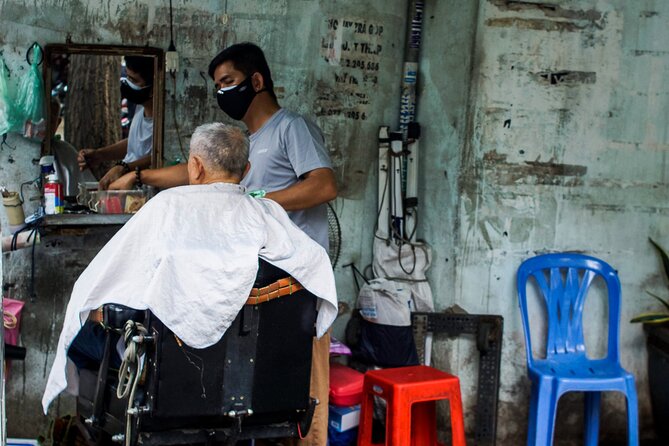
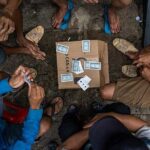
Another core location is a local hardware market. Markets are visual gold, but they can also get messy fast. The coaching helps you simplify your choices so you don’t end up with 50 blurry shots and a headache.
What you’ll learn here is how to shoot details and motion: the way people handle tools, the patterns created by shelves and bins, and small gestures that make photos feel real. Instead of treating it like a background, you learn how to frame the human activity inside the market’s visual grid.
A hardware market also gives you color and contrast that’s hard to fake. Dark metal, bright packaging, worn surfaces, and the flow of people create natural emphasis. Your host’s tips on composition and timing help you capture the moment while still keeping your distance and respecting the space.
Practical advice: if you feel nervous about photographing close-up, start wider and let the host show you where to step. You’ll get stronger faster by adjusting one variable at a time—angle, distance, height, or timing—rather than changing everything at once.

The Buddhist temple stop: shooting with calm, not chaos
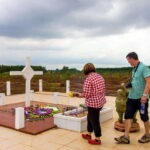
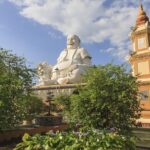
You’ll also visit a beautiful Buddhist temple. Temple photography is a different game. Your host will guide you toward angles that feel respectful, and you’ll focus on scenes where the mood matters—quiet moments, architecture, and small human gestures.
I like temple stops because they slow you down. Street photography can tempt you to keep moving and spraying the shutter. In a temple setting, you learn patience. You also learn that a thoughtful composition often beats frantic clicking.
This stop is especially useful if you want variety in your final set of photos. You’ll come home with people-in-motion images from streets and markets, plus calmer frames that show architecture and daily spiritual life through a different visual language.
If you’re unsure what’s acceptable in the moment, take the host’s lead. You’ll get better pictures and smoother interactions when your camera behavior matches the place.
Walking route and pace: close stops, steady practice, no marathon
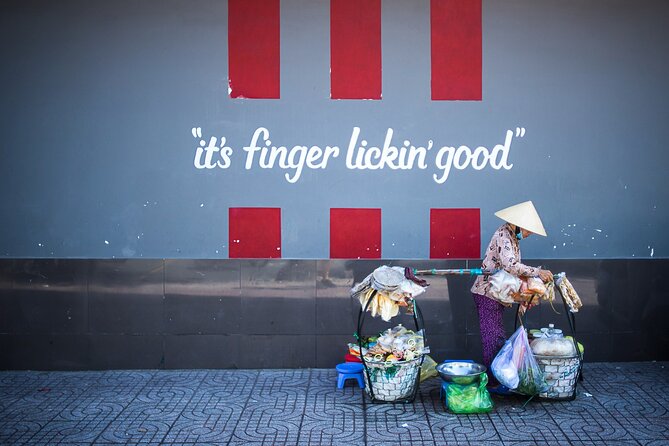
Locations are spread out across central Saigon, but the pacing is designed so you’re not doing a long-distance trek. You’ll be walking enough to stay engaged and notice details, yet the stops are close enough that the experience doesn’t feel exhausting.
The group size is capped at 10 travelers / 10 people, which matters. With a smaller group, your host can check your framing, give quick pointers, and help you correct a habit before it becomes a permanent bad habit.
Still, you should plan for early morning walking. Wear shoes you trust and bring a light layer if the morning feels cool. If rain rolls in, the experience may be canceled for weather, and you’ll be offered a different date or a full refund. So if your trip is tight, I’d keep flexibility.
Photo tips you’ll actually use after the walk
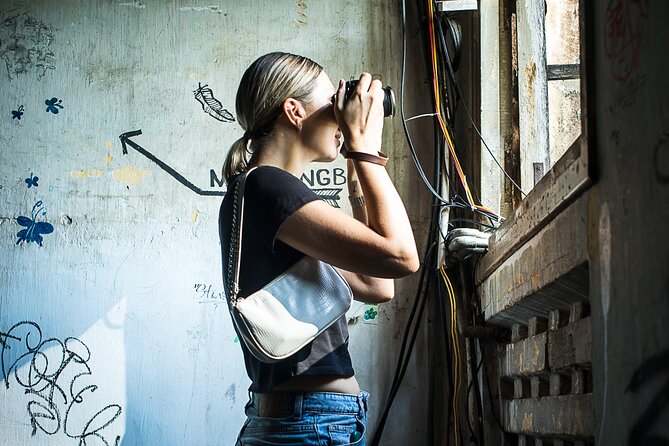
This is a hands-on street photography session for any level—beginner, hobbyist, or more serious shooter. The best part is how the tips connect directly to the scenes you’re standing in.
Based on what you’ll practice, the coaching tends to focus on:
- Angles that change the story (not just the viewpoint)
- Light and timing so shadows and highlights add meaning
- Exposure choices that keep people and details readable
- Composition that reduces clutter and makes a scene feel intentional
- Approach strategies for photographing without being intrusive
I also love the “learn by doing” structure. You don’t just get advice while standing still. You shoot through the walk, then apply corrections in the next location.
And yes, this experience can work with a smartphone. One participant specifically mentioned learning how to get more out of their phone camera while still treating the walk like a photography mission. The underlying skills—seeing light, choosing angles, and timing moments—are the same.
Price and value: what $73 buys you in real terms
At $73 per person for about 2.5 hours, this tour isn’t trying to be the cheapest photo walk in town. It’s priced like a small-group session led by working professionals.
Where the value shows up:
- You get focused coaching instead of a generic sightseeing route.
- You visit specific photo-friendly spots: apartment buildings, a market, and a temple.
- The route is short enough to stay practical, long enough to build a mini portfolio.
- Small group size (max 10) means you’re not competing with a crowd for attention.
If you’ve ever bought a city tour and felt like you were just getting transported between “nice views,” this is different. You’re paying for instruction and access to real daily-life contexts that you might not find on your own.
And if you already know basic camera settings, you’ll still benefit from the way the hosts teach you to see—angles, light, and composition habits that carry into any city.
Who should book this Saigon street photo walk
This is a strong fit if you want:
- Street photography skills that improve your results quickly
- A guided route through central Saigon with stops you may not stumble upon
- Confidence learning how to photograph people respectfully
- A morning activity that’s hands-on but not all-day
It’s also a good choice if you’re traveling solo and want structured feedback. The small group size makes it easier for the host to notice what you’re doing and adjust tips to your pace.
If you dislike early starts or hate walking in busy areas, then this might feel like too much. In that case, you may prefer a later photo session or a shorter urban route.
Should you book it? My practical answer
If you want better street photos in Ho Chi Minh City and you like learning by doing, I’d book this. The combination of strong professional hosts and a route that includes apartment buildings, a market, and a temple gives you variety, and the coaching helps you turn that variety into consistent images.
If your goal is pure sightseeing with occasional photos, you might feel like the focus is too photo-specific. But if you care about the craft—angles, light, and how to approach people—this walk is exactly the kind of experience that pays off after you get home, when you review your photos and realize your eye has changed.
FAQ
FAQ
What is the price of the Saigon Street Photography Experience?
The price is $73.00 per person.
How long is the experience?
It lasts about 2 hours 30 minutes.
Where does the tour start, and what time does it begin?
It starts at Cafe Linh77 on Hàm Nghi (District 1) at 7:00am.
Where does the tour end?
The activity ends back at the meeting point.
Who hosts the photography experience?
It is created with photographer Frederik Wissink and is hosted by either Frederik Wissink or Kevin Lee.
What type of places will we visit during the walk?
You’ll visit several locations, including French colonial and war-era apartment buildings, a local hardware market, and a Buddhist temple.
What is the group size limit?
The experience has a maximum group size of 10 people.
Do I need a weather-dependent plan?
Yes. The experience requires good weather. If it’s canceled due to poor weather, you’ll be offered a different date or a full refund.
How do I get my ticket?
A mobile ticket is provided.
Is there free cancellation?
Yes. You can cancel for a full refund up to 24 hours in advance of the experience start time. If you cancel less than 24 hours before, the amount paid is not refunded.