REVIEW · HO CHI MINH CITY
HCM: Cu Chi Tunnels-Tapioca Small Group Tour Morning or Afternoon
Book on Viator →Operated by KIM TRAVEL · Bookable on Viator
Cu Chi Tunnels changes how you picture the war. You’ll go from surface exhibits to an underground maze, plus a tour guide who makes the story click through daily-life details. I especially like the on-site war exhibits and the chance to see how movement and survival worked underground. The main drawback: if you’re not comfortable with tight space, the optional crawl is a hard sell.
This is one of those Ho Chi Minh City tours that feels worth the money without turning into a factory assembly line. With pickup from Districts 1, 3, and 4 and a max group size of 25, you get a smoother ride than DIY transport. Still, it’s a long day (about 7 hours), and you’ll be on-site in a heat-and-humidity environment, so plan like it’s a jungle outing.
In This Review
- Quick Takes: What Makes This Cu Chi Tunnels Tour Work
- Price and Logistics: Is $14.90 Good Value?
- Getting Picked Up in Districts 1, 3, and 4 (and Why It Matters)
- The Start at Cu Chi: Movie Orientation and War Exhibits
- Forest and Strategy Film: Seeing the Tunnels as a System
- Cassava and Vietnamese Tea: War-Time Food That Feels Real
- Inside the Tunnels: What You Can Expect (and the Real Constraint)
- Agent Orange Handicraft Stop: Meaningful, Even If Shopping Isn’t Your Thing
- Small-Group Feel: Guides, Pace, and the Human Factor
- Time on the Road: Why It Can Feel Long
- Who Should Book This Cu Chi Tunnels Tour
- FAQ
- How long is the Cu Chi Tunnels small-group tour?
- Where are the pickup and drop-off locations?
- What’s the tour price?
- Is this tour small group?
- Is admission included?
- Is the tour in English?
- What food and drinks are included?
- Do I have to crawl through the tunnels?
- Is the movie included?
- What happens if weather is poor?
- Should You Book It?
Quick Takes: What Makes This Cu Chi Tunnels Tour Work
- Pickup from Districts 1, 3, and 4 means you start relaxed, not stressed.
- Exhibits + movie start gives you context before you go underground.
- Optional crawling lets you choose your comfort level with the tunnel experience.
- Cassava and Vietnamese hot tea turn history into something you can actually taste.
- Small group size (up to 25) keeps the tour from feeling chaotic.
- Tunnels today are widened for safety, so you’ll see the system differently than wartime accounts.
Price and Logistics: Is $14.90 Good Value?
At $14.90 per person, this tour is aggressively priced for what you get: hotel pickup (in a set area), an English-speaking guide, admission to the Cu Chi Tunnels area, and included refreshments. In a city where transportation and entry tickets can add up fast, this price tends to feel fair because most of the “friction costs” are already handled for you.
The other big value piece is time structure. You’re not doing a half day by piecing together bus routes. You’re leaving Ho Chi Minh City, getting orientation, spending time on-site, then returning. With about 7 hours total, it’s a full slot in your itinerary, but it’s one you can actually plan around.
Here’s the practical note: the tour is set up as a shared group experience. That’s why the schedule stays fixed (for example, the movie and core stops). If you’re hoping to customize every minute, this isn’t that kind of tour. It’s also not a “luxury” day: the transport is a minivan with air-conditioning, and one set of feedback mentioned that vehicles can vary in cleanliness and condition. Plan to bring your patience for the road between HCMC and Cu Chi.
You can also read our reviews of more tours and experiences in Ho Chi Minh City


Getting Picked Up in Districts 1, 3, and 4 (and Why It Matters)
Pickup is one of the most underrated parts of a Cu Chi day. When you’re heading out of Ho Chi Minh City to a major site, you don’t want to spend your morning bargaining with rides or figuring out where to meet a driver.
This tour handles pickup from hotels in Districts 1, 3, and 4, and it includes drop-off back in District 1. That matters because it reduces friction at both ends: fewer missed connections, fewer last-minute logistics headaches, and a calmer start before the long ride.
You’ll meet around Kim Travel near Thủ Khoa Huân in District 1. From there, the group generally moves as one. With a maximum of 25 travelers, you won’t be stuck in a huge crowd, but it still helps to arrive early, since pickup timing can shift with traffic.
The Start at Cu Chi: Movie Orientation and War Exhibits
Before you go underground, you’ll get a crash course in what you’re about to see. The tour begins with a 3D movie about the largest American ground operation of the Vietnam War, followed by time in the exhibits area. This isn’t just “background reading.” It helps you understand the tunnel system as part of a broader campaign, not as a standalone oddity.
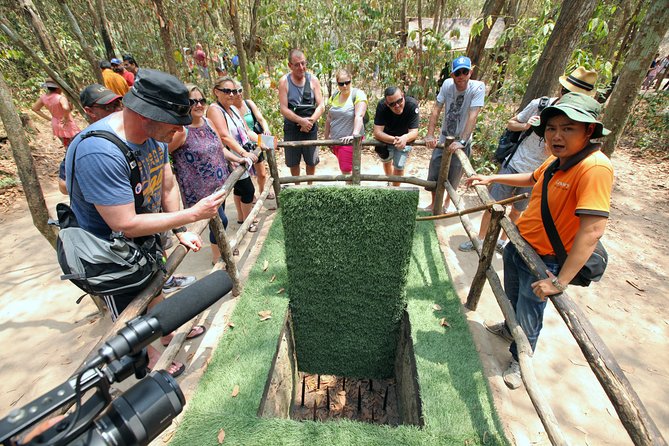
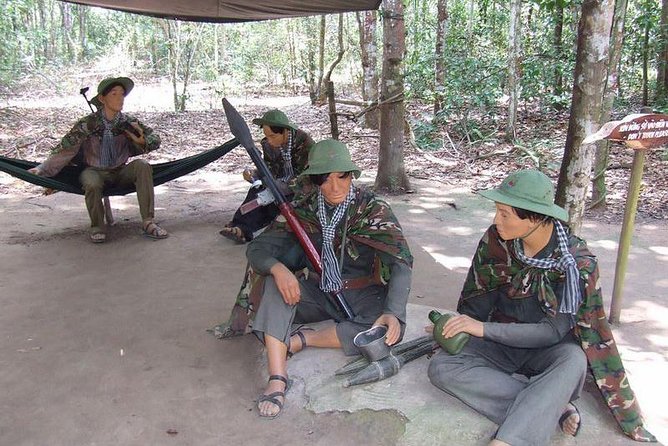
Then you’ll move through the war relics and displays. Expect things like bunkers, guns, and traps, plus interpretive stops that explain how the tunnel network worked for fighters and for life inside the system. If you tend to get lost at war memorial sites, this step is what keeps the experience coherent.
One practical thing I appreciate: the exhibits give you a sense of scale and purpose before you face the tight reality of the tunnels. It’s easier to accept what you’re seeing when you already know what the tunnels were built to do—hide, move, store, treat the wounded, and keep operations going under pressure.
Forest and Strategy Film: Seeing the Tunnels as a System
After the initial exhibits, there’s a documentary film focused on the strategic system of the Cu Chi Tunnels. This is where the tour shifts from objects to the big picture: how a complex underground network supported a long conflict.
The reason this part is valuable is simple. Cu Chi gets marketed as “the tunnels.” But on a good day, you’ll come away seeing it as a system of links—routes, hidden entrances, and supporting spaces that made underground living possible for long stretches.
If you’ve ever walked through a museum and thought, I know what I’m looking at, but not why it matters—this is the segment that closes that gap.
Cassava and Vietnamese Tea: War-Time Food That Feels Real
One of the tour’s highlights is the food stop that’s tied to war-time days: cassava (often described as the most popular food used during war days at Cu Chi), plus Vietnamese hot tea. You also get small extras like wheat cake, wet tissues, and bottled water.
This kind of included snack sounds small, but it’s actually a smart pacing tool. The day is long, and Cu Chi can be hot. Having food and water handled for you means you don’t burn energy trying to find a place to eat after you’re already tired.
And cassava isn’t just a novelty. It’s a reminder that the tunnel story isn’t only about combat—it’s about supply, survival, and adapting to what’s available.



Inside the Tunnels: What You Can Expect (and the Real Constraint)
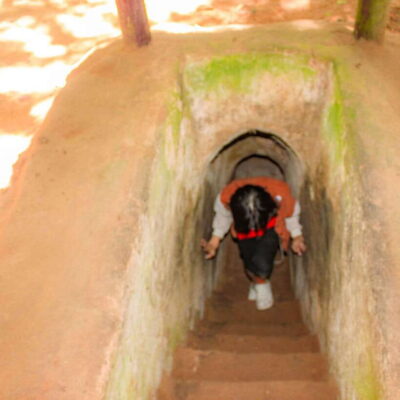
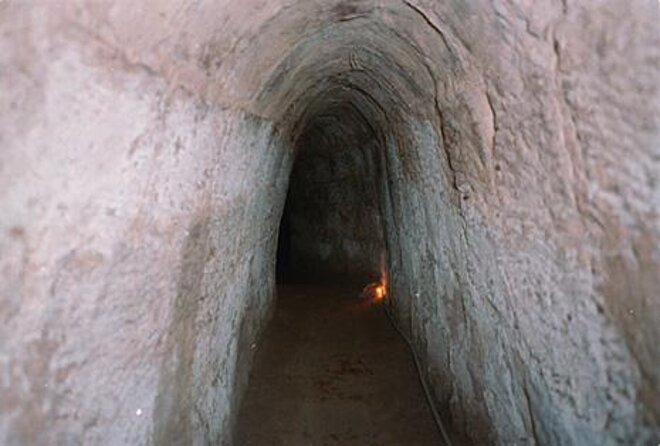
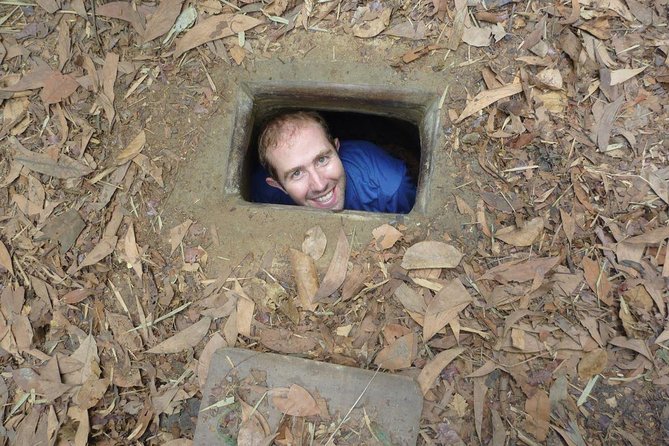
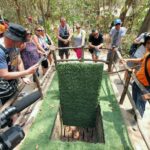
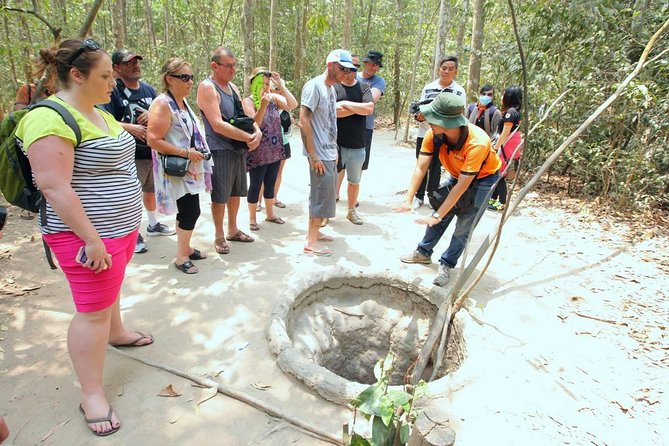
Here’s the core experience: you’ll have time exploring the maze of tunnels, including areas with trap doors, storage spaces, factories, field-hospital setups, and command or kitchen-type spaces. You’ll also get the chance to try a tiny hiding entrance entrance in the tunnel—one of those moments where you instantly understand why secrecy and space mattered.
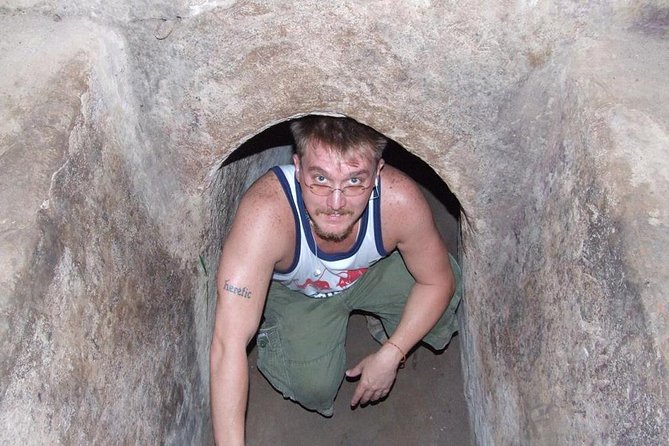
Then comes the optional part: crawling through the Cu Chi Tunnels. The key point for your planning is comfort. Multiple guided accounts emphasize that passages are extremely small. One detailed comment described the classic version of the crawl as about 60 meters long and roughly 4 feet high, which makes it clear why the optional choice exists in the first place.
If you’re claustrophobic, skip the crawl. The “tunnels are tight” reality isn’t a complaint; it’s the point. But if you can handle it, the crawl is the most direct way to understand the daily limits underground—how movement slows, how you must stay aware of your footing, and how everything feels close and controlled.
Also note this: today’s tunnel visit is built with safety in mind. That means passages are widened and simplified compared to wartime conditions. So you’ll see a version made for modern visitors, not a perfect time capsule. That can be a drawback if you want strict historical recreation, but it’s also why most people can actually experience it without getting stuck or injured.
Agent Orange Handicraft Stop: Meaningful, Even If Shopping Isn’t Your Thing
There’s often an extra stop connected to the legacy of Agent Orange. One detailed complaint described a workshop stop that wasn’t highlighted the way it shows up during the day, including a mention of a handicraft workshop and the idea that guests are made aware of victims of Agent Orange.
In other words: this stop can feel like it’s “extra,” but it’s not random. It’s intended to connect the site to long-term human impact, and purchases are typically treated as voluntary. If you don’t want souvenirs, you should still be able to rest in the canteen/restroom area.
My advice: go into this stop with the right mindset. If you want facts and context, be respectful and pay attention. If you want shopping, you’ll know where you stand. And if you just need a break from heat and walking, use it as a pause and then get back on track.
Small-Group Feel: Guides, Pace, and the Human Factor
This tour caps at 25 travelers, and that usually makes the experience feel more personal than the giant bus tours. The ride and tour style depend heavily on your guide, and the names that show up frequently include Bao, Khanh, Phong, Luna, Tommy, Martin, and others.
The most praised guides share a pattern: they explain items clearly, keep the energy up during the trip, and handle group flow so no one gets lost. Several comments also highlight a “fun + informative” vibe—stories and explanations that connect the site’s details into a story you can follow.
There are also occasional negative notes that you should keep in mind:
- Some departures may feel like they include distractions (like phone use) that can reduce how “on-rails” the tour feels.
- A few people felt the tour was more surface-level than expected for the time.
- In one account, the movie portion was said to be skipped, which shows that not every day matches the ideal version.
What this means for you: choose this tour for the structure and value, but don’t assume perfection every time. If you care a lot about the exact order of segments (like the movie), you’ll want to be on the bus on time and stay attentive when the schedule is announced.
Time on the Road: Why It Can Feel Long
Cu Chi is about 60 km from Ho Chi Minh City, and the ride can realistically take 1.5 to 2.5 hours depending on traffic and conditions. Add that to site time and you reach the 7-hour total day.
That’s not a deal-breaker, but it changes how you should pack:
- Bring water and something salty if you know you get lightheaded in heat (water is included, but you might want more).
- Wear shoes you can walk in for a long time.
- Expect the tunnels area to feel warm and humid, even when you’re off the crawl.
If you’re deciding between morning and afternoon, both are offered. Morning can help you avoid some of the day’s peak heat, while afternoon may work better if you have morning plans in the city.
Who Should Book This Cu Chi Tunnels Tour
This tour is a great fit if you want:
- A guided, structured way to understand what you’re seeing at Cu Chi.
- A choice-based approach to the crawl (do it if you can; skip it if you can’t).
- Pickup and drop-off to avoid wasting time wrestling with transportation.
It may be less ideal if:
- You want deep, academic-level detail and don’t want the time constraints of a group schedule.
- You expect a long crawl and lots of freedom to explore tunnels independently.
- You’re very sensitive to tight spaces or have mobility limitations for crawling through narrow passages.
It suits history-minded visitors, but it also works for people who just want a gut-level understanding of how underground life changes everything.
FAQ
How long is the Cu Chi Tunnels small-group tour?
It runs for about 7 hours total (approx.).
Where are the pickup and drop-off locations?
Pickup is offered from hotels in HCMC Districts 1, 3, and 4. Drop-off is in District 1.
What’s the tour price?
The price is $14.90 per person.
Is this tour small group?
Yes. The maximum group size is 25 travelers.
Is admission included?
Yes. The tour includes an admission ticket to the Cu Chi Tunnels area.
Is the tour in English?
Yes. You’ll have an experienced English-speaking guide.
What food and drinks are included?
Included items include tapioca, Vietnamese hot tea, wheat cake, bottled water, and wet tissues.
Do I have to crawl through the tunnels?
No. Crawling through the tunnels is listed as an optional experience.
Is the movie included?
Yes. You’ll watch a 3D movie at the Cu Chi Tunnels area, and there is also a documentary film included.
What happens if weather is poor?
The experience requires good weather. If it’s canceled due to poor weather, you’ll be offered a different date or a full refund.
Should You Book It?
If you’re looking for a solid, no-nonsense way to experience Cu Chi without spending hours on transport planning, I’d book this. The value at $14.90, plus pickup from key districts, plus exhibits and a guided storyline, makes it a smart use of your time in Ho Chi Minh City.
Just go in with the right expectations: it’s a group day with a set schedule, the crawl is optional but the tunnels are tight, and the “underground” experience is shaped by safety today. If that matches your comfort level, you’ll leave with a much clearer picture of how people survived and fought from below.