REVIEW · HO CHI MINH CITY
6 Hours Historical Tour in Cu Chi Tunnel with Free Snack
Book on Viator →Operated by Kim Delta Travel · Bookable on Viator
Cu Chi tunnels pack Vietnam’s war into six hours. This Cu Chi Tunnels tour brings you into a hidden underground world and explains why it mattered, with spaces like clinics, schools, kitchens, and secret entrances. I like the clear, step-by-step pacing that turns the site into a story, and I like that an English-speaking guide helps you connect what you see to the bigger history.
One thing to consider: the tunnel crawl section is tight. If you’re claustrophobic, plan mentally for close quarters even though the distance is short.
In This Review
- Key Highlights to Expect
- How The Six-Hour Schedule Works In Ho Chi Minh City
- Cu Chi Tunnels: What You’ll See Above Ground
- Booby Traps and Underground Life: The Story Behind the Design
- The Tunnel Crawl: Small Space, Big Perspective
- Optional AK-47 Shooting: Fun Factor With a Cost Note
- Snacks, Tea, and Comfort: The Included Break You’ll Appreciate
- Price and Logistics: Does $19.79 Make Sense?
- The En-Route Stops: What to Watch for
- Guides Matter: English, Humor, and Patience
- Who This Tour Is Perfect For
- Who Might Want a Different Option
- Should You Book This Cu Chi Tunnels Tour?
- FAQ
- What time does the Cu Chi Tunnels tour start?
- How long is the tour?
- Is pickup available from Ho Chi Minh City?
- What’s included in the price?
- Is rifle shooting included?
- How many people are in a group?
- Where does the tour start and end?
Key Highlights to Expect
- Admission and key fees included in the 6-hour experience, so you’re not nickel-and-dimed at the site
- Central District 1 pickup (where offered) and two start times, 8:00 am and 12:30 pm
- Short documentary, booby trap stops, and a brief tunnel crawl that keeps the history grounded in real design
- Tapioca snack, hot tea, and bottled water included, which helps you feel human after the driving
- Optional AK-47 rifle shooting available for extra cost, with shooting bullets not included
How The Six-Hour Schedule Works In Ho Chi Minh City
This tour is built for one main goal: getting you from Ho Chi Minh City out to the Cu Chi Tunnels area without losing the day. You’ll either start at 8:00 am or 12:30 pm, and the total time is about 6 hours.
If you’re staying in Central District 1, pickup is offered (otherwise you’ll meet at the starting point at 268 Đề Thám, Phường Phạm Ngũ Lão, Quận 1). On the ride out, you’ll get a look at the countryside view outside the city, which is a nice change of pace before you step into the underground world.
Once you arrive, the tour focuses on getting you oriented fast. There’s a short war-era documentary first, then you move through the site’s key stops. That sequence matters. It keeps you from wandering around confused, and it helps you understand what you’re seeing in the tunnels as something practical, not just a spooky attraction.
You can also read our reviews of more historical tours in Ho Chi Minh City



Cu Chi Tunnels: What You’ll See Above Ground
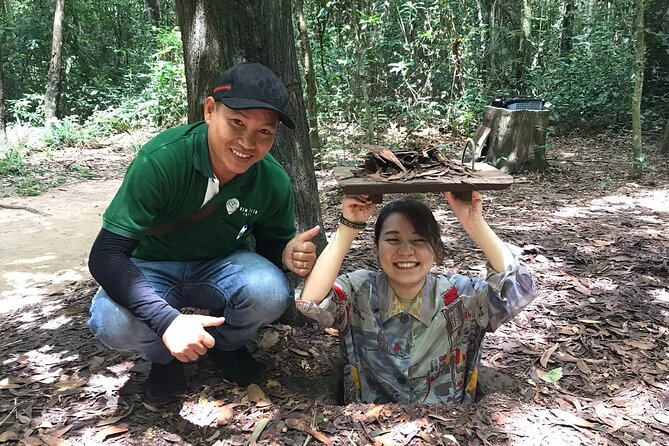
The Cu Chi experience isn’t just about “going underground.” The most convincing parts start above ground, where the tour helps you understand how the tunnels were protected and hidden.
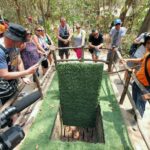
You’ll learn about the tunnel network’s layout and why the Vietnamese could function in a place that was both concealed and defensible. The entrances were camouflaged, and the tour explains how the setup used secret wooden doors and camouflage leaves above. Even if you’ve read about the war before, seeing the logic of concealment in a real physical setting makes it click.
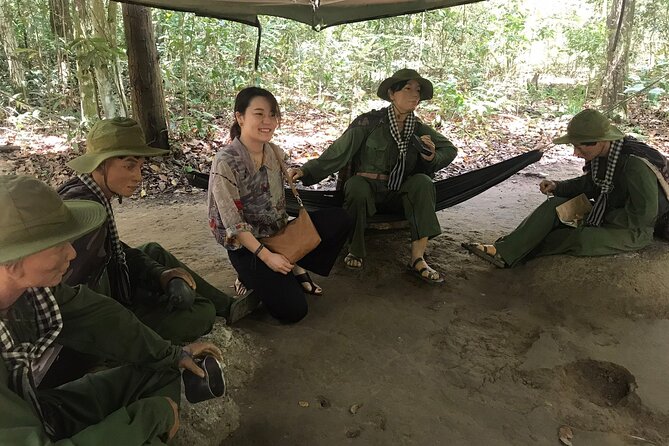
Then comes the part that turns the story from words into something physical: you’ll get guided stops that focus on what people built and used. The site is arranged so you can connect the dots—hospitals, schools, theaters, kitchens, and the overall underground “town” concept—without feeling like you’re guessing.
Booby Traps and Underground Life: The Story Behind the Design

This is where the tour becomes most “historical” and least sightseeing. You’ll be shown booby traps used during wartime, and your guide’s job is to connect each stop to the bigger reason it existed: survival, protection, and making an enemy pay a real price for getting too close.
The tour’s strength is how it balances information with structure. You don’t just read a plaque. You hear the context while standing in the right place. That’s also why an English-speaking guide matters here more than it might on some other attractions. The tunnel story is full of details, and you’ll feel the value when the guide can translate what you’re seeing into a clear narrative.
The tour also emphasizes the underground “daily life” angle. The idea that there were hospitals, schools, and kitchens inside the network changes how you think about the place. It’s not only about hiding. It’s about continuing life under extreme conditions—and that’s a major part of why Cu Chi is considered so iconic.
The Tunnel Crawl: Small Space, Big Perspective
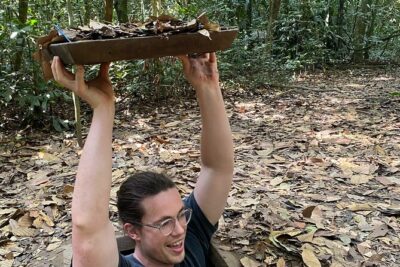
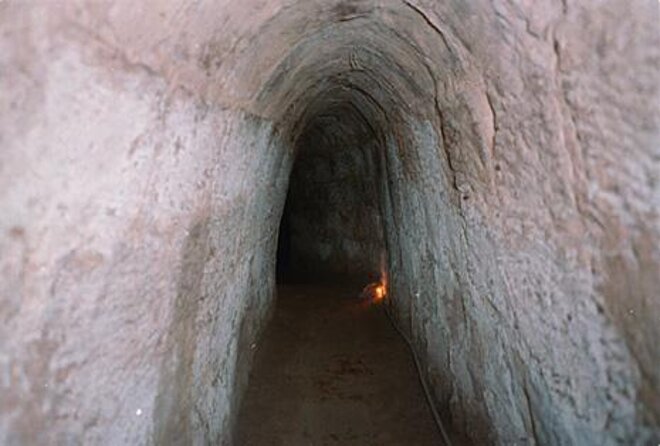
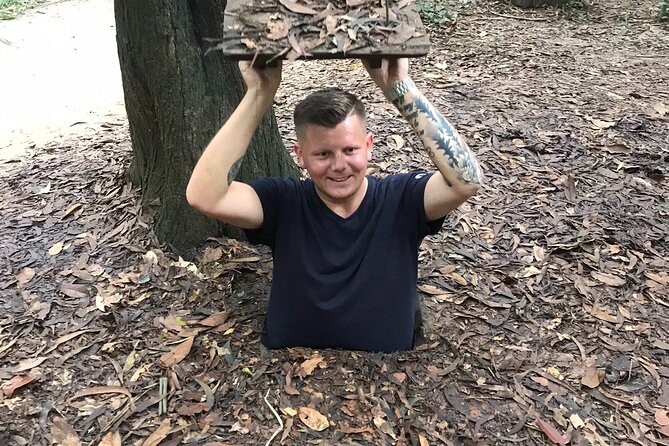
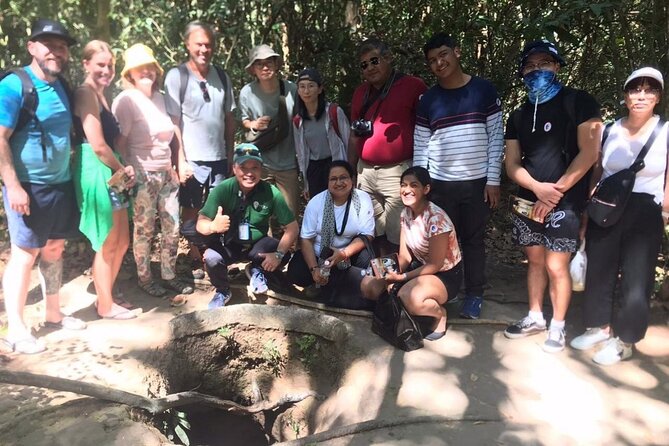
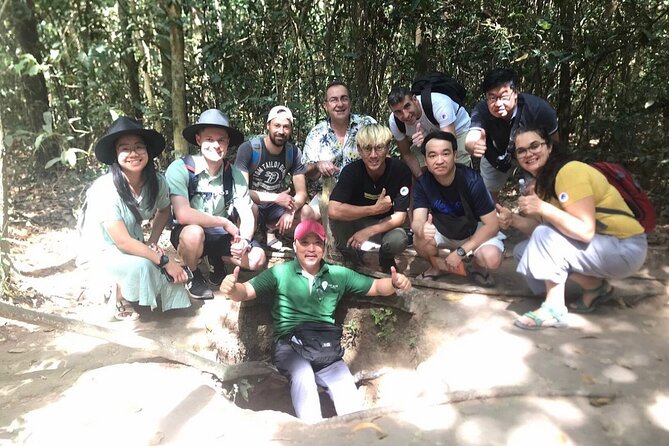
Yes, you’ll crawl into a tunnel. The key word is short. The tour includes a brief crawl so you can experience the scale of the space without turning the outing into a marathon.
But even a short crawl can feel intense, because the tunnels are described as so small that only the Vietnamese could fit. Translation for your body: you’ll likely be hunched, close to the walls, and aware of your breathing. If you’re fine with tight spaces, this part adds a layer of understanding that photos can’t provide.
If you are claustrophobic, plan carefully. I’d treat the tunnel crawl like a “try it if you can” moment rather than a must-do. The history is still worth it even if you decide your comfort comes first.
One practical tip: wear something you can move in and that won’t snag easily. The tour is only a few hours, but this is still a place where you’ll feel the physical restrictions of wartime architecture.
Optional AK-47 Shooting: Fun Factor With a Cost Note
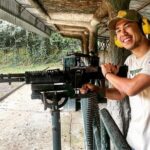
Some versions of this tour include a shooting range option. Here, it’s optional at your own expenses, and you’ll hear that bullets are not included.
If you’re the type who likes a hands-on, adrenaline-adjacent experience, the shooting range can be a memorable add-on. If you’re not into that, you can still enjoy the tunnels-focused parts of the day and treat the shooting as a separate choice.
Either way, make your decision before you arrive so you’re not rushed mid-experience. Shooting adds time and changes the mood, so decide based on what you want most out of the day: history first, or action first.



Snacks, Tea, and Comfort: The Included Break You’ll Appreciate
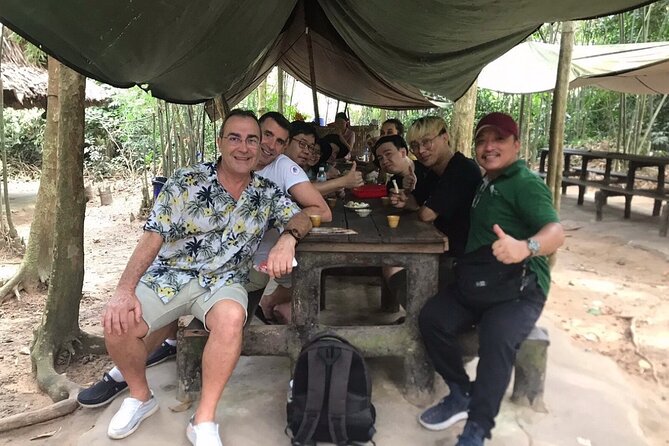
A small detail that really helps: you’re not walking around hungry. The tour includes a snack of tapioca, plus hot tea and bottled water.
Tapioca is a classic wartime-friendly food, and the tour framing makes it more than just a snack. You’re tasting something tied to the era being discussed, and you get a break from heat and constant moving. The hot tea also helps you reset—especially if you’re going on the 8:00 am departure and the day is already climbing in temperature.
This is also where the A/C vehicle inclusion shows its value. It’s a long drive out and back, and you’ll feel it. Having a comfortable ride reduces the chance that you start the tour mentally drained.
Price and Logistics: Does $19.79 Make Sense?
At $19.79 per person for about 6 hours, this tour lands in the “great deal” zone, mostly because important items are bundled.
You’re getting:
- an English-speaking guide
- air-conditioned vehicle
- tapioca snack, hot tea, and bottled water
- all fees and taxes
- and admission is included
That bundling matters in Vietnam, where a cheap ticket can sometimes turn into a pricey day once you add entry fees and guide time. Here, you’re paying for the core experience upfront.
Group size is also capped at 25 travelers, which usually means you’ll get enough attention from the guide without feeling swallowed by chaos. It’s not a private tour, but it’s not a massive bus crowd either.
One logistics note: the tour starts back at the meeting point and ends back there. That’s convenient because it keeps your day tidy in a city where moving around can eat time.
The En-Route Stops: What to Watch for
On the ride out, you’ll see countryside views. Some departures may also include a brief stop tied to local production or a shop setup—think along the lines of a factory-style stop or a local arts-related stop.
Here’s the consideration: if you want the day to be strictly history, these added stops can feel like time you’d rather spend at Cu Chi. I’d treat any en-route stop as a possibility and plan your expectations accordingly. The main focus will still be the tunnels, but you might not get a perfectly nonstop drive both directions.
Guides Matter: English, Humor, and Patience
This is a tour where your guide can seriously change your day. In the feedback, names like Bao and Son come up with praise for clear explanations and a friendly, patient approach.
That’s what you want. Cu Chi has details, and the point isn’t just to look at tunnels. It’s to understand why they were built this way and how people lived around them during the war. A guide who can answer questions without making you feel rushed makes a big difference.
There’s also a reality check: not every guide may match your English expectations. If you strongly depend on perfect narration, it’s worth choosing a departure with a guide known for explanation quality. Even then, you’ll get more out of the experience if you’re comfortable with a mix of storytelling and on-site cues.
Who This Tour Is Perfect For
This is a good fit if you:
- want an iconic war-history experience in Vietnam with clear structure
- enjoy guided storytelling more than self-guided wandering
- like hands-on context, even if the tunnel crawl is short
- want a one-day format that’s practical from Ho Chi Minh City
It’s also a solid choice for families in the right mindset. The tunnel and trap elements can be thrilling for kids, and the guide-led explanations help keep it from feeling like a simple “scary place.” That said, keep expectations realistic about how small the space is.
Who Might Want a Different Option
You might want to think twice if:
- you’re very claustrophobic and the tunnel crawl sounds like a no-go
- you don’t want any optional add-ons like the shooting range
- you dislike any extra en-route stops that can cut into time
The tunnels are the heart of the day. Everything else supports that. If the crawl and tight spaces don’t work for you, you may feel better choosing a tour version that leans harder on viewing and explanation rather than physical participation.
Should You Book This Cu Chi Tunnels Tour?
If you want real value—history, a guided explanation, and the core Cu Chi experience in about six hours—this tour is easy to recommend. The bundled price (including guide, admission, and snacks) is the big win, and the structure helps you get meaning from the tunnels instead of just photos.
I’d book it if you’re comfortable with tight spaces for a short crawl and you want an English-speaking guide to connect the dots. Skip or go cautiously if claustrophobia is a serious issue for you.
One last practical point: this tour runs best in good weather, and it’s planned for a smooth day rather than a long, flexible one. If you’re traveling during a period of unsettled conditions, check before you go so you don’t get stuck with a last-minute change.
FAQ
What time does the Cu Chi Tunnels tour start?
The tour starts at 8:00 am or 12:30 pm, depending on the option you choose.
How long is the tour?
The duration is about 6 hours.
Is pickup available from Ho Chi Minh City?
Pickup is offered for guests staying in Central District 1 hotels. Otherwise, you meet at the tour start address in Quận 1.
What’s included in the price?
The tour includes an air-conditioned vehicle, an English-speaking guide, tapioca snack, hot tea, bottled water, and all fees and taxes. Admission is included as part of the tour.
Is rifle shooting included?
No. Rifle shooting with an AK-47 is optional and is at your own expense. Bullets are not included.
How many people are in a group?
The tour has a maximum group size of 25 travelers.
Where does the tour start and end?
It starts at 268 Đề Thám, Phường Phạm Ngũ Lão, Quận 1 and ends back at the meeting point.