REVIEW · HO CHI MINH CITY
Bean to bar Chocolate Workshop in Ho Chi Minh City
Book on Viator →Operated by Ban Cacao - Vietnamese chocolate maker · Bookable on Viator
Making chocolate in Saigon is more than sampling candy; this workshop puts you from cacao pod to final bar with your own hands. In about 2 hours, you learn the steps, taste the ingredients, and leave with decorated chocolate you made yourself.
What I like most is how practical it feels, step by step. You’ll actually husk cacao beans and grind them the traditional way with a granite mortar, instead of watching everything from a chair. You also taste fresh cacao pods along the way, which makes the whole process click fast.
One thing to plan for: the work is hands-on and a bit tiring, especially the grinding part. If you’re bringing kids, keep in mind the workshop can be better suited for children over 8, since that grinding is real effort.
In This Review
- Key things to know before you go
- Bean-to-bar in District 1: the Ban Cacao workshop setup
- How the 2-hour session actually flows
- Tasting fresh cacao pods (and why it matters)
- Husking cacao beans: the first real work
- Granite mortar cacao paste: traditional texture, real effort
- Making your chocolate bar: nibs, butter, cane sugar, molds, and wrappers
- Vietnamese cacao stories, explained in plain language
- The drink, the family fit, and the effort level
- Price and value: why $32 can feel fair here
- Should you book Ban Cacao’s bean-to-bar workshop?
- FAQ
- How long is the Bean to Bar Chocolate Workshop?
- What does the workshop cost?
- Where does the workshop meet?
- Do I get to make and take home chocolate?
- Is there a drink included?
- Is the group size limited?
- Is free cancellation available?
Key things to know before you go
- Pods-to-bars, not just tasting: you learn the whole workflow and make a bar at the end.
- Fresh cacao pod tasting: you’ll taste cacao pods as part of the session.
- Traditional granite-mortar grinding: you’ll get hands-on with a classic method.
- Small group size (max 10): more attention and smoother hands-on time.
- Take-home chocolate with decorated wrappers: you leave with bars you personalize.
- A hot or iced chocolate drink is included: a nice break while you work.
Bean-to-bar in District 1: the Ban Cacao workshop setup
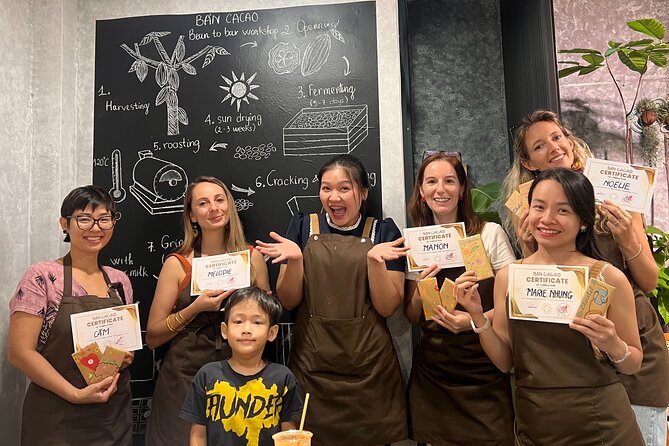
This class takes place at Ban Cacao, a Vietnamese chocolate maker in Ho Chi Minh City, at 89/14 Hàm Nghi, Phường Nguyễn Thái Bình, Quận 1. It’s in central District 1, and it’s also described as near public transportation, which matters in a city where traffic can turn “quick” into “long.”
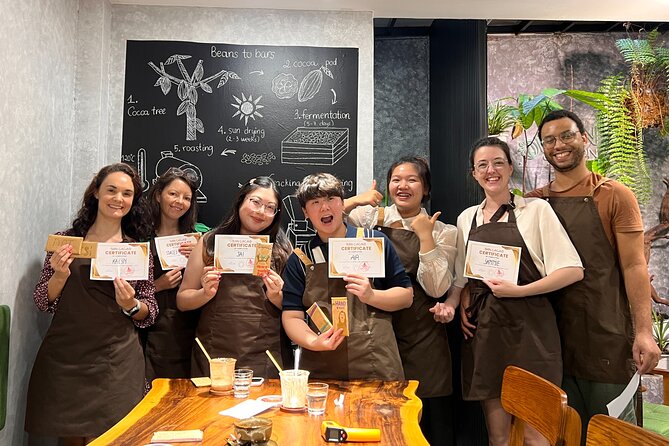
The experience runs in a small group capped at 10 travelers, which is a big part of the value. With fewer people, you get more time doing each step, rather than waiting in line for the one tool or the one step everyone wants to try.
It also uses a mobile ticket, so you don’t have to hunt for paper. And the workshop ends back at the starting point, which keeps your evening simple after the class.
You can also read our reviews of more city tours in Ho Chi Minh City


How the 2-hour session actually flows
The workshop is designed as a full mini-course on Vietnamese cacao turning into chocolate bars. You’ll start with an explanation of the pods-to-bars process, plus the story of cacao in Vietnam and how Vietnamese makers work with local ingredients.
Then you move into the “hands on” section. You’ll taste fresh cacao pods, learn how to select good cacao beans as part of the process, and begin preparing the beans yourself. That matters because cacao is not just an ingredient here—it’s the start of everything you’ll eat later.
From there, the workshop walks you through making your own cacao paste using traditional tools. Finally, you build a chocolate bar from the early steps through the finished result, and you’ll get to decorate your bar and its wrappers before taking everything home.
The whole thing is about 2 hours total, so it’s paced like a practical workshop, not a slow museum talk. You won’t get stuck on one step for so long that the others feel rushed.
Tasting fresh cacao pods (and why it matters)
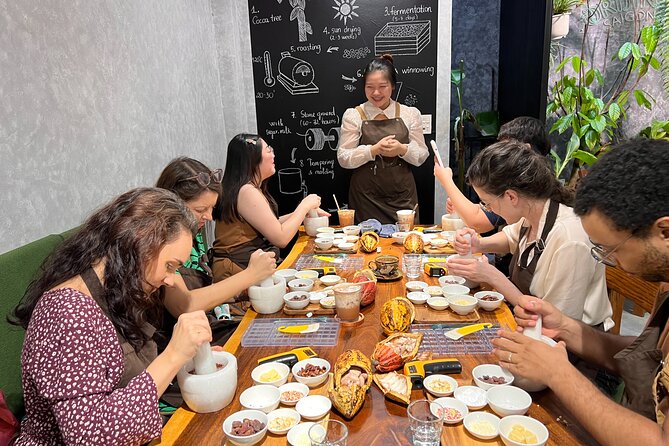
A simple but surprisingly memorable moment is tasting the fresh cacao pods. This is where the workshop earns its credibility: you get a direct sense of the raw materials before you process anything.
Most people in Vietnam (and beyond) know chocolate as a finished product. Tasting the pods helps you understand the ingredients as living, natural things. It also makes the later steps feel less like a factory script and more like a transformation you can actually picture.
It’s also a fast way to build your own “taste map.” If you pay attention to flavor changes as you go—from pod to beans to paste and then to bar—you’ll leave with a better feel for how chocolate’s flavor is shaped by the steps.
Husking cacao beans: the first real work
Next comes husking your own cacao beans. This is one of those tasks that sounds simple until you do it: you’re opening up the cacao and separating what you need to use.
The workshop includes instruction on how to pick good cacao beans from the first step of the process. So you’re not just doing it blindly—you’ll learn what to look for before you start.
Then, once the beans are husked, you’re set up for the next step: turning beans into cacao nibs and paste. Since the session is only about 2 hours, husking happens early enough that you still have time to finish your bar without feeling like you barely started.
Granite mortar cacao paste: traditional texture, real effort
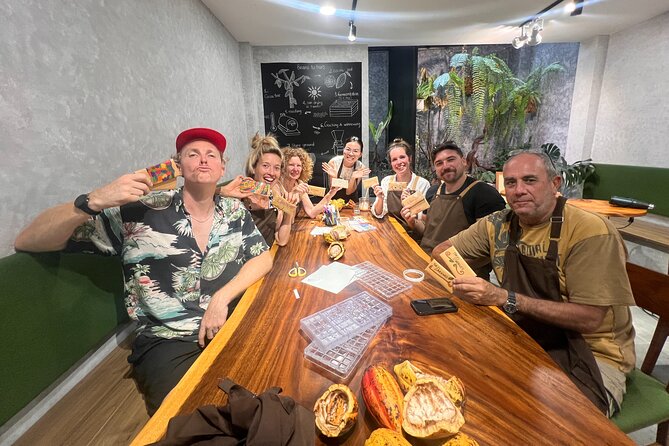
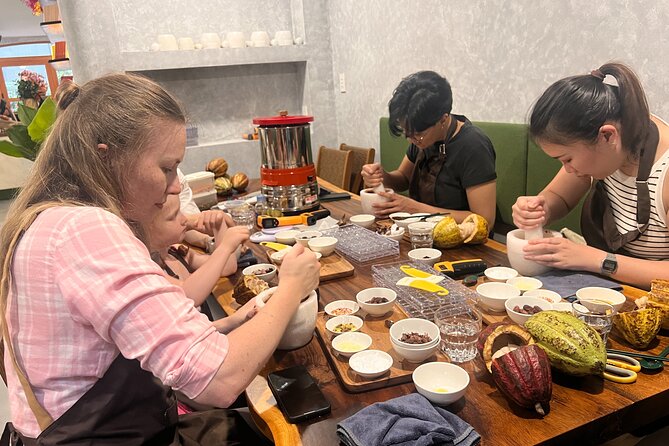
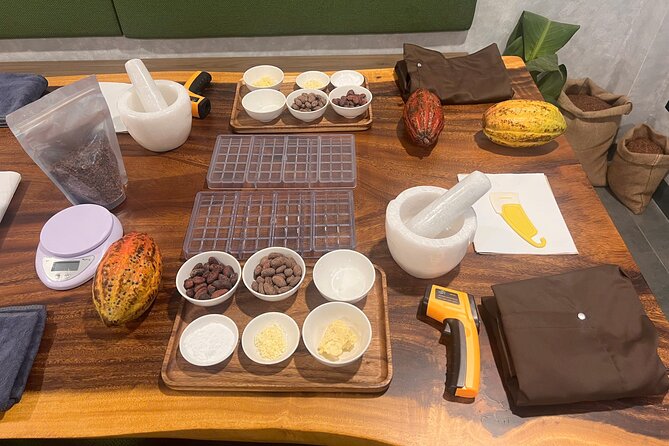
The most hands-on step is making cacao paste the traditional way with a granite stone mortar. You’ll use the grinder directly rather than relying on a machine.
Why I think this is a highlight for most people: you get to feel texture changes as you work. Grinding is slow compared to modern machines, which means you can’t “zone out.” You’re present, and the process becomes tangible.
The workshop also includes a thermometer and other tools like a scale, which suggests you’re not doing it completely by guesswork. Even if you don’t get deep into technical chocolate making, the presence of these tools helps you understand that bean-to-bar isn’t just vibes—it’s careful handling.
One practical note from the experience: the grinding can be tiring, especially for kids. So if you’re booking for a family, consider that this is a workshop with physical effort, not a light craft class.
You can also read our reviews of more drinking tours in Ho Chi Minh City



Making your chocolate bar: nibs, butter, cane sugar, molds, and wrappers
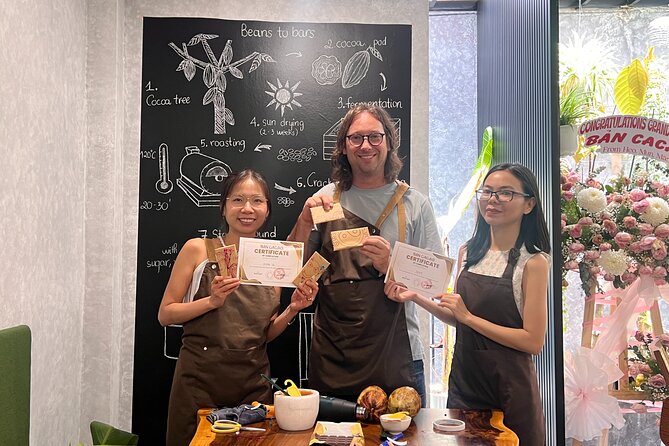
After the cacao paste stage, the workshop transitions into building the final chocolate bar. The materials listed include cacao nibs, cacao butter, and cane sugar, plus the process ingredients you’ve prepared earlier.
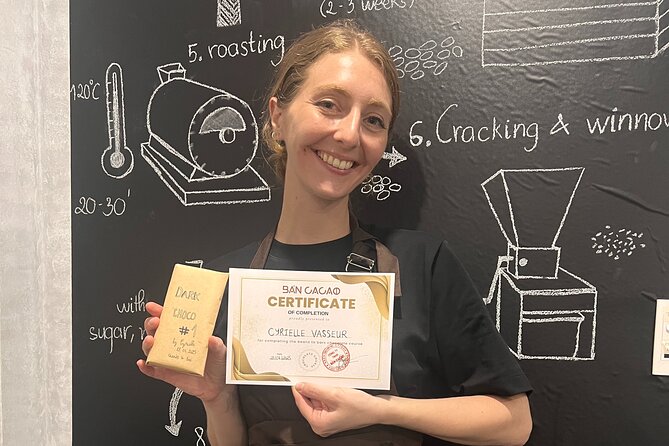
You’ll use a chocolate mold and wrapping paper so your bar can go home with you neatly packaged. There’s also decorating time, so you’re not leaving with a plain slab. The wrappers are part of the experience, and you get to personalize them.
If you want a concrete takeaway, one of the best parts is that people come away with actual bars they can keep after decorating their packaging. In one family-friendly note, kids and parents ended up with two bars after the decorating step.
This is also where the session feels different from most “make a dessert” classes. Chocolate here is built from cacao ingredients—pods and beans in the front, finished bar at the end—so you leave with something you understand, not just something you assembled.
Vietnamese cacao stories, explained in plain language
Along with the hands-on steps, the workshop includes an explanation of the history of cacao in Vietnam and how Vietnamese makers translate local ingredients into chocolate.
I appreciate this part because it keeps the workshop from feeling like a generic chocolate stunt. Instead of only teaching technique, it gives context for why these ingredients and methods matter in Vietnam.
It also helps you make sense of what you’re seeing. When you learn how pods and beans become paste and bar, the “why” gives you a better mental model. That can turn a one-time class into a useful skill you remember later when you buy chocolate or try to identify styles.
The drink, the family fit, and the effort level
You’ll be included with a drink each, either hot or iced chocolate, which makes a good comfort break while you’re working. It’s not just a sweet add-on; it gives you a chance to reset your palate after tasting the pods and before you build the final bar.
As for families: this workshop is often described as a good activity to do in Saigon that also works as a bonding experience with kids. One key detail for planning is that the grinding part can be tiring, so it’s best for children over 8 rather than younger kids who may struggle with sustained effort.
The upside is that the workshop is short enough at 2 hours that you’re not signing up for an all-day commitment. With a small group, you also tend to get help quickly when someone needs it.
Price and value: why $32 can feel fair here
At $32 per person, this workshop can feel like good value if you care about process and take-home results. Here, you’re paying for more than a tasting: you get instruction, tools, cacao ingredients, and a finished product you can take home.
What justifies the price in practical terms:
- You make the chocolate bar through multiple steps, not just assemble one part.
- You use traditional equipment like the granite mortar, so the experience costs more than a quick DIY craft.
- You get time with a small group (max 10), which usually means the instructor can manage the flow better.
- You leave with chocolate you decorated and kept, not only samples.
Also, the workshop is noted as something booked about 11 days in advance on average, which suggests it can book up. If you want a specific day or you’re traveling with limited flexibility, booking ahead is a smart move.
Should you book Ban Cacao’s bean-to-bar workshop?
Book it if you want a hands-on Saigon activity that’s still educational, and you like the idea of learning by doing. This is a great choice for couples, food lovers, and families who are okay with a bit of real effort during the grinding step.
Skip it (or at least rethink timing) if you’re expecting a super lightweight, sit-and-watch class. The process includes physical work, and the grinding part can feel tiring for kids.
If you like experiences where you can point to your own chocolate bar and say you made it from pods and beans, this workshop is a strong bet. And if you want an authentic local twist, this one ties cacao directly to Vietnamese ingredients and methods instead of treating chocolate as a generic global product.
FAQ
How long is the Bean to Bar Chocolate Workshop?
It runs for about 2 hours.
What does the workshop cost?
The price is $32 per person.
Where does the workshop meet?
It starts at 89/14 Hàm Nghi, Phường Nguyễn Thái Bình, Quận 1, Thành phố Hồ Chí Minh, Vietnam.
Do I get to make and take home chocolate?
Yes. You make a chocolate bar during the workshop and take it home. You’ll also decorate your wrapper.
Is there a drink included?
Yes. A drink is included, either hot or iced chocolate.
Is the group size limited?
Yes. The class has a maximum of 10 travelers.
Is free cancellation available?
Yes. You can cancel for a full refund up to 24 hours in advance.
—
If you tell me what day of the week you’re going to be in District 1 and who’s coming with you (adult only, or kids and ages), I can help you pick a time window that fits the pace of the workshop.