REVIEW · HO CHI MINH CITY
Ho Chi Minh City: Five Faiths of Saigon Guided Tour
Book on GetYourGuide →Operated by VIVA VIETNAM · Bookable on GetYourGuide
Saigon prays in five directions, close together. This Ho Chi Minh City half-day tour lets you visit major religious sites back-to-back, so you can see how five faiths share the same streets and everyday rhythm. You’ll go inside places most visitors only spot from the sidewalk, including the uniquely Vietnamese world of Cao Dai.
I really like two things here. First, the guide ties each stop to everyday life in Saigon, so the architecture and rituals start to make sense fast. Second, I like that the itinerary doesn’t treat religion like a museum topic, especially at Cao Dai, where symbolism is the whole point.
One thing to plan around: you may face shoe rules, and some buildings can be closed to visitors depending on the day. The Pink Tan Dinh Church is specifically noted as not open for visits on weekends, so you may only get an outside look then.
In This Review
- Key things that make this tour worth your time
- Why Saigon’s faith scene is unlike most cities
- Meeting points and the reality of a 4-hour schedule
- Central Mosque: Islamic Saigon in one calm stop
- Jade Emperor Pagoda: Taoist carvings and Lunar New Year prayers
- Pink Tan Dinh Church: French colonial Catholic architecture
- Mariamman Hindu Temple: Tamil devotion in color
- Cao Dai temple: Caodaism’s mission to unify faith
- Your guide matters more than you think
- What to wear, what to bring, and what not to do
- Value check: is $34 a good deal for this kind of learning?
- Who this tour suits best
- When it may feel less ideal
- Should you book the Ho Chi Minh City Five Faiths tour?
- FAQ
- What languages is the live guide available in?
- How long is the tour?
- What is the price?
- What does the tour include?
- Where do I meet the tour?
- Is the Pink Tan Dinh Church always open to visit?
- What should I bring, and are there dress or shoe rules?
Key things that make this tour worth your time
- Five landmarks, short walking gaps: You’ll cover multiple faiths in about 4 hours without feeling lost.
- Caodaism (Cao Dai) is the real curveball: It’s not just another temple stop.
- A real guide makes it click: You’ll get history and meaning tied to what you’re looking at.
- Photo angles with context: Your guide helps you see what’s important before you take pictures.
- Multiple languages, one live voice: Japanese, English, and Vietnamese speaking guides are available.
- Weekend planning matters: The Pink Church may be outside-only on Saturdays and Sundays.
Why Saigon’s faith scene is unlike most cities
Ho Chi Minh City is a place where religion shows up in public, not hidden behind closed doors. On this kind of tour, you quickly notice a theme: faith isn’t only about belief. It’s also about community, identity, and how people mark important moments throughout the year.
What makes this experience especially practical is the way you don’t just read about religions. You see the buildings, the materials, and the mood changes as you move from one worship space to another. The guide’s job is to translate what you’re seeing into human terms, not just dates and names.
And yes, you’ll likely come away with a more “how it works here” view of Saigon, not a checklist.
You can also read our reviews of more guided tours in Ho Chi Minh City

Meeting points and the reality of a 4-hour schedule
This tour runs about 4 hours, and that time moves fast in a good way. You’re doing multiple stops, so expect a steady pace, short photo moments, and guided time at each site.
You’ll meet at one of two locations depending on your booking option: Sheraton Sài Gòn or Nhà hát Thành phố Hồ Chí Minh (Ho Chi Minh City Theater). You’ll also be dropped off at one of those same points when the tour ends.
Since you’re on your feet for most of the tour, bring comfortable shoes in the sense that you need to walk well. But also know you may be asked to remove them indoors at religious sites. That’s why “comfortable” matters so you can handle the on-off shoe routine without turning it into a misery contest.
Central Mosque: Islamic Saigon in one calm stop
You start at the Saigon Central Mosque, a peaceful place where prayer and community life intersect. It’s the kind of stop that helps set the tone for the whole tour: you’re not just sightseeing, you’re entering a living religious space.
The guide will explain the Islamic community in Vietnam and what visitors should understand about traditions there. You’ll have time for a guided visit plus photo time, so you can capture the exterior and also look closely at details you might miss if you rush on your own.
This is also a useful mental warm-up. Once you’ve seen how one faith centers worship space, you’ll be better at noticing what changes when you switch to Taoist, Catholic, Hindu, and Cao Dai sites.
Jade Emperor Pagoda: Taoist carvings and Lunar New Year prayers
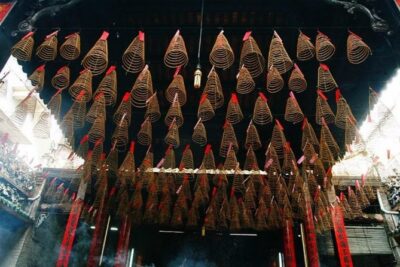
Next comes the Jade Emperor Pagoda, one of Saigon’s most atmospheric Taoist temples. The mood is usually a key part of the experience here: you’ll notice smoky incense and intricate details that reward slow looking.
The guide focuses on the meaning behind what people come for: prayers tied to prosperity, fertility, and good fortune. And the pagoda is especially important around Lunar New Year, when the temple becomes a major moment for worshippers.
If you’re the type who learns visually, this is where you’ll get a lot out of the tour. Carvings and symbols can look like decoration until someone explains what they’re pointing to. After that, you start seeing messages everywhere.
Pink Tan Dinh Church: French colonial Catholic architecture
The Tan Dinh Church (often called the Pink Church) is one of those places you can spot because of its color, but you’ll enjoy it more once you know why it matters. Built during French colonial rule, it sits at an intersection of architecture and Saigon’s Catholic heritage.
You’ll take photos and get guided time for context. Just don’t plan on a flawless inside visit every day. The tour notes that the Pink Church is not open for visit on weekends, so if you’re going Saturday or Sunday, expect to stand outside rather than tour the interior.
Also keep an eye on rules about what’s allowed. Photography may be restricted in certain areas, and you’ll want to respect signage and the guide’s instructions quickly.
You can also read our reviews of more city tours in Ho Chi Minh City



Mariamman Hindu Temple: Tamil devotion in color
Then you shift to Saigon’s Indian heritage at the Mariamman Hindu Temple, tied to the Tamil community and worship of the goddess Mariamman. This stop has the kind of visual energy that makes religion feel immediate, not academic.
You’ll spend time with a guide who can explain what you’re looking at—why colors, statues, and ritual cues matter. If you like a sensory learning style, this is where the tour feels most alive. The temple’s details aren’t random; they point to devotion and shared tradition.
One practical note: Hindu temples can involve specific behavioral expectations, and you’ll want to follow your guide’s lead on where to stand and how to photograph respectfully.
Cao Dai temple: Caodaism’s mission to unify faith
The final stop is the Cao Dai temple, and this is the one that tends to surprise people. Caodaism (often spelled Cao Dai) is described as a uniquely Vietnamese religion, and the temple experience is built around that idea.
You’ll see colorful architecture and learn about the symbolic side of worship. The tour emphasizes the belief that faiths can be united under one spiritual vision, so you’ll likely notice how the temple design and rituals reflect that concept.
This is also where good guiding matters most. Cao Dai rituals and symbolism can look theatrical if you don’t know what to look for. A strong guide helps you connect the visuals to the message, so you can actually understand what you’re watching.
If you’re curious about how a society blends different spiritual influences, this ending stop is the payoff.
Your guide matters more than you think
This tour uses a live local guide with language options including Japanese, English, and Vietnamese. That’s not a small detail. In religion-focused tours, explanations change how you interpret details, especially at sites where symbols and ritual steps are easy to misread.
In past departures, guides such as Daniel and Stephanie have been noted for clear, customer-focused teaching and for making explanations easier with map references and visual aids on a phone. Another Japanese-speaking guide, Tao-san, has also been described as friendly and helpful beyond only the tour talk.
Even if your guide isn’t one of those names, the pattern you want is the same: ask questions. If you don’t understand a symbol or ritual, that’s your moment to ask on-site, while the meaning is fresh.
What to wear, what to bring, and what not to do
For a smooth visit, bring comfortable shoes, a camera, and water. You should also plan for respectful attire since you’re entering religious sites.
The tour explicitly lists shoes as not allowed, which means you should be ready to remove them indoors or in specific areas. Wear shoes you can take off quickly without destroying your day. Think easy slip-on, not complicated laces.
Photography can also be restricted in certain areas. Don’t fight the rules. If you’re unsure, ask your guide before you lift your camera.
Value check: is $34 a good deal for this kind of learning?
At $34 per person for about 4 hours, this tour offers a solid value if your goal is learning with structure. You’re paying for:
- a local guide who explains meaning, not just locations
- all entrance fees included
- a small group format
That entrance-fee piece matters in Vietnam. Many people underestimate how quickly site costs and guided access add up when you plan it alone. Here, the tour stitches multiple paid entries into one simple package.
What’s not included is also clear: meals and transportation to and from the meeting point. So you’ll want to plan to eat before or after on your own, and start the day already in the area around Sheraton Sài Gòn or Ho Chi Minh City Theater.
Overall, this is a good use of half a day if you want real context and you’d rather not coordinate multiple separate tickets.
Who this tour suits best
This is a strong match if you:
- like cultural learning that actually happens on-site
- want to understand how different faiths show up in the same city
- enjoy guided explanations more than wandering alone with a phone map
- can handle a brisk pace across several sites
It’s also a good option if you’re short on time. Four hours is not enough to master anything, but it is enough to build a clear mental framework for how Saigon’s religious community life is organized.
When it may feel less ideal
If you want a slow, contemplative visit with lots of unhurried time at just one place, this might feel too fast. You’re seeing five sites, so you’ll trade depth of time for breadth of experience.
Also, be aware that building hours and access can change. The Pink Church is specifically noted as not open on weekends for visits, and other sites can occasionally limit entry. Your best defense is simple: go in flexible, and let your guide handle the adjustments.
Should you book the Ho Chi Minh City Five Faiths tour?
I’d book it if you want a well-paced, guided way to understand Saigon beyond stereotypes. For $34 with entrance fees included, you’re getting a structured walk through major faith spaces, plus explanations that connect symbols to daily life.
Skip it only if you already know the subject well and crave long, independent visits with no restrictions. Otherwise, this tour is an efficient way to see why Ho Chi Minh City feels spiritually layered rather than divided.
FAQ
What languages is the live guide available in?
The tour offers live guides in Japanese, English, and Vietnamese.
How long is the tour?
The experience lasts about 4 hours.
What is the price?
It costs $34 per person.
What does the tour include?
You get a local guide, all entrance fees, and a small group experience.
Where do I meet the tour?
The meeting point can vary, with two options listed: Khách sạn Sheraton Sài Gòn or Nhà hát Thành phố Hồ Chí Minh.
Is the Pink Tan Dinh Church always open to visit?
No. The tour notes that the Pink Church is not open for visit on weekends, so you may only view it from outside when the tour runs on those days.
What should I bring, and are there dress or shoe rules?
Bring comfortable shoes, a camera, and water. The tour recommends respectful attire, and shoes are not allowed, so expect to remove them in certain areas.