REVIEW · HO CHI MINH CITY
Remembering Long Tan- Nui Dat Battle : A Tour of Historic Sites
Book on Viator →Operated by Viet Kolors Tour · Bookable on Viator
Small hills, huge memories. This Ho Chi Minh City day trip strings Nui Dat and the Long Tan area together with real-world stops, taking you through specific points on the ground so the story feels tangible, not abstract. I love how the route is structured to follow the same kind of mapping the sites use, which makes it easier to understand what you’re seeing.
The day also balances the big outdoor monuments with something very physical: the Long Phuoc Tunnels, used to store ammunition. I like that you’re not stuck trying to read plaques all day; you get context, then you move to the next location. The main drawback is the long day with a lot of road time, so it helps to pack patience (and water already covered).
In This Review
- Key highlights to look for
- From Ho Chi Minh City to the Nui Dat area: your morning rhythm
- Nui Dat to Long Tan sites: how the route helps you make sense of everything
- The memorial moments at Luscombe bow and the 6 RAR flagpole
- Horseshoe Hill and the Diggers base: adding another piece of the puzzle
- Long Phuoc Tunnels: the wartime storage setting that changes the mood
- Lunch, bottled water, and admissions: the value math for $107.10
- The guide makes or breaks the day: why Dingo Chien is a big deal
- Who should book this Nui Dat and Long Tan day trip
- Should you book it? My practical take
- FAQ
- What time does the tour pickup start in Ho Chi Minh City?
- How long is the tour?
- Is lunch included?
- Are admission fees included?
- What are the main sites you visit?
- Is this tour private?
- Can I cancel for a full refund?
Key highlights to look for
- 161 Kiwi artillery, plus other exact Nui Dat points that help you connect the terrain to the battle story
- Luscombe airfield and Luscombe bow, including a remembrance of the concert connection tied to the Long Tan fighting
- 6 RAR flagpole and a second memorial site, built for honoring what happened in the area
- Horseshoe Hill base, where Diggers were stationed, giving you more than one side of the picture
- Long Phuoc Tunnels, used for ammunition storage, adding a rarely-seen wartime setting
- English-speaking guide with a human touch, and the reviews specifically praise guide Dingo Chien’s clarity and humor
From Ho Chi Minh City to the Nui Dat area: your morning rhythm
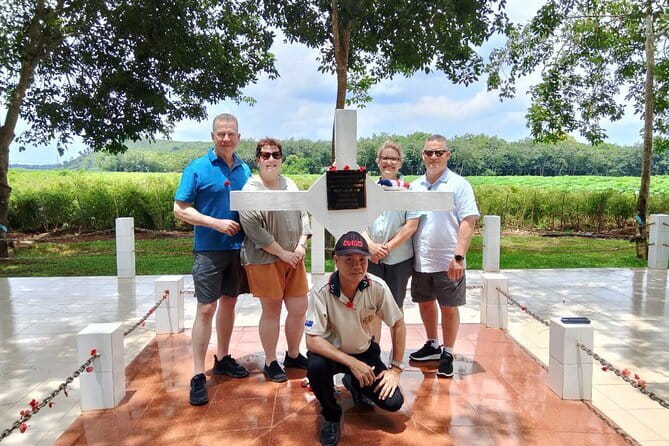
You start early. The pickup runs from your hotel in Ho Chi Minh City around 7:30 AM, and you head out toward Ba Ria–Vung Tau Province. There’s a scheduled break at the Ba Ria rest stop, which is not glamorous, but it’s genuinely useful when you’re committing to a full day away from the city.
You’ll be in an air-conditioned vehicle, and bottled water is part of the package. That matters here because the day is built around outdoor sites and long drives, not short museum hops. If you get the urge to nap, go for it early. Once you’re out at Nui Dat, you’ll want your brain switched on for place names.
This is also a private tour in the sense that it’s only your group. So you’re not playing the “find the slowest person” game, and your guide can usually keep the pace tight.
You can also read our reviews of more historical tours in Ho Chi Minh City



Nui Dat to Long Tan sites: how the route helps you make sense of everything
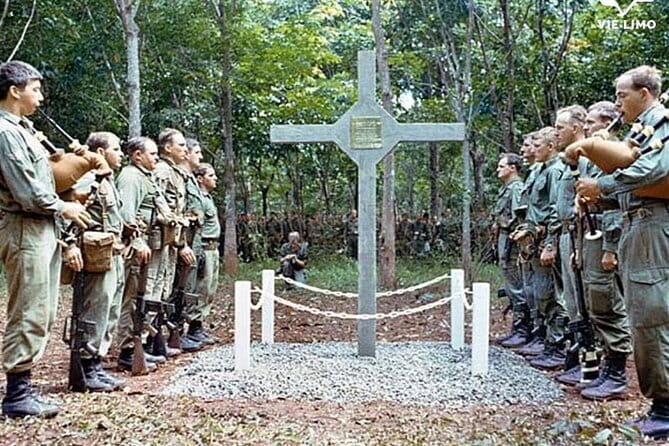
The core of the day happens when you drive into the Nui Dat army base area and follow the Nui Dat military maps approach. Instead of bouncing randomly, the tour is built around moving through named locations in sequence. That’s the big difference between “seeing” and “understanding.”
You’ll spend time at several specific points, including the 161 Kiwi artillery and the Kangaroo Pad. The stop here is not just photo time. It’s meant to help you connect a physical location to the wider battle story. When you’re standing there, the place names stop being abstract words from a history book and become anchors.
Next come additional features tied to the area’s military layout, including SAS hill and the Luscombe airfield. Even if you don’t know the battle details going in, you’ll get enough orientation from your guide to understand why each stop is included. The tour keeps returning you to the idea of position and movement: where forces were, where key points sit, and why certain areas matter.
One small but practical note: this part of the day is outdoors. Wear shoes you don’t mind walking around in, and plan for the fact that you may spend time standing while your guide explains. You don’t need to be a history buff to enjoy it, but you do need comfortable feet.
The memorial moments at Luscombe bow and the 6 RAR flagpole
Two parts of the Nui Dat/Long Tan segment feel especially human: Luscombe bow and the memorial focus around the 6 RAR flagpole.
At Luscombe bow, the tour includes a very specific remembrance connection tied to the Battle of Long Tan: a concert connected to little Dottie and Col Joy. That detail shifts the mood. It’s not just about strategy lines and coordinates. It reminds you that real people lived through the moment—sometimes even in ways that sound almost impossible in hindsight.
After that, you continue to the 6 RAR flagpole, described as the second memorial site. Memorial sites have their own pace: you’ll likely spend more time looking and less time sprinting for the next stop. The tour also includes flowers as part of what you receive. Even if you choose not to do anything beyond holding them, it’s a thoughtful touch that signals what the day is really about.
What I like about this middle stretch is that it doesn’t treat commemoration as an afterthought. It places remembrance right in the route, not at the very end when your energy might be low.
Horseshoe Hill and the Diggers base: adding another piece of the puzzle
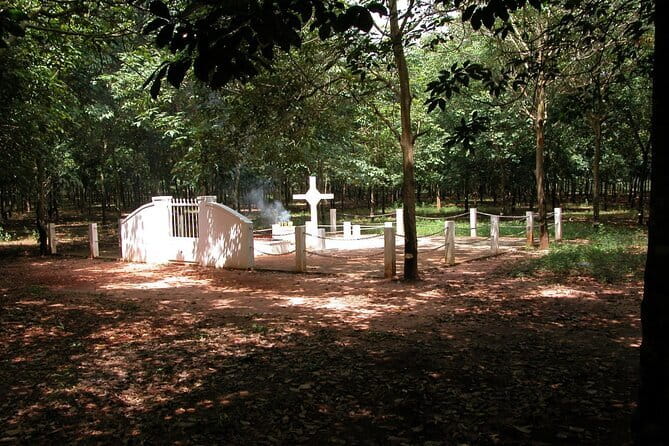
Once you’ve worked through the major Nui Dat points and memorial locations, the tour moves on to Horseshoe Hill, another base where the Diggers were stationed.
This stop is valuable because it keeps you from reducing the day to a single location or a single viewpoint. You’ll feel the broader structure of the area more clearly—how one position relates to another, and why different stops keep appearing as you track the story across the region.
In a long tour like this, one risk is that each stop turns into the same thing: walk, listen, photos, repeat. The Horseshoe Hill stop helps break that pattern because it’s framed as a base location with its own role. It also gives you a chance to compare what you saw earlier without needing any special technical knowledge.
If you’re the type who likes learning from the guide’s explanations, this is where the day can click. The guide connects the names to the reason they’re placed on the map you’re following.
Long Phuoc Tunnels: the wartime storage setting that changes the mood
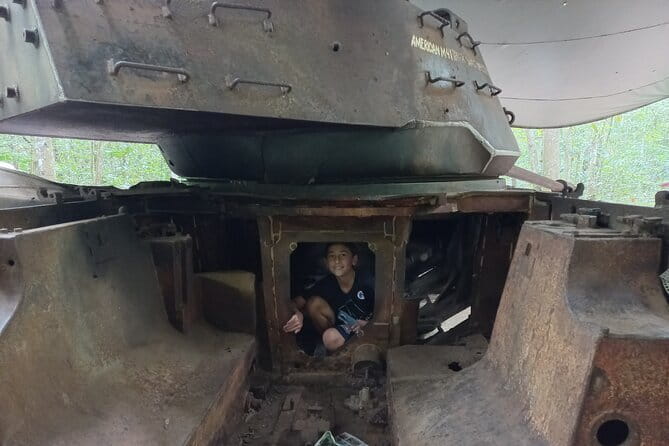
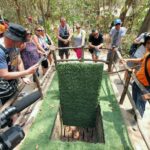
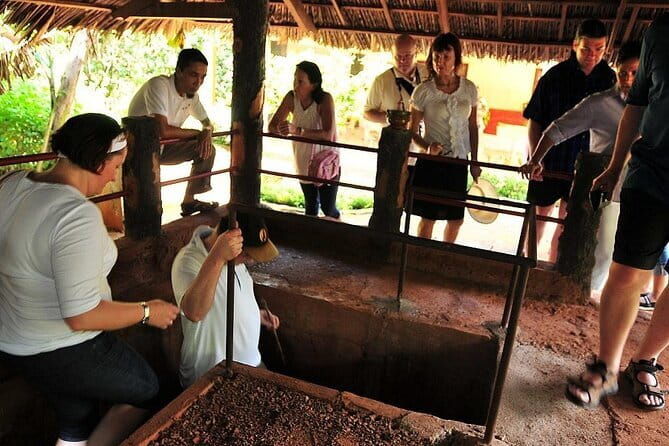
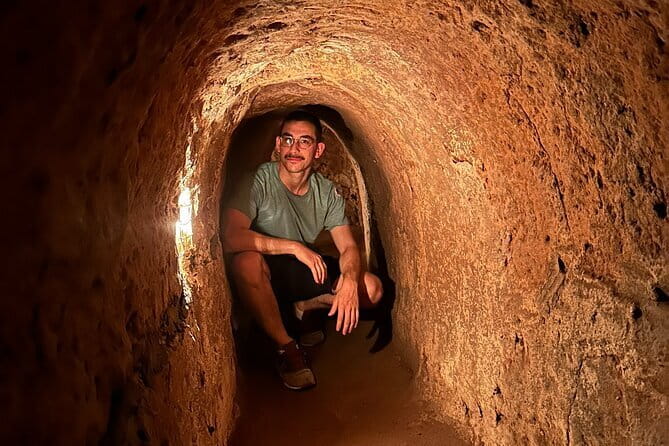
If the Nui Dat portion feels like positioning and memory, Long Phuoc Tunnels shift the tone. These tunnels were used as storage for ammunition, which is a concrete, practical purpose—not just a memorial landmark.
You’ll spend about 1 hour here. That’s enough time to take in what makes the tunnels different from open-air sites: the enclosed feel, the sense of utilitarian design, and the way storage space changes what life and work might have looked like. Even if you’ve seen tunnel-style attractions elsewhere, this one is presented specifically in the context of war logistics—so it reads differently.
A key value of adding Long Phuoc to the day is contrast. Monuments are powerful, but tunnels help you picture the infrastructure behind the headlines. It’s the kind of stop that can stick with you long after you’re back in the city.


Lunch, bottled water, and admissions: the value math for $107.10
At $107.10 per person for about 7 hours, this tour isn’t trying to be cheap, and it isn’t trying to be a luxury day either. It’s positioned as a guided, all-in package for people who want a structured visit to multiple sites without juggling transport, tickets, or directions.
Here’s what’s included that affects actual value:
- Air-conditioned vehicle for the full day’s driving
- Lunch (important because the schedule is fixed and you’re out of central Ho Chi Minh City for most of the day)
- English-speaking guide
- Bottled water
- All fees and taxes
- Convenient hotel pickup and drop-off
- Flowers
- Admission tickets included for the core stops (with the Ho Chi Minh City segments listed as free)
Then there’s what’s not included: tip (optional).
For me, the biggest value driver is the combination of transport + admissions + guide. If you tried to reproduce this on your own, you’d spend more time coordinating and less time learning the story at the actual locations. Paying for a guide is especially useful with site names like Luscombe bow or 161 Kiwi artillery, where context makes the difference between a photo and understanding.
One more practical plus: the tour uses a mobile ticket. That’s a small convenience, but it reduces friction on a long day.
The guide makes or breaks the day: why Dingo Chien is a big deal
The reviews you shared put real emphasis on the guide experience, and the strongest recurring name is Dingo Chien.
His style, as described, is a blend of clear explanations and real personality. The praise is specific: Dingo’s English is described as very good, he has detailed understanding of 6 RARs key personnel, weapons, and tactics, and he also brings humor and Australian slang into the mix. That matters because war sites can get heavy fast. A guide who can explain clearly without turning the day into a lecture helps you stay present.
Even if you don’t get Dingo, the guide is part of the core product. So when choosing this tour, treat the guide as central—not optional.
Who should book this Nui Dat and Long Tan day trip
This is a strong fit if you want:
- A guided, structured route across multiple battle-related locations
- A full-day experience with transport taken care of
- A stop that goes beyond monuments into Long Phuoc Tunnels
- Clear place-based storytelling tied to Nui Dat and Long Tan sites
It’s also good for first-timers to the region who don’t want to manage driving between far-flung stops on their own. The schedule is tight, but the inclusion of lunch and admissions keeps you from feeling stranded or constantly searching for the next payment desk.
If you’re someone who hates early starts or you struggle with long car time, you might feel the downside more. This tour builds its best moments around travel time you can’t really skip.
Should you book it? My practical take

If you care about getting the context while you’re standing at the locations—rather than just collecting pictures—this tour is a smart choice. The pairing of Nui Dat/Long Tan stops with Long Phuoc Tunnels gives you two types of understanding: open-air memorial geography and enclosed wartime storage reality.
I’d book it if you want a day that feels organized, respectful, and guided. I’d think twice if you’re sensitive to fatigue from a long schedule or you prefer shorter, more flexible outings. The trade-off here is simple: you’re paying for structure, and the structure means time in the vehicle.
FAQ
What time does the tour pickup start in Ho Chi Minh City?
Pickup starts around 7:30 AM from your hotel.
How long is the tour?
The tour runs about 7 hours.
Is lunch included?
Yes. Lunch is included in the tour price.
Are admission fees included?
Yes. The tour includes admission tickets and all fees and taxes.
What are the main sites you visit?
You visit the Nui Dat area sites (including 161 Kiwi artillery, Kangaroo Pad, SAS hill, Luscombe airfield, Luscombe bow, and the 6 RAR flagpole), Horseshoe Hill, and the Long Phuoc Tunnels.
Is this tour private?
Yes. It’s listed as a private tour/activity where only your group participates.
Can I cancel for a full refund?
Yes. You can cancel up to 24 hours before the experience start time for a full refund.
If you want, tell me your travel dates and whether you prefer heavier history or lighter pacing, and I’ll suggest how to plan the rest of your day around this trip.