REVIEW · HO CHI MINH CITY
Ho Chi Minh: Historical City Scooter Tour
Book on GetYourGuide →Operated by AN Tours Vietnam · Bookable on GetYourGuide
A scooter tour in Saigon is the fastest way to get your bearings. You hit classic landmarks and quieter street scenes in one smooth loop, and it’s set up as a private ride with local drivers who know how to work the traffic. The tour also covers about 8 districts in one day, so you don’t waste your first hours guessing where to go.
What I like most is how the stops mix big-name history with small, human-scale details. You’ll start at the famous cathedral built from French materials, then swing by the post office to meet a 90-year-old man who’s described as the last handwritten letter-writer in Vietnam. Later, the War Remnant Museum is where the tour slows down enough to make the past feel real, not just like museum labels.
One thing to consider: this is scooter riding, and it isn’t suitable if you have back problems, mobility issues, heart problems, or if you use a wheelchair. If traffic stress is your deal-breaker, you’ll want to think twice.
In This Review
- Key Highlights at a Glance
- Riding Saigon With a Private Scooter Team
- Notre Dame Cathedral and the Post Office: French Materials and Handwritten Letters
- War Remnant Museum and Thich Quang Duc: When the Tour Gets Serious
- The Old Apartment From the War Era and Saigon’s Everyday Spaces
- Flower Market and Coffee: From Da Lat Blooms to 75-Year Old Brewing
- Chinatown, the Thien Hau Temple, and Trading Streets
- What the 4 Hours Feel Like: Pace, Traffic Reality, and Safety
- Price and Value: Why $49 Can Work (If You Like This Style)
- Who Should Book This Scooter Tour in Saigon
- Should You Book This Historical City Scooter Tour?
- FAQ
- How long is the Ho Chi Minh historical city scooter tour?
- What time does the pickup happen?
- Is this a private tour?
- What’s included in the tour price?
- What languages are spoken by the guide?
- Do I need to buy entrance tickets?
- What should I bring?
- Is it suitable for people with mobility or health concerns?
- Is there free cancellation?
- Does the tour include pickup from my hotel?
Key Highlights at a Glance
- Private tour with fluent English drivers who guide you stop by stop
- Fast sweep of 8 districts in about 4 hours
- French-built cathedral, War Remnant Museum, and major memorials
- Markets and daily life stops, from a 24-hours-near flower market to Chinatown trading streets
- Helmet and raincoat provided, so you’re not scrambling at the last minute
Riding Saigon With a Private Scooter Team
Ho Chi Minh City (still called Saigon by many locals) is a place where your first impression comes in waves: noise, motion, scooters, and people going about their day. This tour helps you meet that rhythm early, because you’re not just parked in front of sights. You’re actually traveling through the city the way locals do.
The big value is the private setup. You’re not squeezed into a crowd, so the pace can match you. Guides you may see mentioned often include names like Halsey, Henry, Hannah, Son, Sunny, and Midori, and the common thread in their feedback is that they explain what you’re seeing with care, including how war shaped everyday life here.
You’ll get picked up from your hotel lobby (there are two start times: 8:00AM or 1:00PM). Then you’ll ride to a sequence of major landmarks and local stops that cover a lot of the city’s story in one run. Four hours doesn’t sound long, but because you’re bouncing between neighborhoods, it’s enough to feel like you covered more than one day.
You can also read our reviews of more city tours in Ho Chi Minh City



Notre Dame Cathedral and the Post Office: French Materials and Handwritten Letters

The tour kicks off with the city’s most famous cathedral—Notre Dame Cathedral—built 100% from materials from France. It’s the kind of building you can’t help but notice, even if you’re not the type to chase architecture. The reason it works early in the tour is simple: it gives you a clean “starting point” for Saigon’s mixed past, when influences flowed in through trade, colonial rule, and changing eras.
Next comes the Central Post Office, where you get a rare human moment: you’ll meet a 90-year-old man who’s described as the last hand-written letter-writer in Vietnam. That’s not a typical museum scene. It’s personal. It makes the city feel lived-in, not staged. Even if you don’t speak much Vietnamese, you’ll still feel the point: communication used to be slower, more deliberate, and more physical.
Practical note: these early stops are also a good time to take a breath and handle basics. Wear comfortable shoes because you’ll be on and off the scooter. Add sunscreen and sunglasses early, too. Sun hits hard in southern Vietnam, even when you’re moving fast.
War Remnant Museum and Thich Quang Duc: When the Tour Gets Serious
After the French-era landmarks, the tour shifts gears into Vietnam’s modern history—no detours, no soft edges. The War Remnant Museum is a key stop, and the tour frames it the way it should be framed: not as random images, but as stories behind the wars in Vietnam. You’ll hear context that helps you connect what you see to what Vietnam lived through.
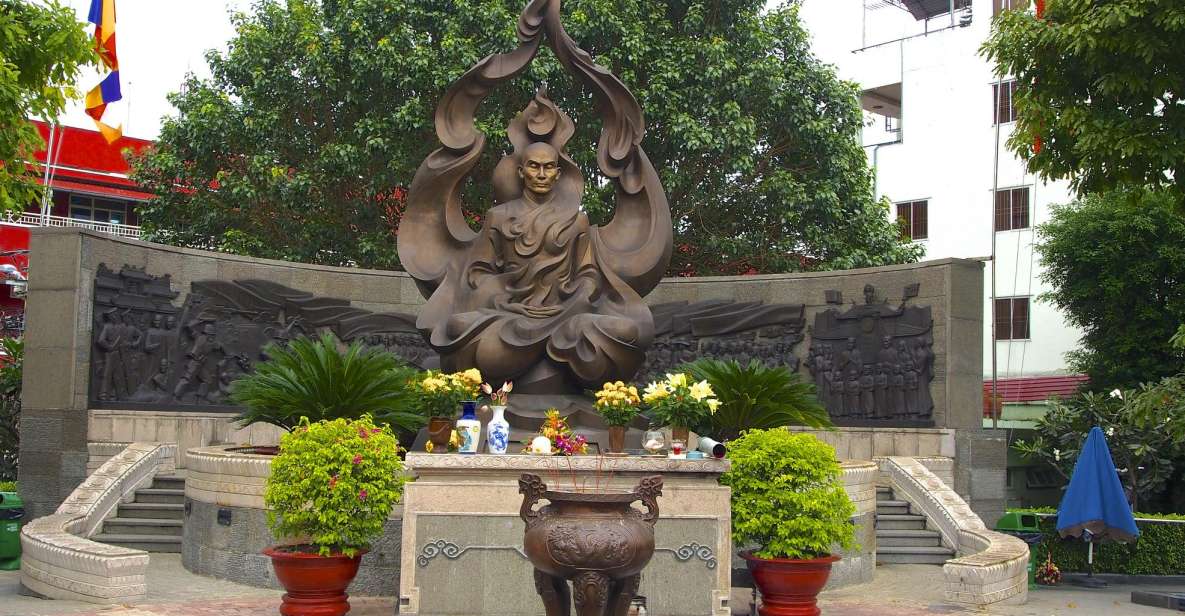
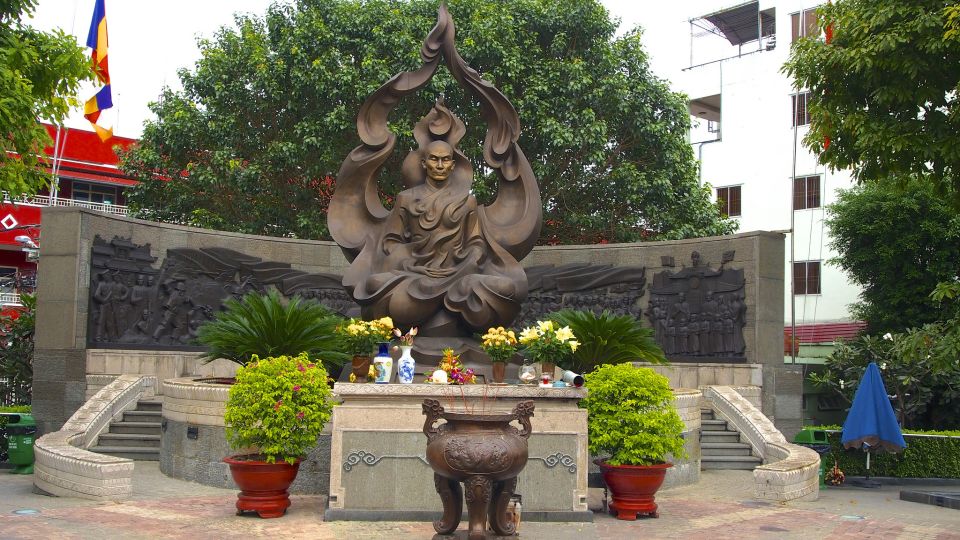
Then you visit the Thich Quang Duc Monument, a tribute to the monk who set himself on fire in 1963 as a protest. This is one of those places where the explanation matters. If you only glance at the monument, you’ll miss why it remains meaningful. A good driver/guide will help you understand what it represented at the time and why the city remembers it.
I appreciate tours like this that don’t treat memorials like photo backdrops. The goal here isn’t to scare you. It’s to make sure you leave with understanding, not just snapshots.
The Old Apartment From the War Era and Saigon’s Everyday Spaces
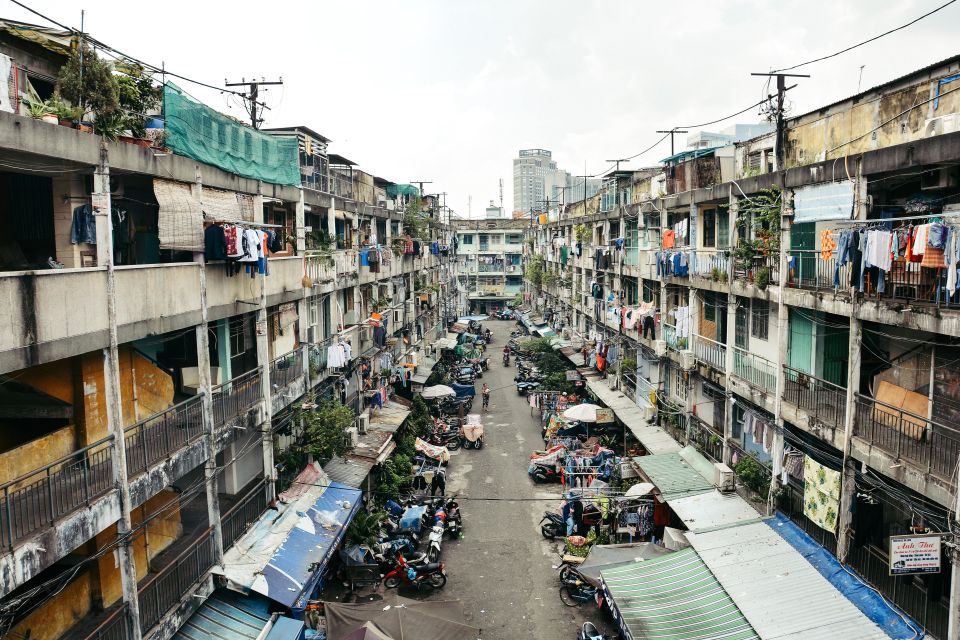
You don’t stay in “big history” mode for long. Next, you’ll see the oldest apartment in Ho Chi Minh City, built from the wartime period. This stop matters because it shows how history isn’t only in museums and monuments. It’s also in the buildings people still lived around, raised families in, and adapted to.
Here, you’ll get a sense of local lifestyle and hear stories tied to its history. That’s the value of mixing these stops: you’re not bouncing from landmark to landmark with no bridge. You’re learning how the city’s past shows up in housing, street life, and daily routines.
If you’re the type who wants one “anchor lesson” for the city, this apartment stop gives you one. It’s not about fame. It’s about function—what people needed, what they built, and what they endured.
Flower Market and Coffee: From Da Lat Blooms to 75-Year Old Brewing
One of my favorite parts of this kind of tour is when it lets you see what people do when the city is working, not posing. That’s exactly what happens next with the biggest flower market in Ho Chi Minh City.
The market is described as starting in 1980, and it’s known for being open almost 24 hours a day. You’ll learn how flowers are transferred from Da Lat each morning—Da Lat is nicknamed the Paris of Vietnam in this tour context—and you’ll have time to walk and see the scale of the displays. It’s an easy stop to photograph, but it’s also an easy stop to understand: this is an engine that supports ceremonies, homes, and street-facing life.
After flowers, the tour shifts to coffee at a 75-year-old coffee shop. You’ll be shown a coffee-making method that’s said to be used by only three coffee shops in Vietnam. Even if you don’t become a coffee snob by the end of it, you’ll leave with a more grounded idea of what “Vietnamese coffee culture” actually includes: technique, tradition, and a local approach to flavor.
You can also read our reviews of more historical tours in Ho Chi Minh City






Chinatown, the Thien Hau Temple, and Trading Streets
Toward the end of the tour, you’ll enter Chinatown, home to generations of Chinese-Vietnamese residents. The tour frames it with a scale that sticks: 1.5 million Chinese-Vietnamese living here over time.
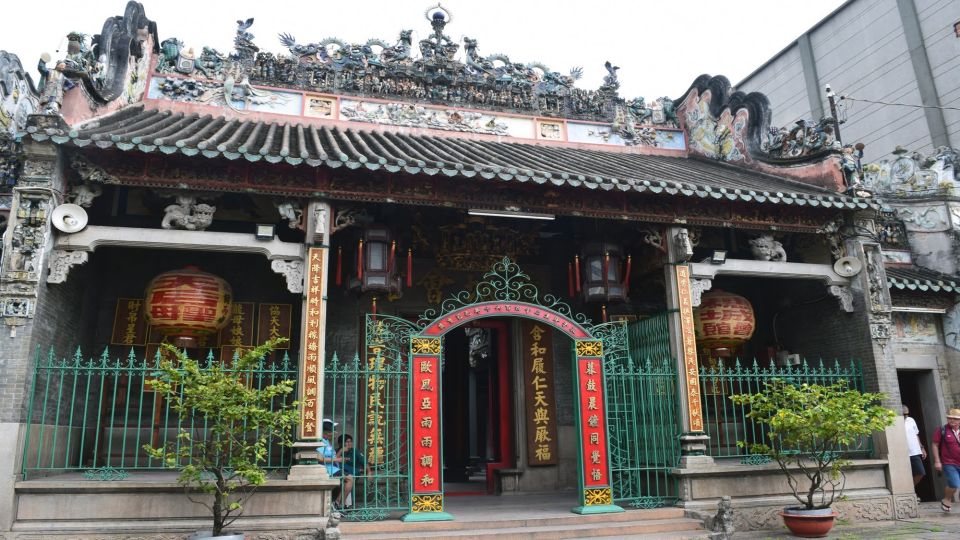
The headline stop is a stunning 300-year-old temple called Thien Hau, which you’ll encounter amid street markets. Depending on timing, you may see the trading culture around you—like a motorbike market and a bird market—and those details matter because they show Chinatown as a working neighborhood, not just an old building with a dramatic sign.
This section is especially good if you want variety from the earlier landmarks. You get cultural rhythm: religion, commerce, and everyday movement all in the same area. And since you’ve already learned to connect history to daily life earlier, Chinatown lands harder.
What the 4 Hours Feel Like: Pace, Traffic Reality, and Safety
Four hours in Ho Chi Minh City is a sprint, not a stroll. That can be a pro. You’ll cover major sites, then still have time to experience markets and neighborhood culture.
You also ride through heavy traffic, and that’s where your driver matters. Many of the strongest guide comments highlight smooth maneuvering and a sense of safety. The tour includes a good quality helmet and a raincoat, which is not glamorous, but it’s smart. Rain can pop up without warning, and the helmet removes one major worry before you even start.
For comfort, bring sunscreen, and wear comfortable shoes that can handle short walks and uneven ground near markets and memorial sites. Sunglasses help too, because you’re outdoors a lot and the glare is real.
Health note: this tour is not recommended for people with back problems, mobility impairments, heart problems, or wheelchair users. Scooter tours can be rough on the body, and the tour is built around that kind of movement.
Price and Value: Why $49 Can Work (If You Like This Style)
At $49 per person for about 4 hours, the cost is pretty reasonable for a private, guide-led scooter experience that includes entrance tickets plus gear (helmet and raincoat). The math gets better when you consider what you’re getting in one block:
- Multiple major attractions rather than just one neighborhood
- Entrance tickets included
- A fluent English-speaking private driver
- A route that mixes tourist icons with local markets and daily-life stops
If your travel style is “I want the highlights, fast, with context,” this price fits. If you’d rather slow down and linger for hours in fewer places, you might feel the sprint nature of it.
One more value angle: you’re choosing between the two start times (8:00AM or 1:00PM). That flexibility can help you build the rest of your day, whether you want a light evening or an early dinner after.
If plans change, the tour offers free cancellation up to 24 hours in advance for a full refund, plus a reserve-now-pay-later option. That reduces stress when your schedule is still forming.
Who Should Book This Scooter Tour in Saigon

This tour is a strong fit for you if:
- You want a one-day overview of Ho Chi Minh City’s key historic and cultural places
- You like learning from a live guide while moving between neighborhoods
- You want markets and daily life, not just monuments
- You’re comfortable riding a scooter and can handle short walks
It may not be for you if you:
- Have back or mobility limitations
- Have heart conditions
- Need wheelchair access
- Get extremely anxious in traffic (even with a careful driver)
Should You Book This Historical City Scooter Tour?
Book it if you want the city’s story in one efficient afternoon. The mix is the point: French-era architecture, war history with context, memorial meaning, then markets, coffee, and Chinatown life. It’s the kind of route that helps you pick where to return later—because you’ll already know what you missed and what you loved.
Skip it if you want a calm, slow day or you’re not comfortable with scooter riding. In that case, you’ll probably prefer a walk-and-taxi style plan.
If you can handle the ride, you’ll leave with a clearer sense of Saigon: not just what’s famous, but why the city looks and feels the way it does.
FAQ
How long is the Ho Chi Minh historical city scooter tour?
The tour duration is 4 hours.
What time does the pickup happen?
Pickup is either at 8:00AM or at 1:00PM.
Is this a private tour?
Yes, it’s described as a private tour just for you.
What’s included in the tour price?
It includes all attractions listed on the tour, a good quality helmet and raincoat, a private driver with fluent English, and entrance tickets.
What languages are spoken by the guide?
The tour includes a live guide in Vietnamese and English.
Do I need to buy entrance tickets?
No. Entrance tickets are included.
What should I bring?
Bring comfortable shoes, sunglasses, and sunscreen.
Is it suitable for people with mobility or health concerns?
No. It’s not suitable for people with back problems, mobility impairments, heart problems, or for wheelchair users.
Is there free cancellation?
Yes, you can cancel up to 24 hours in advance for a full refund.
Does the tour include pickup from my hotel?
Yes. Pickup is included, and you should wait at your hotel lobby.