REVIEW · HO CHI MINH CITY
Cooking Class with Ben Thanh Market visit
Book on GetYourGuide →Operated by Saigon Cooking Class · Bookable on GetYourGuide
Morning eats start at Ben Thanh market. This cooking class is built as market-to-plate: you shop for ingredients with your chef, then you cook a three-course Vietnamese meal back in the kitchen. I also like that the class is genuinely hands-on, with your own equipment and ingredients, so you learn the steps as you go, not just the theory.
One thing to consider: the schedule is tight, and the chef may keep moving through steps so the whole group can finish and eat. That said, people highlight careful instruction from team members like Oanh and Chef Ly, and the class can be paced for learners who need a little extra help.
In This Review
- Key highlights worth your attention
- From Ben Thanh Market to your cutting board
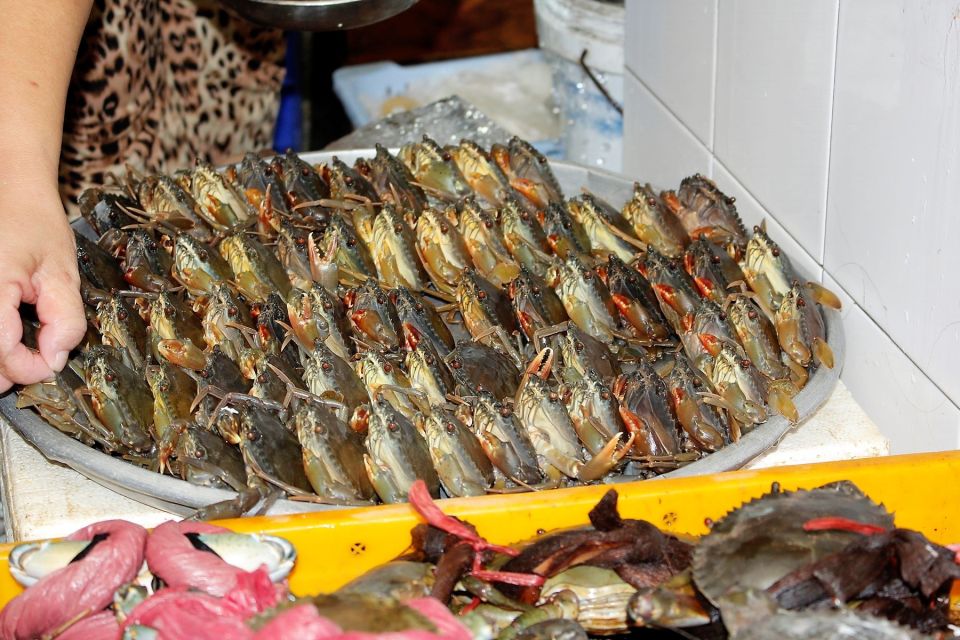
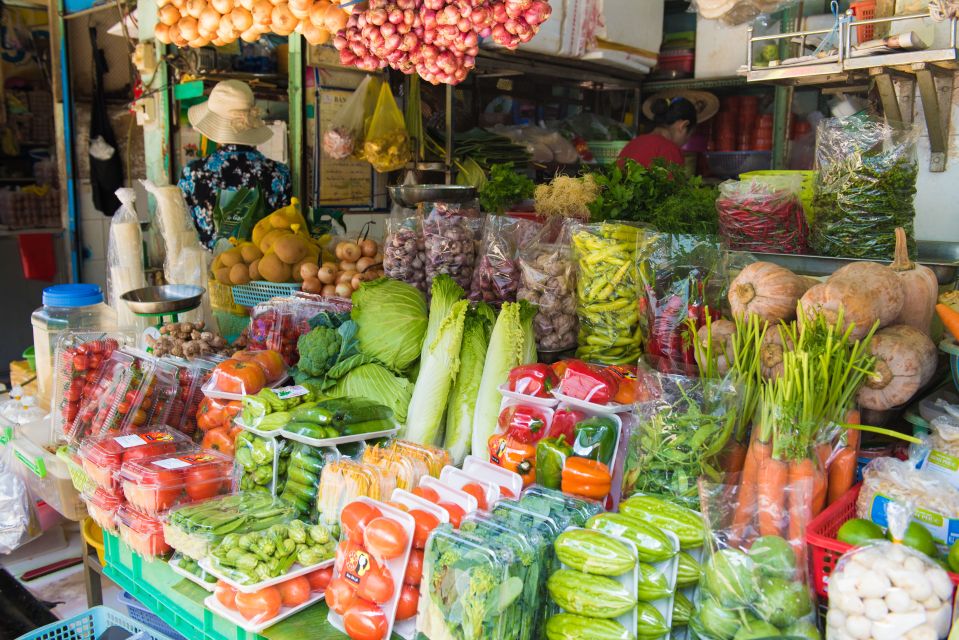
- The market visit: what you’re really learning between stalls
- The taxi transfer: simple logistics that save your morning
- Cooking class from 10:00 to 1:00: how the hands-on format works
- What you’ll make (and why it’s more than “three dishes”)
- The MSG-free rule: why it matters for flavor
- Your chef and instructor team: what to expect from the teaching
- Price and value: is $45 really fair?
- Timing tips so you don’t feel rushed
- Who should book this Ben Thanh cooking class
- Should you book this experience or skip it?
- FAQ
- FAQ
- What time does the Ben Thanh Market cooking class start?
- How long does the whole experience last?
- Is pickup or drop-off included?
- Where do we meet, and where does it end?
- Are there vegetarian or allergy options?
- Is MSG or flavor enhancer powder used?
- What’s included in the price?
- What languages will I hear during the class?
Key highlights worth your attention
- Ben Thanh Market ingredient run with your chef: You buy what you need and learn what you’re choosing and why.
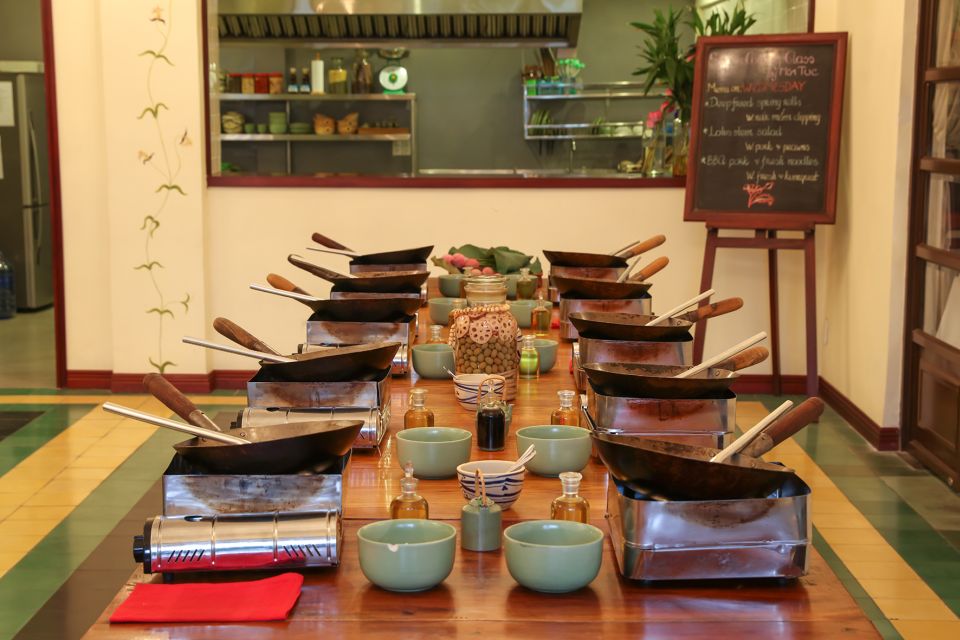
- Hands-on cooking at your own station: Each person works with their own tools and ingredients.
- A 3-course meal you actually make and eat: Not just samples at the end.
- MSG and flavor-enhancer powders forbidden: You cook with real Vietnamese flavor instead of additives.
- Dietary changes can be made: Vegetarian and allergy needs are accommodated if you tell them ahead of time.
- English plus Vietnamese instruction: Helpful if your Vietnamese is still at the hello stage.
From Ben Thanh Market to your cutting board
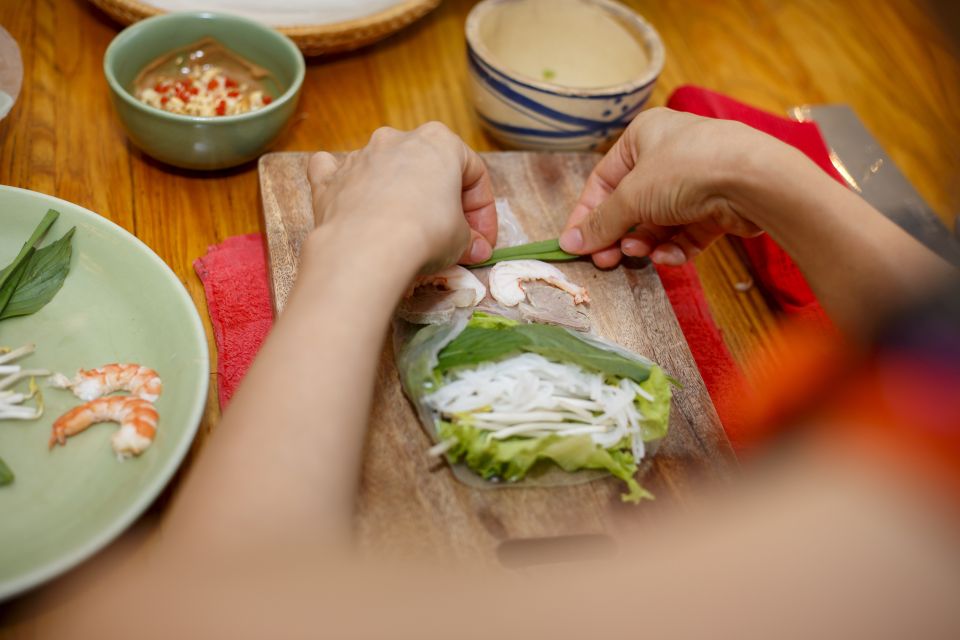
If you’ve ever wondered why cooking Vietnamese food feels intimidating at home, this format helps. The tour ties the cooking lesson to the ingredients you’ll recognize in real markets. Instead of arriving at a kitchen already “half cooked” by prep, you start by choosing produce and items that make the dishes taste like Vietnam.
The timing matters, too. You meet at 9:00 AM at the Cua Tay gate of Ben Thanh Market on Phan Chu Trinh Street. From there, you spend about 50 minutes walking with your chef to buy what your class needs. Then you’re back in the kitchen area for a cooking block that runs 10:00 AM to 1:00 PM.
Why this is good value: for $45, you’re paying not only for instruction, but for the ingredient-shopping experience that sets you up to cook later. You’re also getting a digital recipe book, plus iced tea and water during the class.
You can also read our reviews of more shopping tours in Ho Chi Minh City



The market visit: what you’re really learning between stalls
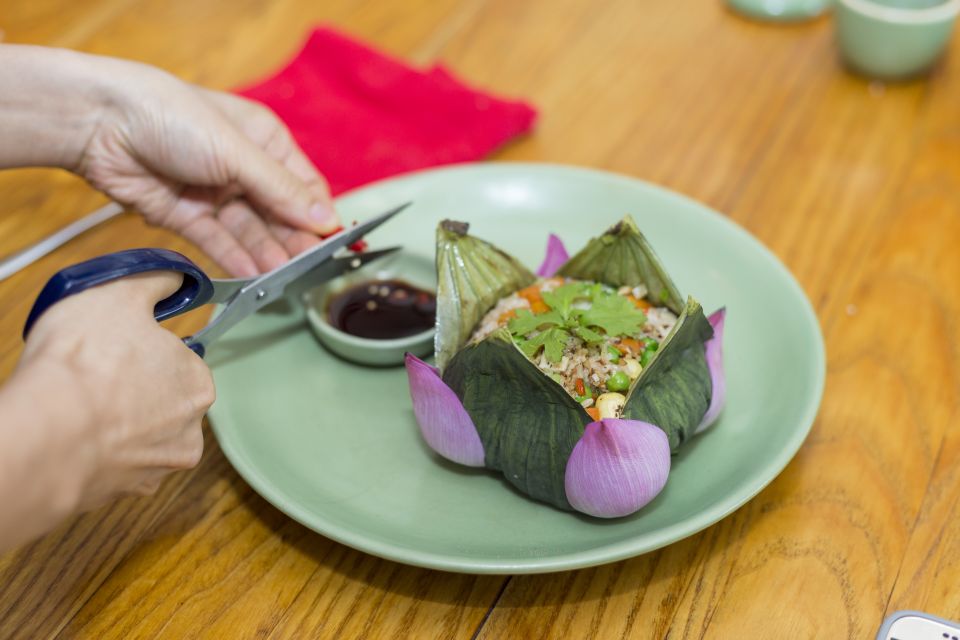
You’ll walk Ben Thanh with your chef from roughly 9:00 to 9:50, with a taxi transfer scheduled around 9:40 to get you to the kitchen in time. This part is short on purpose. The goal isn’t to “see everything in the market.” It’s to understand what matters for your meal.
Here’s what you should pay attention to during the shopping part:
- How ingredients are selected
Your chef guides you through what looks right and what’s used for specific dishes. You’re not just buying; you’re learning the logic.
- Kitchen context for what you’re cooking
One of the best outcomes of this tour is that it gives you a feel for everyday ingredients—vegetables, herbs, and other items that shape Vietnamese flavors.
- Asking questions while it’s still relevant
With the chef right next to you, you can ask about substitutions and how ingredients behave when cooked. That matters later when you shop at home.
A few people found the market segment especially useful for questions about everyday produce and Vietnamese cuisine context. Others noted that some ingredients may not come from the market itself in the way you expect—but that doesn’t make the market visit a waste. The real win is the guided ingredient education.
Also, expect the market portion to be more practical than sightseeing. You’ll be moving with purpose, likely stepping away from the widest tourist routes so you can focus on what will end up on plates.
The taxi transfer: simple logistics that save your morning
After you finish your market shopping, the group heads to the cooking location by taxi. This is included, and it’s a nice touch. In the real world, Vietnamese traffic and confusing walking routes can eat up time fast—so having the transfer handled helps you stay on schedule.
Since the cooking class starts at 10:00 AM, you’ll want to arrive at the meeting point a few minutes early and ready to move. If you’re the type who runs on “I need coffee first,” do that before you show up.
Cooking class from 10:00 to 1:00: how the hands-on format works
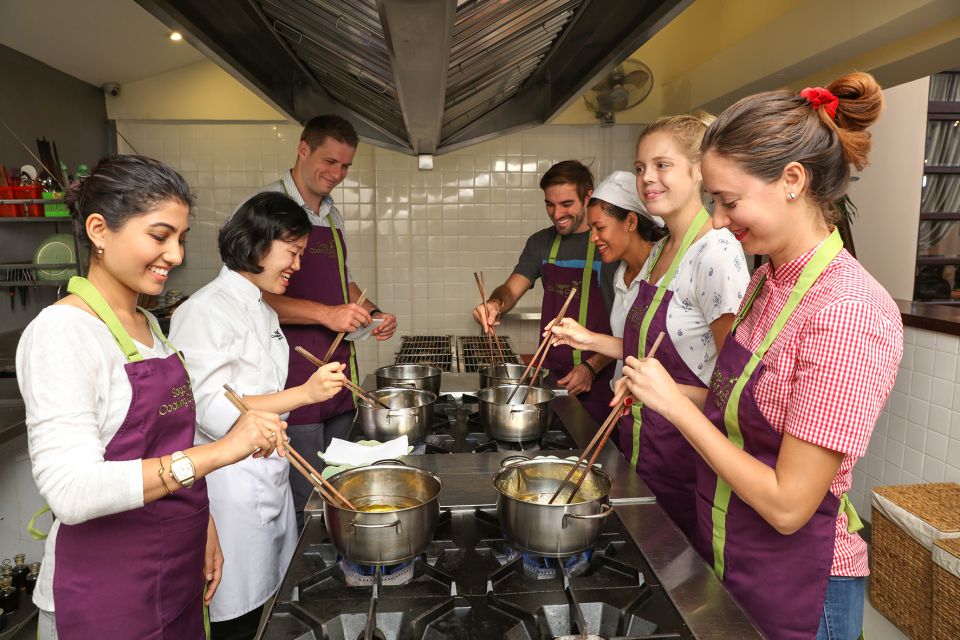
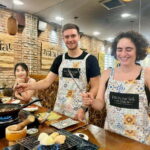
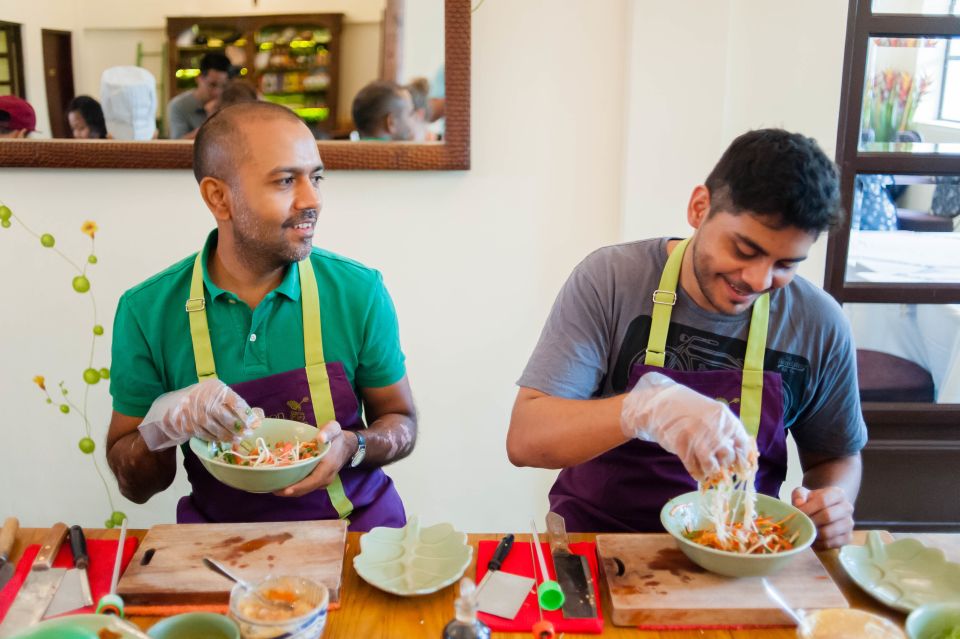
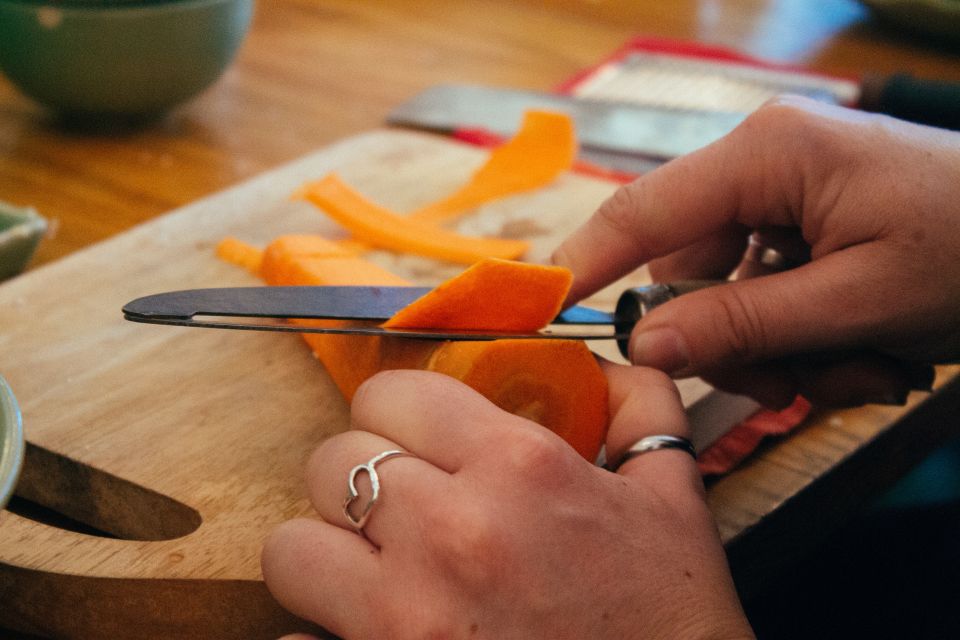
The cooking part runs from 10:00 AM until 1:00 PM and is designed so everyone cooks together. You’ll follow your chef step by step, and the class is set up with individual equipment and ingredients for each participant. That means you’re not waiting your turn to chop while someone else does the real work.
A few details make this feel different from casual cooking demos:
- You actually practice the steps
Since you have your own station, you learn timing, textures, and method—not just the final dish.
- The class structure supports different skill levels
People describe it as clear and doable, even if you’re not a confident home cook.
- The environment is set up for learning
The cooking space has been described as a classy interior, even an older colonial-style building in some feedback. Either way, the point is comfort and flow while you cook.
What you’ll make (and why it’s more than “three dishes”)
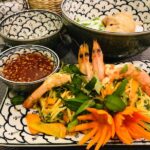
You’ll create a 3-course meal and eat it during the session. The menu can be adjusted for vegetarians and people with food allergies if you let the team know in advance.
Even without knowing the exact dishes ahead of time, you should think of this as a method lesson plus a flavor lesson. Vietnamese cooking often depends on balancing salty, sour, sweet, herb freshness, and heat—ingredients you can only understand fully when you cook them, taste them, and then see how the dish changes after the final seasoning.
One extra note: some people mention a surprise dessert. Since a specific dessert isn’t listed in the core description, treat that as a pleasant bonus rather than a promise.
You can also read our reviews of more tours and experiences in Ho Chi Minh City




The MSG-free rule: why it matters for flavor
The class explicitly says MSG and Knorr flavor-enhancer powders are forbidden. For you, that’s a big deal for two reasons.
First, it trains your palate. You learn what food tastes like when it isn’t relying on additive “shortcuts.” That makes the dishes easier to recreate later, because the flavors come from real ingredients and technique.
Second, it usually means your seasoning and broth choices matter more. If the instructor isn’t leaning on instant flavor products, they have to teach you how to build taste with aromatics, herbs, and balance.
You won’t walk away with a dependency on a particular packaged product. You’ll walk away with a better sense of what makes Vietnamese seasoning work.
Your chef and instructor team: what to expect from the teaching
Instruction is Vietnamese and English. People often praise the English level and the way steps are explained. Names mentioned in feedback include Wan, Thao, Oanh, and Chef Ly, with multiple notes about clarity and patience.
A realistic expectation: there can be moments where the chef is moving quickly to keep the whole class on track. That’s not unusual in a group cooking lesson. If you need slower pacing, ask questions as they come up, and focus on the current step rather than trying to catch up on everything at once.
If you’re worried about getting lost in the process, the good news is that the class includes step-by-step guidance and personal ingredients. You’re not just watching a show.
Price and value: is $45 really fair?
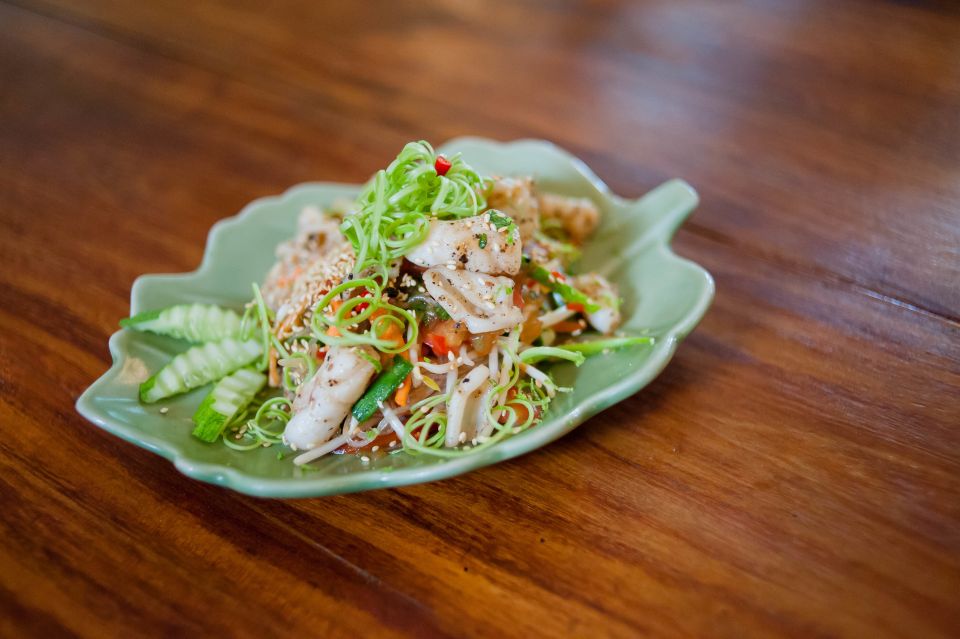
At $45 per person for a 4-hour experience, this is priced like more than a cooking class. You’re paying for:
- 1 hour of market time with a chef
- a full, hands-on 3-course cooking session
- drinks (iced tea and water)
- a digital recipe book
- a taxi transfer between market and kitchen (included)
Where the value shows up for you is in the “output.” You don’t leave with theory and a half-cooked demonstration. You leave with food you made, a recipe reference for later, and a better sense of what ingredients to buy and how to use them.
If you’re comparing this to a cooking class that only covers one dish, the per-course value is stronger here. Plus, the market shopping component makes it easier to shop with confidence when you go back to your rental.
Timing tips so you don’t feel rushed
This is a morning plan, and it runs on the clock.
- Arrive early to the 9:00 AM meeting point at Cua Tay gate.
Even a few minutes matter with a transfer built in.
- Don’t eat a big breakfast right before if you can help it.
The rhythm is designed so you shop, cook, and then eat what you make.
- Wear comfortable shoes for market walking.
You’ll be moving around enough that comfort counts.
- If you have allergies, tell them clearly in advance.
The menu can be adapted, but you’ll want your needs on record early so the chef can plan substitutions.
Who should book this Ben Thanh cooking class
I think it’s a great fit if you want:
- A practical Vietnamese cooking lesson, not just a meal out
- Market context so ingredients make sense later
- A group experience where you cook alongside others
- English-supported instruction with Vietnamese input
It may be less ideal if you hate structured schedules or you need extremely slow, one-step-at-a-time pacing. In that case, go in knowing the class is timed and plan to ask questions right when you get stuck.
Should you book this experience or skip it?
I’d book it if you want the market-to-plate approach. The chef-led ingredient shopping plus hands-on cooking plus an actual 3-course meal is a solid mix for learning and for eating well in a single half-day.
Skip it only if you strongly prefer self-guided market wandering and you’d rather choose your own ingredients without a chef’s structure. Also skip if you already know Vietnamese cooking inside out and you’re looking for very advanced techniques; this class is built to teach clean, repeatable steps.
If your main goal is to leave with skills you can use at home, this one has the right ingredients—literally.
FAQ
FAQ
What time does the Ben Thanh Market cooking class start?
You meet at 9:00 AM at the Cua Tay gate of Ben Thanh Market on Phan Chu Trinh Street. The market visit runs until about 9:50 AM, then you head to the kitchen for cooking.
How long does the whole experience last?
The activity lasts about 4 hours, with a market segment and a cooking class that runs from 10:00 AM to 1:00 PM.
Is pickup or drop-off included?
No. The tour includes the taxi transfer between the market and the cooking class, but it does not include pickup or drop-off from your hotel.
Where do we meet, and where does it end?
You start at the Cua Tay gate of Ben Thanh Market on Phan Chu Trinh Street. The activity ends back at the same meeting point after the cooking class.
Are there vegetarian or allergy options?
Yes. The menu can be adapted for vegetarians and for people with food allergies, as long as you let them know in advance.
Is MSG or flavor enhancer powder used?
No. The class states that MSG and Knorr powders/enhance flavors are forbidden.
What’s included in the price?
Included are the 1-hour market tour, the 3-course cooking class, iced tea and water, and a digital recipe book.
What languages will I hear during the class?
The instructor teaches in Vietnamese and English. The class description also notes English support.