REVIEW · HO CHI MINH CITY
Chef Vu Cooking Class Plus Market Trip in Saigon Center (Pick up by Cyclo)
Book on Viator →Operated by Chef Vu Cooking Class · Bookable on Viator
Saigon teaches your chop skills fast. This half-day food experience pairs a Ben Thanh Market ingredient shop with a hands-on cooking class run by the team at Cyclo Resto. You’ll learn how Vietnamese flavors get built, not just how to plate them.
Two things I really like: you cook in a small group (they cap it at 12), so you’re not stuck watching from the side, and you leave with recipes plus a certificate. One thing to consider first is the cyclo ride through busy traffic—fun for photos, but not ideal if you’re prone to motion discomfort.
In This Review
- Key Highlights You’ll Care About
- Cyclo Pickup to Ben Thanh: Getting Your Saigon Rhythm Early
- Ben Thanh Market Shopping: Ingredients, Dong, and Freshness Checks
- The Cooking Classroom (9:15–12:00): Knife Work and Flavor Building
- What You’ll Cook: A Menu That Teaches Vietnamese Variety
- Started Dishes: Crunch, Sour, Sweet
- Main Dishes: Clay Pots, Lemongrass, and Noodle Comfort
- Soup Dishes: Learn When to Season and When to Wait
- Must-Have and Bonus Dishes: Pancake and Morning Glory
- The Lunch Table + Egg Coffee Dessert: Why This Ends at the Right Time
- Price and Value in Saigon: $46 for a Real Cooking Day
- Who Should Book This Cooking Class (and Who Might Skip)
- Should You Book Chef Vu in Saigon?
- FAQ
- How long is the cooking class plus market trip?
- What does the tour cost?
- Is hotel pickup included?
- Do I visit Ben Thanh Market?
- What language support do you get?
- What food is included?
- Are alcoholic drinks included?
- How small is the group?
- What are some example dishes on the menu?
- What about kids?
Key Highlights You’ll Care About

- Cyclo pickup + a short ride that sets the tone for your morning before you even touch a cutting board
- Ben Thanh Market shopping with real bargaining and dong basics, so ingredients feel less random and more intentional
- Knife skills, marinating, and decoration techniques taught step-by-step, not as a cooking show
- A full menu you can actually repeat at home, from spring rolls and salads to clay-pot mains and soup
- Egg coffee for dessert after you eat what you made, which is the payoff this experience is built around
Cyclo Pickup to Ben Thanh: Getting Your Saigon Rhythm Early
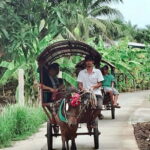
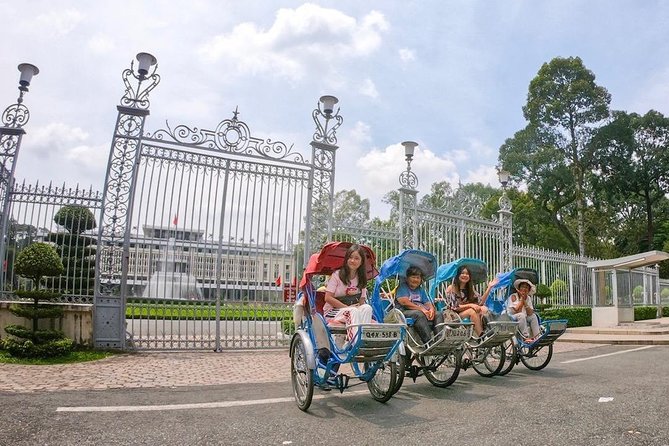
Your morning starts around 8:00 AM with hotel pickup by cyclo, followed by a 30-minute ride into the center of Saigon. It’s not just a transfer. It helps you get your bearings fast, so when you’re later walking through the market, you already feel oriented to the neighborhood.
This timing also matters for the day’s flow. You’ll reach the meeting point around 8:30 AM, have a short training/prep session, and then get moving toward the market by about 8:45 AM. By the time the cooking starts at 9:15 AM, you’re warmed up and mentally ready to focus.
If you’re traveling with kids or friends, this pacing is friendly: the ride breaks up the morning, and the rest of the day is structured in clear chunks. Still, do note that you’ll be in real city traffic. A cyclo is lightweight and slow, but you’re still sharing the road ecosystem with trucks and motorbikes—so it’s worth skipping if motion or crowded-feeling rides stress you out.
You can also read our reviews of more shopping tours in Ho Chi Minh City



Ben Thanh Market Shopping: Ingredients, Dong, and Freshness Checks
Ben Thanh Market is where you learn that Vietnamese cooking starts long before the wok. When you arrive (about 8:45 AM), you’ll go with an English-speaking tour guide and practice practical things like paying in dong, bargaining with vendors, and choosing ingredients that are actually fresh.
This part is valuable because most cooking classes skip the shopping mechanics. Here, you learn how to spot quality: things like the look and texture of herbs, the readiness of fruit for salads, and the freshness cues for seafood and vegetables used later in your dishes. Even if you don’t become a market pro overnight, you’ll come away with a mental checklist you can use in any market.
It’s also the cultural layer. You’re not just buying ingredients—you’re watching how people talk prices, how produce is displayed, and how quick decisions get made during a busy market morning. That context makes the class feel more grounded when you’re back at the kitchen station chopping and marinating.
One practical note: the market experience may not feel like a highlight for everyone. If you prefer quieter shopping or skip bargaining culture, this stop might feel short and straightforward. But if you want to cook Vietnamese food with ingredients you can recognize and replicate, this is the most useful part of the whole day.
The Cooking Classroom (9:15–12:00): Knife Work and Flavor Building
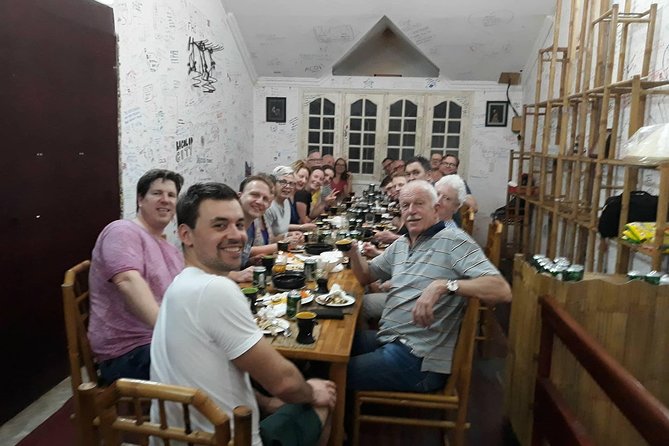
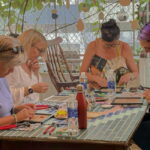
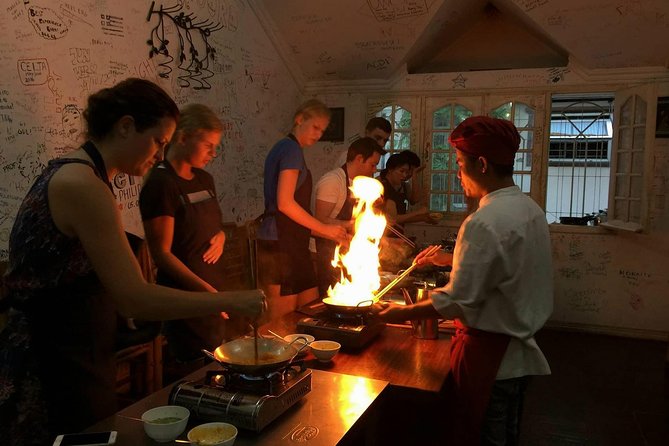
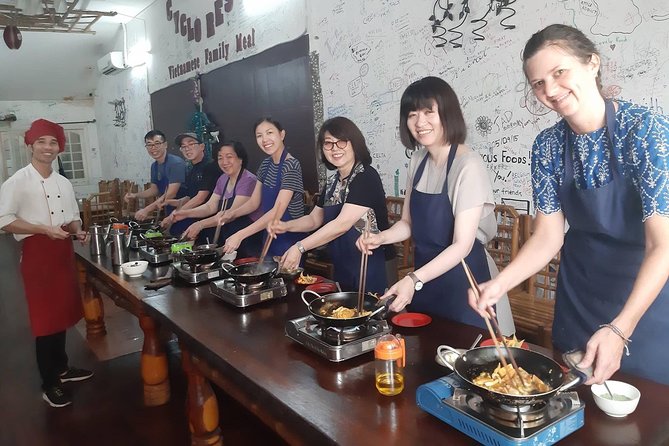
Around 9:15 AM, the class shifts from shopping to hands-on practice. This is where you learn “how,” not just “what.” The teaching is built around useful kitchen skills: knife skills, decoration techniques, and marinating to get the right Vietnamese taste.
And yes, you’ll cook. The group setup is designed for participation—people have their own chopping areas and burners so you’re not waiting around for the chef to finish something first. Small-group class size (again, capped at 12) helps a lot because the instructor can correct your pace, your cuts, and your timing.
What stands out is the technique focus. When you learn knife skills for herbs and vegetables, you’re also learning how Vietnamese salads and rolls get their clean bite. When you learn marinating, you start to understand why certain meats taste balanced instead of flat. When you learn decoration skills, the food stops looking like a bowl of random ingredients and starts looking like it belongs on a Vietnamese table.
Depending on the session, the teaching team may include different instructors on the Cyclo Resto side. The brand is Chef Vu Cooking Class, but your main chef/host for the day can be someone else from the team. Either way, the class aims to keep instructions clear and interactive, and you’ll still get the recipes and guidance to reproduce the dishes later.
What You’ll Cook: A Menu That Teaches Vietnamese Variety
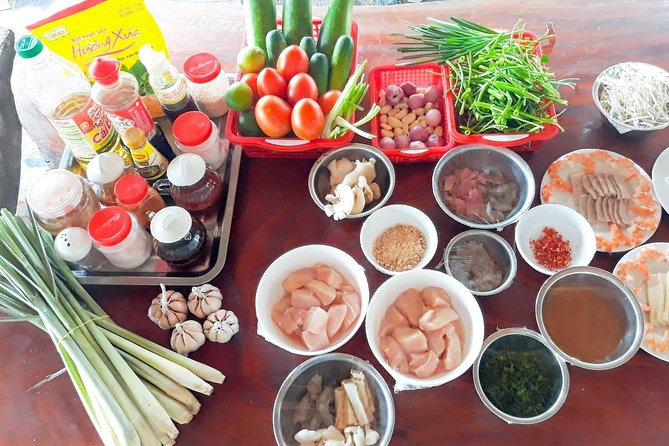
The menu is the real curriculum here. You’ll typically work through multiple course styles—fresh starters, mains in classic Vietnamese styles, soups, and one “must-have” item—so you learn the logic behind the meal, not a single dish.
Started Dishes: Crunch, Sour, Sweet
You may make items like:
- mango salad
- papaya salad
- fresh spring rolls
- fried spring rolls (including a traditional version and a pumpkin blossoms version)
These starters are smart picks for beginners because they force you to practice balance. Vietnamese salads rely on sweet-sour-salty balance, and spring rolls teach wrapping discipline and texture control. The fried spring roll variations also let you see how presentation changes the same core filling and wrapper approach.
You can also read our reviews of more tours and experiences in Ho Chi Minh City



Main Dishes: Clay Pots, Lemongrass, and Noodle Comfort
You may cook from options like:
- stewed fish in clay pot
- sautéed chicken with lemongrass
- stewed pork belly in clay pot
- simmer pork ribs
- grilled pork with steamed rice noodle
- chicken noodle soup
Clay-pot cooking teaches a slow, gentle method that keeps meat tender and sauces cohesive. Lemongrass cooking is about aroma and restraint—enough fragrance to carry the dish without overpowering it. And the noodle options are useful because Vietnam loves comfort foods that are easier to repeat than you’d expect.
Soup Dishes: Learn When to Season and When to Wait
Possible soup options include:
- bok choy soup with minced meat
- green melon soup with chopped shrimp
- pumpkin soup with minced meat
- sour soup with seafood
Soup is where technique becomes timing. You learn how to build flavor without turning the pot into a heavy stew. These choices also broaden your ingredient comfort: shrimp, pork, greens, melon, and seafood each teach a slightly different approach to taste and consistency.
Must-Have and Bonus Dishes: Pancake and Morning Glory
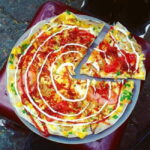
- must-have dish: pancake
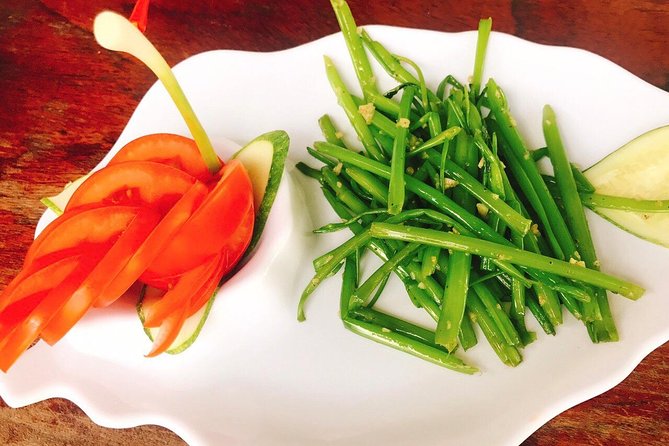
- free bonus: stirred fry morning glory with garlic
The pancake matters because it’s often a “simple but not easy” item that rewards attention to heat control and batter handling. The morning glory bonus is also a nice training dish: fast sauté, garlic aroma, and vegetable texture. It’s a great “weeknight repeat” choice if you take the class seriously about cooking at home.
The Lunch Table + Egg Coffee Dessert: Why This Ends at the Right Time
At 11:30 AM, you eat what you cooked. That is not a throwaway detail. It’s the moment everything clicks: you taste the balance you practiced with your own hands.
Dessert is egg coffee, which is part of the experience package. You’ll also see mineral water included, and the included list mentions the best ice-cream in Saigon as well. Those extras are small, but they round out the day so you’re not leaving on an empty stomach.
Finishing around 12:00 PM keeps this as a true half-day. You still have time to plan the rest of your afternoon in District 1 or along the Saigon riverside without feeling like you surrendered the whole day to one activity.
Price and Value in Saigon: $46 for a Real Cooking Day
At $46 per person, this sits in the “serious value” zone if you compare it to what you actually receive.
You’re getting:
- hotel pickup (within District 1 and 3)
- a cyclo ride (30 minutes)
- market shopping with an English-speaking guide
- cooking ingredients
- chef direction plus recipes
- lunch based on what you cook
- egg coffee dessert
- mineral water, plus ice-cream mentioned in the included list
- a certificate
Most classes at this price are either a cooking session only, or a market tour only, or a demo with minimal hands-on work. Here, you get the full sequence: shop → train → cook → eat. That makes the cost easier to justify because you’re paying for time, instruction, and the ingredients that would otherwise cost you extra.
If you’re aiming to bring back a few dishes you can repeat (especially spring rolls, salads, and one or two mains), this value works better the more seriously you listen and cook, not just watch.
Who Should Book This Cooking Class (and Who Might Skip)
This is a strong fit if you want Vietnamese food you can recreate with confidence. It’s also a great “first-day in Saigon” activity because the cyclo ride + Ben Thanh Market give you quick context, and the class gives you a cooking skill set you can use afterward.
It’s especially good for:
- couples and small groups who want shared activities
- families who prefer structured fun with clear timing
- people who like learning technique, not just tasting
It may be less ideal if:
- you dislike cyclo rides in traffic
- you expect a market that feels like a long adventure rather than a focused ingredient hunt
- you’re mainly hunting for a single signature dish instead of a full menu lesson
Should You Book Chef Vu in Saigon?

If you’re the type of traveler who buys ingredients at markets and then wonders how to turn them into real meals, book this. The combination of Ben Thanh Market shopping and hands-on instruction gives you both the sourcing knowledge and the cooking skills.
I’d say go for it unless cyclo comfort is a dealbreaker for you. Otherwise, this is one of those activities that feels like a day you’ll remember and dishes you’ll cook again—because the point isn’t just eating in Saigon, it’s learning how to cook Saigon.
FAQ
How long is the cooking class plus market trip?
It runs about 4 hours.
What does the tour cost?
The price is $46.00 per person.
Is hotel pickup included?
Yes. Pickup is provided by cyclo for hotels located within District 1 and 3.
Do I visit Ben Thanh Market?
Yes. The experience includes a stop at Ben Thanh Market where you shop for cooking ingredients.
What language support do you get?
You’ll have an English-speaking tour guide.
What food is included?
You cook and eat dishes for lunch, plus dessert (egg coffee). Mineral water is included, and ice-cream is also listed as included.
Are alcoholic drinks included?
No. Alcoholic drinks are not included, but you can purchase them.
How small is the group?
The tour lists a maximum of 12 travelers.
What are some example dishes on the menu?
Depending on the menu you choose, dishes can include starters like mango salad, papaya salad, and spring rolls; mains like stewed fish in clay pot, lemongrass chicken, and stewed pork belly in clay pot; soups like bok choy soup and sour seafood soup; plus a pancake and bonus morning glory with garlic.
What about kids?
A child rate applies only when sharing with 2 paying adults, and children must be accompanied by an adult.