REVIEW · HO CHI MINH CITY
Immersive Cooking Class & Wet Market Tour by Local Chef +Cookbook
Book on Viator →Operated by The Provincial Table Cooking Class · Bookable on Viator
Market-to-kitchen turns Saigon real fast. This 4-hour experience starts at Ben Thanh Market, where you pick ingredients, then moves into a chef-led kitchen lesson at your own cooking station, finishing with tasting your food and taking home a cookbook.
I like two things most. First, you’re not just watching; you’re cooking at your station while a local chef guides you step-by-step. Second, the takeaway is substantial: a Vietnamese cookbook with 25+ recipes. One consideration: pacing and room comfort can vary, and some classes can feel hot depending on how the kitchen airflow is working.
In This Review
- Key things to know before you go
- Ben Thanh Market Wet Tour: picking ingredients you’ll actually use
- The kitchen setup in District 1: cooking with your own station
- What you’ll cook: Vietnamese classics with real technique
- The cookbook: why it’s more than a souvenir
- Price and value: is $49 really fair?
- Logistics in District 1: meeting point vs end point
- Who this is best for (and who should reconsider)
- Should you book this Ben Thanh cooking class?
- FAQ
- How long does the Ben Thanh market and cooking class take?
- Where do I meet the tour?
- Where does the tour end?
- What is the price per person?
- How many people are in the group?
- What dishes will I learn to make?
- Do I receive a cookbook?
- Is cancellation free if I change my plans?
- Are service animals allowed?
Key things to know before you go
- Ben Thanh Market wet market tour: ingredient shopping that connects directly to what you’ll cook
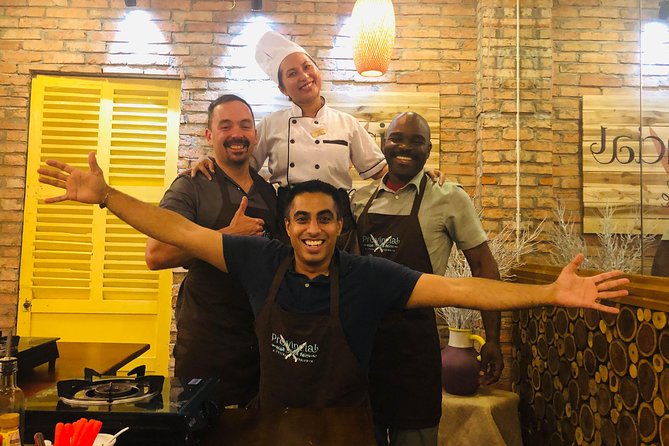
- Your own cooking station: you actively make the dishes, not just assist
- Chef-led, hands-on teaching: step-by-step technique with plenty of interaction
- Classic Vietnamese menu: goi cuon spring rolls plus other well-known Saigon dishes (often 3 dishes) plus dessert
- Take-home cookbook: 25+ recipes that help you recreate the food later
- Small group cap (20 people): more personal than big bus-style tours
Ben Thanh Market Wet Tour: picking ingredients you’ll actually use
This tour begins in District 1 at Ben Thanh Market, a place you can feel in your nose and ears before you even reach the stalls. The wet market portion is designed to show you how daily food shopping works in Vietnam—how meats, vegetables, herbs, and aromatics get chosen and handled.
What’s useful here is the connection. You’re not just sightseeing. You’re selecting ingredients that line up with your cooking class menu later. That matters because Vietnamese dishes hinge on fresh herbs, the right cuts, and flavor-building aromatics. Seeing and handling them at the market makes the recipes make more sense once you’re standing over a burner.
You’ll also notice how the market experience changes depending on timing. One practical example from the experience: if your class runs later in the day, you might not see the butchers, since they tend to be open in the morning. So if the wet market sights are a big part of why you’re booking, try to pick an earlier departure when you can.
A quick reality check: wet markets mean tight walkways and close spacing. If you don’t love crowded aisles, bring patience and wear shoes you can walk in for 45 minutes without hating your life. The benefit is you’ll come away with a clearer sense of what Vietnamese cooks treat as everyday ingredients.
You can also read our reviews of more shopping tours in Ho Chi Minh City



The kitchen setup in District 1: cooking with your own station
After the market, the group shifts to the cooking location at 131/3 Nguyễn Thị Minh Khai. One heads-up that saves stress: this is not the same address as the meeting point. If you’re mapping things, plan for the end location to be in the Phạm Ngũ Lão area (still in District 1).
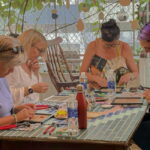
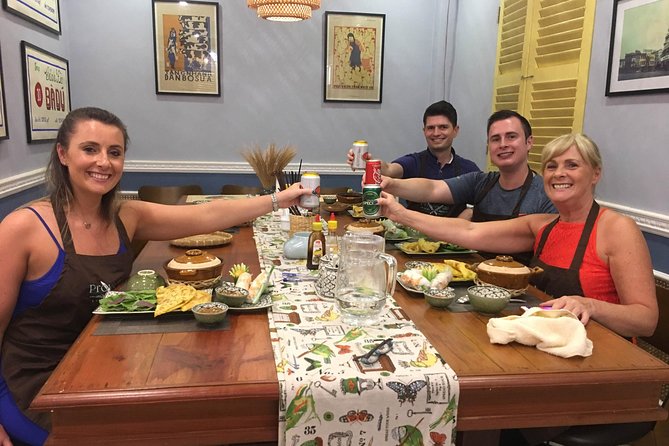
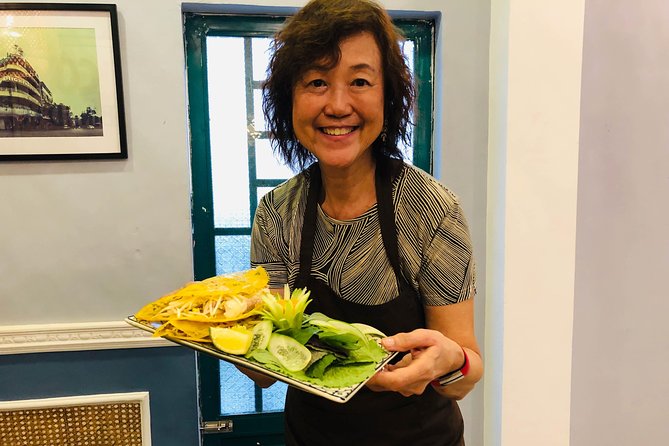
Inside, the format is built around hands-on work. You’ll have your own cooking station, with the ingredients and tools laid out so you can follow along without constantly searching for supplies. Many people love this because it turns the class into practice time, not just a demonstration.
The chef element is also a big deal for enjoyment. Multiple instructors are referenced across different sessions, including An/Anh and Chef Dung, and they’re described as patient, funny, and good at explaining steps in clear English. That makes a difference if you’re a beginner. You’re more likely to finish the dishes without guessing what you’re supposed to do next.
Now for the drawback: comfort. A few experiences mention the kitchen running very hot, sometimes because of air conditioning not working well. There are also accounts of lots of burners and a crowded heat load. If you’re sensitive to heat, bring a water bottle if you can, and don’t be shy about asking for ice—some tables had water, but you may need ice to cool down.
What you’ll cook: Vietnamese classics with real technique
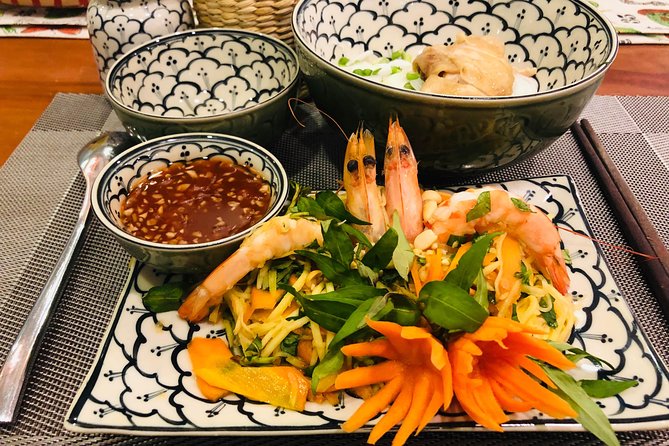
The program is built around classic Vietnamese cooking. The tour materials highlight four iconic dishes (including goi cuon, spring rolls), but in practice many sessions report making three dishes plus dessert. Either way, you’ll be working through a mix of fresh rolls or salads, a main component, and a soup or meat dish flavor profile that shows you how Vietnamese meals are structured.
Here are examples that show up often in the described sessions:
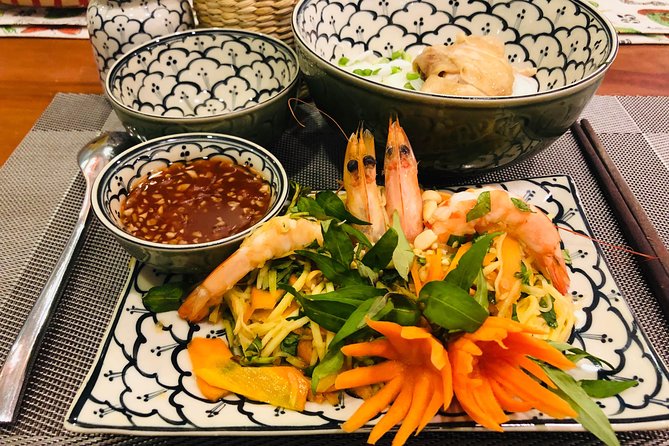
- Fresh spring rolls (often goi cuon-style): you learn how to handle wrappers and fill them without overstuffing. If you’ve only had spring rolls from restaurants, this is where you finally see why the balance of herbs and dipping sauce matters.
- Pho ga (chicken pho): you get exposure to how fragrant broths are built and how toppings and seasoning come together.
- Beef dishes: examples mentioned include beef wrapped in betel leaves and a dish nicknamed Beef Dancing in Fire. Even if the exact phrasing differs by class, the takeaway is technique for tenderizing and building flavor with sauces/aromatics.
- Pork or noodle-soup style components: some sessions include grilled pork belly and meatballs or a more basic pho approach, depending on what the chef has queued.
What I think is valuable—even more than any single dish—is the method. Vietnamese cooking is often about:
1) having fresh components ready,
2) balancing salty/sweet/sour,
3) building fragrance quickly, and
4) tasting as you go.
In a class like this, you get repeated chances to do those things instead of only learning one recipe.
Dessert is part of the final meal too. Reports include homemade yogurt and other simple sweet finishes. The point isn’t a complicated dessert course; it’s a satisfying close after hands-on cooking, with enough food to feel like you left with an actual meal, not just a few bites.
The cookbook: why it’s more than a souvenir
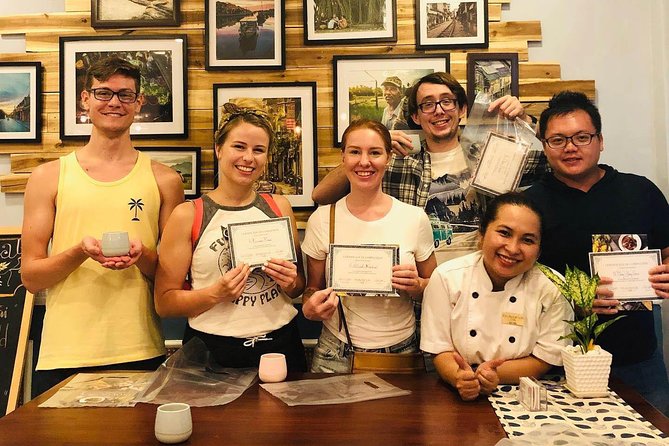
A lot of cooking classes hand you a folded flyer. This one aims higher. You take home a Vietnamese cookbook with 25+ recipes. That’s important for value because it helps you keep cooking after the trip—especially in Vietnam, where flavor notes and ingredient names can be hard to remember once you’re back home.
Some people also highlight how good the booklet is in design and usefulness, even calling it something they’d put on a bookshelf. If you’ve ever taken notes during a class and then lost them two weeks later, the cookbook becomes your safety net.
Tip for using the cookbook well: when you get home, don’t start by cooking everything. Pick one dish you made—like spring rolls or pho—and then look for the matching sauce instructions first. Most Vietnamese flavor comes from the dipping and seasoning details, not just the main ingredient.
Price and value: is $49 really fair?
At $49 per person, this is priced like a “real activity,” not like a cheap sampler. Whether it’s worth it depends on your expectations.
Here’s what you get for the money, based on what’s described:
- Ben Thanh Market wet market tour (with admission listed as free)
- Chef-led cooking with your own station
- A set menu of classic Vietnamese dishes plus dessert
- Tasting what you make
- A Vietnamese cookbook with 25+ recipes
- A small group size with a cap of 20
That combination is the value case. You’re paying for market context, hands-on technique, and a take-home guide.
Where value can slip is if the class pace feels uneven. A few experiences describe moments where most people weren’t actively cooking yet (like watching one person prepare a sauce for the group), or describe ingredients being prepped more than expected. If you’re the type who wants constant action the whole time, you may find some waiting.
Also watch for what you consider a “market tour.” Some market-style experiences get criticized when the walking component turns into shop stops that feel sales-heavy. If you care most about learning and seeing ingredients, focus your attention on what the chef points out—herbs, cuts, and how different stalls handle produce—rather than what’s being offered for sale.
You can also read our reviews of more tours and experiences in Ho Chi Minh City

Logistics in District 1: meeting point vs end point
This matters more than people expect. Your meeting point is listed at Cửa Tây Chợ Bến Thành on Phan Chu Trinh, while the experience ends at 131/3 Nguyễn Thị Minh Khai (your cooking/dining location).
If you’re staying near Ben Thanh, it can feel like the class should end back nearby. But it doesn’t. Plan for a short ride or walk after the session depending on where you’re staying.
One more timing note: if you’re working around cruise schedules or tight itineraries, build in buffer. Some accounts mention drive time from cruise ports to the meeting area being long. If you’re on a day with multiple plans, don’t book this too close to your departure time.
Who this is best for (and who should reconsider)
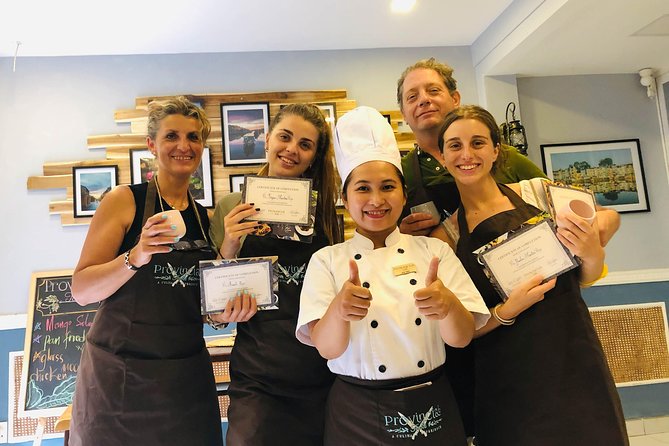
This cooking class is a good fit if you want:
- a hands-on Vietnamese lesson, not just a show
- small group dynamics (max 20)
- a market connection that makes ingredients feel less mysterious
- a take-home cookbook you’ll actually use
It can also work well for families. One account includes an 8-year-old participant and describes the chef making space for the child to engage. That suggests the class can be friendly for kids who enjoy cooking with guidance.
Consider reconsidering if:
- you’re very heat-sensitive (some sessions feel extremely warm)
- you hate walking through narrow market lanes
- you expect constant cooking every minute (some prep may happen before you step in)
- you’re allergic or require special dietary changes and you haven’t communicated needs ahead of time. Still, there are examples where a chef adjusted recipes for an allergy request, so it’s worth reaching out with details.
Should you book this Ben Thanh cooking class?
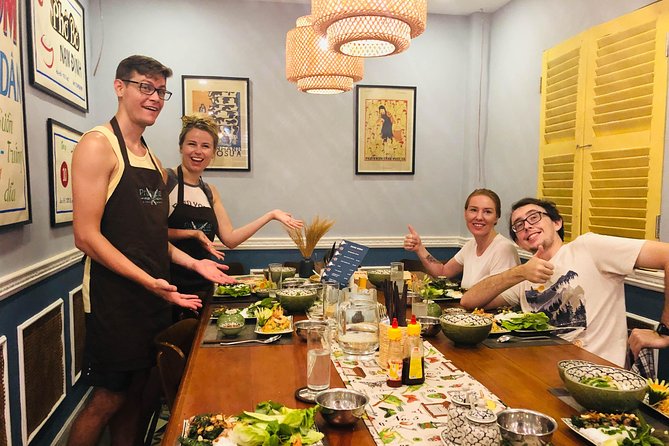
Yes, book it if you want a meaningful Vietnamese food experience in Ho Chi Minh City that goes beyond eating. The market-to-kitchen structure is the main advantage, and the cookbook with 25+ recipes makes it easier to recreate dishes after your trip.
Skip it or choose carefully if your priorities are mainly comfort and frictionless logistics, especially regarding heat in the kitchen and the fact that you end at a different address than you start. Also, if you’re extremely sensitive to pacing and don’t want any sitting/watching time, consider choosing a time slot that better matches your preferences.
If you like learning through doing, you’ll come away with practical skills: how spring rolls come together, how a pho-style bowl is built, and how Vietnamese seasoning layers taste when you make them yourself.
FAQ
How long does the Ben Thanh market and cooking class take?
The experience is about 4 hours total, with 45 minutes for the wet market tour and about 2 hours 30 minutes for the cooking class.
Where do I meet the tour?
You start at Cửa Tây Chợ Bến Thành, 21, 23 Phan Chu Trinh, Phường Bến Thành, Quận 1, Thành phố Hồ Chí Minh, Vietnam.
Where does the tour end?
The experience ends at 131/3 Nguyễn Thị Minh Khai, Phường Phạm Ngũ Lão, Quận 1, Hồ Chí Minh 711106, Vietnam, which is different from the meeting point.
What is the price per person?
The price is $49.00 per person.
How many people are in the group?
The tour has a maximum of 20 travelers.
What dishes will I learn to make?
You’ll cook classic Vietnamese dishes, including goi cuon (spring rolls). The program is designed around iconic Vietnamese dishes, plus dessert.
Do I receive a cookbook?
Yes. You’ll walk away with a Vietnamese cookbook that includes 25+ recipes.
Is cancellation free if I change my plans?
Yes. You can cancel up to 24 hours in advance for a full refund. If you cancel within 24 hours of the start time, the amount paid is not refunded.
Are service animals allowed?
Yes, service animals are allowed.