Saigon tastes fast and smart on foot. This Walking Food Tour by Vietnam Vibes strings together 10 must-try dishes and a few low-key stops that show you how locals actually eat, shop, and move through the city. I especially like the opening run of Hue-style cakes and the way the route mixes food with city context, not just a checklist. One thing to consider: you’ll be eating a lot in a short window, so come hungry and pace yourself when the street heat kicks in.
I also like the value math here. For $65 you’re not just paying for plates; the price covers the guide, all foods and drinks, and transportation, with a private group and an English-speaking guide. In the reviews, guides like Tri, Yu, and Vincent get called out for being friendly, confident, and easy to understand. That’s the kind of setup that makes a food tour feel like a guided day out, not a mad dash.
In This Review
- Key Things I’d Watch For Before You Go
- Where You Meet at Saigon Opera House and What the Start Feels Like
- Price and What You Actually Get for $65
- Hue Court Cakes Begin the Flavor Story: Bánh Bèo to Ram Ít
- Southern Pho and Sugarcane Juice: Reset, Then Refuel
- Bánh Tráng Nướng and Bánh Xèo: Street Snacks With Regional Flair
- Exploring Saigon on Foot: Old Apartments, Flower Market, and Cholon
- Bò Lá Lốt, Local Beer, and the Dessert Finish You’ll Remember
- Scooter Rides and Safety: What Guides Tri, Yu, and Vincent Bring
- Who This Tour Fits Best (And Who Might Prefer Something Else)
- Should You Book Vietnam Vibes in HCM?
- FAQ
- How long is the walking food tour?
- What does the $65 price include?
- Is the tour private?
- Is pickup offered?
- Where does the tour start?
- Do I need a mobile ticket?
- What dishes are included in the tour?
- Are the guides English-speaking?
- Can I cancel for a full refund?
Key Things I’d Watch For Before You Go
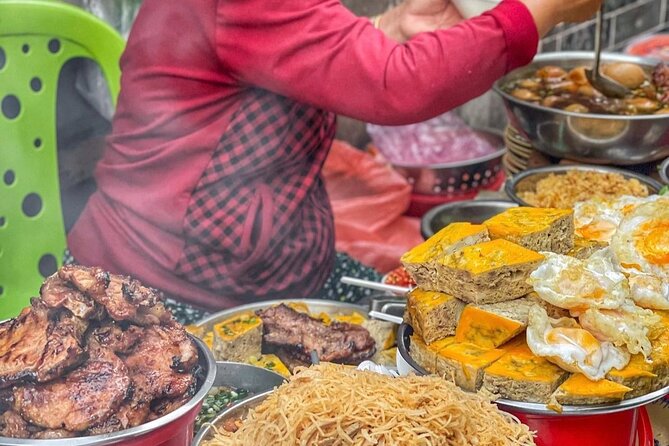
- 10 dishes that start in Hue court style, then move into Saigon street favorites, so the menu has range.
- Food + neighborhoods, including an old apartment complex, a wholesale flower market, and Cholon.
- Transportation is included, and some parts involve scooter rides with guides who manage the traffic.
- Private tour setup, so you’re with your group only and can adjust the pace.
- Flexible adjustments for requests, so it’s not one rigid route for everyone.
Where You Meet at Saigon Opera House and What the Start Feels Like
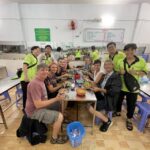
You’ll meet at Saigon Opera House in District 1. It’s a solid starting point because it’s easy to orient yourself, and it puts you close to the core of where most visitors first feel “I’m in the right place.” From there, the tour shifts into motion: short walks, then food stops, and likely a few scooter hops since scooter riding comes up in the experience feedback.
The first part matters more than you’d think. When you start in a recognizable area and then quickly get guided into smaller local spots, you lose that awkward moment where you’re not sure what street to choose. You also start learning the guide’s rhythm—when to look, when to cross, when to stop and smell what’s cooking, and when to just taste.
Because it’s private, your group can set the pace. If you want to linger for a photo or slow down for digestion, you’re not stuck with a large group moving like a single unit. If you’re traveling with someone who gets tired walking, you’ll likely appreciate the balance of walk + transport.
You can also read our reviews of more walking tours in Ho Chi Minh City


Price and What You Actually Get for $65
At $65 for about 4 hours, this tour is priced like a “mid-tier” food experience. The reason it can still feel like good value is that the inclusions are doing the heavy lifting: all foods, drinks, guide, and transportation are included. That means you don’t have to play the add-on game of guessing which stops cost extra or whether you’ll need to pay to drink water, coffee, or beer.
It also helps that the tour’s selling point is variety: 10 dishes representing distinct culinary flavors. Instead of eating the same category twice, you get a sequence that moves from Hue-style cakes to Southern pho to street snacks like bánh tráng nướng and bánh xèo, then to grilled, beer, and a dessert finish.
One practical note: because everything is included, it’s easier to keep expectations simple. You show up, you eat what’s planned, and you focus on the experience—who’s cooking it, how locals order it, and what tastes good right then. If you prefer a food tour where you can control every bite yourself, this might feel less flexible than an à la carte plan. But if you want a smooth, set route with no surprises, this inclusion style is a big plus.
Hue Court Cakes Begin the Flavor Story: Bánh Bèo to Ram Ít
The tour kicks off with four royal Hue cakes—the kind of dishes tied to imperial-court tradition. You’ll try bánh bèo, bánh nậm, bánh bột lọc, and bánh ram ít. This is a smart move for a first stop because it changes how you think about Vietnamese food right away. These aren’t “just snacks.” They’re small bites with distinct textures and sauces, which makes it easier to compare flavors across the table.
Here’s why I like this opening sequence: you start with a calm, food-forward introduction rather than jumping straight into heavy street fry-ups. That matters in Saigon, where the weather can feel determined to melt your concentration. Hue-style cakes give you multiple variations fast, so you learn what to look for—how sauces cling, how chewy or soft textures feel, and how aroma signals what you’re about to taste.
The one drawback? Because these are light-ish in portions but numerous in variety, it’s easy to think you’re fine, then realize you’ve got a full tour ahead. Keep that in mind and pace your bites. If you’re the type who wolfs food quickly, you may want to slow down early so you don’t hit the later stops too full.
Southern Pho and Sugarcane Juice: Reset, Then Refuel
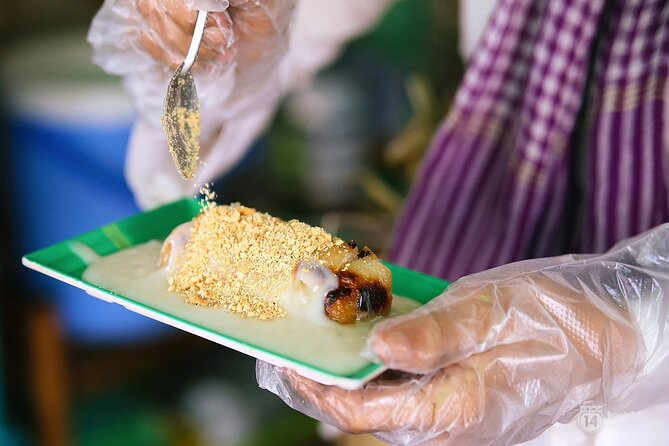
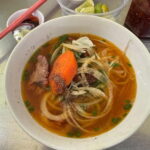
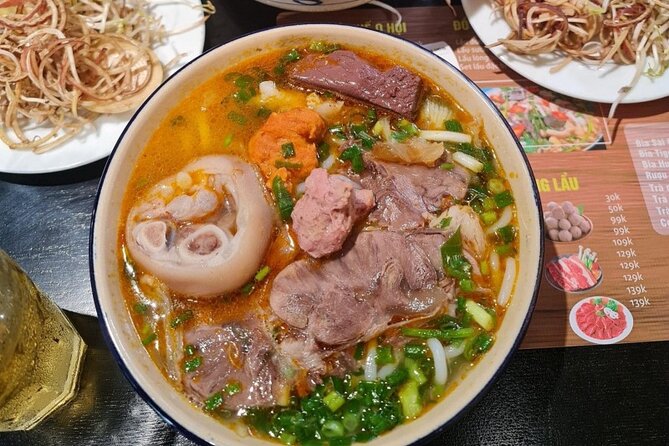
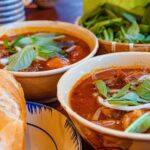
After the Hue cakes, you’ll move into a bowl of Southern-style pho. This is the “comfort fuel” stop. Southern pho is known for a different flavor profile than some northern versions, and having it mid-tour works well because it interrupts the parade of fried and grilled items that usually dominate street-food routes.
Then comes sugarcane juice, which is a perfect palate reset after hot, savory food. It’s also practical. Street food tours can get dehydrating fast, and a cold drink like sugarcane juice helps you keep tasting accurately instead of losing your sense of flavor halfway through.
This part of the tour is where you start getting the rhythm of Saigon eating. Locals don’t treat food like a single event. They treat it like a day flow—snack, sip, eat again. When you learn that rhythm, the later stops feel less random and more connected.
Bánh Tráng Nướng and Bánh Xèo: Street Snacks With Regional Flair
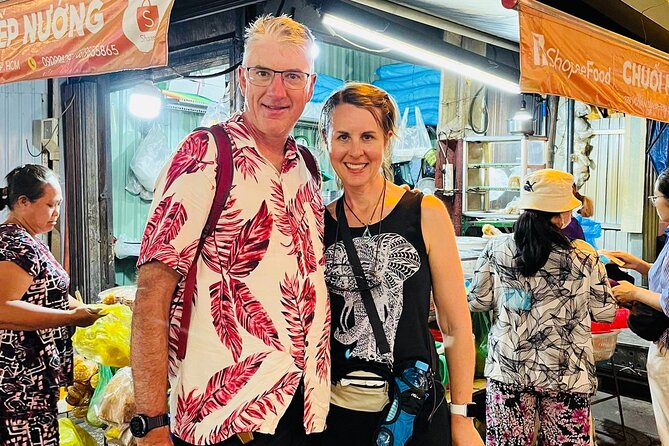
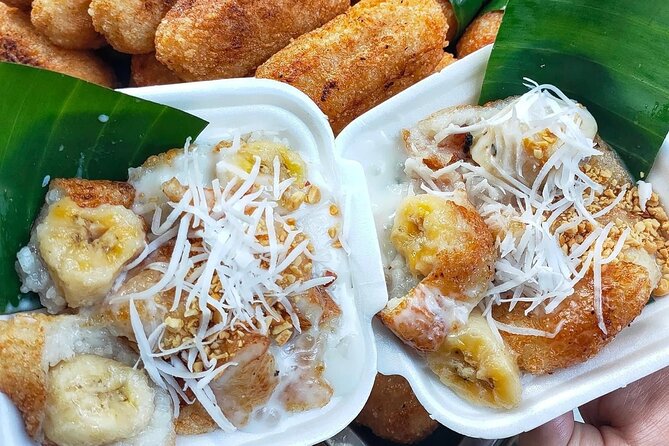
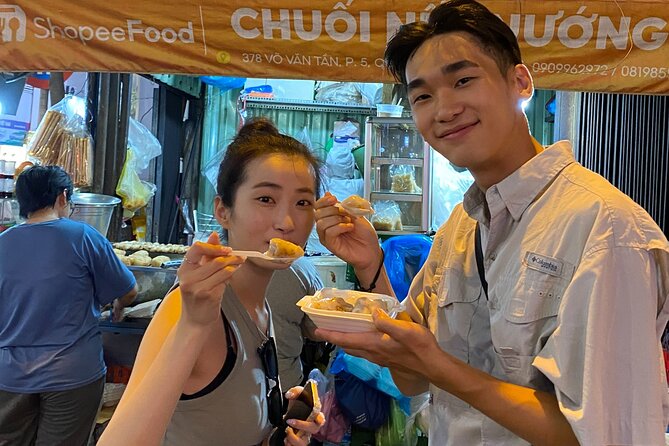
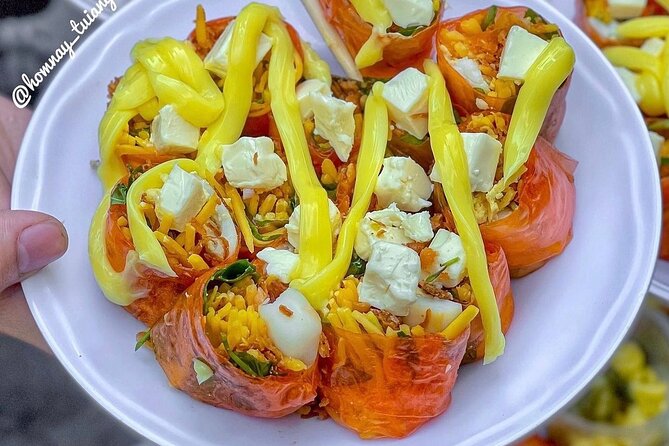
Next up, you’ll hit several street food staples, including bánh tráng nướng, crispy bánh phồng, and bánh xèo with a Mekong twist. This block is where the tour really leans into texture: crispy, chewy, blistered, then saucy. It’s also where you learn how Saigon adapts regional ideas.
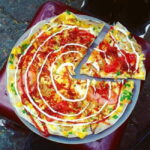
Bánh tráng nướng is often described as Vietnamese-style pizza—charred on the edges, topped, and eaten hot. Bánh phồng adds the crunchy element, while bánh xèo brings the savory comfort of a savory pancake-like dish, typically paired with fresh herbs and dipping sauces. The Mekong twist is important because it signals that you’re not only sampling “classic” Saigon street food. You’re also sampling the way food traditions travel and remix.
A friendly warning: these stops tend to be messy in the best way. Expect some sauce and sticky fingertips. If you’re picky about clean eating, this tour may feel physically inconvenient. If you’re okay getting a little street-food character on your hands, you’ll enjoy the realism.
You can also read our reviews of more food & drink experiences in Ho Chi Minh City


Exploring Saigon on Foot: Old Apartments, Flower Market, and Cholon
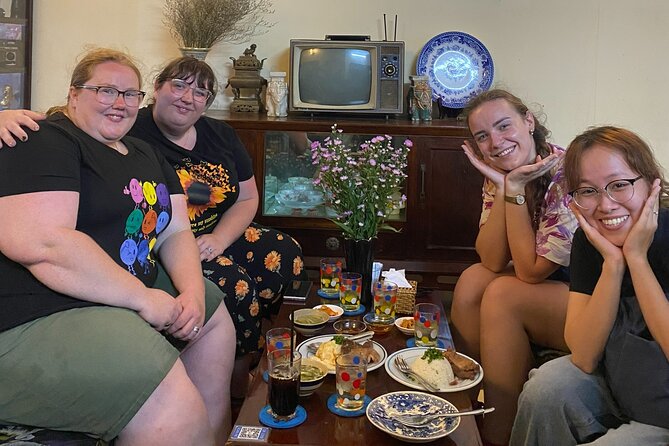
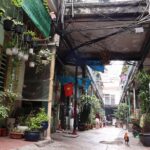
One of the most valuable parts of this tour is the mix of food with “where” you’re eating. You’ll walk through a very old apartment complex, visit a wholesale flower market, and explore Cholon, also known as Chinatown.
Why that matters: your taste buds can’t fully understand a dish unless you also understand the setting. Saigon’s neighborhoods shape what’s easy to buy, what’s sold daily, and what foods are made for quick consumption. The wholesale flower market stop is especially useful for that mental map. Even if you don’t buy anything, seeing how flowers move through daily supply adds context to the city’s pace.
Cholon brings a different vibe—different sounds, different food energy, and often different cooking styles nearby. The point here is not that you’re doing sightseeing for sightseeing’s sake. The point is you’re seeing food culture in the same zones where it actually operates.
This is also one of those “listen to your guide” moments. The best value from stops like these comes from the story you get while walking, not from trying to memorize details. Ask questions. Your guide’s English is part of why this tour works.
Bò Lá Lốt, Local Beer, and the Dessert Finish You’ll Remember
Later in the route, you’ll savor smoky bò lá lốt, plus local beer. This is a great pairing because it shifts you from snack mode into a more grounded, savory meal vibe. Bò lá lốt is all about fragrance—wrapped and cooked in a way that makes the aroma part of the experience. When you add beer, you get a classic street-food match: savory richness plus something refreshing to cut it.
Then the tour ends with coconut caramel flan made from a secret family recipe. Dessert on food tours is sometimes an afterthought. Here, it’s positioned like a proper finale. Coconut caramel flan is smooth and sweet, and it also ties into the tropical ingredient profile you’ve been tasting throughout the tour.
If you’re the kind of person who saves room for dessert, you’ll be glad this stop is last. If you’re already overly full by the time you reach it, ask your guide if you can share a portion. Eating together is part of the fun, and a private group makes that easier.
Scooter Rides and Safety: What Guides Tri, Yu, and Vincent Bring
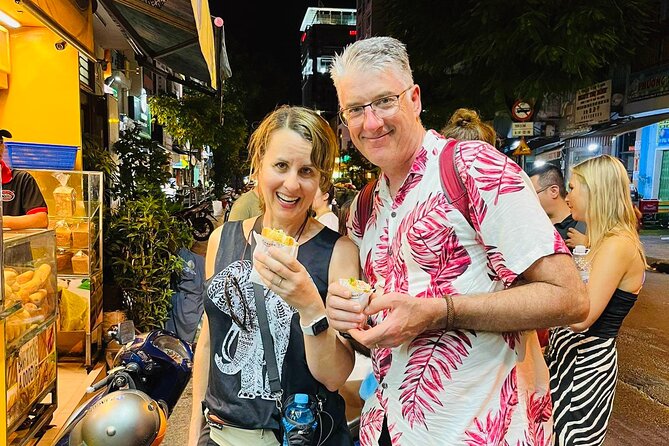
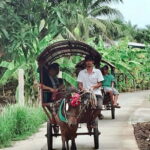
Some portions involve riding around on scooters, and the traffic in Ho Chi Minh City can feel intense from the sidewalk. The reviews highlight that guides like Tri and Yu ride with confidence and keep everyone feeling safe. That’s not a small detail. On a food tour, the ride can either kill your appetite (fear makes you tense) or support your focus (you trust the plan and enjoy the route).
What you should do: wear comfortable shoes, keep your phone secured, and follow the guide’s instructions without second-guessing. When the guide signals where to sit, where to stand, and how to cross, you’ll feel more in control. Scooter rides also shorten the distance between neighborhoods, which helps you fit in 10 dishes in about 4 hours.
Also, the guides are described as friendly and fluent in English. That matters because you’ll get more than instructions—you’ll get “why this dish, why this area, why this order.” It turns eating into learning without turning it into a lecture.
Who This Tour Fits Best (And Who Might Prefer Something Else)
This tour is best for you if you want to:
- Try 10 distinct dishes without planning each stop yourself
- Learn how local food habits connect to different neighborhoods
- Ride along with an English-speaking guide who can explain what you’re tasting
- Prefer an organized experience with everything included (foods, drinks, transportation)
It may be less ideal if:
- You hate being in traffic even briefly, because scooter hops are part of the experience
- You have a very sensitive stomach or need strict control over portion size
- You want a slow, leisurely meal at one sit-down restaurant
If you’re visiting for the first time and feel overwhelmed by the food scene, this format works because it reduces decision fatigue. You’re not guessing what’s safe, what’s worth it, or where locals go. You’re also moving through areas like Cholon rather than staying stuck in the tourist-heavy zones.
Should You Book Vietnam Vibes in HCM?
I’d book this tour if you’re craving variety, value, and local context in one half-day slot. The best argument for booking is simple: for $65 you get the guide, the food, the drinks, and the transportation, plus a route that takes you beyond just eating into how Saigon neighborhoods function. The guide quality shows up in the details people mention—names like Tri, Yu, and Vincent come up for being fun, capable, and easy to communicate with.
Choose a different option only if you know you want full control over every dish you order, or if scooter rides stress you out. Otherwise, this is the kind of tour where you leave with a stronger sense of Saigon’s flavor range and a few practical lessons about where certain foods belong.
FAQ
How long is the walking food tour?
The tour runs for about 4 hours.
What does the $65 price include?
The price includes the tour guide, all foods, drinks, and transportation.
Is the tour private?
Yes. It’s private, so only your group participates.
Is pickup offered?
Pickup is offered.
Where does the tour start?
The tour starts at Saigon Opera House, 07 Công trường Lam Sơn, Bến Nghé, Quận 1.
Do I need a mobile ticket?
Yes, a mobile ticket is included.
What dishes are included in the tour?
You’ll try 10 signature dishes, including four Hue royal cakes (bánh bèo, bánh nậm, bánh bột lọc, bánh ram ít), Southern-style pho, sugarcane juice, bánh tráng nướng, bánh phồng, bánh xèo with a Mekong twist, bò lá lốt, local beer, and coconut caramel flan.
Are the guides English-speaking?
The guides are described as friendly and communicating well in English.
Can I cancel for a full refund?
Yes. You can cancel up to 24 hours before the experience for a full refund. If you cancel less than 24 hours before the start time, no refund is given.