REVIEW · TAY NINH
From Ho Chi Minh: Black Virgin Mount And Cao Dai Holy Mass
Book on GetYourGuide →Operated by Trip in Vietnam · Bookable on GetYourGuide
Clouds meet you on Ba Den. This day trip pairs a fast cable car ascent with the feeling that you’re stepping through sacred pagodas above Tay Ninh.
I like how the route mixes big viewpoints with smaller temple stops, so it feels more human than just a photo run.
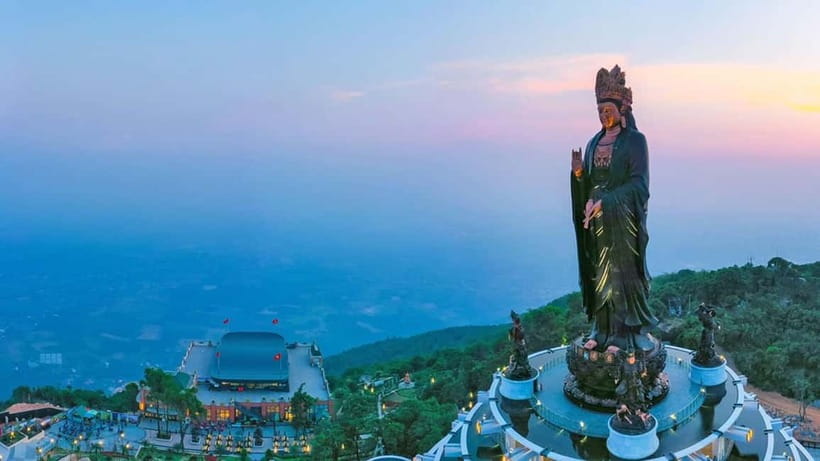
I also love the stories tied to Black Virgin Mountain (Bà Đen), especially the myths and legends you hear as you go up. And the stops around the massive Miroku Bosatsu (Maitreya) statue add a wow factor that’s hard to replicate anywhere else in Vietnam.
One caution: the Cao Dai Holy Mass is included, but the temple complex is large. If you prefer wandering gardens and exhibits, you might feel slightly rushed around the mass moment depending on timing.
In This Review
- Key Things to Know Before You Go
- Ho Chi Minh City Pickup to Tay Ninh: The Real Meaning of a Day Trip
- Riding the Cable Car Up Ba Den to the First Pagoda
- Temple Trail to Higher Spots: Learn, Walk, Stop
- Ba Den at 986 m: The View That Makes the Climb Worth It
- Giant Statues and Cave Living: Two Ways of Seeing Buddhism
- Miroku Bosatsu (Maitreya) and the thousands-of-stones detail
- Tall bronze Buddha presence
- Caves used as residences for Buddhist monks
- Cao Dai Holy Mass in Tay Ninh: Where Tradition Turns Into Atmosphere
- Lunch and the Pace: What Makes This Tour Feel Comfortable
- Value for $67: What You’re Paying For (and What You Still Need)
- Language Support: More Than Just Words on Paper
- Practical Tips That Actually Help on Ba Den and Cao Dai
- Who This Tour Fits Best
- Should You Book From Ho Chi Minh City: Black Virgin Mountain and Cao Dai Holy Mass?
- FAQ
- Is lunch included on this tour?
- Is the cable car included in the $67 price?
- What does the tour include besides entrance tickets?
- Which languages are available for the guide?
- Can I pay later instead of paying immediately?
- Can I cancel and get a full refund?
Key Things to Know Before You Go
- Ba Den hits 986 m: the height is the whole point, and the views can put clouds right at eye level.
- Myths of Bà Đen matter here: legends give the temples meaning instead of making them feel like random stops.
- Cable car makes it accessible: you get the mountain experience without needing a long hike right away.
- Optional extra hiking: you can continue upward toward more temples if your legs and time allow.
- Big Buddha stops come in two styles: a Maitreya statue built from thousands of sandstone stones plus a towering bronze Buddha.
- Cash helps at the temple: at least one stop in the complex may not accept card for purchases.
Ho Chi Minh City Pickup to Tay Ninh: The Real Meaning of a Day Trip
This tour starts with hotel pickup in Ho Chi Minh City’s center and includes round-trip AC car transfer. In practice, it means you’re trading some time in the car for two major religious experiences in the same day: Ba Den Mountain and Cao Dai worship.
I like that the tour doesn’t leave you guessing about logistics. A professional guide helps you connect the dots between temples, statues, and the local belief system, so you’re not just seeing stone and bronze—you’re understanding why people come.
The other practical point: cable car costs aren’t listed as included. That’s fine, but it affects your total budget once you’re there, so I’d plan for it rather than assume it’s already covered in the $67.
Riding the Cable Car Up Ba Den to the First Pagoda
The morning push is the cable car ride up to the pagoda dedicated to the local Khmer deity, Bà Đen. From below, the mountain looks like a single destination; from the cable car, you start to see the real structure—a vertical world of rice fields, jungle, and fruit orchards with mango trees.
As you rise, the guide’s storytelling brings the legends to life. You’ll hear the mountain described as towering roughly 3,000 feet above the rice fields and jungle, and it’s framed as part of a wider landscape of belief rather than just a hike.
What I like most is the pacing. You’re not dumped at the top with zero context. You build the mood during the ascent, then step into the sacred space with an idea of what you’re looking at and why it matters to locals.
Temple Trail to Higher Spots: Learn, Walk, Stop
Once you reach the temple area, the route becomes a walking tour through Buddhist architectural works and multiple temples and pagodas along the way. You can take this in at two speeds: quick sightseeing or slower wandering where you stop to read details, look at carvings, and notice how the complex is arranged.
There’s an optional hike farther up the mountain to find two more temples. This is a nice choice because it lets you decide how active you want to be. If you’d rather save energy for the viewpoints (and later Cao Dai), you can keep it simpler and still get a strong experience.
One small consideration: the higher you go, the more your route depends on your comfort level in outdoor stairs and uneven surfaces. The cable car helps, but you’ll still be doing temple walking on a mountain day.
Ba Den at 986 m: The View That Makes the Climb Worth It
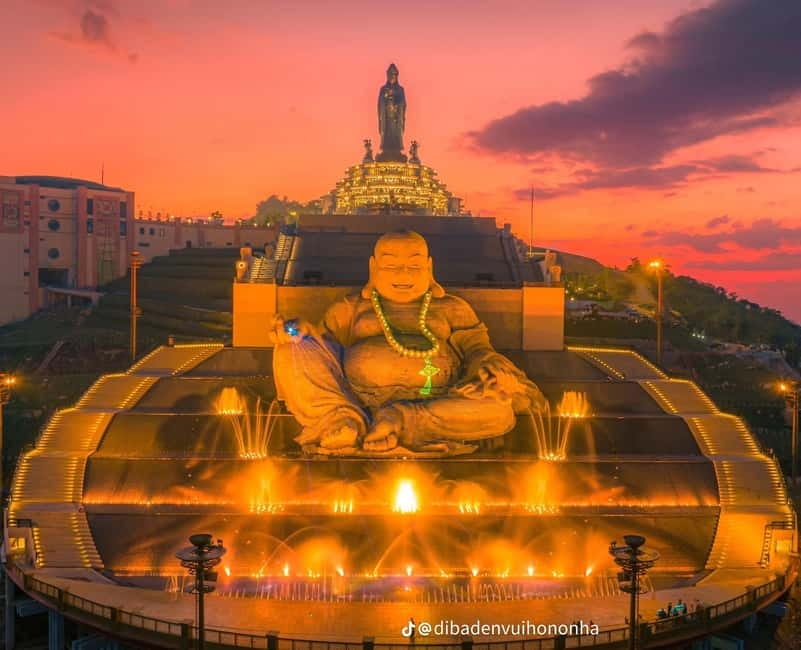
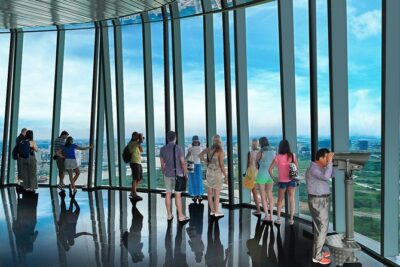
At 986 meters, the viewpoint is the payoff. The tour focuses on panoramic views of Tay Ninh city, and the best part is the chance to see clouds sitting almost at eye level.
When visibility is good, this becomes more than scenic—it changes how the entire day feels. You’re above orchards and rooftops, looking across a wide area, and the temples stop feeling like isolated attractions. They feel like checkpoints on a sacred mountain that people have visited for generations.
Bring a light layer for the top. Even when it’s warm in the city, mountains can feel cooler or misty near the clouds. It also helps for photos, since you’ll likely pause longer than you planned.
Giant Statues and Cave Living: Two Ways of Seeing Buddhism
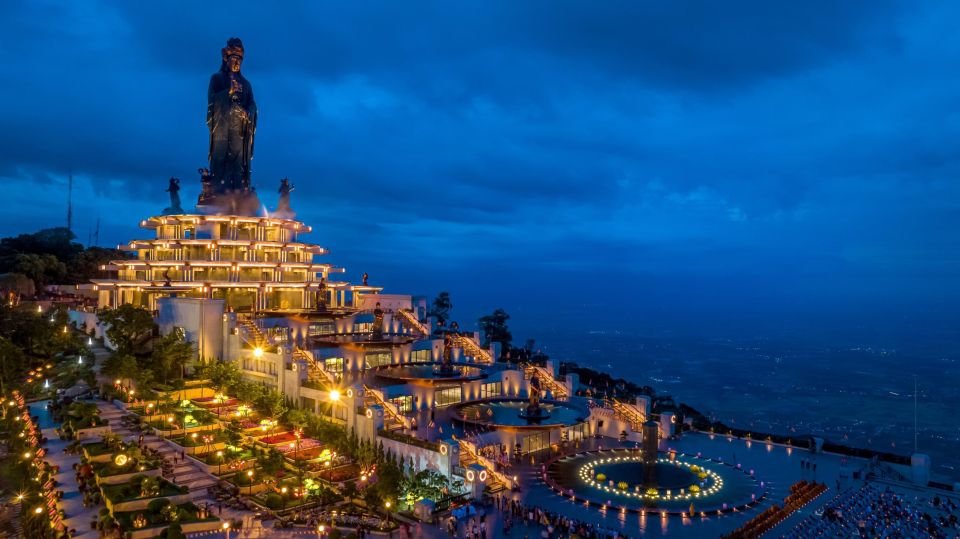
Ba Den’s religious attractions go beyond temples and viewpoints. The tour includes stops that show how monumental Buddhist iconography can be, plus quieter spaces tied to monastic life.
Miroku Bosatsu (Maitreya) and the thousands-of-stones detail
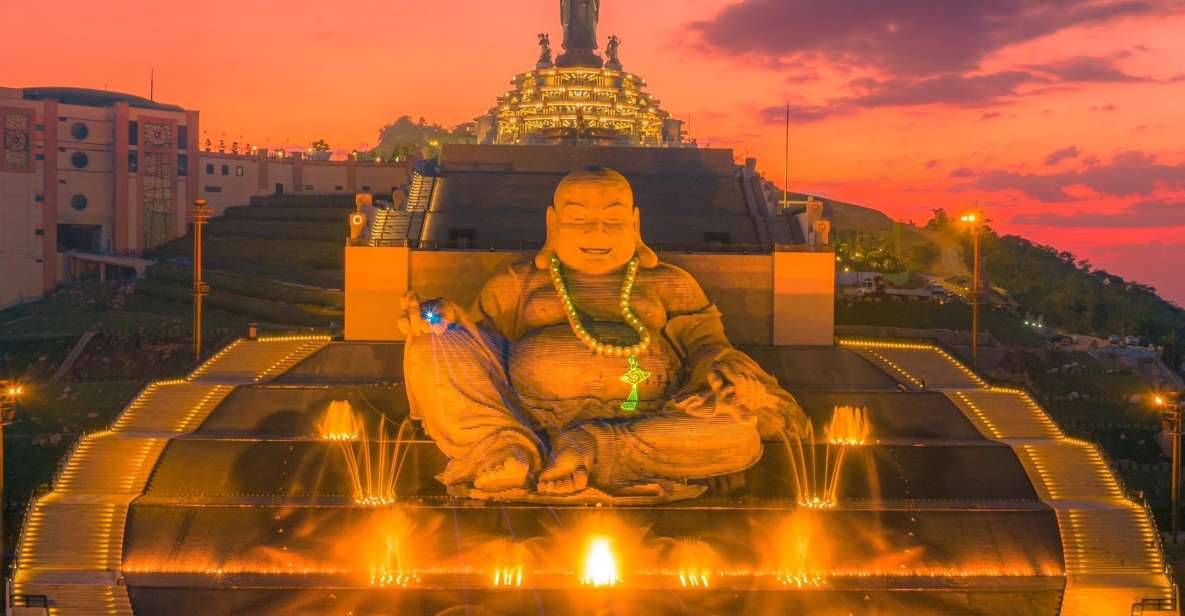
One highlight is the giant Maitreya Buddha statue, also called Miroku Bosatsu. The scale is specific and impressive: it’s made up of 6,688 sandstone stones, stands 36 m tall, and reaches a maximum width of 45 m. It’s also described with a surface area of 4,651 m² and a weight of 5,112 tons.
I like that the tour doesn’t just point at it; it gives you enough detail to appreciate the construction effort. When you understand that it’s built from thousands of stones, the statue becomes more than a photo target. It’s a statement about patience and devotion.
Tall bronze Buddha presence
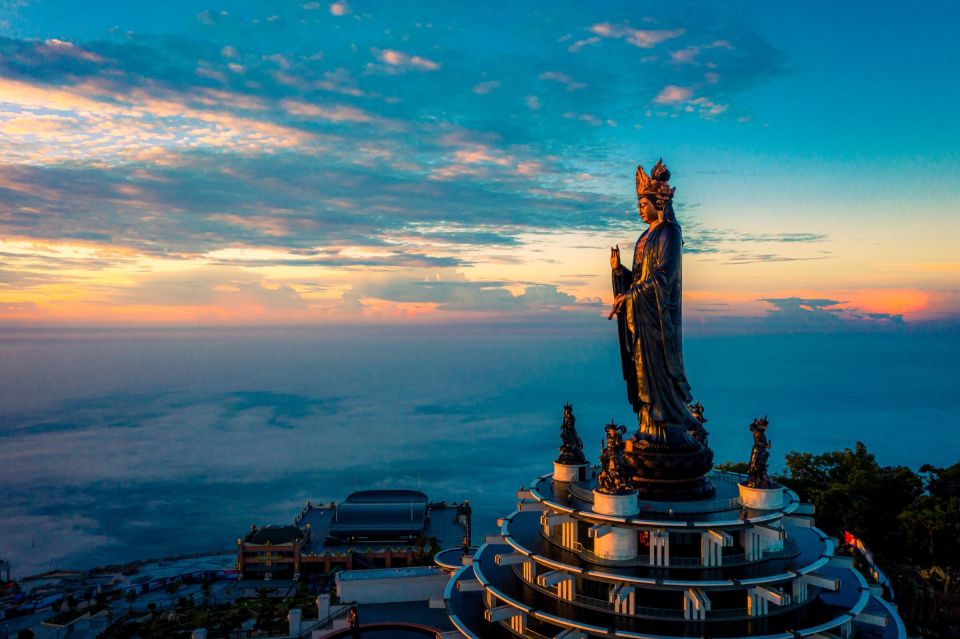
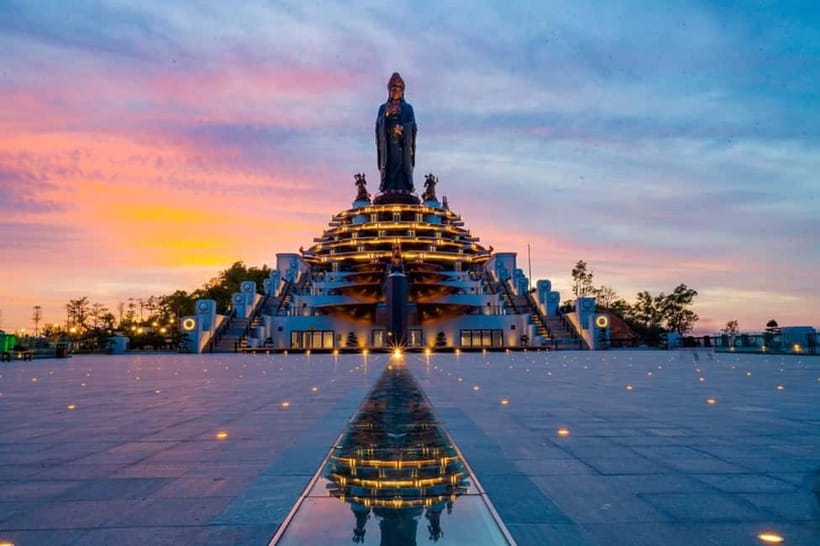
You’ll also see another standout: the tallest sacred bronze Buddha statue in Asia, cast with 170 tons of red bronze. It’s described as 72 meters long, and that sheer length changes the way you experience the area around it. When a statue is that big, you stop thinking like a tourist and start noticing how the space is designed around the figure.
Caves used as residences for Buddhist monks
The tour also includes visiting caves used as residences for Buddhist monks. This part balances the big visuals with a quieter idea: faith is not only about public ceremonies and massive statues. It also includes retreat, routine, and a more secluded life.
If you like observing how architecture communicates purpose, this cave stop makes the day feel more rounded.
Cao Dai Holy Mass in Tay Ninh: Where Tradition Turns Into Atmosphere
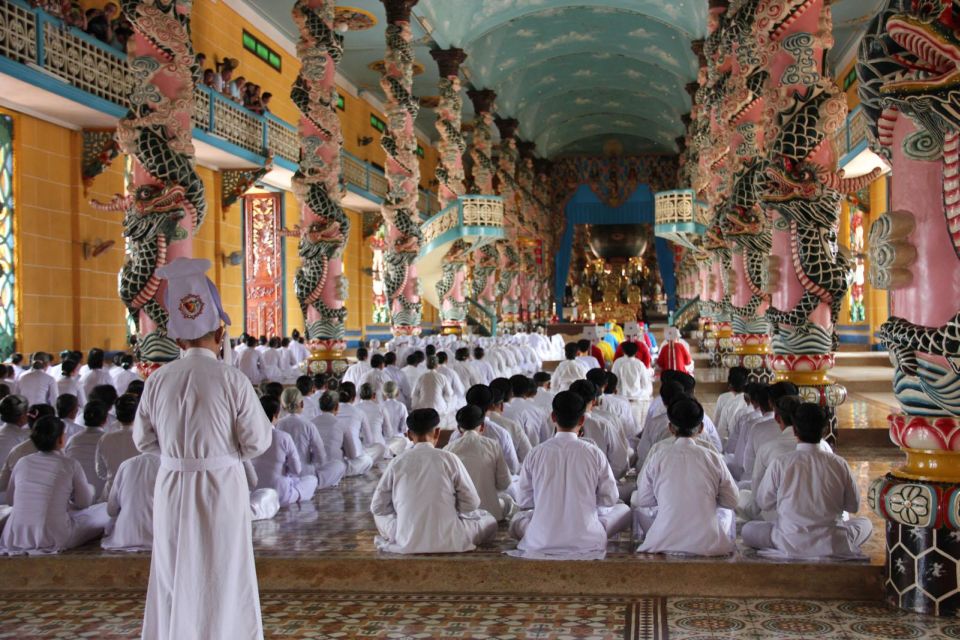
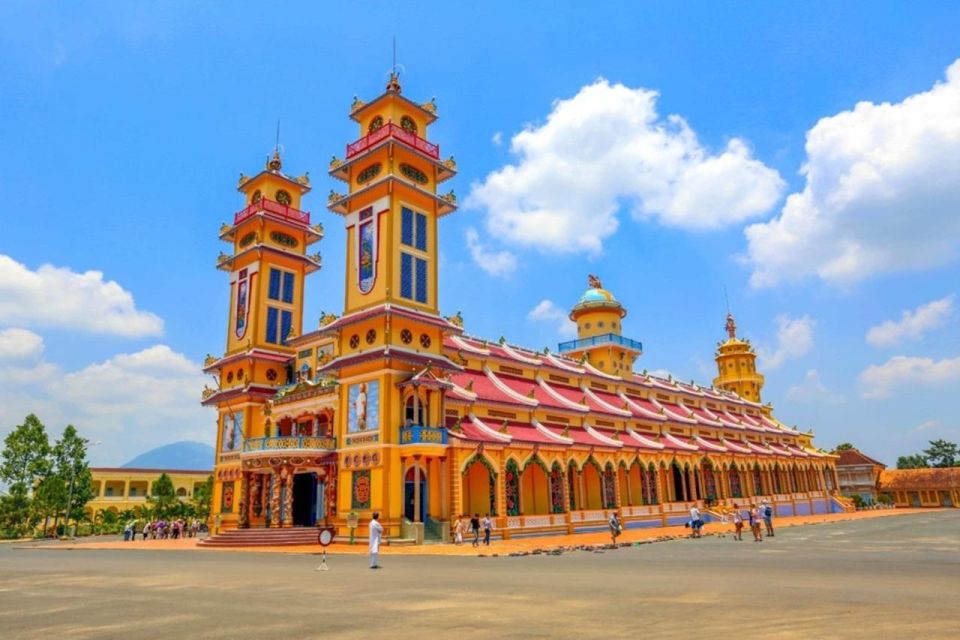
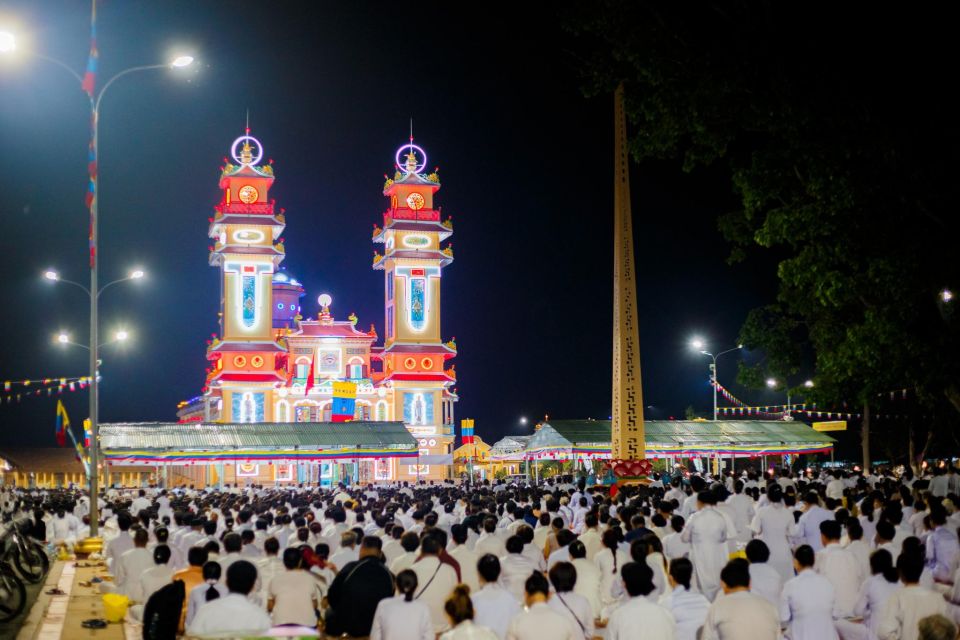
After the mountain portion, the tour moves toward Cao Dai Holy Mass, the spiritual heart of the Cao Dai faith. Cao Dai is known for elaborate ceremony and a strong sense of pageantry, and this stop is a meaningful contrast to the more overtly Buddhist mountain complex.
The mass itself is included, but here’s the timing reality to keep in mind: the temple complex is large. One helpful piece of advice from a previous experience is that you may want to decide whether you’d rather prioritize the mass moment or spend extra time with exhibits and the temple grounds.
At least one visitor also found time-related flexibility useful for enjoying the complex, including things like an exhibit area, a Buddha water show, garden exploring, a spectacular view, and mist deployment. That’s not guaranteed to replace the mass, but it’s a sign the site can offer more than the ceremony alone.
If you care a lot about the mass, arrive with a mindset of focus: step inside, watch what’s happening, and keep your attention on the ritual rather than treating it like one more photo stop.
Lunch and the Pace: What Makes This Tour Feel Comfortable
Lunch is included at a local restaurant. It’s one of those practical details that quietly makes the day work, especially on a trip where you’re moving between several major sites.
The quality feedback is also positive: the lunch is described as traditional and filling, with generous portions that people struggled to finish. That matters because it reduces decision fatigue. You get fed without needing to hunt for something near each stop.
Pace-wise, the guide style seems to be a strength. In one example, the guide did not make the visitor feel rushed and helped with translation while explaining the significance of Buddhism and surrounding temples. That kind of pacing is important on a day trip, because you need enough breathing room to actually look at details.
Value for $67: What You’re Paying For (and What You Still Need)
The price of $67 per person becomes more understandable when you break down what’s included:
- AC car transfer and pickup/drop-off from the center of Ho Chi Minh City
- A professional English-speaking tour guide
- All entrance tickets
- Lunch at a local restaurant
- Bottled water on the car
What’s not included:
- Cable car
- Any language surcharge for non-English service (the tour lists that language options exist, but not every language may be at the same cost)
- Holiday surcharges
So, is it good value? I’d say yes if you want a guided, ticketed circuit that connects Ba Den Mountain, major Buddha sights, and Cao Dai Holy Mass without you having to plan transportation between them.
The cable car cost is the one easy surprise. If you budget for it from the start, the rest of the tour feels like you’re buying a smooth day with minimal hassle.
Also, there’s a possible bonus: if seats are available on the vehicle, the operator can include a free visit to the Cu Chi Tunnels. That’s a nice add-on if your schedule is flexible, but it depends on seat availability.
Language Support: More Than Just Words on Paper
This tour offers multiple languages, listed as English, Chinese, French, Japanese, Italian, Spanish, Russian, Korean, and German. If you’re not traveling in English, that language list is a big deal because it affects how well you’ll understand the religious context behind what you’re seeing.
One practical example from earlier experiences: Japanese language support was appreciated, and the guide also used extra help via Google when needed. Translation tools can’t replace a good guide, but it can prevent the day from feeling like you’re only looking at buildings without meaning.
If language clarity matters to you, this is one of the reasons to consider this operator rather than taking random buses and solo taxis.
Practical Tips That Actually Help on Ba Den and Cao Dai
A few tips can save you time and stress.
Bring cash for purchases. At least one visitor ran into a situation where the temple did not accept card for purchases, so having Vietnamese dong on hand makes life easier.
Plan for weather changes. Clouds can appear right at eye level on Ba Den, and mist is possible. A light layer helps, and it also makes temple walking more comfortable.
Decide your priorities early. If you want maximum mass time at Cao Dai, you may need to move a bit more directly once you reach the complex. If you’d rather spend more time exploring exhibits and gardens, be aware you could miss part of the mass depending on the schedule.
Wear sturdy shoes. You’ll be walking temple paths on a mountain. Even if the cable car does most of the heavy lifting, your feet still need traction.
Who This Tour Fits Best
I think this trip is a strong match if you:
- Want a one-day religious and cultural hit from Ho Chi Minh City
- Like guided explanations, not just sightseeing
- Want mountain views plus major spiritual stops without juggling multiple tickets and transfers
- Are curious about Cao Dai ceremonies and how they differ from Buddhist temple culture
It’s less ideal if you dislike guided schedules, hate large temple complexes, or strongly prefer only one focus (for example, just Ba Den with zero Cao Dai time). The tour blends both, so you’ll need to accept the trade-offs.
Should You Book From Ho Chi Minh City: Black Virgin Mountain and Cao Dai Holy Mass?
Book it if you want a guided, structured day that hits the core sights with enough context to feel meaningful: Ba Den at 986 m, myths of Bà Đen, the huge Miroku Bosatsu presence, and the cultural contrast of Cao Dai Holy Mass. The included tickets, lunch, and AC transfer make the day feel organized, not piecemeal.
Skip it or reconsider if you’re very budget-tight because the cable car is not included, or if Cao Dai Holy Mass is your absolute top priority and you’d rather avoid any chance of schedule trade-offs due to the complex size.
If you’re flexible and curious, this is the kind of tour that makes Tay Ninh feel like more than a distant day trip.
FAQ
Is lunch included on this tour?
Yes. The tour includes lunch at a local restaurant, plus bottled water on the car.
Is the cable car included in the $67 price?
No. The cable car is listed as not included, so you should expect an extra payment for that part.
What does the tour include besides entrance tickets?
It includes AC car transfer, pickup and drop-off at the center of Ho Chi Minh City, a professional English-speaking tour guide, lunch, and bottled water.
Which languages are available for the guide?
The tour lists English, Chinese, French, Japanese, Italian, Spanish, Russian, Korean, and German.
Can I pay later instead of paying immediately?
Yes. It offers reserve & pay later, so you can book your spot and pay nothing today.
Can I cancel and get a full refund?
Yes. You can cancel up to 24 hours in advance for a full refund.