REVIEW · HO CHI MINH CITY
Private Ho Chi Minh City Half-Day Tour
Book on Viator →Operated by Ginkgo Voyage · Bookable on Viator
Saigon in four hours, with real context. This private Ho Chi Minh City half-day tour uses an English-speaking guide to connect major landmarks, including the Eiffel-style Central Post Office and Notre Dame Cathedral, plus hotel pickup and an air-conditioned ride. You’ll move through busy streets with a plan, not guesswork.
I especially like that entrance fees are included, so the time you paid for goes to seeing the places, not figuring out tickets. The lineup also mixes French colonial architecture, Buddhist temple culture, and the Vietnam War story, which makes the city feel easier to understand fast.
One consideration: the War Remnants Museum can be emotionally intense, and the exhibits may be too graphic for some travelers. If you’re sensitive or you hate rushing through heavy content, build in extra breaks and consider how much war history you want in one go.
In This Review
- What You’ll Notice Most
- Price and Logistics: What $54 Really Buys You in Saigon
- How the Four-Hour Format Works (and Why It’s Not Too Short)
- Saigon Central Post Office: French-Era Icon, Practical Souvenirs
- Jade Emperor Pagoda: Chinese-Styled Detail in a 30-Minute Break
- War Remnants Museum: Powerful Exhibits, Real Emotional Weight
- Independence Palace: Where Wartime History Became Everyday Power
- Notre Dame Cathedral: Colonial Architecture as a City Symbol
- Private Guide Energy: The Real Difference Is the People
- Comfort, Timing, and What to Bring on a Hot Saigon Day
- Who This Tour Is Best For
- Should You Book This Private Ho Chi Minh City Half-Day Tour?
- FAQ
- What is included in the Private Ho Chi Minh City Half-Day Tour?
- How long is the tour, and how long do I spend at each site?
- Can I choose a morning or afternoon departure time?
- Is this a private tour or shared with other people?
- Is food included during the tour?
- Is the War Remnants Museum suitable for children or sensitive travelers?
What You’ll Notice Most
- A tight, first-time orientation in about four hours, with optional morning or afternoon departures
- Ticketed stops built into the schedule, including Saigon Central Post Office and War Remnants Museum
- Air-conditioned transport plus hotel pickup/drop-off (from selected hotels) for low stress
- A mix of eras in one route, from colonial-era buildings to wartime sites
- Private-group flexibility, so your guide can adjust pace and what you spend time on
Price and Logistics: What $54 Really Buys You in Saigon
At $54 for a roughly four-hour private tour, the value comes from what you avoid: logistics. You’re not just paying for a driver and a checklist of sights. You’re paying for an English-speaking guide, air-conditioned minivan transport, hotel pickup/drop-off (selected hotels), and entrance fees for every stop on the route.
If you’re doing Saigon for the first time, this helps a lot. Central districts can be walkable, but cross-city hopping by taxi can eat up your half-day. Here, the plan is designed around efficient sequencing and minimal waiting, which matters when you’re trying to see “the highlights” without turning your trip into a routing problem.
The tour also includes mineral water and wet tissue. That’s a small detail, but it’s the kind that keeps a hot-day schedule from turning miserable. Some reviews mention wanting water available more consistently during the day, so I’d treat the included water as a bonus, not a substitute for carrying your own bottle if you run thirsty.
You can also read our reviews of more city tours in Ho Chi Minh City


How the Four-Hour Format Works (and Why It’s Not Too Short)
This is a half-day tour, not an all-day marathon. The schedule is built around major central sites, with shorter timed visits at the first couple of stops and more time for the heavier hitters later.
In practice, the sweet spot is balance: you get enough time to experience each location without the “cover everything” fatigue. Some people end up wanting extra time inside places like the War Remnants Museum or other large venues. That can happen anytime you pack a lot into one day—but four hours is usually the point where most visitors start feeling like they’re getting grounded, not overscheduled.
Another practical plus: you’re offered a choice of morning or afternoon departure times. If you prefer to start earlier to beat the heat, morning is the obvious fit. If you’d rather sleep in, or you have other plans that day, afternoon helps you keep your rhythm.
Saigon Central Post Office: French-Era Icon, Practical Souvenirs
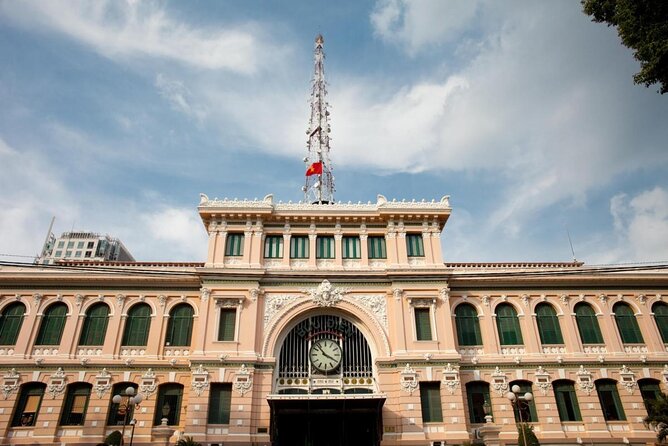
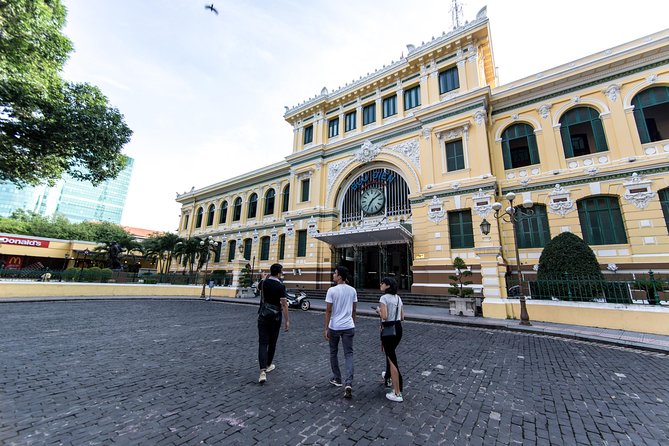
Stop one is Saigon Central Post Office, a building constructed around 1886–1891. It’s one of the oldest and most iconic structures in the city, and the tour allots about 20 minutes with admission included.
This stop is more than a photo opportunity. It’s a functioning post office, so it’s ideal if you want something tangible to take home. One very practical detail from experience with this tour: people often use the building to buy postcards and stamps right there. That’s the kind of simple travel win that costs you nothing extra and gives you a souvenir with a story attached.
What to expect on the ground: you’ll see the classic architecture and details, and your guide can point out why it’s such a recognizable landmark. The short timing keeps you moving, but it also means you can combine it with a quick shopping or mailing errand if that’s your style.
Possible drawback? If you love architectural slow-walks, 20 minutes can feel brief. The good news is that you’ll likely get a clear, guided overview first, so you know what to focus on when you revisit or explore nearby on your own.
Jade Emperor Pagoda: Chinese-Styled Detail in a 30-Minute Break
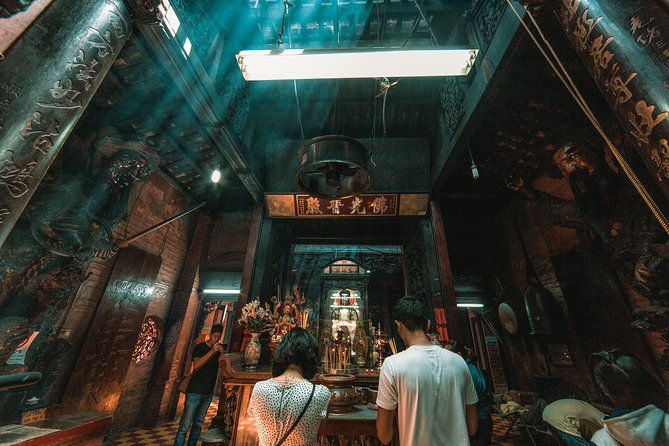
Next comes Emperor Jade Pagoda, built in 1892 and known for its Chinese architectural style. You get about 30 minutes, with admission included.
This is the tour’s texture shift. After colonial-era buildings, you step into a temple with strong design cues—especially the colorful yin-yang roof elements. If you like noticing symbols and design choices, this is a good stop because it’s visually clear what the building is drawing from.
The route timing matters here. A 30-minute visit fits well after the Post Office and before the heavy emotional turn at the War Remnants Museum. It gives you something calm and culture-focused without derailing the half-day schedule.
War Remnants Museum: Powerful Exhibits, Real Emotional Weight
Then the tour moves into the heart of Vietnam War history with the War Remnants Museum. You’ll have about one hour, and admission is included. The museum’s exhibits are described as potentially too graphic for some travelers, and that warning is not just a legal footnote.
This stop is usually the emotional centerpiece. People often talk about the impact of the displays, including photography by war photojournalists. If you’re the type who likes to understand a place through what happened there, this museum gives you the context you can’t get from street-level sightseeing alone.
The major consideration is pace. Many visitors want to slow down and read more, but the tour time is one hour. Some people wish they had longer inside, especially for the photo and document sections that hit hardest. If you know you tend to linger, go in ready to choose a few areas to focus on, instead of trying to absorb everything.
Practical advice: wear comfortable clothes and give yourself permission to step out if needed. If you’re traveling with someone sensitive to graphic content, talk with your guide early so you can plan your time with care.
You can also read our reviews of more private tours in Ho Chi Minh City






Independence Palace: Where Wartime History Became Everyday Power
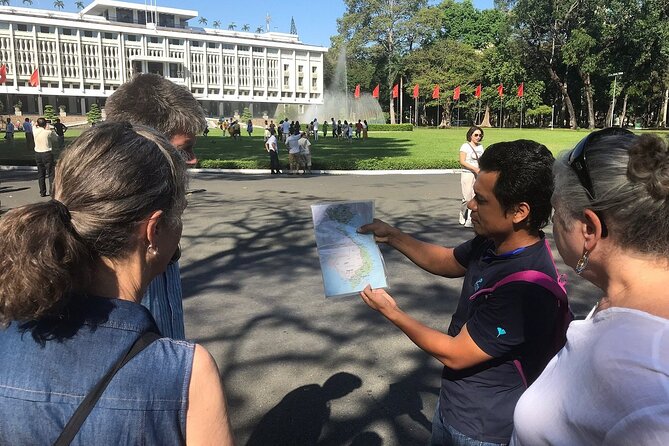
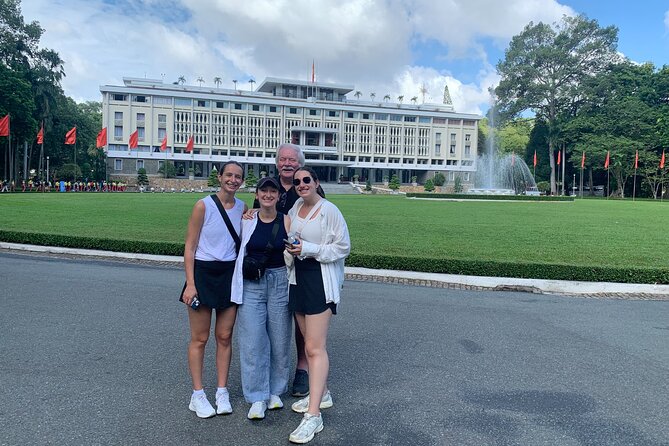
Stop four is The Independence Palace, with about 1 hour 30 minutes allotted. Admission is included, and it’s one of the most important wartime sites in central Saigon.
During the Vietnam War, it served as the residence and office of South Vietnamese President Nguyen Van Thieu. The site is also a designated historical monument, so you’re not just looking at a building—you’re stepping into a preserved snapshot of political operations during a pivotal period.
This is a great match for a half-day tour because it helps connect the museum’s story to a real place where leadership decisions were made. You’ll likely be able to move through rooms and spaces at a slower pace than the first two stops, which makes the time feel fair.
A note on what to bring emotionally: if you came from the War Remnants Museum, your brain is probably still processing. Plan to keep your expectations realistic. You don’t need to memorize every detail. Use this stop to understand the setting, then let your guide’s interpretation help you connect the dots.
Notre Dame Cathedral: Colonial Architecture as a City Symbol
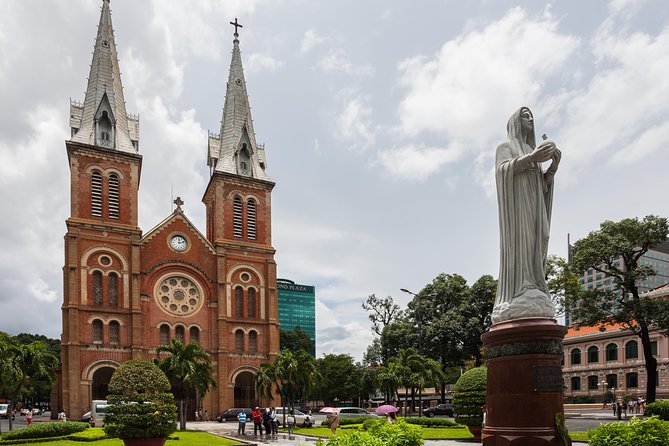
The final listed major stop is Notre Dame Cathedral Vietnam, described as one of the world’s 19 most majestic cathedrals and the only Southeast Asia representative. It’s positioned as an architectural symbol of Ho Chi Minh City.
Your guide will help you see why it’s visually important in the city’s mix of styles. It also functions well as a “landing” point after the palace and war-themed content: you get back into architecture and city identity.
One timing note: the exact minutes aren’t provided in the tour summary for the cathedral stop the way they are for earlier sites. That means your experience may feel a little more flexible depending on how the day flows and what the group needs. If you want extra time for photos or simply to sit and watch the area, tell your guide at the start of the tour. A private format usually helps with that.
Private Guide Energy: The Real Difference Is the People
A private tour is only as good as its guide. Here, the tour includes an English-speaking guide, and the standout theme from real-world experiences is that the best tours feel personal.
Some guide names people mention include Typhoon Honey, Ngoc, Hai, Tam, and Jason. Across those examples, the common thread is how the tour connects sites to everyday life and backstory, not just dates and facts. I like that the guide role isn’t only “tell me the monument facts.” It’s also practical: helping you navigate, understand why streets and buildings matter, and answer questions that pop up while you’re standing in front of something.
That said, private tours can also vary based on communication. One review mentioned a guide whose English was a bit harder to follow, and another mentioned a guide who provided brief overviews then left people to explore on their own. That doesn’t mean the tour is bad; it means your experience depends on how engaged your guide is and what you ask for.
My practical advice: before the first stop, tell your guide what you want most.
- If you want shorter explanations and more time inside rooms, ask for that.
- If you want deeper historical context, ask for it early, not halfway through.
- If you want extra time to read exhibits at the museum, request it while you still have the schedule margin.
And yes, the driver matters too. People consistently mention smooth transport and good navigation through busy streets. When the driver is confident, it reduces stress fast.
Comfort, Timing, and What to Bring on a Hot Saigon Day
This tour uses an air-conditioned minivan, which is a real quality-of-life upgrade in Ho Chi Minh City’s heat and humidity. Walking is limited in reviews, so you’re mostly riding between stops and stepping out for targeted visits.
Included help: mineral water and wet tissue. Even so, I’d plan as if you might want more. One review specifically wished water had been available throughout the tour, not only at certain points. If you’re prone to dehydration, bring a small bottle you can keep with you.
Also consider bringing:
- Comfortable shoes for museum floors and cathedral interiors
- A light layer if you get cold inside air-conditioning
- Sun protection if you run hot outdoors
Who This Tour Is Best For
This half-day tour is a strong fit if you:
- Have limited time and want a high-impact overview of central Saigon
- Want a guide because you don’t want to DIY your way through the city center
- Like seeing how French-era and wartime history shape the city you’re walking through today
- Prefer a schedule where transport and entrance fees are handled for you
It’s also a good choice for first-timers who want to get oriented quickly. One of the best outcomes of a compact tour is that it makes your later independent wandering easier—you start recognizing what you saw and why it matters.
Who should think twice: if you’re not comfortable with war content, the museum warning is important. The War Remnants Museum may be too graphic, and the tour includes that stop as a core item. Also, if your priority is current-day culture and daily life over wartime history, you may find this route heavy on historical sites. You’ll still learn a lot, but the city’s “today” won’t be the main focus.
Should You Book This Private Ho Chi Minh City Half-Day Tour?
Book it if you want a well-paced, low-stress way to see major Saigon landmarks with a real guide and without paying extra for tickets at each stop. The structure makes sense for a first visit: start with the Central Post Office, take in the Jade Emperor Pagoda, tackle the War Remnants Museum, then connect it to wartime leadership at Independence Palace, ending with the architectural symbol of Notre Dame.
Pass or pair it with something else if war exhibits aren’t your thing, or if you know you like long, unscheduled museum time. In that case, you might want a museum-focused day with more hours, or a different tour emphasizing daily life and neighborhoods.
If you do book, send your guide a clear note about your preferences. Private tours work best when you speak up early about what you want to get out of those four hours. That’s how you turn a good highlight route into a memorable one.
FAQ
What is included in the Private Ho Chi Minh City Half-Day Tour?
You get hotel pickup and drop-off from selected hotels, transport by air-conditioned minivan, an English-speaking guide, entrance fees, and mineral water with wet tissue. Food and drinks aren’t included.
How long is the tour, and how long do I spend at each site?
The tour runs about 4 hours. The posted time at stops includes about 20 minutes at Saigon Central Post Office, 30 minutes at Emperor Jade Pagoda, 1 hour at War Remnants Museum, and 1 hour 30 minutes at Independence Palace (Notre Dame Cathedral timing isn’t listed in the summary).
Can I choose a morning or afternoon departure time?
Yes. The tour offers morning or afternoon departure times so you can fit it into your schedule.
Is this a private tour or shared with other people?
It’s a private tour/activity, meaning only your group participates.
Is food included during the tour?
No. Food and drinks are not included, though mineral water and wet tissue are provided.
Is the War Remnants Museum suitable for children or sensitive travelers?
The museum exhibits may be too graphic for some travelers. Children must be accompanied by an adult, so plan carefully if you’re bringing kids or if you’re sensitive to war-related content.