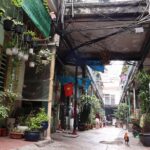
War stories, under Saigon streets, are what make this walk special. I love the small-group pace and I love that it brings you to the Secret Weapons Cellar, not just the postcard squares. The only drawback is the subject matter: the War Remnants Museum can be emotionally intense, and you’ll do a fair amount of walking.
This is a 2 to 3 hour Saigon orientation through District 1, starting near 7-Eleven on Tôn Thất Tùng and ending at Independence Palace. It’s a tips-only tour with a local English-speaking guide and a vegetarian option if you request it, and you’ll check in with a mobile ticket.
In This Review
- Key things that make this tour worth your time
- A small-group Saigon highlights walk that actually feels like a guide
- Start near 7-Eleven Tôn Thất Tùng, then stitch together Saigon’s colonial story
- Secret Weapons Cellar: the war site that reframes what you think Saigon is
- Coffee with the guide’s family and a Buddhist memorial that hits hard
- French tiles, Vietnamese schooling, and an old chapel with a long timeline
- War Remnants Museum and Independence Palace: your day’s story arc
- Price, tips, and the $2 admissions you should plan for
- Who should book this Ho Chi Minh City war-and-religion walk
- Should you book this free walking tour of Ho Chi Minh City?
- FAQ
- How long is the Ho Chi Minh City Hidden Bunker & Vietnam War walking tour?
- What price model does this tour use?
- Are there admission fees on top of the tour?
- How big is the group?
- Does the tour include the Jade Emperor Pagoda?
- Does the tour include English-speaking guidance?
- Where does the tour start and end?
- Is there a vegetarian option?
Key things that make this tour worth your time
- A guided group that stays small so you can ask real questions
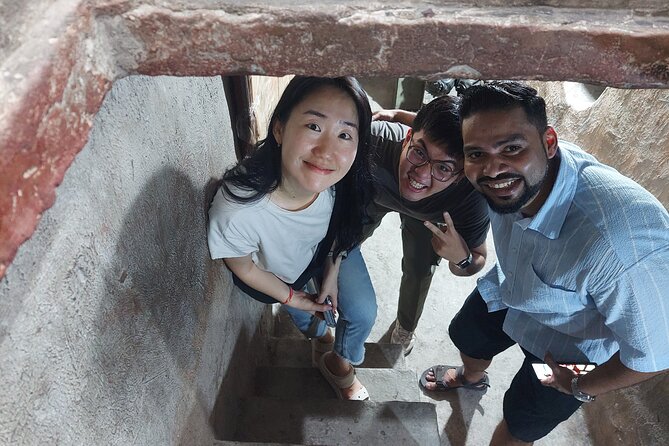
- Secret Weapons Cellar experience that’s easy to miss on your own
- Jade Emperor Pagoda and a Buddhist memorial that add meaning beyond the war
- French-era landmarks like Archbishop’s Palace and Lê Quý Đôn High School
- War Remnants Museum + Independence Palace create a clear story arc from conflict to 1975 reunification
A small-group Saigon highlights walk that actually feels like a guide
If you’ve only got half a day in Ho Chi Minh City, this format makes sense. You’re not sprinting between random stops. You’re walking a connected route through the places that help you understand modern Saigon, including the parts that visitors often gloss over.
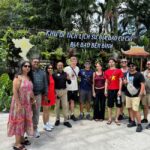
The best part is the size. The tour is designed around an intimate group (up to eight), with the wider activity capped at 20. That means you’re more likely to get personal answers instead of listening to a guide talk at you for hours.
And you’re not just checking boxes. This walk weaves together colonial and post-colonial architecture, Vietnamese religion, and the Vietnam War story. That mix is what turns a “sights tour” into a sense-making tour.
One more practical note: it’s a walking tour with multiple photo-worthy exteriors and a couple of longer indoor stops. Wear shoes you trust, and don’t schedule it as your fastest “get-everything-done” day if you’re sensitive to heavy topics.
You can also read our reviews of more walking tours in Ho Chi Minh City


Start near 7-Eleven Tôn Thất Tùng, then stitch together Saigon’s colonial story
The tour begins in central District 1 near 7-Eleven on Tôn Thất Tùng, Phường Phạm Ngũ Lão. From there, you’ll move through the downtown core where French colonial buildings and later political architecture sit side by side. That pairing is the point.
You’ll see major landmarks that first-time visitors usually want on their list—like the Saigon Opera House, the People’s Committee Building, the Central Post Office, and the Saigon Notre-Dame Basilica. Even when you’re mostly viewing from outside, it helps to have someone explain what you’re looking at and why it matters.
Then the tour shifts from “pretty buildings” to “what happened here.” The downtown colonial quarter isn’t just scenery. It’s part of the city’s layers—pre- and post-colonial, religious and political, public and private. Having a guide prevents the usual problem: you end up taking photos but missing the why.
If you’re the type who likes to connect the dots while walking, this kind of route pays off. If you only want peaceful sightseeing, the coming war-focused stops might feel like a left turn.
Secret Weapons Cellar: the war site that reframes what you think Saigon is
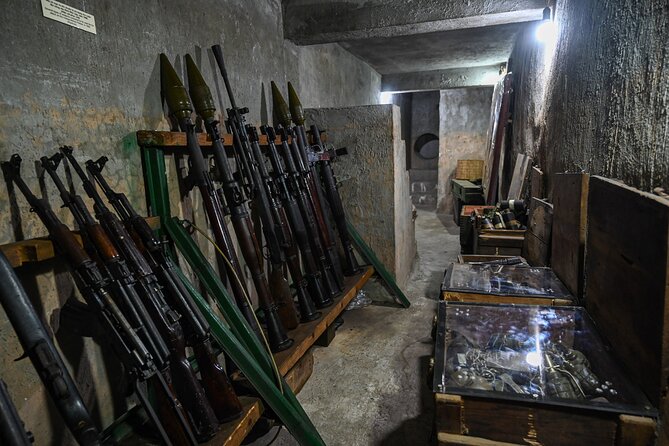
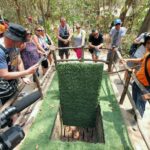
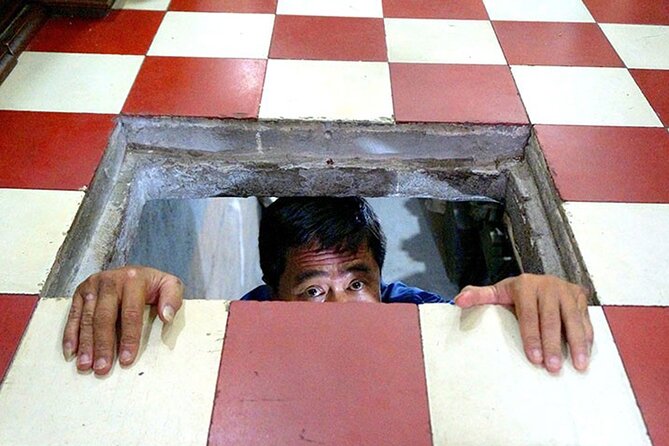
The star early stop is the Secret Weapons Cellar (also referred to as the Saigon Secret Weapons Bunker). This is one of those Vietnam War relics that doesn’t get the same attention as the big museum stops.
You’ll spend about 20 minutes there, and the value is less about “facts on a worksheet” and more about perspective. You’re looking at the physical reality of the war—how people adapted, engineered solutions under pressure, and survived using what they had. That theme fits the tour’s overall approach: don’t just read about conflict, see how it shaped everyday space and decisions.
One practical point: you should plan for a small extra admission fee for the weapons bunker. The tour pricing is tips-based, but the materials you’ll enter have their own costs—listed as $2 per person for the weapons bunker and the War Remnants Museum.
The only drawback is that a cellar/bunker setting can feel tight or dim compared with the wide boulevards outside. If you’re claustrophobic, go slowly and don’t force yourself to stay longer than you want.
Coffee with the guide’s family and a Buddhist memorial that hits hard
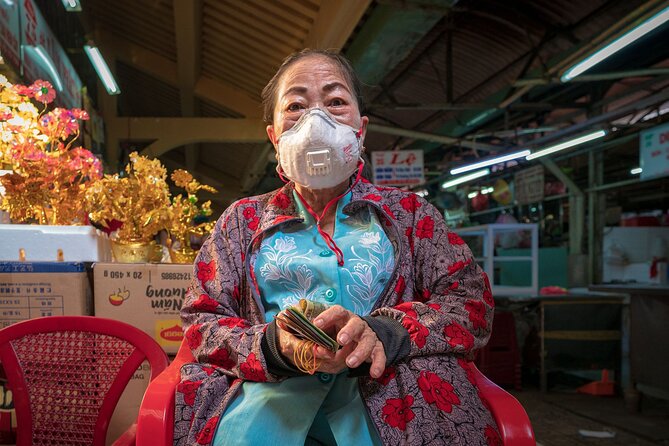
Next you’ll step off the typical tourist track with a stop in the Vietnam Tourist Guide family home. It’s built around conversation: you sit down together and hear stories from the guide’s perspective, with history shown through photos on the wall and chat happening over coffee.
This is the kind of stop I like because it adds context you can’t get from guidebooks. Buildings and museums are important, but personal stories put a human face on the same events the city is dealing with. It also makes the day feel less like a checklist and more like a shared walk with a person who lives here.
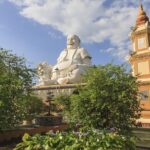
After that, you visit the Thích Quảng Đức Memorial. This memorial honors the Buddhist monk who self-immolated in protest against the Vietnam War. Even if you know the headline, a memorial stop tends to slow people down. It’s not a quick “photo and move on” moment.
If you’re the type who needs a moment after heavy content, take it here. You’ll have a clearer head for what comes next, especially the War Remnants Museum.
French tiles, Vietnamese schooling, and an old chapel with a long timeline
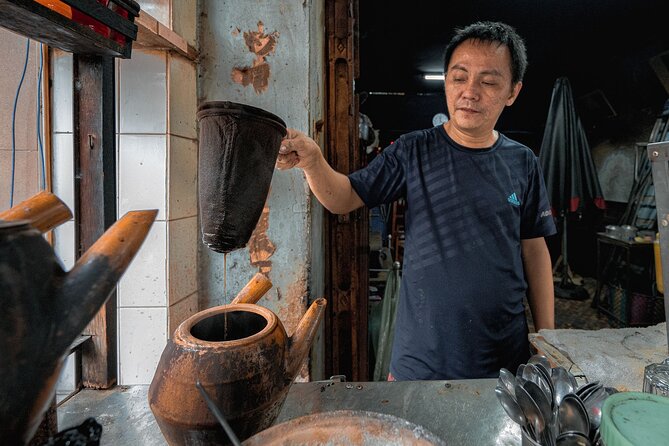
Mid-tour, the walking route brings in French-era architecture that helps explain Saigon’s layered identity.
One highlight is Tòa Tổng Giám Mục Sài Gòn, located in the French Archbishop’s Palace area. It’s described as Saigon’s oldest building, and you’ll hear a specific timeline: a tiled chapel built for Lord Nguyen Anh in 1790, about 12 years before he ascended as Emperor Gia Long. That kind of detail matters because it connects the building to the longer Vietnamese story, not only the colonial era.
Then you’ll see Lê Quý Đôn High School, noted as the first French colonial school in Saigon. It also gets positioned as a symbol of early blending between Vietnamese and French culture. Even if you don’t go inside (the tour gives you a short stop), having someone explain the purpose of the school adds meaning to what would otherwise just look like old architecture.
The plus here is contrast. The memorial and bunker emphasize war-era pressure. These stops remind you the city also invested in institutions—religion, education, administration—while layers of power shifted.
The consideration: if you’re tired after the memorial, these architectural stops can feel lighter but still informational. I’d treat them as a “reset for the mind” rather than skipping ahead.
You can also read our reviews of more city tours in Ho Chi Minh City



War Remnants Museum and Independence Palace: your day’s story arc
The tour’s emotional center is the War Remnants Museum, where you’ll spend about an hour. The museum is described as a powerful look at the Vietnam War’s impact, using exhibits, photographs, and military artifacts to show the human cost and consequences.
This is not light entertainment. If you’re sensitive to graphic or distressing imagery, go at your own pace. It’s okay to linger at the parts that speak to you and move on from the ones that don’t. Your guide can often help you understand what you’re seeing without rushing you.
After the museum, the finale is the Independence Palace (also known as the Reunification Palace). Here you get a different emotional register. The palace is where the war ended in 1975, and it was used as a presidential home and command center. Now it functions as a reunification symbol, with preserved rooms and even a rooftop helipad included in the site.
That ending changes the tone of the whole morning/afternoon. You start with a war-era bunker, move through religious protest memorials, then see the museum’s impact, and finally land in a place tied to the end of the conflict. It’s a full arc: conflict, suffering, and then political change.
If you’re a history buff, this pacing is great. If you’re not, it still works because the day is guided by a theme: understanding how the city remembers.
Price, tips, and the $2 admissions you should plan for
This tour is marketed as a tips-only walking tour. The listing price you see (like the $0.71 figure) is essentially just a booking placeholder; what really matters is the tipping model and the extra site fees.
Plan for small add-ons at the Secret Weapons Cellar and the War Remnants Museum, listed as $2 per person. Everything else on the walk is described as free or included as part of the experience (with the big museum stop being the main extra cost besides the bunker).
So the value is mainly in three things:
- You’re paying for interpretation, not just access.
- You get a small group that keeps the experience human.
- You’re seeing places that are easy to miss if you’re solo.
One story that made me trust the guiding here: in at least one case, the guide Joseph went beyond the script—organizing transfers from a cruise port and even lending money so the group could buy an iced coconut coffee when they hadn’t exchanged dong yet. That’s the kind of practical help you don’t get from a basic “here’s the route” tour.
If you’re counting every dollar, tips-only tours can feel awkward at first. The way to handle it is simple: tip based on effort and clarity, especially when the guide helps with more than just facts.
Who should book this Ho Chi Minh City war-and-religion walk
This tour is ideal for you if:
- It’s your first trip to Ho Chi Minh City and you want a fast orientation through central Saigon
- You care about the story behind Vietnam War sites, not just the locations
- You like a guide who can connect architecture to the political and religious shifts the city went through
- You want a small group experience instead of a big bus feel
It’s also a good match if you appreciate the “local life” moments, like the stop in the guide’s family home with coffee and photos. That part is brief, but it adds emotional texture.
You might want to think twice if:
- You know you don’t handle heavy material well. The War Remnants Museum is the core of the experience.
- You’d rather do only upbeat, casual sightseeing today. This walk has a serious center.
- You’re extremely limited on walking time, since it’s a multi-stop route across District 1.
Vegetarian eaters should know that a vegetarian option is available if you request it ahead of time. That’s not always offered on themed history walks, so it’s a real plus.
Should you book this free walking tour of Ho Chi Minh City?
I’d book it if you’re looking for a structured half-day that goes beyond the usual “postcard Saigon.” The combination of Secret Weapons Cellar, the Thích Quảng Đức Memorial, the War Remnants Museum, and the Independence Palace gives you a coherent story arc in 2 to 3 hours. And the small-group setup keeps it interactive.
Skip it if your main goal is relaxation or you want to avoid the Vietnam War’s emotional weight. You’ll still see beautiful colonial architecture, but the day is clearly designed around war and remembrance.
If you do book, go in with the right mindset: show up ready to walk, and give yourself a little space for the heavier stops. You’ll leave with your bearings fast—and with a far more meaningful understanding of Saigon than a checklist alone.
FAQ
How long is the Ho Chi Minh City Hidden Bunker & Vietnam War walking tour?
It runs about 2 to 3 hours.
What price model does this tour use?
It operates on a tips-only basis.
Are there admission fees on top of the tour?
Yes. The weapons bunker and the War Remnants Museum have an admission fee listed as $2 per person. Other stops are described as free.
How big is the group?
The guided group is capped at no larger than eight, and the activity has a maximum of 20 travelers.
Does the tour include the Jade Emperor Pagoda?
Yes, Vietnamese religion at the Jade Emperor Pagoda is part of the experience.
Does the tour include English-speaking guidance?
Yes. The guide is fluent in English.
Where does the tour start and end?
It starts at 7-Eleven at 23 Tôn Thất Tùng, Phường Phạm Ngũ Lão, Quận 1, and ends at Independence Palace Ben Thanh, District 1.
Is there a vegetarian option?
Yes. A vegetarian option is available if you advise ahead of time.