REVIEW · HO CHI MINH CITY
Cu Chi Tunnels Half-Day Tour: Big Group Vietnam War Experience
Book on Viator →Operated by TNK Travel · Bookable on Viator
Tunnels under Ben Duoc tell a hard story. This Cu Chi Tunnels half-day tour keeps things focused, with a guided Vietnam War walkthrough plus roundtrip transport from central Ho Chi Minh City.
I love the practical comfort: an air-conditioned bus and a bottle of mineral water included. I also love how the tour starts with orientation (a guide briefing and a short documentary), so the underground rooms and routes make sense fast.
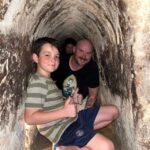
One consideration: the visit includes a tight, underground section you can try (optional). If you’re claustrophobic, treat that part as optional and stick to the surface exhibits.
In This Review
- Key highlights worth the money
- Cu Chi Tunnels at Ben Duoc: What You’re Really Seeing
- Getting to Ben Duoc from Ho Chi Minh City: 8:00 AM to a Calm Return
- The Orientation Moment: Guide Briefing and Documentary Before You Go Underground
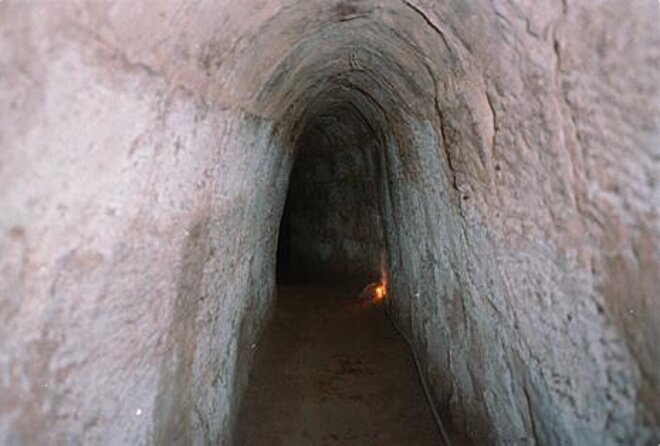
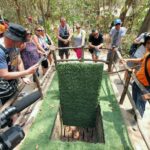
- Guided Tunnel Exploration: Concealed Entrances and Reconstructed “Everyday” Spaces
- The Claustrophobia Question: How to Decide What to Try
- Cassava and the Optional Shooting Range: Two Ways to Feel the Period
- Group Size and Guide Delivery: Why 25 People Works Here
- Price Check: What $19.70 Includes (and What It Doesn’t)
- Timing Tips: Make This Tour Fit Your Whole HCMC Day
- Who Should Book This Cu Chi Half-Day Tour?
- Should You Book This Cu Chi Tunnels Half-Day Tour?
- FAQ
- How long is the Cu Chi Tunnels half-day tour?
- What time does the tour start?
- Is roundtrip transportation included?
- Is the Cu Chi Tunnels entrance fee included?
- Is water included?
- Is food included on the tour?
- Can I go into the tunnels?
- Is the shooting range included?
- What’s the cancellation policy?
Key highlights worth the money
- Central pick-up from District 1 (112 Đ. Trần Hưng Đạo, Phường Phạm Ngũ Lão, Quận 1)
- Ben Duoc briefing + documentary film to set the story before you go underground
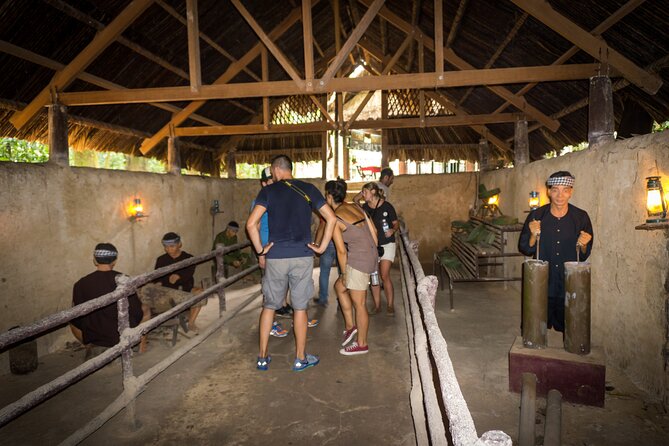
- Reconstructed tunnel spaces such as weapon factories, medical facilities, and communal kitchens
- Optional cassava and shooting range add-ons (shooting costs extra)
- A widened tunnel section that’s your controlled chance to feel how confined it is
- Entrance fee and water included so you don’t get surprise charges at the gate
Cu Chi Tunnels at Ben Duoc: What You’re Really Seeing
Cu Chi Tunnels can sound like a single stop. On the ground, you’ll see a whole underground system—rooms, passages, concealed entrances, and practical spaces designed for wartime survival.
The Ben Duoc tunnel complex is the star here, and the tour frames it in a very grounded way. You’re not just staring at darkness; you’re moving through a guided experience that points out the ingenuity behind hidden routes and functional underground areas.
You’ll also get specific examples of what the tunnels supported. The tour includes reconstructed sections like weapon-factory areas, medical facilities, and communal kitchens. That matters because it turns the tunnels from a headline into something more concrete—how people lived and operated below ground.
You can also read our reviews of more tours and experiences in Ho Chi Minh City

Getting to Ben Duoc from Ho Chi Minh City: 8:00 AM to a Calm Return
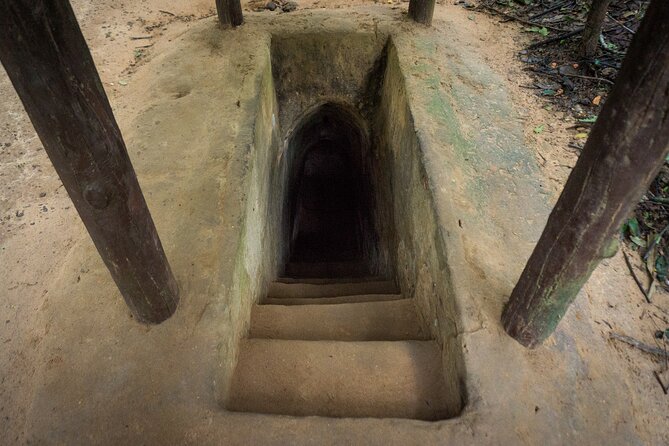
This tour starts at 8:00 am, with transportation from central Ho Chi Minh City. You’re looking at about a 90-minute drive to reach the tunnel area, so you’ll spend the morning on the road—then most of the rest of the day on-site.
The ride is in an air-conditioned bus, which is a big deal in Vietnam. Heat and humidity can drain you fast, and this setup helps you arrive ready to focus instead of already tired.
Plan for a true half-day rhythm, not just a quick stop. The tour runs about 6 hours, and you can expect to be back in Ho Chi Minh City by the early afternoon (around 2:00 pm is a good ballpark). That timing is a real win if you’re trying to avoid losing an entire day to travel.
Also, you’ll get 1 bottle of mineral water per person. It’s not a full day-meal plan, but it’s one less thing to think about before you head out.
The Orientation Moment: Guide Briefing and Documentary Before You Go Underground
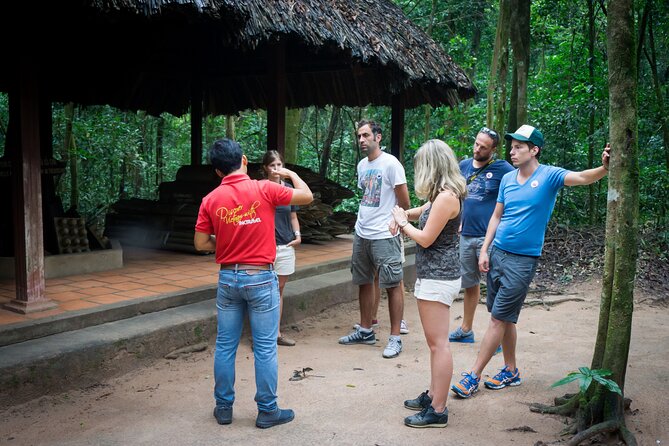
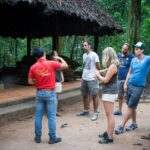
A lot of tunnel tours skip the context and throw you straight into the physical experience. This one does the opposite: you get a briefing and a documentary film before the tunnel walk begins.
That prep is useful because the underground environment can feel confusing at first. When your guide explains what you’re looking at—how hidden entrances and reconstructed areas fit together—you’re able to connect the dots while you’re actually inside.
The tour also uses the guide commentary to connect the tunnel network to the Vietnam War. You’ll hear why this region mattered, then you’ll see those ideas played out through the layout and recreated rooms.
In practice, I like this structure. It helps you avoid the common problem of leaving with photos but not much understanding. You get a story first, then the tunnels make sense as you go.
Guided Tunnel Exploration: Concealed Entrances and Reconstructed “Everyday” Spaces
Once you’re through the initial briefing, you move into the guided exploration of the tunnel complex. This is where the experience becomes physical—dark, narrow, and very different from street life.
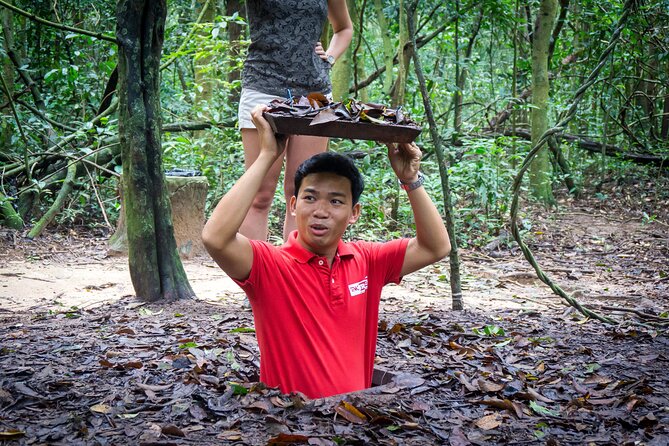
The tour focuses on practical underground features, not just dramatic visuals. You’ll see concealed entrances, reconstructed sections, and areas that represent real functions: weapon-related spaces, medical facilities, and communal kitchens.
Those specifics are valuable because they show how guerrilla life required systems. Food, care, and production didn’t happen only above ground. The tunnels weren’t just for hiding; they were for working and surviving.
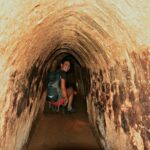
One smart detail: the tour includes an optional widened tunnel section where you can experience the confined conditions firsthand. That’s a great compromise if you want the reality of the space without committing to something extreme.
If you choose to go in, don’t treat it like a stunt. Go slowly. Expect the feeling of tight air and close walls. Even the “widened” option is still a tunnel experience.
The Claustrophobia Question: How to Decide What to Try
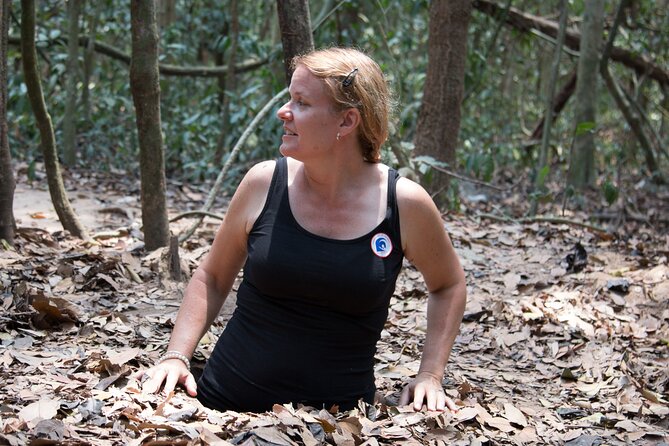
This tour is designed for most travelers, and the schedule gives you choices. The optional tunnel section is your main “hands-on” moment, and everything else is a guided walk through exhibits and reconstructed areas.
So if you’re even a little nervous about confined spaces, you’ve got a decision point built in. Try the widened section, or skip it and keep your focus on the guided explanations and surface areas.
I’ll put it plainly: tunnels can trigger discomfort quickly. You can enjoy the history without forcing yourself into the tightest part. If you’re the type who panics in small rooms, make your call early so you don’t waste energy during the walk.

Cassava and the Optional Shooting Range: Two Ways to Feel the Period
After the main tunnel exploration, the tour includes a taste of cassava. Cassava is presented as the staple food that sustained the guerrilla fighters, which gives the visit another layer beyond underground architecture.
A quick food tasting is a small thing, but it helps your brain connect the dots. After seeing underground rooms for practical needs, cassava adds the “what they ate” piece to the same story.
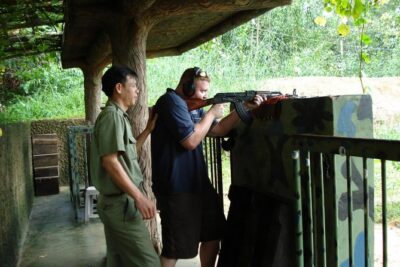
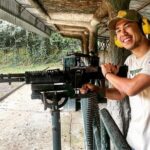
Then there’s an optional add-on that costs extra: an opportunity to fire authentic weaponry, such as AK47s and M16s, at a designated range. The tour makes it clear this is not part of the base price.
If you’re tempted by the shooting option, treat it like any paid add-on: it changes your total cost, and it also changes the emotional tone of the day. Some people love the hands-on element; others prefer to stick with the historical walkthrough only.
Either way, I appreciate that the tour separates the paid option from the included experience. It keeps the core visit consistent.
Group Size and Guide Delivery: Why 25 People Works Here
This is a group tour with a maximum size of 25 travelers, and the guide is English-speaking. That size is large enough to make the tour run efficiently, but small enough that you can still hear the guide and follow the story.
One of the most praised parts of this tour style is how friendly and informative the guide can be. That matters because tunnel tours are sensory. If the guide keeps the explanation clear, you don’t get lost in the maze or stuck staring at details without meaning.
I also like that the tour is structured—briefing, documentary, guided exploration, then the small add-ons. A tunnel visit isn’t the place for a free-for-all. This format keeps the day moving at a pace that still feels thoughtful.
Price Check: What $19.70 Includes (and What It Doesn’t)
At $19.70 per person, this tour sits in the “serious value” category for Ho Chi Minh City day trips—mainly because a lot of the big-ticket items are already handled.
Included:
- air-conditioned bus transportation
- English-speaking tour guide
- entrance fee
- mineral water (1 bottle)
- group tour structure (max 25)
Not included (based on what’s stated):
- food and drinks beyond the water
- tips/personal expenses
- the optional shooting range (extra cost)
That’s the key for judging value. You’re paying for transport and entry, plus a guided program that’s long enough to feel real. The one gap is food: since no meal is mentioned, you should plan to eat before you go or afterward. Don’t assume lunch is part of the deal.
Also, keep in mind weather. The tour notes it requires good weather, and if it’s canceled for poor weather you’ll be offered a different date or a full refund. That’s another small value point because you’re not locked into a day that gets ruined by rain.
Finally, demand is real. It’s often booked about 20 days in advance, so if your dates are firm, don’t wait until the last week.
Timing Tips: Make This Tour Fit Your Whole HCMC Day
Because you’re leaving at 8:00 am and getting back around early afternoon, you can pair this tour with evening plans in Ho Chi Minh City. That’s exactly why people like it as a quick day trip.
Here’s what helps the day feel smooth:
- Eat something light before pickup so you don’t feel snack-starved during the drive.
- Save room in your schedule for rest after. Tunnel-heavy mornings can wear you out more than you expect.
- If you want the optional widened tunnel section or cassava tasting, go in mentally ready to spend a little time being patient while the group stays together.
This tour keeps travel simple: pickup from a central meeting point and return to the same spot. That means less time hunting for the next step.
Who Should Book This Cu Chi Half-Day Tour?
You’ll probably enjoy this tour most if:
- you want a Vietnam War history stop without losing an entire day
- you like guided explanations that connect story to what you’re seeing
- you’re okay with a physical visit to reconstructed tunnel spaces
- you want roundtrip transportation handled for you
It may not be your best fit if:
- you strongly dislike tight spaces and want zero tunnel crawling sensation (the tunnel option is optional, but the visit is still underground-focused)
- you’re looking for a “relaxing” outing. This is history that involves confinement and serious subject matter
- you expect meals to be included. The only stated refreshment is water
If you’re traveling with a mixed group—someone who wants history and someone who just wants something easy to plan—this tour often works because it’s structured, time-controlled, and not overly long.
Should You Book This Cu Chi Tunnels Half-Day Tour?
If you want a straightforward, good-value way to see the Cu Chi Tunnels without turning your schedule into chaos, I’d book it. The included entrance fee, guide, air-conditioned transport, and water make the base price feel fair, and the Ben Duoc focus gives you enough time to understand what you’re walking through.
My main advice is simple:
- Do the guided tunnel portion with your attention switched on.
- Treat the widened tunnel option as optional, and choose based on your comfort level.
- Budget for the optional shooting range if you’re interested, and plan your own food since meals aren’t listed.
If your goal is to get in, learn fast, and still have your afternoon free, this is a strong pick.
FAQ
How long is the Cu Chi Tunnels half-day tour?
It runs for about 6 hours.
What time does the tour start?
The start time is 8:00 am.
Is roundtrip transportation included?
Yes. Pickup is offered, and the tour includes transportation by air-conditioned bus from central Ho Chi Minh City and back to the meeting point.
Is the Cu Chi Tunnels entrance fee included?
Yes. The entrance fee is included.
Is water included?
Yes. You get 1 bottle of mineral water per person.
Is food included on the tour?
Food and beverages are not mentioned as included in the program, so plan your own meals.
Can I go into the tunnels?
There is guided exploration of the tunnel complex, and a widened tunnel section offers an optional opportunity to experience the confined conditions firsthand.
Is the shooting range included?
No. The optional opportunity to shoot weapons is available for an extra cost.
What’s the cancellation policy?
You can cancel for a full refund up to 24 hours before the experience starts. Free cancellation is offered up to that cutoff, based on local time.