REVIEW · HO CHI MINH CITY
Afternoon Saigon Unseen Adventure by Scooter |Opt: Ao Dai Riders
Book on Viator →Operated by Saigon On Motorbike · Bookable on Viator
Motorbikes turn Saigon into a quick lesson. I love how this English-speaking guide connects big events to real street corners, and I also like the practical flow of hopping on and off without wasting time. The Thich Quang Duc Memorial stop alone makes the rest of the ride feel meaningful, not just scenic; as for a drawback, you’re on a scooter for about 4 hours, and if you care about an Ao Dai rider match it can depend on timing and crowd levels.
You’ll get helpful hotel pickup and drop-off, then spend the afternoon moving through a mix of religion, daily life, and wartime secrets. Expect stops for local food like bun bo hue, grilled oysters, fresh coconut, and Vietnamese coffee, plus a flower market and places such as Thien Hau Pagoda, District 4’s floating market, and a hidden basement site at 287/70 Nguyễn Đình Chiểu.
In This Review
- Key highlights you’ll feel right away
- Why an afternoon scooter ride is the smartest way to see Saigon
- Thich Quang Duc: the stop that gives the whole city context
- Ho Thi Ky Flower Market: smell the day, then eat grilled oysters
- Thien Hau Pagoda: Mother of Sea, Chinese roots, and a quiet reset
- District 4 floating market: watching work happen on the water
- 287/70 Nguyễn Đình Chiểu: the secret basement that carries war memory
- Food that anchors the ride: bun bo hue, coconut, oysters, and coffee
- Ao Dai riders option: great photos, but plan the timing
- Price and value: why $25 can work out better than it looks
- Who this tour fits best (and who might skip it)
- Should you book it?
- FAQ
- How long is the Afternoon Saigon Unseen Adventure by Scooter?
- Is hotel pickup included?
- Is this a private tour?
- What’s included in the price?
- Is admission included for the main sites?
- Do you offer vegetarian food options?
- Is there an Ao Dai rider option?
- Do I need to bring tickets to the tour?
- What happens if it rains?
- What is the cancellation policy?
Key highlights you’ll feel right away
- A guide who ties culture to the streets so history doesn’t stay in a textbook
- Thich Quang Duc Memorial with context for the monk and the August Revolution era
- Ho Thi Ky Flower Market with time to browse and eat grilled oysters
- Thien Hau Pagoda (Mother of Sea) built by Chinese in 1760
- District 4 floating market where people live and trade from boats
- Ao Dai rider option with specific timing rules for female riders
Why an afternoon scooter ride is the smartest way to see Saigon

Saigon moves fast, and that’s exactly why a motorbike tour makes sense. In just a few hours, you can cover neighborhoods and viewpoints that would take way longer on foot or with slow transfers. The tour keeps things simple: you’re picked up, you ride, you stop, and you get back—no self-planning headache.
The scooter setup is designed for comfort and safety, with a high-quality open-faced helmet included. If the weather turns, a rain poncho is part of the deal. That matters because Saigon’s afternoons can shift from dry to rainy without much warning, and you don’t want your day to fall apart over one wet hour.
One more plus: this is set up as a private experience, meaning it’s only your group. That gives your guide more freedom to answer questions and adjust pacing when something catches your eye—like an alley entrance, a temple detail, or a food stall you want to pause for.
Finally, your timing is good. An afternoon outing feels less rushed than morning tours, but it still keeps your day from stretching too long into the night. You’ll be done while you still have energy to grab dinner on your own.
You can also read our reviews of more tours and experiences in Ho Chi Minh City

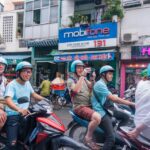

Thich Quang Duc: the stop that gives the whole city context
The ride begins at the Venerable Thich Quang Duc Memorial Monument in District 3. This is a major site dedicated to the monk Thich Quang Duc, known for his self-immolation in 1963 as a protest against the persecution of Buddhism by the South during the conflict of that era. It’s not a quick photo stop; you’ll have around 40 minutes to slow down and take it in.
What I like about starting here is the way it changes how you see later stops. Once you understand why this moment mattered, the rest of the afternoon stops being a list of attractions. Instead, it feels like you’re moving through Saigon while the city’s past sits in the background—shaping what people built, how communities formed, and what they remembered.
Your guide also brings in the August Revolution story, which adds political context to the spiritual and social threads you’ll see around town. That combination is powerful: religion isn’t treated like a separate topic, and politics isn’t treated like dry dates. You get the sense of why people cared so much, and how those pressures echoed across different parts of the city.
A practical note: sites connected to protest and persecution can feel heavy. If you prefer light and cheerful tours only, this start may feel intense. But if you want to understand Saigon beyond its skyline, it’s a strong anchor.
Ho Thi Ky Flower Market: smell the day, then eat grilled oysters
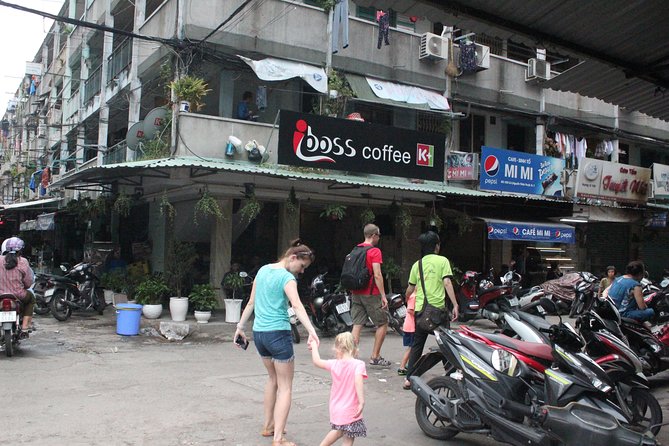
Next you head to Ho Thi Ky Flower Market, one of the best places to watch daily life through a sensory lens. You’ll spend about 45 minutes here, with time to walk the aisles and take in the colors and fragrances. Flowers come from across Vietnam, so you’re not just seeing one local supply chain—you’re seeing a whole network that keeps celebrations and homes stocked.
This is also where the tour adds food that fits the setting. You’ll enjoy grilled oysters as part of the experience. I like this kind of pairing because it makes the market feel like a living place, not a themed stop. You’re eating something local while you’re already surrounded by local rhythms.
Another good touch is that this part of the day gives your guide an easy opening to talk. Flower markets often lead to natural questions about culture, seasons, and what people buy for. If you ask, your guide can usually connect what you’re seeing to wider city habits.
One consideration: markets can be busy, and you’ll be moving through stalls while also stopping for bites. If you don’t like close-contact crowd movement, keep your pace steady and give yourself a little patience. The payoff is that you get a real feel for the city’s everyday commerce.
Thien Hau Pagoda: Mother of Sea, Chinese roots, and a quiet reset
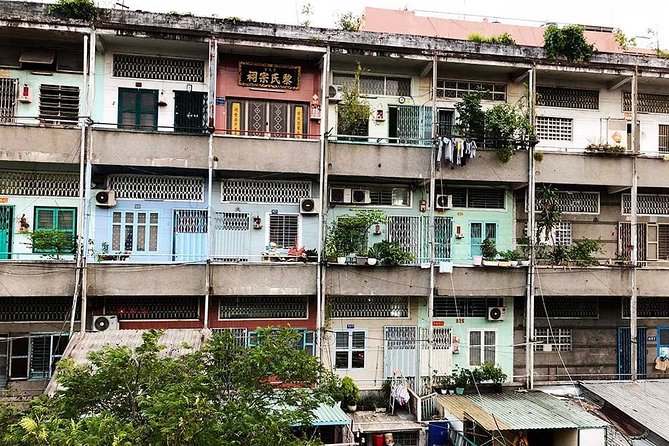
After the market, the tour shifts from shopping energy to temple calm at Thien Hau Pagoda, also known as the Mother of Sea. This site was built by the Chinese in 1760, and it’s a great example of how different communities helped shape Saigon over time.
You’ll have around 40 minutes here, and admission is free. I like this stop for a simple reason: it gives your brain a break. After scooters, alleyways, and food time, you need a slower space. Temples do that. You can stand back, watch details, and let the guide explain symbolism at a pace that actually lands.
Thien Hau Pagoda’s reputation as the Mother of Sea fits the city’s history as a place tied to waterways and trade. Even if you’ve never thought about sea-related worship before, your guide can help you connect the dots between geography, livelihoods, and belief.
The drawback is mostly sensory rather than logistical. Temples can involve incense smoke, crowds at peak moments, and lots of small visual details. If you’re traveling with someone who wants minimal walking inside, consider wearing shoes you can move in comfortably.
District 4 floating market: watching work happen on the water
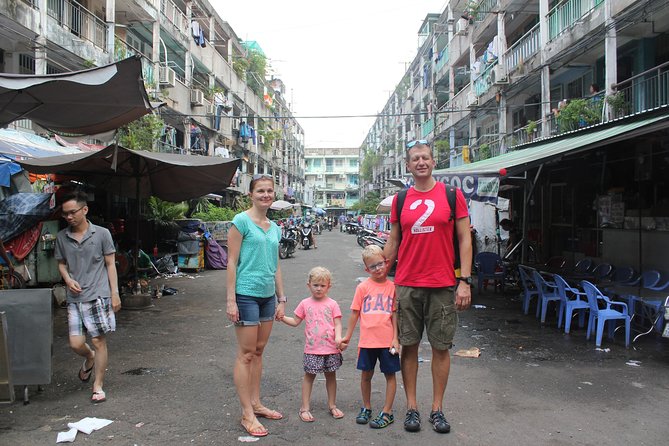
Then you ride to District 4, where the tour focuses on the floating market—people live and work on boats and trade goods right from the water. You’ll have about 40 minutes here, with admission listed as free.
This is one of those stops that works best when you keep your expectations flexible. You’re not arriving at a museum display. You’re seeing a practical system of commerce that relies on boats, simple storage, and daily routine. Look closely and you’ll notice how many things are built around the water, from where goods are kept to how people move through the scene.
Your guide can also help you interpret what you’re seeing so it doesn’t feel like you’re just watching from the edge. The experience is as much about understanding how people organize work as it is about photos.
The main consideration is motion and footing. Floating markets sit on watercraft and docks, so surfaces can feel uneven. Take it slow, hold onto any offered handrails, and don’t rush your balance.




287/70 Nguyễn Đình Chiểu: the secret basement that carries war memory
One of the most striking parts of this tour happens at 287/70 Nguyễn Đình Chiểu Street in District 3. Beneath a house at that address is a secret basement that once hid more than 2 tons of weapons of the Saigon Rangers during the war.
You’ll spend about 40 minutes at this stop, and admission is listed as free. What makes it memorable is how tangible the idea of secrecy feels. Even if you’ve read about wartime networks before, a physical site gives your imagination something concrete to grab onto.
This is also where the guide’s story-telling matters. Sites like this can turn into a quick history recap unless someone connects it to the city’s human scale—who built it, why it stayed hidden, and what it says about fear, resistance, and survival.
If you prefer sightseeing that stays strictly cheerful, this part may feel heavy. But if you want Saigon to include the truth of its conflicts, it’s one of the most honest stops on the route.
Food that anchors the ride: bun bo hue, coconut, oysters, and coffee
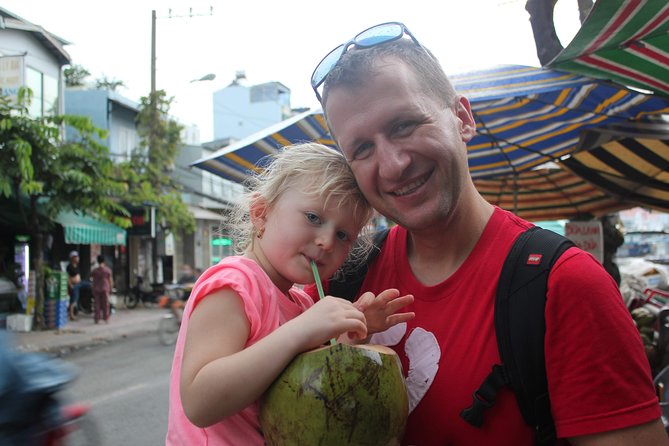
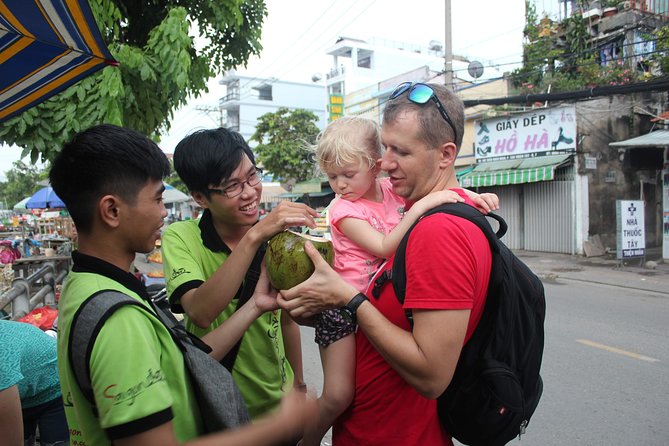
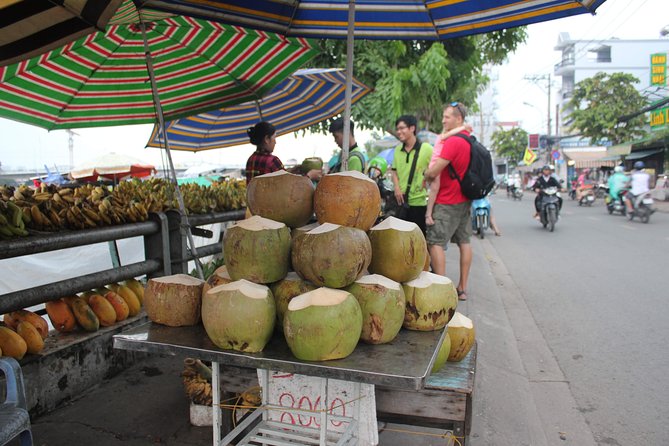
The food on this tour isn’t random. It’s built into the day so every stop gets a local taste. You’ll get bun bo hue, a traditional soup dish, and you’ll also enjoy fresh coconut. The afternoon is rounded out with grilled oysters at the flower market and Vietnamese coffee mentioned as part of the overall experience.
I like the pacing here because it keeps energy steady. The route includes temple time, market time, and a wartime secret site—if you only eat at the end, you’d be running on fumes halfway through. Instead, you snack and sip along the way, so you can actually pay attention to what your guide is showing you.
If you’re vegetarian, there’s a vegetarian option available. That’s important, because scooter tours can sometimes rely on meat-heavy defaults. Having a built-in option means you won’t spend your stops scanning menus while everyone else keeps moving.
Practical tip: if you’re sensitive to spice or strong flavors, tell your guide right away. Food is included, so small adjustments matter.
Ao Dai riders option: great photos, but plan the timing
This tour includes an Ao Dai riders option, which can add a fun photo moment to your day. But there’s a key detail: female Ao Dai riders require 6 hours in advance. If you request later, or if days are crowded, rider gender is random.
I think this is worth talking about upfront. If Ao Dai matching is a must for you, treat it like a priority item, not an afterthought. Book with enough lead time so you’re not gambling on luck once the afternoon is already locked in.
Also, keep in mind the tour is still a scooter experience. Helmets are included, and you’ll still be riding through real streets, not a closed photo set. The Ao Dai option is about adding style to the experience, not about eliminating wind, traffic noise, or the need for everyday scooter logistics.
Price and value: why $25 can work out better than it looks
At $25 per person, this tour can feel like a bargain once you see what’s included. You’re paying for more than a guide. The price covers the motorbike experience (including fuel), a high-quality open-faced helmet, and the rider setup that lets you move around efficiently.
On top of that, all food and drinks are included, plus an accident insurance policy and a rain poncho if needed. If you’ve priced out a similar mix of guide time plus multiple snack stops plus private scooter transport in Ho Chi Minh City, it usually adds up fast.
There’s also hotel convenience. Pickup and drop-off are offered to many Saigon hotels, which saves you time and reduces the effort of arranging your own rides between distant neighborhoods. That can be a hidden cost for self-guided plans.
One admission detail to note: the Thich Quang Duc memorial stop lists an admission ticket included, while other stops show as free admissions. Either way, the structure is built so you’re not stuck scrambling for tickets while managing a scooter day.
Is it perfect value for everyone? Not quite. If you already know Saigon well and prefer to wander solo at your own pace, you might not need a guided scooter loop. But if it’s your first days in town—or you want the story behind the places—this is strong for the money.
Who this tour fits best (and who might skip it)
This is a great fit if you want a guided Ho Chi Minh City motorbike tour that balances history, daily life, and food. It’s also ideal if you like asking questions and learning how different pieces connect—like how a 1963 protest story relates to later cultural sites and wartime memory.
You’ll likely enjoy it most if you’re comfortable with scooter travel and you’re okay spending time standing and moving at markets and temples. The total time is about 4 hours, so plan for that as a commitment.
You might want another option if you strongly dislike motorbike rides, hate crowds at markets, or want a calmer walking-only day. Also, if Ao Dai matching is your top goal, plan early because the female rider request needs 6 hours in advance.
Should you book it?
If your goal is to see more of Saigon than you could cover on your own—while also getting clear explanations—you should book this afternoon scooter adventure. The route mixes the big emotional story of Thich Quang Duc, everyday life at the Ho Thi Ky Flower Market and District 4 floating market, and the wartime secret of 287/70 Nguyễn Đình Chiểu. Add food at multiple points, plus the convenience of pickup and drop-off, and you get a tight afternoon with real variety.
If you’re unsure, decide based on two things: your comfort with being on a scooter for about 4 hours, and whether you want history explained in plain terms rather than just sightseeing. For the right mindset, this tour is one of the most efficient ways to understand Saigon fast.
FAQ
How long is the Afternoon Saigon Unseen Adventure by Scooter?
The tour runs for about 4 hours.
Is hotel pickup included?
Yes. Hassle-free transfers to and from many Saigon hotels are included.
Is this a private tour?
Yes. It’s set up as a private tour/activity, and only your group participates.
What’s included in the price?
The tour includes the motorbike, fuel, a high-quality open-faced helmet, all food and drinks, and accident insurance. A rain poncho is included if needed.
Is admission included for the main sites?
Admission is included for the Thich Quang Duc Monument stop. The other listed stops have admission marked as free.
Do you offer vegetarian food options?
Yes. A vegetarian option is available.
Is there an Ao Dai rider option?
Yes, there’s an Ao Dai rider option. Female Ao Dai riders require 6 hours in advance, and later or crowded days may result in random rider gender.
Do I need to bring tickets to the tour?
You’ll use a mobile ticket.
What happens if it rains?
A rain poncho is provided if needed.
What is the cancellation policy?
You can cancel for free up to 24 hours in advance for a full refund. If you cancel less than 24 hours before, the amount paid is not refunded.