REVIEW · HO CHI MINH CITY
Private China Town Walking Tour in Ho Chi Minh City
Book on Viator →Operated by Magic Karp tour · Bookable on Viator
A street-map personality beats a basic tour. This private Chinatown walking tour in Ho Chi Minh City turns Cho Lon into a story you can actually follow, from markets to temples and the religions that overlap here. I like that it starts with the real place people shop and pray, not a photo stop.
I love how the guide keeps the sights practical. You’ll spend time at Binh Tay Market learning how Vietnamese Chinese business works, plus the market origin story that gives the whole area context. I also love that the tour is private, so guides such as Casey or Ben (names you may see for this experience) can shape the walk around what you care about.
One thing to consider: this is a walking tour in a compact area, so bring comfortable shoes and plan for a bit of effort, especially if you’re starting from farther in the city. If you’re tight on energy, you can always use Grab for the short hop and still enjoy the on-foot part.
In This Review
- Key things to know before you go
- Why a Cho Lon Chinatown walk beats a generic Ho Chi Minh City loop
- Meeting at Binh Tay Market: the sights, smells, and the founder story
- St Francis Xavier Church (Cha Tam Church) and the religion mix behind the Big Market area
- Ong Bon Pagoda and the God of the Sky angle on architecture
- Ba Thien Hau Temple: sea goddess mythology and worship details you can actually picture
- Nghia An Temple: Quan Cong, the horse, the God of money, and a cool-down treat
- Private guide style: why Casey and Ben-type pacing works so well
- Price and logistics from Ben Thanh: when $31.63 makes sense
- Who should book this tour, and who might skip it
- Should you book the Private China Town Walking Tour in Ho Chi Minh City?
- FAQ
- FAQ
- How long is the private Chinatown walking tour in Ho Chi Minh City?
- Where does the tour start and end?
- What sights will we visit during the walk?
- Is pickup included, and is there any limit?
- What’s included in the tour price?
- Is lunch included?
- What’s the price per person?
- Do I need to worry about weather?
- What is the cancellation policy?
Key things to know before you go
- Cho Lon first, photos later: the walk is built around places locals actually use, like Binh Tay Market and multiple temple compounds.
- Temple stories are the main event: you’re not just looking at architecture—you’re learning why it’s arranged that way and who’s worshiped.
- A private guide changes the pace: you get a real back-and-forth, not a forced marching tempo.
- English/Japanese support: you can book with an in-person guide in English or Japanese.
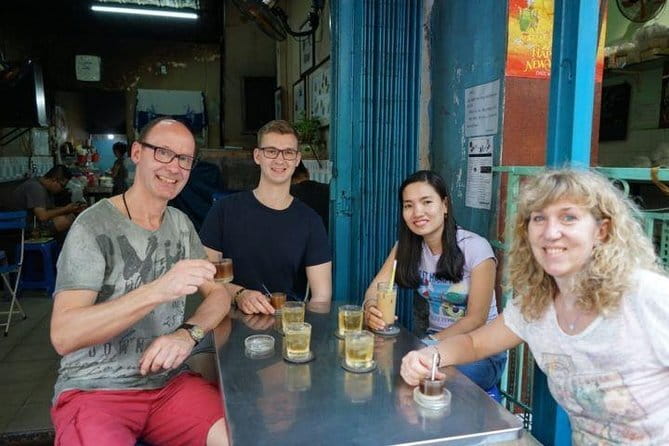
- Coffee or tea is included: a small break helps you keep going without turning this into a grind.
Why a Cho Lon Chinatown walk beats a generic Ho Chi Minh City loop
Ho Chi Minh City is loud, fast, and full of “see this, then this” tours. This one feels different because it’s focused. Instead of bouncing across unrelated landmarks, you get a concentrated loop through Cho Lon, the Chinese quarter where trade, migration, and temple worship overlap in everyday life.
The best part is how the guide connects details that normally feel random. A market stall isn’t just a colorful scene. A church isn’t only a building. A pagoda isn’t only a place to look. When you understand what locals think about—business, sea protection, ancestor/general worship—the neighborhood starts clicking into place.
You also get a practical advantage: it’s built for a few hours, not an all-day haul. The tour runs about 3 to 4 hours, which makes it a nice afternoon plan when you still want something meaningful but you don’t want to lose your whole day.
You can also read our reviews of more walking tours in Ho Chi Minh City


Meeting at Binh Tay Market: the sights, smells, and the founder story
The tour begins at Binh Tay Market (57A Tháp Mười, Phường 2, Quận 6). This is a smart starting point because it’s not just sightseeing. It’s where the local Chinese-Vietnamese community does business, and the guide walks you through how that world works.
You’ll spend about 30 minutes inside the market with your guide, and you’re not wandering alone. Expect a guided route that helps you notice what you’d otherwise miss—how goods are displayed, how people move through the space, and what the guide points out about the neighborhood’s commercial role. Then you’ll hear the story about the man who created the market, which adds a foundation layer to everything you’ll see later.
What I’d watch for: markets can be tight and busy, and some aisles feel like you’re walking through a maze. If you’re sensitive to crowded spaces, go in with a patient mindset and keep your camera ready but not constantly in your hands.
Also, keep an eye on time. The market stop is short on purpose. It’s enough to get the context, and it sets you up for the religion and temple stops that follow.
St Francis Xavier Church (Cha Tam Church) and the religion mix behind the Big Market area
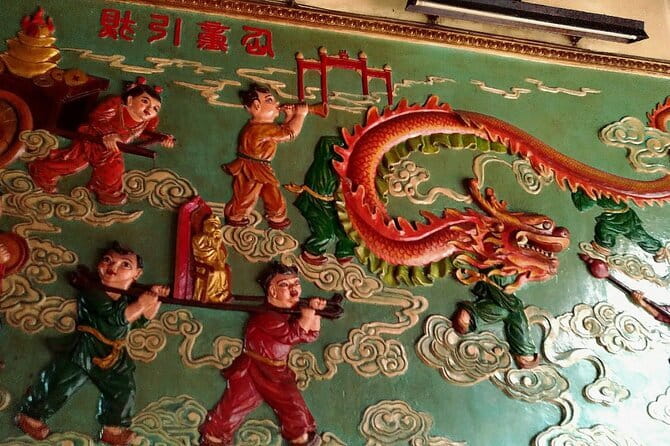
After the market, you head to St Francis Xavier Church (you may also hear it referenced as Cha Tam Church). This stop lasts about 30 minutes, and it’s about meaning more than architecture-only facts.
Here, the guide gives you context about the mix of religions in the big market area and how people lived side-by-side with different beliefs. The church also comes with an untold-story style explanation—why this church mattered in the same neighborhood that’s known for Chinese community temples and market commerce.
This is valuable because it prevents the usual “one religion per place” mindset. Cho Lon doesn’t neatly separate faiths. Instead, it layers them. You might notice that the market and church are part of the same human ecosystem: trade, community, and faith shaping daily life.
Possible drawback: if you’re expecting long, detailed church history lectures, this is more of a guided orientation than a deep museum-style stop. It’s still worthwhile, but you won’t get an hour-long sermon’s worth of detail. The goal is to keep the rhythm of a walking tour.
Ong Bon Pagoda and the God of the Sky angle on architecture

Next comes Ong Bon Pagoda, where you’re in for about 30 minutes. Your guide leads you around the temple with a focus on the God of the Sky and what makes the “big market” temple architecture distinct.
This stop is a good example of why a guided tour works better than just “doing temples on your own.” Without explanation, many temple elements look similar. With the guide, you start noticing differences in design and layout and understanding how those differences connect to the community behind them.
Why this matters for you: it trains your eye. After Ong Bon, you’ll be better at spotting what’s shared and what’s different in the next temples, instead of treating each stop like a separate random photo scene.
What to expect: you’ll follow along at a respectful pace, with the guide explaining key points and pointing out details connected to the deity and temple style. Dress normally for a sacred place and keep your volume down—this is a working religious space, not a themed attraction.
Ba Thien Hau Temple: sea goddess mythology and worship details you can actually picture
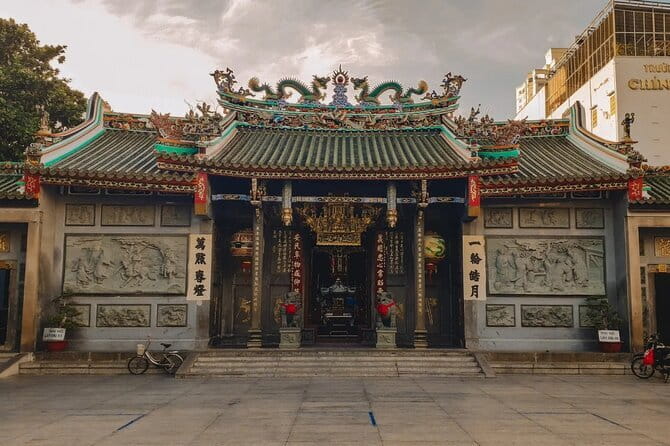
Then you reach Ba Thien Hau Temple (also described as the Thien Hau Temple), and this is one of the tour’s emotional anchors. It lasts about 45 minutes, and the guide focuses on the mythology of Ms. Thien Hau, the sea goddess for the Chinese community in the big market area.
The guide doesn’t stop at the goddess story. You’ll also be led to meet other gods within the temple compound, with explanations that help the worship make sense beyond names. The temple becomes more than a landmark—you start understanding why it’s there and why people keep returning.
If you’ve traveled in Southeast Asia long enough, you know that sea-related protection themes show up in coastal and trading communities. Cho Lon is tied to trade and movement, so it fits that a sea goddess would matter. The tour’s explanation helps you see that connection rather than missing it.
Tip for getting the most out of this stop: slow down for the guide’s key moments. At temples like this, photos are easy, but the interesting part is the story tied to specific features. Listen for what the guide points at, not just where you’re standing.
You can also read our reviews of more city tours in Ho Chi Minh City



Nghia An Temple: Quan Cong, the horse, the God of money, and a cool-down treat
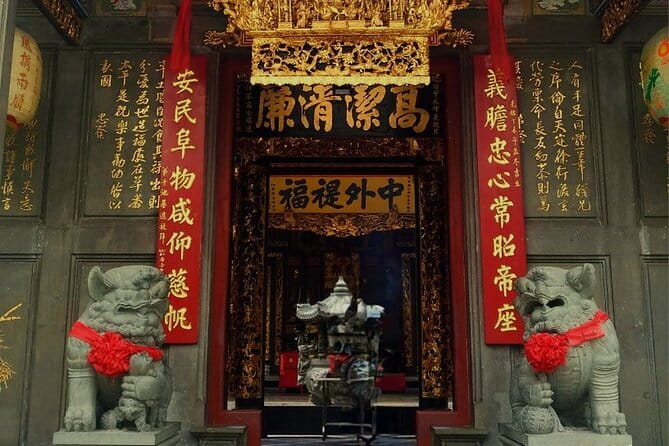
The final stop is Nghia An Temple at 678 Nguyễn Trãi, Phường 11, Quận 5. You’ll spend about 45 minutes here, and the tone shifts to a mix of hero worship and practical beliefs.
Your guide brings you to see Quan Cong, a general from the Three Kingdoms period (184–280), along with his famous horse and the God of the money. This stop also gets described as a place of love worship, which is the kind of detail that makes the tour feel local and human instead of purely academic.
And yes, there’s a moment built in to cool you off. The tour includes time for a nice cold treat—not a full meal, but enough to reset your energy and make the last stretch feel easier in the heat.
This ending is satisfying because it ties multiple threads together:
- market life and community organizing,
- faith and neighborhood identity,
- and beliefs tied to protection, prosperity, and personal life.
Practical note: because this is the end point, plan your next ride from there. If you’re heading back toward central sights, Grab is the simplest path.
Private guide style: why Casey and Ben-type pacing works so well
The private format is the hidden value here. You’re not just buying access to temples; you’re buying someone to translate a neighborhood for you.
In past groups, guides named Casey and Ben came through with a style that made the tour feel tailored. That means you can ask questions as you walk—why something is placed the way it is, what a deity represents in this specific community, or how the market connects to the rest of Cho Lon.
Also, walking tours live or die by pacing. The stops are spaced to keep you moving but not exhausted. It’s built so you can listen, look, and walk without feeling like you’re constantly catching up.
If you like tours where you leave with a clearer mental map of the area, this one fits. If you only want quick photos and zero questions, you might find it too story-heavy.
Price and logistics from Ben Thanh: when $31.63 makes sense
At about $31.63 per person, this tour sits in the budget-friendly zone for a private, guided experience. The value isn’t just the guide. It’s also the included items: coffee and/or tea, plus private transportation support.
Duration matters too. You’re getting 3 to 4 hours of structured time in a part of Ho Chi Minh City that’s easier to understand with local context. If you tried to do this alone, you’d likely spend extra time figuring out what each stop means—and you might miss key explanations that turn the walk into understanding.
Pickup is offered, but there’s a rule: pickup outside 1 km from Ben Thanh market comes with a $10 per customer charge. That’s the one place you should do a quick reality check. If you’re far away from Ben Thanh, price comparisons change. If you’re near Ben Thanh, it’s usually painless.
Your start and end locations are different (you start at Binh Tay Market and end at Nghia An Temple). That’s convenient because you don’t backtrack, but it also means you’ll want a plan for the ride afterward.
One more practical note: the tour requires good weather. If skies turn rainy, you may be offered a different date or a full refund, so don’t schedule this as your only daytime plan.
Who should book this tour, and who might skip it
This is a great choice if you:
- want a more local-feeling experience than a standard city bus loop,
- like walking with a guide who explains meaning, not just facts,
- are curious about the mix of Chinese community faith and the overlap with other religions,
- want a focused afternoon plan with a clear route.
Skip it (or choose a different style) if you:
- dislike walking tours and want only minimal walking,
- need long, slow museum-style deep dives,
- only care about big postcard sights rather than everyday neighborhood spaces.
Also, if you’re the type who enjoys switching off to cool drinks and short breaks, this tour is built for that—coffee or tea is included and there’s that cool-down treat near the end.
Should you book the Private China Town Walking Tour in Ho Chi Minh City?
If you want one afternoon in Ho Chi Minh City that actually feels like you’re reading the neighborhood instead of just checking boxes, I think this is a smart book. The biggest reason is focus: you’re spending a few hours in Cho Lon with a guide who connects market life and multiple temple traditions into one coherent story.
Book it if you’re comfortable with walking and you like guided explanations. Don’t book it if you want a relaxed, no-thinking stroll with zero history or religious context—this tour’s value is the meaning in the details.
FAQ
FAQ
How long is the private Chinatown walking tour in Ho Chi Minh City?
The tour runs about 3 to 4 hours.
Where does the tour start and end?
It starts at Binh Tay Market and ends at Hội Quán Nghĩa An on Nguyễn Trãi in District 5.
What sights will we visit during the walk?
You’ll visit Binh Tay Market, St Francis Xavier Church (Cha Tam Church), Ong Bon Pagoda, Ba Thien Hau Temple, and Nghia An Temple.
Is pickup included, and is there any limit?
Pickup is offered, but pickup outside 1 km from Ben Thanh market is charged at $10 per customer.
What’s included in the tour price?
The tour includes coffee and/or tea, private transportation, and an in-person guide in English or Japanese.
Is lunch included?
No, lunch is not included.
What’s the price per person?
The price is $31.63 per person.
Do I need to worry about weather?
The experience requires good weather. If it’s canceled due to poor weather, you’ll be offered a different date or a full refund.
What is the cancellation policy?
Free cancellation is available. You can cancel up to 24 hours in advance for a full refund.