Saigon Chinatown changes when you slow down. This tips-based walk is a smart way to learn the Chinese side of Ho Chi Minh City without paying for sights. I love how guide Thang turns everyday alley scenes into clear history, and I love that the stops are real places with free admission rather than staged “look at this photo spot” moments. One thing to consider: it’s a mostly-on-foot morning plan, and there are no included snacks or coffee.
You start at Saigon Skydeck (9:00 am) and the tour loops back to the same spot. The group is kept to a max of 30, so you get a guided pace but still feel like you’re moving with local life.
If you’re wondering about cost: the ticket shows a small price ($0.71), but the experience works on a tips-only basis, with a suggested extra tip of 15–25 USD per person. So think of it as “pay what you feel + tip your guide,” not “buy a normal attraction ticket.”
In This Review
- Key things I think you’ll like
- Chinatown in Ho Chi Minh City is best seen up close
- Price and tips: what this really costs (and why it’s still good value)
- Starting at Saigon Skydeck: timing, pace, and what to expect
- Stop 1: Hao Sy Phuong Alley and the meaning of a narrow passage
- Stop 2: Hội Quán Nghĩa An and old religious halls inside modern Saigon
- Stop 3: Ba Thien Hau Temple, Cantonese builders, and the yin-yang roof
- Stop 4: Chợ Lớn and the trade engine behind the district
- Guide Thang: the difference between seeing buildings and understanding them
- What’s not included: plan for comfort on a 3-hour street walk
- Best for: history lovers who like streets, not just photos
- Should you book this Chinatown hidden treasures free walking tour?
- FAQ
- FAQ
- What is the tour price?
- How long is the walking tour?
- What time does it start?
- Where do I meet for the tour?
- Does the tour end at the same place?
- Is there an admission fee for the stops?
- Is the guide available in English?
- What is the suggested tip amount?
- Are drinks or snacks included?
- How many people are in the group?
Key things I think you’ll like
- Thang’s storytelling: history explained in a way that stays easy to follow.
- Real Chinatown locations: alleys, halls, a temple, and the trade area around Chợ Lớn.
- Free entry at the key stops: you’re not stacking paid admissions on top of the price.
- Small-to-medium group size: up to 30 people, not a chaotic crowd.
- Built for learning on foot: you get context for what you’re seeing, not just a route.
Chinatown in Ho Chi Minh City is best seen up close
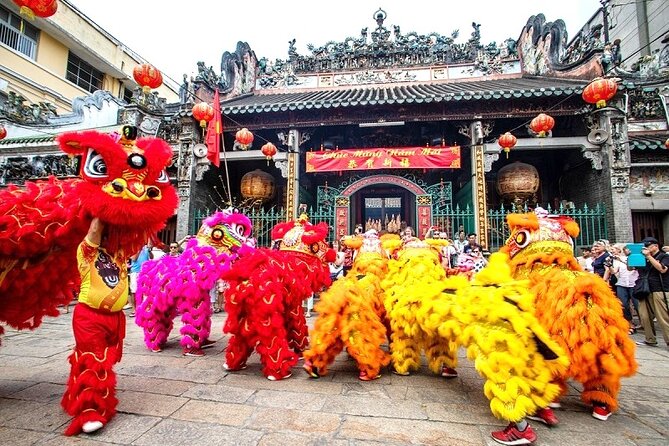
Ho Chi Minh City’s Chinese community didn’t just “add decorations” to the city. They shaped how people traded, worshipped, and organized neighborhoods. That’s why this walk works: it focuses on compact places where you can actually sense how daily life and community rules overlap.
The tour’s route is designed to keep you close to what you’d otherwise miss. Instead of only big-name sights, you spend time in the kind of narrow passages and courtyard-linked buildings that only make sense once someone points out the why—why the layout is like this, why the architecture looks the way it does, and how the district changed around it.
You can also read our reviews of more walking tours in Ho Chi Minh City



Price and tips: what this really costs (and why it’s still good value)
On paper, the price is $0.71. In practice, this is a tips-only walking tour. The tour includes an English-speaking guide, and the suggested extra tip is 15–25 USD per person. That means your “real cost” is mostly about what you choose to tip, plus how you handle your own drinks.
So is it worth it? For me, the value comes from two things:
- You’re paying for interpretation. Chinatown is full of clues—signs, building styles, and community spaces—but most visitors won’t naturally connect them without guidance.
- The tour doesn’t load you with extra paid entrances. Admission at the main stops is free, so you’re not getting nickel-and-dimed by ticket desks.
Where the cost can feel less “cheap” is if you tip conservatively but still expect the experience to feel like a paid attraction. If you put real thought into tipping a guide who’s helping you see the district clearly, the math usually works out.
Starting at Saigon Skydeck: timing, pace, and what to expect
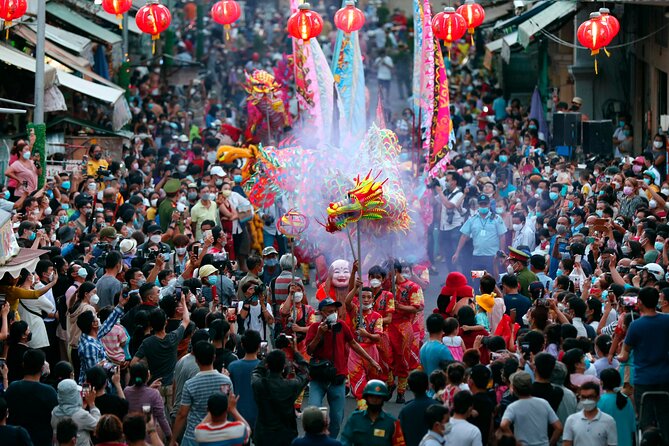
The meeting point is Saigon Skydeck, 36 Hồ Tùng Mậu, Bến Nghé, Quận 1, and the tour starts at 9:00 am. It ends back at the same point. That “return to base” format matters because it keeps the logistics simple, especially in a city where traffic can turn simple plans into time traps.
The tour runs about 3 hours. That’s long enough to learn, but short enough that you can still do other sights later that day. With a max group size of 30, you won’t be lost in a wall of people. You should still expect the usual limits of walking tours: you’ll move steadily, stop often, and stand to listen during short segments.
Also note what’s not included: no air-conditioned vehicle, and no coffee/tea or snacks. If you’re the kind of person who gets cranky when you’re hungry or thirsty, plan accordingly. This is a history-and-streets morning, not a café-hopping spree.
Stop 1: Hao Sy Phuong Alley and the meaning of a narrow passage
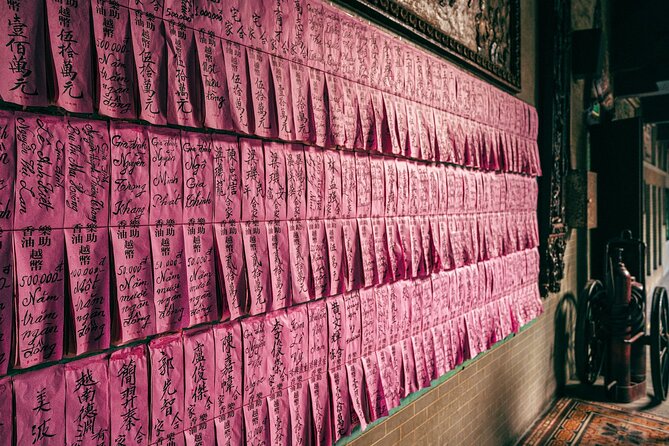
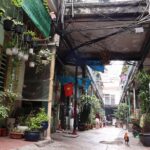
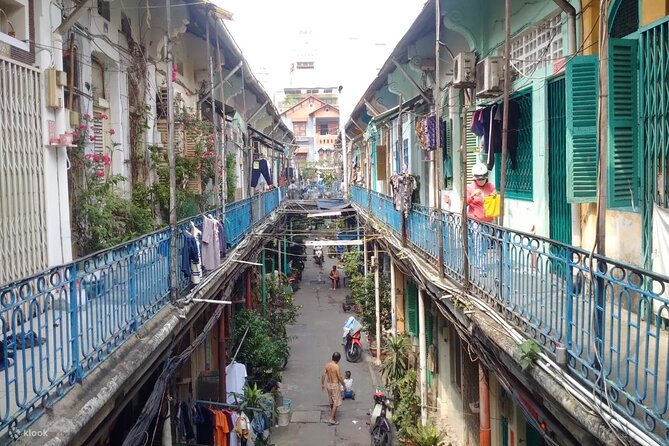
Your first stop is Hao Sy Phuong Alley in the heart of Saigon’s Chinatown. This narrow passageway has a history spanning over a century. That “over 100 years” detail isn’t trivia. It’s a reminder that alleyways like this weren’t built for tourists. They’re built for families, commerce, and community routines.
During this stop, you’ll get a sense of how these small lanes function like living corridors. Even if the street looks modest, it usually carries a lot of social logic—how people move, how shops cluster, and how neighborhoods maintain identity over time.
What I like about starting here is that it sets the right mindset. By the time you reach the more famous-looking buildings later, you already understand the district’s basic unit: not a single landmark, but a web of small spaces.
Potential drawback: alleyways can feel cramped if you’re uncomfortable with tight sidewalks. If you like wide views and quick photo stops, this part may feel slower than you expect. That said, it’s also where the walk becomes “real.”
Stop 2: Hội Quán Nghĩa An and old religious halls inside modern Saigon
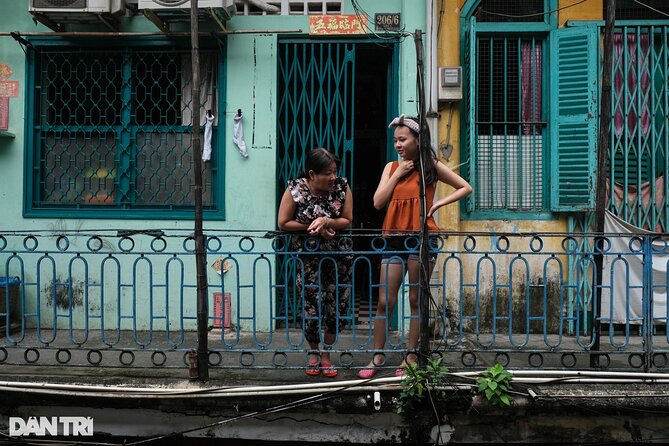
Next up is Hội Quán Nghĩa An (Nghĩa An Hoi Quán). This hall was constructed before the 19th century and has been rebuilt a few times, so what you see now reflects continuity rather than a single “original perfect moment.”
The biggest lesson here is contrast. The hall sits among modern buildings, which means you’re watching history squeeze into the present. The “unique archaic look” people notice isn’t just style—it’s a visual argument that communities keep returning to their roots, even while the surrounding city keeps changing.
This stop is also a reminder that Chinatown isn’t only about temples. Hoi quán-style spaces often function as community anchors—places tied to shared identity, social support, and religious practice. When you understand that, you start seeing these buildings as part of a support system, not just an architectural stop.
You can also read our reviews of more city tours in Ho Chi Minh City





Stop 3: Ba Thien Hau Temple, Cantonese builders, and the yin-yang roof
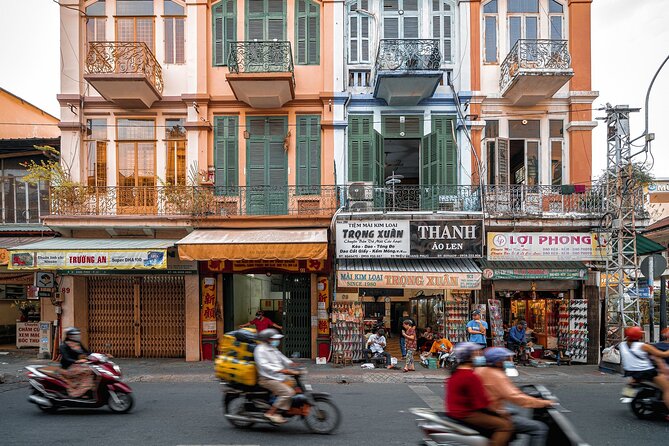
The walk then shifts to Ba Thien Hau Temple, a Chinese-style architectural heritage built in the late 19th century by the Cantonese community in Saigon. This is the point where the architecture becomes hard to ignore, including the yin-yang tiled roof.
That yin-yang roof is more than a design flourish. It signals religious and cultural symbolism you’re not meant to treat like a casual decoration. When you see it while a guide explains what it’s connected to, the temple stops feeling like just a pretty façade.
I also appreciate that the temple is located in the heart of the city. That makes it easier to understand how religious heritage survives in the middle of modern life. You’re not traveling far to find it—you’re learning how the neighborhood formed around places like this.
Practical consideration: temples often ask for respectful behavior, and you may need to stand and look while listening. If you prefer constant movement, you might find this section more “pause and absorb” than “walk and snap photos.”
Stop 4: Chợ Lớn and the trade engine behind the district
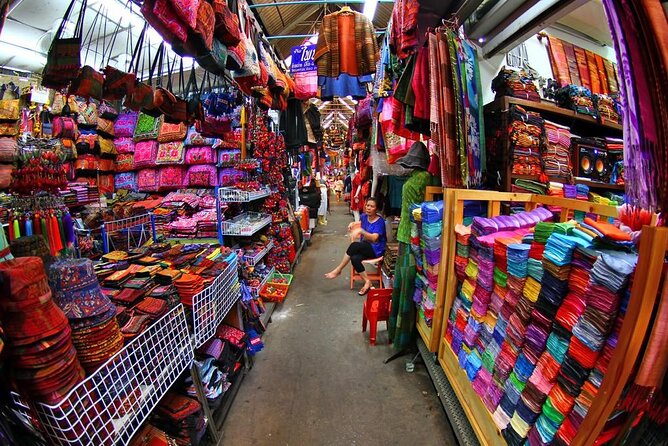
After the temple, you spend about an hour in the area of Chợ Lớn (Chinese market district). This is described as a significant commercial center for Chinese people in Ho Chi Minh City, and it still preserves important values of culture, religion, and architecture with roots going back thousands of years.
That “thousands of years” phrasing can feel big, but the idea is clear: trade communities tend to build infrastructure that outlasts individual business cycles. Markets don’t just sell goods. They bring people together repeatedly. That repetition creates habits, social boundaries, and shared traditions.
In this part of the tour, your guide helps you connect the dots between what you saw earlier (community buildings and cultural symbols) and what you see now: commerce as a daily rhythm. The result is that Chợ Lớn doesn’t feel like a random market zone. It feels like a district with a purpose.
Potential drawback: markets are not always comfortable for slow walkers, and the sensory load can be high. If crowds bother you, keep your pace focused and follow your guide’s lead. You’ll get more out of it that way.
Guide Thang: the difference between seeing buildings and understanding them
The biggest strength of this tour is the guide. In multiple accounts, Thang comes up for the same reason: he makes stories work at walking speed. The history isn’t dumped as a lecture. It’s organized so you can hold onto it.
One of the best parts, based on descriptions of the experience, is how he connects Vietnamese history and city development with what you’re standing in front of. Chinatown in Saigon isn’t separate from the rest of the country. It’s tied to broader shifts in politics, migration patterns, and everyday life. When you hear those connections out loud, the streets start acting like a timeline.
If you like tours where your guide answers your mental questions in real time—Why this community? Why this architecture? Why here?—this is a strong match.
What’s not included: plan for comfort on a 3-hour street walk
Here’s what you should budget around because it isn’t provided:
- No coffee/tea
- No snacks
- No air-conditioned vehicle
That doesn’t mean you’ll be uncomfortable the whole time, but it does mean you’re responsible for your own basic energy. Wear shoes that handle uneven sidewalks and curb steps. Bring whatever you use to deal with heat and sun.
Also, since the stops are spread across narrow streets and market areas, this is not the tour to do in fancy dress shoes. You want grip, not style.
Best for: history lovers who like streets, not just photos
This tour is a good fit if you:
- want a guided way to understand Chinatown architecture and community spaces
- enjoy short stops that build into a bigger picture
- like walking tours where the guide makes you notice details you’d otherwise skip
It can be less ideal if you:
- hate standing in one place to listen
- prefer fully seated tours or large-vehicle sightseeing
- want meals included as part of the experience
Should you book this Chinatown hidden treasures free walking tour?
If your goal is to understand the Chinese story inside Ho Chi Minh City—through Hao Sy Phuong, Nghĩa An Hoi Quán, Ba Thien Hau Temple, and the Chợ Lớn area—this tour is a smart buy. The biggest reason: you’re paying for interpretation, not just movement. And the admission at the core stops is free, so you’re not forced into extra fees.
I’d book it if you’re open to a 3-hour walking format and you’re ready to tip well. With a suggested 15–25 USD per person, treat it like a paid-quality walking lesson. If you expect the price tag to cover everything, you may feel confused when you get to the tips-only setup.
FAQ
FAQ
What is the tour price?
The tour price is listed as $0.71 per person.
How long is the walking tour?
The duration is about 3 hours.
What time does it start?
It starts at 9:00 am.
Where do I meet for the tour?
The meeting point is Saigon Skydeck, 36 Hồ Tùng Mậu, Bến Nghé, Quận 1, Thành phố Hồ Chí Minh, Vietnam.
Does the tour end at the same place?
Yes, the activity ends back at the meeting point.
Is there an admission fee for the stops?
The stops listed include free admission tickets.
Is the guide available in English?
Yes, the tour includes an English speaking guide.
What is the suggested tip amount?
The suggested extra tip is 15–25 USD per person, and the tour works on a tips-only basis.
Are drinks or snacks included?
No. Coffee/tea and snacks are not included.
How many people are in the group?
The tour has a maximum of 30 travelers.