REVIEW · HO CHI MINH CITY
Ho Chi Minh: 3-Day Mekong Delta & Optional Exit to PhnomPenh
Book on GetYourGuide →Operated by MILLENIUM TRAVEL CO.,LTD · Bookable on GetYourGuide
Three days in the Mekong feels like a movie.
This Ho Chi Minh City tour strings together boat time, village life, and temple stops across the Delta, with an optional exit to Phnom Penh. It’s a packed route, but it’s built around the places where southern Vietnam still feels local. You’ll see orchards and canals in Cai Be, then float through the famous Cai Rang market, and end with quiet rowing through Tra Su’s mangroves.
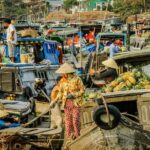
I love two parts most. The first is Cai Rang Floating Market, where the early-morning water traffic turns the morning into a show you can watch up close. The second is Tra Su Mangrove Forest in Chau Doc, because the slow rowing lets you see the ecosystem instead of just skimming it from the shore.
One drawback to plan for: this tour runs at a steady pace. Some days feel like they’re “on” from early morning to evening, so if you like a long, slow day, the schedule may feel a bit tight.
In This Review
- Key takeaways before you go
- From Saigon to the Delta: what your first morning really looks like
- Cai Be: orchards, canals, folk music, and the kind of lunch you remember
- A Tien River cruise that sets the tone
- The hands-on cooking stop
- Island cycling and historic houses
- Cai Rang Floating Market and a noodle workshop: morning energy with real craft
- What to watch at Cai Rang
- Noodles aren’t just lunch here
- Can Tho: Munir Ansay Pagoda and a Khmer cultural detour
- Why this pagoda stop matters
- Practical tip for pagoda visits
- Chau Doc and Tra Su Mangrove: slow rowing through a living system
- What the rowing style gives you
- The day ends with dinner
- Floating villages and Cham Village: heritage on the waterline
- Floating villages: daily systems, not staged scenes
- Cham Village: why heritage matters here
- Optional exit to Phnom Penh: the fast boat plus border help
- Boat transfer vs. bus transfer
- What the ride feels like in practice
- Visa and entry procedures handled for you
- Hotels and meals: what’s included, what it means for comfort
- Breakfast and lunches
- Dinner with a Vietnamese set menu
- Food focus beyond the standard tourist bowl
- Guides and group size: why it changes everything
- Price and value: is $261 actually fair?
- What to pack and how to act like it’s easy
- Who should book this tour, and who should skip it
- Should you book the 3-day Delta with optional Phnom Penh?
- FAQ
- Where is the meeting point in Ho Chi Minh City?
- What time does the tour start?
- Is hotel pickup included?
- What hotels do you stay in during the tour?
- What meals are included?
- Are entry fees included?
- Do I need visas for Vietnam and Cambodia?
- Is the Phnom Penh transfer always by boat?
- Is the tour suitable for everyone?
Key takeaways before you go
- Cai Rang Floating Market is timed for the best viewing window and paired with a noodle workshop
- Tra Su mangroves are done by rowing boat, giving you a calmer, closer experience
- Munir Ansay Pagoda adds Khmer culture into the Vietnam Delta story
- Cai Be village visits combine hands-on food and biking, not just sightseeing
- Optional Phnom Penh exit uses a fast boat or bus, depending on conditions
- 3-star base hotels in Can Tho and Chau Doc keep travel smooth and predictable
From Saigon to the Delta: what your first morning really looks like
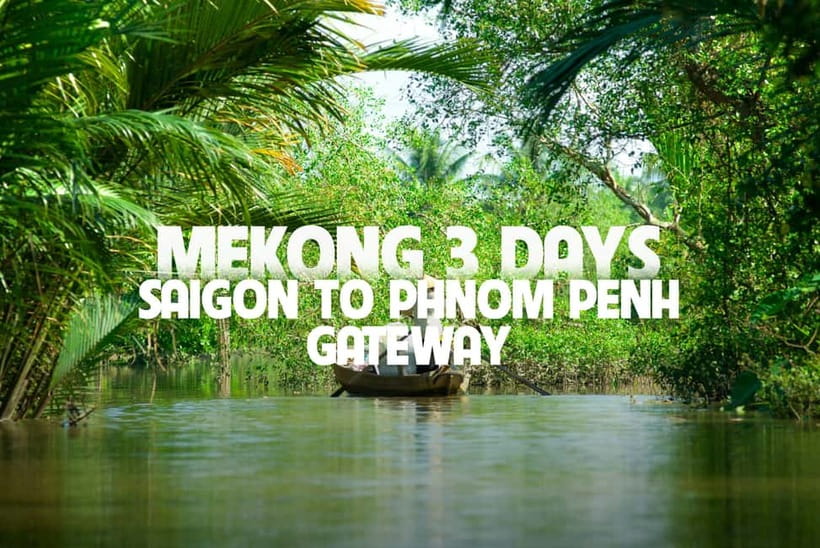
Most Mekong itineraries start with logistics, not scenery. Here, the day begins with a clear meet-up: 07:30–07:45 AM at 112 Tran Hung Dao Street, Ben Thanh Ward, District 1, Ho Chi Minh City. If you’re not in the pickup zone (central District 1 hotels like Saigon Ward, Ben Thanh Ward, and Cau Ong Lanh Ward), you’ll go to the meeting point instead.
Then it’s south. You’ll ride by air-conditioned bus or van and you’ll do a proper chunk of travel before your Delta day truly starts. This matters because the Delta experience works best when you arrive early enough to catch the morning rhythm—especially at the floating market.
I like that the itinerary doesn’t treat the countryside like a scenic postcard. You’re moving between orchards, canals, family-run stops, and specific cultural sites, which gives the region context instead of just motion.
You can also read our reviews of more tours and experiences in Ho Chi Minh City
Cai Be: orchards, canals, folk music, and the kind of lunch you remember
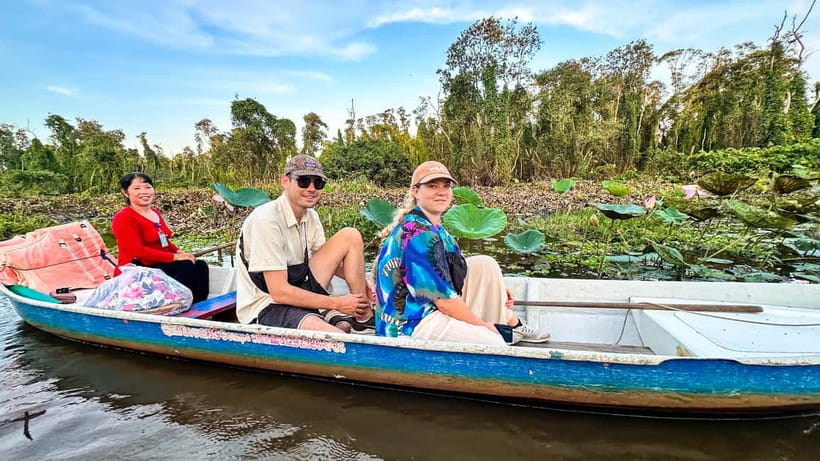
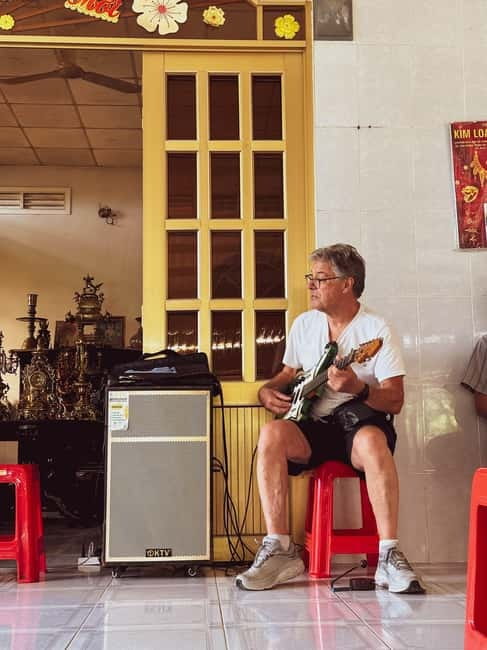
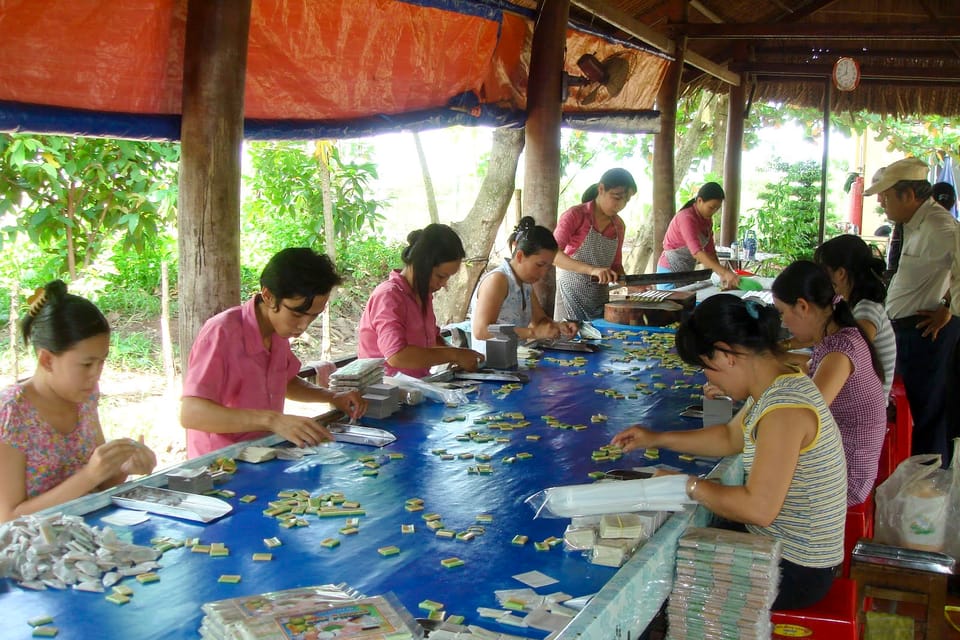
Cai Be is where the tour shifts from “transport” to “character.” You’ll cruise along the Tien River, then slow down for village and orchard exploring. One of the standouts here is how food is built into the day: you may sample sweets like coconut fudge, and you can expect Southern Vietnamese folk music during the experience. It’s not a museum lesson—it’s local sensory detail.
A Tien River cruise that sets the tone
The cruise is practical as well as pretty. By getting out on the water early, you understand how life here is arranged around waterways. Then when you move to smaller canals and village areas, the layout makes sense.
The hands-on cooking stop
After lunch break elements, you’ll join a hands-on cooking experience in a local garden. This is one of those “tour highlights” that isn’t just for show: cooking makes you pay attention to ingredients, timing, and technique instead of passively watching. If you like taking a bit of a place home with you, this is the part.
Island cycling and historic houses
Later, you’ll explore by bicycle and visit Ba Kiet’s historic house. That blend is important: it shows you daily life (gardens, village paths) and also the older side of the region through a historic home. If you’re the type who thinks architecture only matters in big cities, this stop is a good reminder that southern Vietnam’s history lives in local houses too.
Cai Rang Floating Market and a noodle workshop: morning energy with real craft
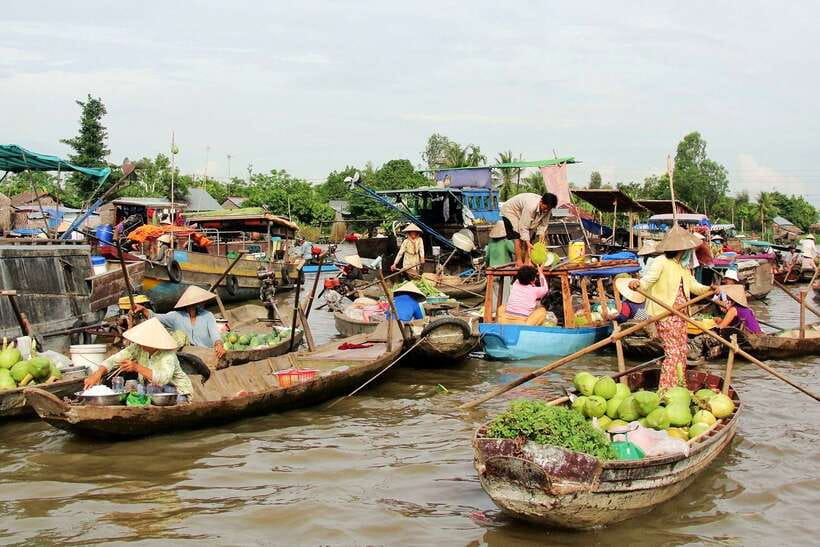
If you came for the floating market, this is your moment. Cai Rang is famous for a reason, but what makes this tour work is timing and pacing: you arrive when the market is active enough to feel lively, not deserted.
What to watch at Cai Rang
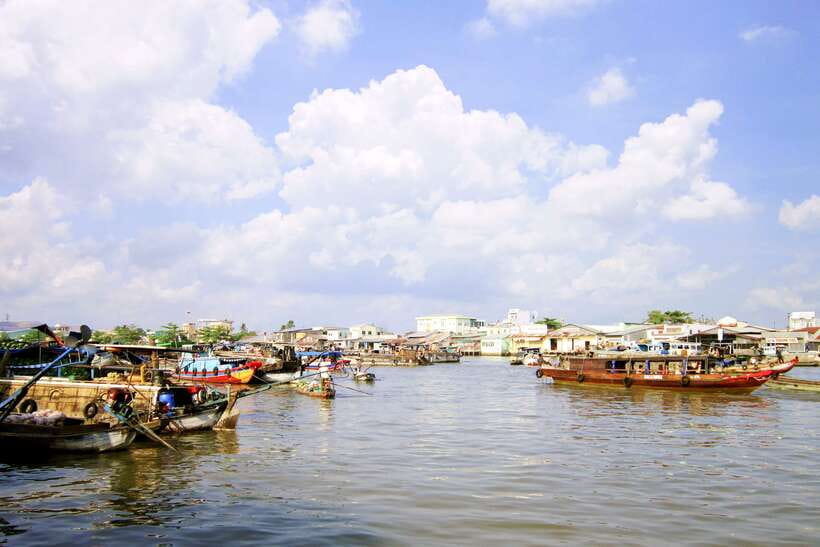
This market is different from a typical market visit because so much of it happens on the water. You’ll see boats, vendors, and the choreography of trading from canal-level. It’s the kind of place where you don’t need a script—just watch how people do business and how quickly things move.
Noodles aren’t just lunch here
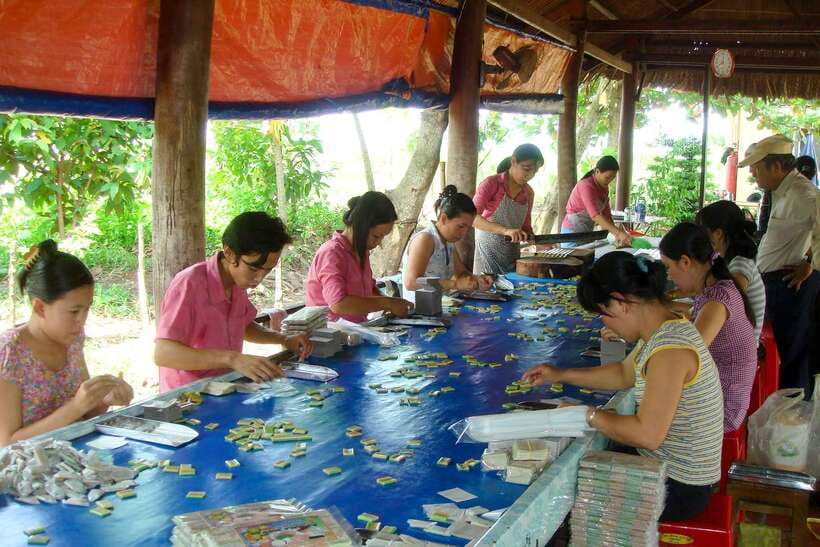
You’ll also visit a family-run noodle factory. That’s the craft side of the day. You’ll get a sense of how something as ordinary as noodles can be built around routine skill—what they make, how they work, and the small practical choices behind the scenes.
If you like food culture, you’ll probably leave Cai Rang thinking more about meals than about photos, which is a win.
Can Tho: Munir Ansay Pagoda and a Khmer cultural detour
On day two, the route brings you to Can Tho. You’ll visit Munir Ansay Pagoda, a highlight for anyone who wants the Mekong Delta story to include Khmer culture, not just Vietnamese river life.
Why this pagoda stop matters
The Delta region is often told through a single lens—rice, boats, markets. A Khmer pagoda gives you a different angle: religion, architecture, and how culture takes root along trade and water routes. It’s also a reminder that the Delta is a meeting zone, not a one-note landscape.
Practical tip for pagoda visits
Pack light for temple time. Dress appropriately with shoulders and knees covered. It’s not a vague “be respectful” rule—you’ll actually want clothing that makes it easy to move, sit, and see.
Chau Doc and Tra Su Mangrove: slow rowing through a living system
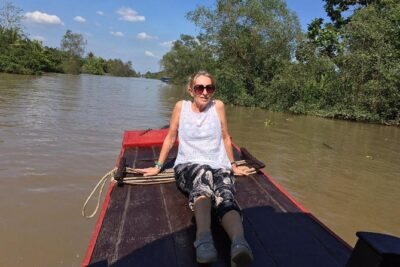
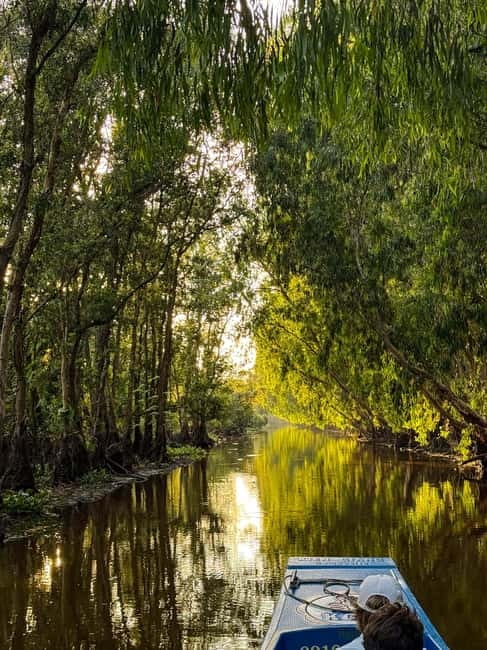
Then comes Chau Doc, where the tour turns nature-focused. The star is the Tra Su Mangrove Forest, and the method matters: you’ll row through the forest on a boat rather than doing a quick shoreline walk.
What the rowing style gives you
Rowing changes your pace. You’re not rushing past sights. You’re moving slowly enough to notice wildlife and the structure of the mangrove ecosystem—water channels, roots, and shaded areas where birds and other creatures can be seen more easily.
One thing I appreciate from the way this day is run: the tour doesn’t just say mangroves are pretty. It builds in time to let you actually experience the forest.
The day ends with dinner
After the nature portion and an evening’s sightseeing, you’ll have dinner with a set menu that includes Vietnamese cuisine. It’s included, which helps keep the day from turning into an expensive hunt for meals after a long day outdoors.
Floating villages and Cham Village: heritage on the waterline
Your final day shifts to cultural geography: floating village areas and the Cham Village. This is where you see daily life linked to the water and where the Cham heritage adds another layer to the Delta story.
Floating villages: daily systems, not staged scenes
The floating village section shows you how communities adapt their homes, movement, and routines to the river environment. It’s less about dramatic viewpoints and more about understanding how people make water-based living work.
Cham Village: why heritage matters here
Cham culture isn’t an add-on. It explains how different ethnic histories tie into trade routes and the broader Southeast Asian river network. If you’ve ever felt that Mekong tours can flatten local diversity into one generic “river culture” label, this day is a corrective.
Optional exit to Phnom Penh: the fast boat plus border help
This is where the tour becomes more than a Vietnam trip. After breakfast on the last day, you can either return to Ho Chi Minh City or take a convenient transfer to Phnom Penh.
Boat transfer vs. bus transfer
The included route is a fast boat or bus ticket to Phnom Penh, and a boat transfer may be replaced by a bus depending on real-time conditions. That flexibility is useful. Water schedules can change, and you don’t want a plan that falls apart if the river decides to be moody.
What the ride feels like in practice
When the boat runs, you’ll be traveling by speedboat on the Mekong. One detailed experience shared that the boat portion took about 5 hours, the boat had a clean toilet, and you could buy drinks on board. Another key point: people reported not getting sea sick, which is a good sign for comfort, especially if you’re sensitive to motion.
Visa and entry procedures handled for you
Your guide won’t leave you to figure everything out alone. The Cambodia side is handled through the included transfer process, with speedboat staff managing the departure and entry procedures. If you’re worried about crossing borders, this structured support is a real value point of choosing this tour instead of piecing it together yourself.
Hotels and meals: what’s included, what it means for comfort
You stay in 3-star hotels on a twin or double-share basis. In Can Tho, it’s West Hotel or similar. In Chau Doc, it’s Paris Hotel or similar. This matters because it’s not just “sleep somewhere.” The included lodging keeps the pacing realistic, so you’re not spending extra hours commuting or changing accommodation.
Breakfast and lunches
The tour includes 2 hotel breakfasts, plus 2 lunches. That’s handy because Delta days can be long, and eating options aren’t always convenient when you’re moving between canals, villages, and forests.
Dinner with a Vietnamese set menu
Dinner on one evening is included as a set menu with Vietnamese cuisine. The advantage is predictability after a day that often includes early departures and boat time.
Food focus beyond the standard tourist bowl
More than once, the experience is described as better than expected on quality, including for vegetarians. If you eat vegetarian, it’s smart to tell your guide in advance so they can coordinate with the restaurants on the route. Based on what people said in similar departures, guides do try to keep dietary needs in mind.
Guides and group size: why it changes everything
Group size isn’t huge, and that makes the day feel more personal. You might see small groups around 15, and sometimes even fewer.
You’ll likely get an English-speaking guide, and the difference shows up in the details: timing, how well you understand what you’re seeing, and how comfortably the day runs. Names that have stood out for strong guiding include Tuco, Vi, Yudi, Naomi, Duy, Nikki, Tom, and Elio. Even when guides differ in style, the pattern is consistent: the best ones keep the pace organized and the explanations practical.
If you’ve ever felt bored on a tour where you’re herded from stop to stop, look for a guide who can give context without turning it into a lecture. This itinerary gives them the chance to do that—especially with food, pagodas, and village visits.
Price and value: is $261 actually fair?
At $261 per person for 3 days, this is a mid-range packaged trip. The value comes from what you’re not paying separately:
- Transport between multiple Delta regions by air-conditioned van or bus
- Boat trips in the Mekong Delta
- Entry fees
- Guide throughout
- Accommodation in 3-star hotels (shared rooms)
- Meals: 2 breakfasts, 2 lunches, and 1 included dinner
- Optional Phnom Penh transfer using a fast boat or bus (subject to conditions)
You’re paying for coordination and access. In the Delta, getting yourself to the right canals, the right market timing, and the right cultural sites can be time-consuming. This tour also reduces the stress of routing toward Cambodia, especially with the included transfer.
Where cost can feel less “worth it” is if you’re someone who wants lots of free time and slow wandering. This is structured. You’ll get a lot done, and that’s the deal you’re buying.
What to pack and how to act like it’s easy
Bring:
- Passport
- Comfortable shoes (you’ll be walking near water and uneven paths)
- Sunglasses and a sun hat (bright days are common along rivers and in mangrove areas)
Don’t bring:
- Pets
- Oversize luggage
- Anything that turns the pagoda visit into a distraction (and skip smoking)
Also, show up on time. The tour can’t wait for latecomers, and early departures are part of why the market and river sections work.
Who should book this tour, and who should skip it
This tour is a great fit if you want:
- A guided Mekong Delta experience without spending days planning logistics
- A mix of food, boats, and culture
- The option to connect straight to Cambodia through Phnom Penh
It may not be a great fit if you:
- Need step-free access or have significant mobility constraints (the tour is listed as not suitable for people with mobility impairments and wheelchair users)
- Have heart problems
- Are pregnant
- Are over 70
For most active travelers, it’s a strong way to see more than one corner of the Delta in a short time, without turning the trip into a chaotic schedule.
Should you book the 3-day Delta with optional Phnom Penh?
If your priority is the big highlights—Cai Rang floating market, Tra Su mangroves, and a cultural mix that includes Khmer and Cham heritage—this is an efficient and well-organized choice. The included meal plan and hotels reduce friction, and the Phnom Penh transfer option can save you the hassle of piecing together borders and schedules.
If you hate structured days or want lots of downtime, consider whether the “packed” pace is your style. For many people, though, the action-packed rhythm is exactly why this route is memorable: you move through the Delta like the region itself moves—by water, by market, by daily life.
FAQ
Where is the meeting point in Ho Chi Minh City?
Meet your guide between 07:30 and 07:45 AM at 112 Tran Hung Dao Street, Ben Thanh Ward, District 1, Ho Chi Minh City. Look for the TNK Travel sign.
What time does the tour start?
You’ll meet between 07:30 and 07:45 AM, and the tour departs after check-in once the group is ready.
Is hotel pickup included?
Pickup is optional and only available for hotels in central District 1 areas, including Saigon Ward, Ben Thanh Ward, and Cau Ong Lanh Ward. Some streets and areas like Nguyen Binh Khiem Street, Nguyen Huu Canh Street, and Tan Dinh Ward are excluded.
What hotels do you stay in during the tour?
Accommodation is twin or double share in 3-star hotels. In Can Tho it’s West Hotel or similar, and in Chau Doc it’s Paris Hotel or similar.
What meals are included?
The tour includes 2 hotel breakfasts, 2 lunches, and 1 dinner (Vietnamese cuisine with a set menu). Drinks and additional meals are not included.
Are entry fees included?
Yes. All entry fees are included.
Do I need visas for Vietnam and Cambodia?
Vietnam and Cambodia entry visas are not included, so you’ll need to arrange them yourself.
Is the Phnom Penh transfer always by boat?
The transfer to Phnom Penh is included as a fast boat or bus ticket, depending on real-time conditions. The boat transfer may be replaced by a bus transfer.
Is the tour suitable for everyone?
It is not suitable for pregnant women, people with mobility impairments, people with heart problems, wheelchair users, and people over 70.