REVIEW · HO CHI MINH CITY
Explore HCMC by US Army Jeep: History & Food
Book on Viator →Operated by Vietnam Tours VIP · Bookable on Viator
A vintage Jeep makes Saigon feel close. In four hours, you roll past big-name sites like Reunification Palace and the Jade Emperor Pagoda from an open-air, former US Army-style Jeep with an English-speaking guide.
I like how this route builds a clear timeline: Independence-era shock at the palace, then a different mood at the Taoist temple and later the war story told at the War Remnants Museum. I also love the Sơn Mài Đại Việt stop, because you can watch lacquer artisans at work and buy souvenirs that come with real craft behind them. Guides such as Luc, Trung, and Nam are specifically praised for turning stops into stories, not checkboxes.
One possible drawback: the clock moves. You get around 30 minutes at Reunification Palace and about 40 minutes at the War Remnants Museum, so if you want to read every label slowly, you may wish for more time.
In This Review
- Key things I’d plan around
- The Open-Air Former US Army Jeep in Ho Chi Minh City
- Reunification Palace: the Independence-era centerpiece
- Saigon Opera House, Notre Dame Cathedral, and the Dong Khoi stroll
- Saigon Central Post Office and local food time
- Nguyen Hue Street, Bitexco views, and Ba Son Bridge
- Emperor Jade Pagoda (Chua Ngoc Hoang): a calmer contrast
- The former US Embassy and War Remnants Museum
- Sơn Mài Đại Việt lacquer workshop: where souvenirs get a story
- Price and timing: is $69 per person good value?
- Best fit: who will love this tour (and who might not)
- Should you book the US Army Jeep: History and Food tour?
- FAQ
- How long is the US Army Jeep tour in Ho Chi Minh City?
- How much does the tour cost?
- Is this tour private?
- Will I be picked up from my hotel?
- What vehicle do you use?
- What’s included in the price?
- Do I need to pay for tickets separately?
- Where will the tour end?
- Is tipping included?
- What is the cancellation policy?
Key things I’d plan around
- Open-air former Jeep: great for photos, but you’ll feel the sun and traffic noise.
- District 1 pickup and drop-off: convenient start, easy finish at your hotel or Ben Thanh Market.
- Entrance fees included for set stops: you avoid the headache of ticketing for several highlights.
- French-colonial landmarks + war-era stops: the route gives you both Saigon’s architecture and its past.
- Lacquer workshop with artists in action: Sơn Mài Đại Việt is a standout shopping stop, but it’s also a craft visit.
- Multiple photo/viewing points: the skyline moments include stops around Bitexco and Ba Son Bridge.
The Open-Air Former US Army Jeep in Ho Chi Minh City
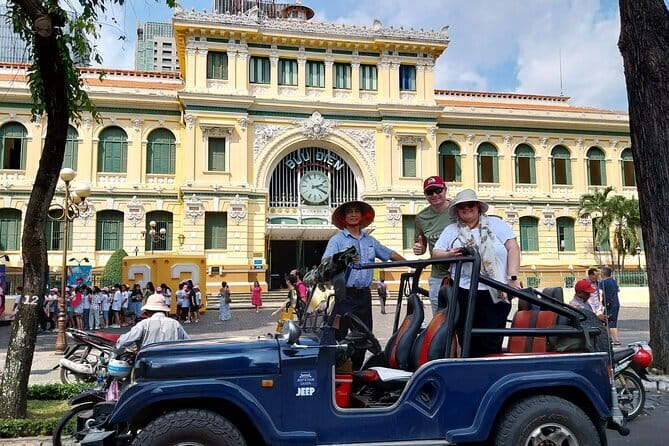
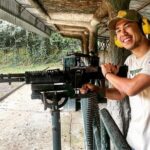
This tour’s main thrill is simple: you’re not sitting in a sealed car. You’re up high enough to see over traffic, and open-air enough to feel like you’re part of the street. That matters in Ho Chi Minh City, where the city’s energy is in the details—shopfront life, street signage, constant motion, and sudden shifts from formal buildings to everyday sidewalks.
The Jeep setup also makes the tour feel like a moving viewpoint. You’ll get lots of chances to frame photos without asking a driver to stop at random places. And since it’s private—only your group—the guide can pace the route to your interests rather than rushing everyone through.
The practical side: expect a noisy ride and plan for sun exposure. Bring sunglasses, sunscreen, and something small to cover up if you’re sensitive to light. The tour includes bottled water, which helps, but you’ll still want to handle your own comfort during the open-air portions.
You can also read our reviews of more food & drink experiences in Ho Chi Minh City



Reunification Palace: the Independence-era centerpiece
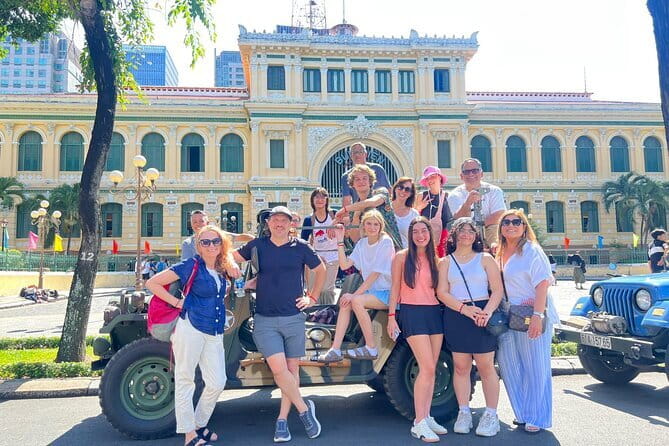
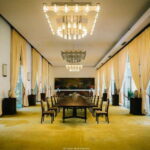
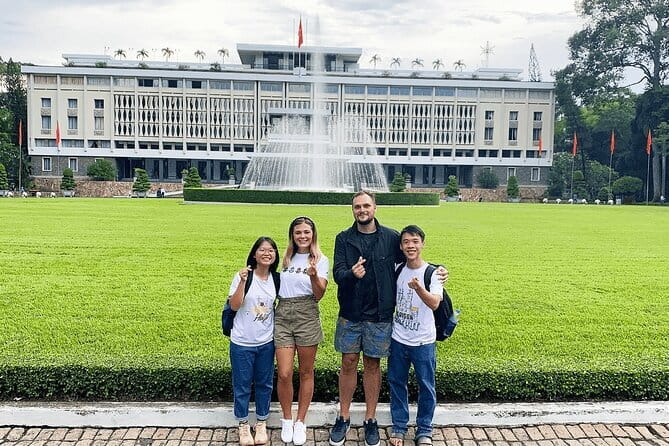
The first big stop is Reunification Palace (also called Independence Palace). Even if you know only the headline, the place hits harder when you’re standing in it. This is where the building itself does the storytelling: it’s a symbol of Saigon’s turbulent modern history and Vietnam’s resilience.
You’re allotted about 30 minutes here, with an admission ticket included. That timing is enough to walk key areas, orient yourself, and grasp the main layout without turning the palace visit into a half-day project. It’s also smart for this kind of tour, since you’re pairing major sites back-to-back.
How to make the most of that 30 minutes: don’t try to read everything. Use the guide to connect what you’re seeing—rooms, corridors, and the overall design—to the story they’re telling. If you’re the type who likes to take notes, do it quickly and trust that the guide’s context will fill in the gaps.
Saigon Opera House, Notre Dame Cathedral, and the Dong Khoi stroll

After the palace, the route shifts into the French-colonial layer of the city. You’ll pass by and spend time around major landmarks that shaped the old Saigon streetscape, including the Saigon Opera House and Notre Dame Cathedral Basilica of Saigon (built between 1877 and 1880).
You also get time near Dong Khoi Street, a central artery known for French-era architecture. This part of the tour is great if you like walking photo lines, because the buildings give you strong angles even when you’re not doing a full walking tour.
What makes these stops work in a Jeep tour: you’re not sacrificing time to transit. Instead, you get short, focused moments at the key structures while the Jeep carries you between eras. The only watch-out is that city streets can be crowded. If you’re hoping for a calm, slow walk, treat this section like a fast architecture walk—use the guide for quick orientation, then take your photos.
Saigon Central Post Office and local food time
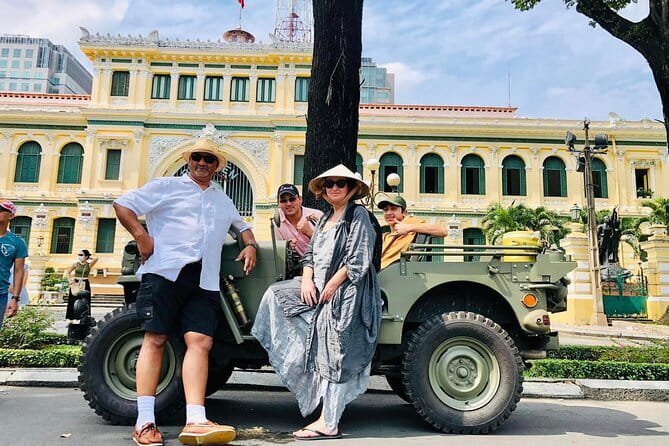
One of the most practical stops on the route is Saigon Central Post Office. The timing here is short—around 10 minutes—but it’s paired with the idea of eating and soaking in the atmosphere.
The post office building is a major architectural highlight, and the tour description frames it as a place where history and everyday life meet. In plain terms: you get a chance to see the grandeur, then you’re set up to grab something local nearby, without having to plan a whole separate meal stop.
A bonus: this is the kind of stop that doesn’t require you to be an expert. Even if you’re not deep into design, you’ll recognize how the space was meant to bring people together. When your guide gives you context, it turns into more than just a quick photo spot.
Nguyen Hue Street, Bitexco views, and Ba Son Bridge

From the old-world streets, you’ll move into modern Saigon energy. Nguyen Hue Street is one of the key pedestrian-feel corridors in District 1, and you get about 5 minutes there. It’s short, but it’s enough to check out the scale, see where crowds gather, and get a sense of how the city functions day-to-day.
Then comes a viewpoint-style moment around Bitexco Financial Tower. Even if you don’t go up inside, the stop helps you connect the city’s rapid modernization to the older colonial and war-era buildings you already saw.
You’ll also stop near Ba Son Bridge (also known as Thu Thiem 2 Bridge). This is a good photo and sightseeing break because it changes your perspective from street-level landmarks to the city’s bigger structure and river-area geography.
The key here is to treat these as context stops. They’re not meant to replace a full city skyline session. They’re meant to keep the tour moving while giving you visual proof that Saigon keeps evolving.
You can also read our reviews of more tours and experiences in Ho Chi Minh City





Emperor Jade Pagoda (Chua Ngoc Hoang): a calmer contrast
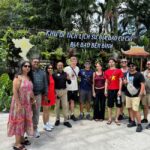
Then the route slows down in mood at Emperor Jade Pagoda (Chua Ngoc Hoang). This Taoist temple, built in 1909, is dedicated to the Jade Emperor, King of Heaven in Chinese mythology.
You’ll have about 20 minutes here, with admission included. That’s long enough to see the main areas, absorb the vibe, and understand why this temple matters to locals. It’s also a helpful contrast after the more intense palace-and-war stops.
What I like about this stop for first-time visitors: it expands your understanding of Vietnam beyond the 20th-century story. Even if your main interest is war history, a temple visit adds layers about belief, daily life, and how people seek order and protection.
If you care about temple etiquette, dress modestly and keep your voice down. For an open-air Jeep tour, this stop is also a nice physical break—your day shifts from motion to quiet walking.
The former US Embassy and War Remnants Museum
This is where the tour stops being about architecture and becomes about the war’s aftermath.
You’ll include a stop at the former U.S. Embassy in Saigon, now part of Ho Chi Minh City. It’s a location loaded with meaning because it represents American involvement during the Vietnam War era, and it ties directly to what you’ll learn next.
After that, you reach the War Remnants Museum, with about 40 minutes on the clock and an admission ticket included. This museum is set up as a hard look at the impact of war. The value here isn’t comfort. It’s clarity—how the museum presents evidence, scenes, and interpretations that shaped how people in Vietnam understand the war and its consequences.
How to handle 40 minutes without feeling rushed: let the guide steer you toward the strongest sections first, especially if you’re not sure what you’re looking for. Then you can spend the rest of your time focusing on the parts that hit you most.
If museums feel heavy for you, plan a short pause afterward. This tour finishes with additional craft and shopping, so you’ll want a bit of emotional pacing.
Sơn Mài Đại Việt lacquer workshop: where souvenirs get a story
This is the stop that a lot of people remember for a simple reason: you get to see the work behind the buying. At Sơn Mài Đại Việt (a lacquerware factory), you can watch artisans practicing their craft and then shop for lacquer souvenirs with more context than a typical souvenir stall.
You get about 30 minutes here, with admission included. That’s a realistic window: long enough to observe process, ask questions, and browse, but not so long that it drains the rest of your day.
Why it’s good value: lacquer can be confusing when you’re just shopping blindly. Seeing the artisans in action helps you understand why some pieces cost more and what makes the work look the way it does. And because this tour is private, you can ask your guide about what you’re seeing without feeling like you’re slowing down a big group.
The strongest feedback from guides like Luc and Nam is that they turn this into a meaningful moment, not a stop you tolerate on the way to something else. If craft and buying thoughtful gifts matter to you, this is the part that pays off.
Price and timing: is $69 per person good value?

At $69 per person for about 4 hours, this tour lands in a sensible range for a private experience in District 1. The value comes from packing several categories of experiences together:
- Transport in an open-air former Jeep (a major part of the appeal)
- Pickup and drop-off in District 1, which saves you time and hassle
- An English-speaking guide who connects the dots across eras
- Bottled water
- Entrance fees included for multiple key stops
The time is also a selling point. Many independent plans in Ho Chi Minh City take longer just because of commuting, ticket lines, and figuring out routes. Here, the route is built to stack the main highlights into a single loop.
The trade-off is also clear: because it’s a 4-hour package, you won’t have hours inside every museum or building. For me, that’s the right expectation. Think of this as a high-impact orientation tour: it shows you the big landmarks, gives you a strong storyline, and points you toward what to revisit later if you want deeper time.
Best fit: who will love this tour (and who might not)
This tour is a strong match if you like three things at once:
- History with context, especially the Independence Palace + War Remnants Museum pairing
- Photos without a ton of walking, thanks to the Jeep
- A hands-on craft stop at Sơn Mài Đại Việt
It’s also a good pick if your schedule is tight. Four hours is often just enough for first-time orientation without burning a whole day.
Who might consider a different option: if you’re the kind of visitor who wants long, quiet reading time in museums and slow temple wandering, you may feel the pacing is too fast.
Should you book the US Army Jeep: History and Food tour?
Yes—if you want a memorable, story-driven introduction to Ho Chi Minh City that blends major landmarks, war-era learning, and a craft-focused shopping stop. The Jeep format makes the city feel closer, the route keeps your day efficient, and the Sơn Mài Đại Việt lacquer visit adds a genuine layer beyond sightseeing.
Book it especially if:
- you prefer a private experience
- you want entrance fees included for several highlights
- you like guided explanations from people praised for making the timeline click (names like Luc, Trung, Nam, Khoa, and Thong come up often)
Skip it if you already know you want slow, deep museum time and don’t care about the Jeep ride or lacquer workshop.
FAQ
How long is the US Army Jeep tour in Ho Chi Minh City?
It’s about 4 hours.
How much does the tour cost?
The price is $69.00 per person.
Is this tour private?
Yes. It’s listed as a private tour/activity, and only your group participates.
Will I be picked up from my hotel?
Yes. Pickup is offered for hotels in District 1 of Ho Chi Minh City.
What vehicle do you use?
You ride in an open-air former Jeep.
What’s included in the price?
The tour includes an English-speaking tour expert, open-air Jeep, entrance fees and bottled water, plus pickup and drop-off in District 1.
Do I need to pay for tickets separately?
Entrance fees are included for the listed sites in the tour. The tour also includes bottled water.
Where will the tour end?
You’ll be dropped off back at your hotel or at Ben Thanh Market.
Is tipping included?
No. Tipping/gratuities or personal expenses are not included.
What is the cancellation policy?
You can cancel for a full refund up to 24 hours before the experience starts.