REVIEW · HO CHI MINH CITY
Discover Saigon Main Sights by Walking
Book on Viator →Operated by LV Tours · Bookable on Viator
Saigon makes a case for walking. This small-group route hits the big landmarks with context, from the War Remnants Museum through Independence Palace and on to Notre-Dame Cathedral, the Central Post Office, and Book Street. I also like that admissions are included, so you can spend less time buying tickets and more time actually looking as the city hums around you.
The only snag is pacing: the stops are short, and the coffee stop is an extra cost since coffee and tea aren’t included.
In This Review
- Key highlights you’ll feel right away
- Why this Saigon walk is a smart use of 3–4 hours
- From the Opera House area to the War Remnants Museum: getting your bearings
- War Remnants Museum: photos, perspective, and how to handle the emotional weight
- Independence Palace: a quick look at the war-era government seat
- Notre-Dame Cathedral and the Central Post Office: French-era design in one stretch
- Saigon Notre-Dame Cathedral
- Central Post Office
- Book Street and Vietnamese coffee: the cultural reset at the end
- Who’s this tour best for (and who might want a DIY plan)
- Price and value: what $35 actually buys you in Saigon
- The small practical details that improve your day
- Should you book this Saigon main sights walking tour?
- FAQ
- FAQ
- How long is the Saigon main sights walking tour?
- Where do I start and where does it end?
- Is pickup included?
- Are museum and attraction entry tickets included?
- Is coffee included?
- How big is the group?
- Is the tour guide English-speaking?
- Can I cancel for free?
- What’s the price per person?
Key highlights you’ll feel right away
- Small group size (up to 15, often described as up to 10): easier questions, less waiting around
- War Remnants Museum entry included: you don’t just stand outside
- Independence Palace, Notre-Dame Cathedral, and the Central Post Office included: big sights with guided context
- Book Street walk: Vietnamese and English books in a purpose-built reading area
- Vietnamese coffee stop: you get the moment, but you’ll pay for the drink
- Pickup/private transport offered: smoother start-to-finish, especially in traffic
Why this Saigon walk is a smart use of 3–4 hours
If you’ve only got a morning (or a chunk of your first day) in Ho Chi Minh City, this tour is built for results. You’re not trying to speed-run history on your own. Instead, you follow an English-speaking guide from site to site, with the route designed around the city’s key landmarks.
The value is simple: you’re getting a guide plus admission tickets plus private transportation, all for a set price. At $35 per person, that’s especially worth it if you want the “why” behind what you’re seeing—French colonial architecture, war-era government spaces, and the city’s more modern identity all in one walk.
The best part is that Saigon isn’t quiet. You’ll be out where street vendors, motorbikes, and food-stall smells are part of the experience. That’s the point. This tour helps you read the city instead of just watching it.
You can also read our reviews of more walking tours in Ho Chi Minh City



From the Opera House area to the War Remnants Museum: getting your bearings
Meet-up is kept easy, with pickup offered and private transportation included. Depending on your timing, you may connect near the Saigon Opera House area before the tour heads to the first main stop.
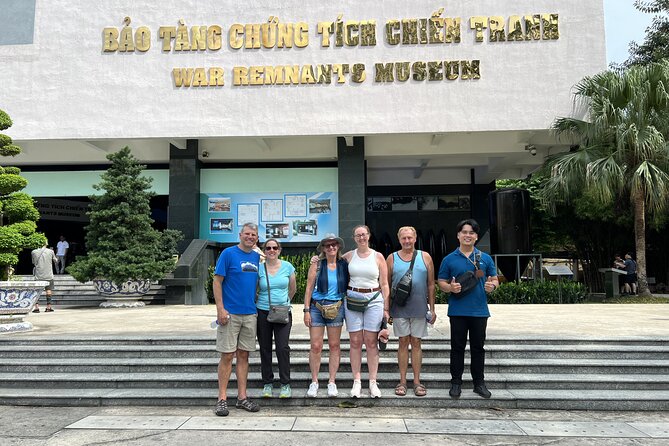
Then you start where the story gets serious: the War Remnants Museum. You’ll spend about an hour here, and entry is included. This isn’t a quick glance. It’s enough time to slow down and actually absorb what the museum is showing—especially if you prefer understanding the big picture before moving on to the more photogenic buildings.
A practical note: this is an intense start. Go in with comfortable shoes and a bit of mental space. You’ll be able to pace yourself inside the museum.
War Remnants Museum: photos, perspective, and how to handle the emotional weight
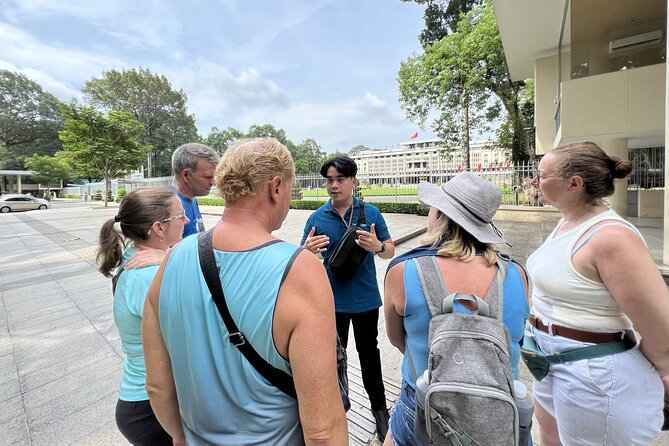
This is your first inside stop, and it matters. The museum uses original photos from the time period to tell the Vietnam War story. If you want context for why Saigon’s central landmarks look the way they do, this is the right anchor.
I like that the tour gives you about one hour rather than rushing. That time window helps if you want to read labels without feeling like you’re speed-walking.
One consideration: the museum presents its viewpoint clearly. If you’re the type who likes comparing perspectives, you may feel that it’s one side of the conversation. You can still get a lot out of it—just don’t treat it as the only lens.
If you want a good plan for your visit, do this: focus on the photo panels and captions first. Don’t get stuck in one corner. You’ll get more from seeing the overall arc than from obsessing over one image.
Independence Palace: a quick look at the war-era government seat
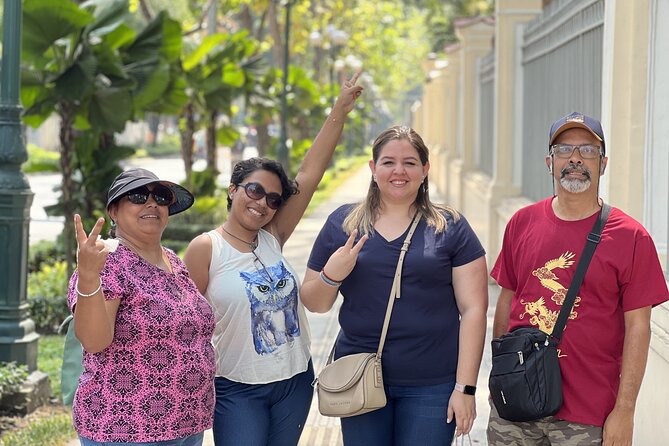
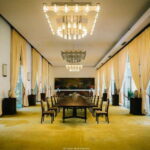
Next is Independence Palace, also called the Reunification Palace in many travel materials. You’ll have around 15 minutes, and admission is included.
Even in a short stop, the palace is a powerful place because it connects architecture to history. You’re seeing the site where the South Vietnam government lived during the war years. That lived-in reality is what makes it more than a backdrop for photos.
If you’re hoping for a long, detailed interior tour, the time might feel tight. But the guide’s job here is to point you toward the features that matter most, so you’re not wandering with no direction.
I’d treat this as a “set the scene” stop. If you fall in love with the interiors, you’ll likely want to come back later with extra time.
Notre-Dame Cathedral and the Central Post Office: French-era design in one stretch
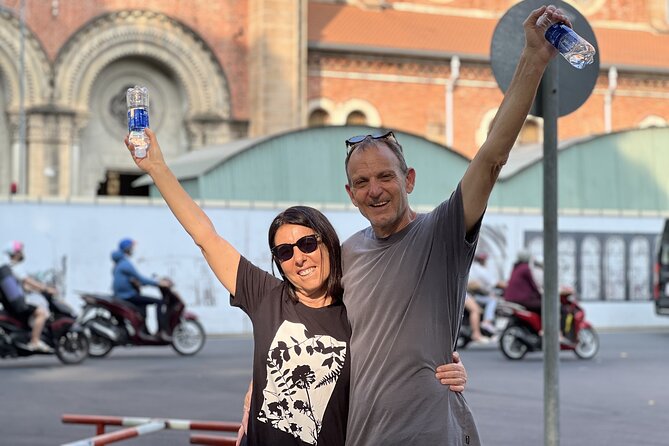
After the palace, the route leans into the city’s French-influenced landmarks.



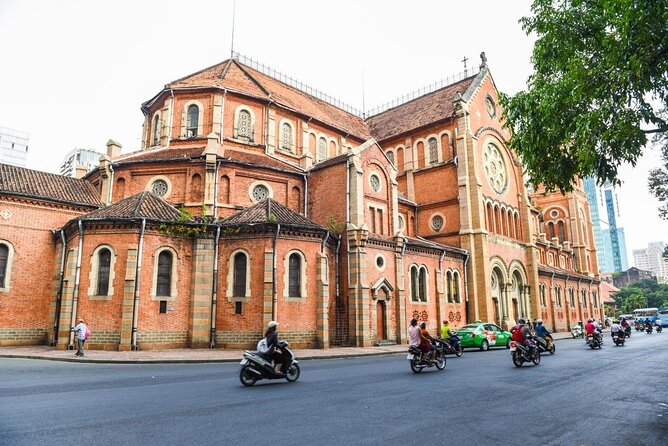
Saigon Notre-Dame Cathedral
You get about 15 minutes at Notre-Dame Cathedral, with admission included. The highlight is the French construction style and the fact that the building has been kept and restored in Saigon.
What I like here is that you’re not just looking for a perfect angle. Your guide helps you notice what’s still here from the earlier era—and how that style changed the feel of the city.
Central Post Office
Then you move to the Central Post Office for another 15 minutes, with admission included as well. This stop is all about design: the building’s 20th-century railway-station look draws on European concepts.
If you’re a “look closely” traveler, this is one of your best photo stops. The building is structured and symmetrical, so even if you’re moving fast, you can catch the details without needing a long stay.
The pacing works because these stops share a theme. You’ll bounce from one architectural mood to another without having to reset your brain too many times.
Book Street and Vietnamese coffee: the cultural reset at the end

You finish with a walk through Ho Chi Minh City’s Book Street. This is a dedicated walking street filled with Vietnamese and English books, built to encourage young people to read more. You’ll have about 15 minutes here, with admission included.
This stop gives your eyes a break after the heavier historical sites. It’s also genuinely useful if you’re the type who likes bringing something small home. Even if you don’t buy a book, browsing is part of the experience.
From there, the tour includes time for authentic Vietnamese coffee. Here’s the key detail: coffee and/or tea are not included, so expect to pay for your drink. Think of it as your moment to sit, refuel, and process what you just saw.
The tour also ends in a central area right by Nhà Sách Phương Nam, which makes it easy to continue exploring on your own afterward.
Who’s this tour best for (and who might want a DIY plan)
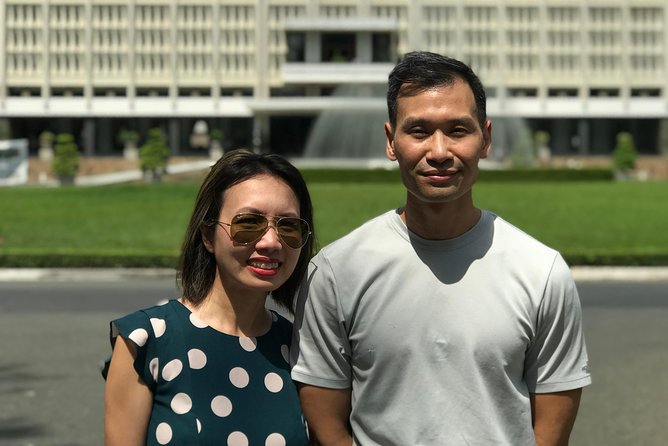
This walking tour is best if you want:
- a guided route through major sights without booking multiple tickets yourself
- an English-speaking guide to explain what you’re looking at
- a plan that runs about 3–4 hours and keeps you moving
It’s especially good for first-timers who don’t want to figure out logistics on day one.
On the other hand, if you’re comfortable reading up and navigating independently, you could DIY a similar route. The difference is that this tour reduces guesswork and includes guidance for getting safely across the road and understanding the buildings’ significance.
Also, the museum-and-palace combo is emotionally heavy and visually intense. If you prefer lighter content, you might want a different day’s plan or to pair this with something gentler later.
Price and value: what $35 actually buys you in Saigon
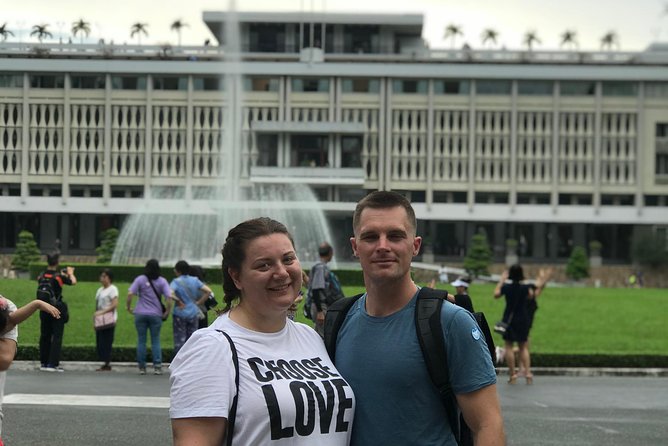
At $35 per person for a 3–4 hour small-group experience, you’re paying for more than a walk.
Here’s what’s included:
- admissions at the main stops (War Remnants Museum, Independence Palace, Notre-Dame Cathedral, Central Post Office, and Book Street)
- private transportation
- all fees and taxes
- a mobile ticket
What’s not included:
- coffee and/or tea
So the real value equation is this: you’re not just paying for a guide. You’re also covering ticket costs and reducing transportation friction. That tends to be worth it when you want a tight itinerary and you’d otherwise spend extra time arranging things yourself.
One more plus: it’s described as a small-group experience, limited to 10 travelers in the tour overview and capped at a maximum of 15. Either way, it’s built for personal attention.
The small practical details that improve your day
These kinds of city-center walks succeed or fail based on the unglamorous stuff. This one seems designed for the reality of Saigon streets.
- English-speaking guidance: useful when signage and history aren’t in your comfort zone.
- Pickup offered / private transportation included: helps with timing, especially with traffic.
- Easy meet-up and a central finish: less time stuck in transit, more time for your next stop.
- Short stops, intentional order: you see the big highlights without losing half your morning to indecision.
I also picked up a pattern from guide behavior that matters in the field. Guides like Kevin and Justin are praised for being friendly, for explaining the meaning of the buildings, and for practical help like crossing roads safely. Other guides mentioned in the same spirit include Dickies and Luke, who were described as engaging and helpful. If road crossings are stressful for you, that kind of support is not a small thing.
And if you get delayed, there’s an expectation of flexibility—one guide was noted as adjusting plans so the group could still get back to the bus on time. That’s the kind of “in real life” detail you want.
Should you book this Saigon main sights walking tour?
Book it if you want a guided, high-impact introduction to Ho Chi Minh City’s core landmarks in one morning or early afternoon. The included admissions and the small-group format make it feel efficient without turning it into a frantic sprint.
Skip it (or pair it with something else) if you’re only interested in taking photos and you don’t care about history context, or if you want long indoor visits at each major site. The palace and the museum both benefit from more time than the tour’s built-in windows—so treat this as your “first look,” not your final, slow museum day.
FAQ
FAQ
How long is the Saigon main sights walking tour?
The tour runs about 3 to 4 hours.
Where do I start and where does it end?
It starts at the War Remnants Museum area and ends at Nhà Sách Phương Nam (a bookshop) in the city center area.
Is pickup included?
Pickup is offered, and private transportation is included.
Are museum and attraction entry tickets included?
Yes. Admission tickets are included for the War Remnants Museum, Independence Palace, Notre-Dame Cathedral, Central Post Office, and Book Street.
Is coffee included?
Coffee and/or tea are not included. There is a coffee stop, but you’ll pay for your drink.
How big is the group?
It’s limited to a small group: the description says up to 10 travelers, and the overall cap is a maximum of 15.
Is the tour guide English-speaking?
Yes, the tour includes an English-speaking guide.
Can I cancel for free?
Yes. You can cancel up to 24 hours in advance for a full refund.
What’s the price per person?
The price is $35.00 per person.