REVIEW · HO CHI MINH CITY
Cu Chi Tunnels Private Tour With A Local Expert
Book on Viator →Operated by TOUR WITH XUAN · Bookable on Viator
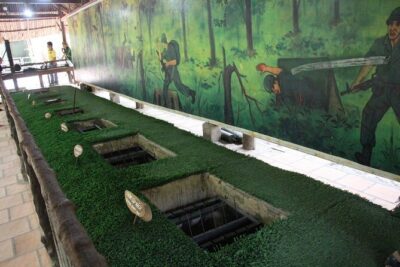
This is history you can crawl into. Cu Chi Tunnels is an underground maze tied to Viet Cong operations during the wars against the French and mostly the US, stretching over 200km with living areas, kitchens, hospitals, command centers, and trapdoors. You’ll walk and crawl through sections built to show how guerrilla life worked underground.
What I like most is the local expert guidance. On this tour, you’ll often be with Hannah, whose English is very clear and whose explanations connect the tunnels to what people had to do to survive. I also like that the tour doesn’t end at the tunnel entrance—it adds a stop at a local farmer’s house to learn how to make rice paper.
One thing to consider: this experience can be physically challenging. You should have moderate fitness, and you’ll be doing walking and crawling in tight spaces, so go in with the right expectations.
In This Review
- Key highlights worth planning around
- Cu Chi Tunnels: What You’re Really Paying For
- The District 1 pickup and the 5–6 hour rhythm
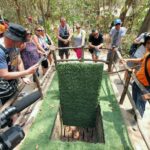
- Walking and crawling the tunnel network
- The rice paper stop: history’s quieter counterpoint
- Price and value: is $120 fair for this private format?
- Who this tour suits best (and who should rethink it)
- Practical tips for a smoother, less-stress day
- Should you book the Cu Chi Tunnels Private Tour with a Local Expert?
- FAQ
- How long is the Cu Chi Tunnels private tour?
- What’s included in the price?
- Is lunch included?
- Where is the pickup and meeting point?
- Is this tour private?
- What if the weather is bad?
Key highlights worth planning around
- A guide like Hannah who’s known for clear English and strong on-site explanations
- Private group format, so your pace and questions stay yours
- Air-conditioned vehicle + bottled water, which helps when your day starts early
- Cu Chi Tunnel walking and crawling through areas tied to daily guerrilla life
- Rice paper workshop at a local farmer’s house for a calmer, practical contrast
- 5–6 hours total with pickup and return to the meeting point near Rex Hotel
Cu Chi Tunnels: What You’re Really Paying For
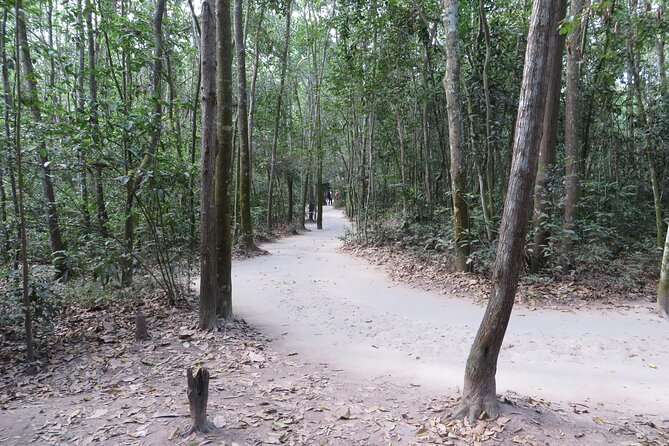
At $120 per person, you’re not just buying entry tickets. You’re paying for transportation, a guided visit, and time with someone who can translate what you’re seeing into real context. Cu Chi can look like a tunnel tour from the outside; it becomes something else when your guide explains why certain areas mattered and how the system functioned.
The tunnels themselves are extensive—over 200km—and the tour format focuses on making you understand how this network supported a fighting force. You’re told it wasn’t a single “spot” but a whole system: living spaces, kitchens, storage, medical areas, and command points. That’s the big value here: you’re not just looking at holes in the ground. You’re getting the logic behind the maze.
A private setup also changes the experience. You can ask follow-up questions, take the explanations at your pace, and spend less time doing the “hurry, next group” thing that can make historical sites feel rushed.
You can also read our reviews of more private tours in Ho Chi Minh City



The District 1 pickup and the 5–6 hour rhythm
The tour starts at Rex Hotel, 141 Nguyễn Huệ, Quận 1, and ends back at the same meeting point. That matters because it removes guesswork. You won’t need to navigate early-day transportation or coordinate multiple timing points across the city.
You’ll ride in an air-conditioned vehicle with bottled water. That’s not a luxury detail—it’s practical. Ho Chi Minh City heat can hit hard before you even reach the tunnels, and keeping your energy up makes the walking and crawling feel more manageable.
Timing is usually about 5 to 6 hours, which is a sweet spot for a day trip. It’s long enough to cover tunnels well and do the rice-paper stop, but not so long that you burn an entire day with travel-only hours.
One more planning note: this experience requires good weather. If weather turns, you’ll be offered a different date or a full refund. If you’re traveling in monsoon season, it’s smart to book a date with some flexibility.
Walking and crawling the tunnel network
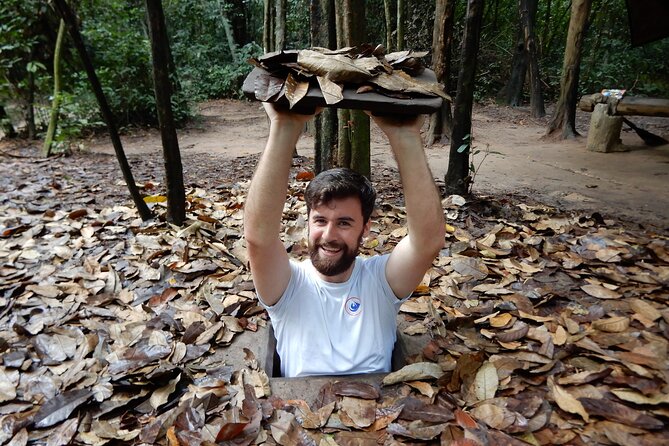
Cu Chi Tunnels were designed to support guerrilla warfare. The site you visit is part of an underground system used during the Vietnam War, including action against the French and primarily against US forces. Once you’re down there, it’s easy to grasp the basic idea: survival depended on concealment, speed, and the ability to move while staying hidden.
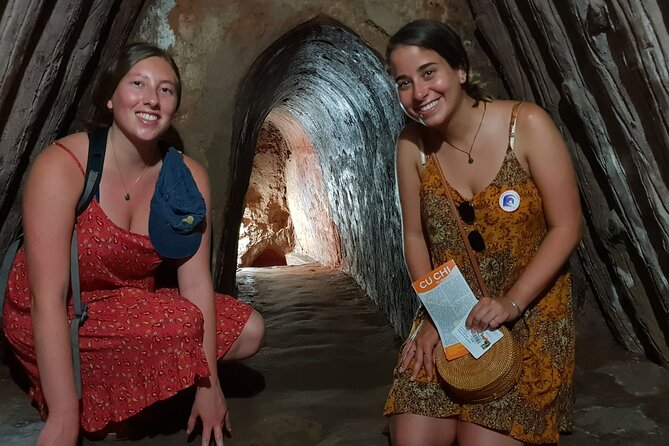
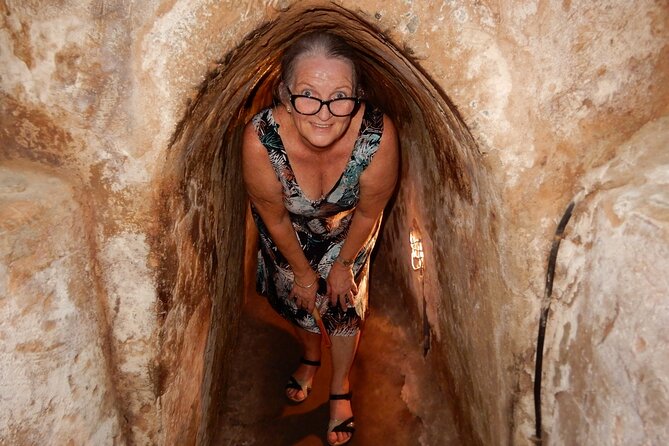
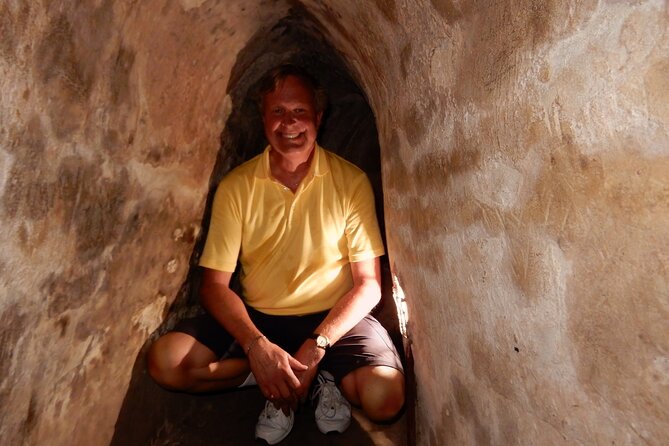
The tour gives you a sense of the underground world through walking and crawling. You’re not just walking through wide corridors where you can stretch out. You’ll experience the scale of confinement—tight spaces, trapdoor concepts, and the feeling of moving like someone who couldn’t afford to be seen.
The most important thing a good guide does here is connect what you see to what it meant. Hannah’s value in particular is how she explains the system in clear language and with specific detail. That’s what turns the tunnels from a “cool and creepy” place into a place that helps you understand how people lived and fought with limited resources.
Also, go in knowing that it’s not set up like a theme park. This is serious material. The goal is not shock for shock’s sake; it’s comprehension—how an underground network could include living areas, kitchens, storage, hospitals, and command centers while staying concealed.
The rice paper stop: history’s quieter counterpoint
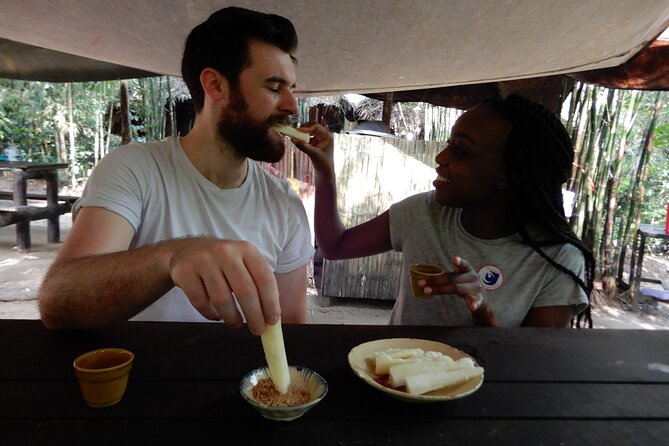
After the tunnels, you’ll stop at a local farmer’s house to learn how to make rice paper. This is a smart pairing, even if you think you’re only there for the tunnels.
Why it works: Cu Chi shows survival underground. The rice-paper workshop shows survival through daily work—turning rice into something that feeds families and supports livelihoods. You get a different kind of Vietnam here: hands-on, practical, and tied to local routines rather than wartime urgency.
The workshop is included in the experience, and it gives you a chance to reset after the confinement of the tunnels. You can also ask simple questions that are usually hard to fit into a bigger city tour—what people grow, how they make staples, and how food traditions stay alive.
It’s also a good moment to shift gears from photos to real-world participation. Even if you don’t become an expert on the first try, you’ll leave with a small skill and a better sense of how everyday life connects to the region.
Price and value: is $120 fair for this private format?
Here’s how I think about the $120 per person price. The included items reduce the surprise costs that often creep up on day trips:
- Air-conditioned vehicle
- Bottled water
- All fees and taxes
- Admission ticket included
- Rice paper activity included
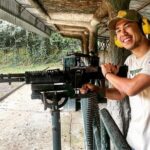
What’s not included matters too: lunch and personal expenses are on you, and the shooting range isn’t included. If you’re planning to add shooting, you’ll need to budget extra. If you don’t, then your biggest extra cost becomes lunch and snacks.
Because it’s a private tour, the price isn’t only about entry and transport—it’s also about having your group’s time handled properly. You’re not sharing with random strangers beyond your group. That often feels like better value if you care about pacing, questions, or a calmer experience.
One more detail: this tour offers pickup, mobile tickets, and group discounts. If you’re traveling with friends or family, it’s the kind of plan where cost can feel easier to swallow because you’re effectively splitting the logistics.


Who this tour suits best (and who should rethink it)
This tour is a strong fit if you like guided history and you want explanations you can actually understand while you’re standing in the environment. It’s also ideal if you appreciate the blend of wartime context and local food tradition through the rice-paper stop.
You should also be comfortable with physical effort. The tour calls for moderate physical fitness, and because the experience includes crawling, it’s not the best match if you hate tight spaces or have mobility limitations. Even if you’re fine physically, the tunnels can be mentally demanding—so if you get anxious in enclosed areas, consider that.
If you’re traveling with kids, it might still work for some families, but only if the children can handle confinement and the overall serious theme. The data only says moderate fitness, so you’ll want to judge based on your group.
Finally, this private format is excellent for couples and small groups who want a single expert voice guiding them, not a rotating group story between multiple stops.
Practical tips for a smoother, less-stress day
Cu Chi can be a long-feeling 5–6 hours if you go unprepared, so a few tweaks help.
- Wear comfortable closed-toe shoes you can move in during walking and crawling.
- Bring a light layer if you’re sensitive to temperature changes. Underground areas can feel cooler than you expect.
- Plan for lunch not being included. If you don’t want to hunt for food, consider bringing a snack or deciding ahead of time where you’ll eat when you’re back near your pickup area.
- If you’re the type who likes to photograph everything, set expectations. The tunnel environment isn’t made for perfect selfies, and tight movement means you’ll want to listen first, shoot second.
- Use the mobile ticket method as your reminder system. Save it in an easy-to-find place so you’re not digging through your phone at the meeting point.
And a small but important mindset: let the guide’s explanations set the pace. When Hannah’s running the show, the benefit is clarity—she connects the tunnels’ features to how people had to function underground. Following that rhythm makes the day feel worth your time.
Should you book the Cu Chi Tunnels Private Tour with a Local Expert?
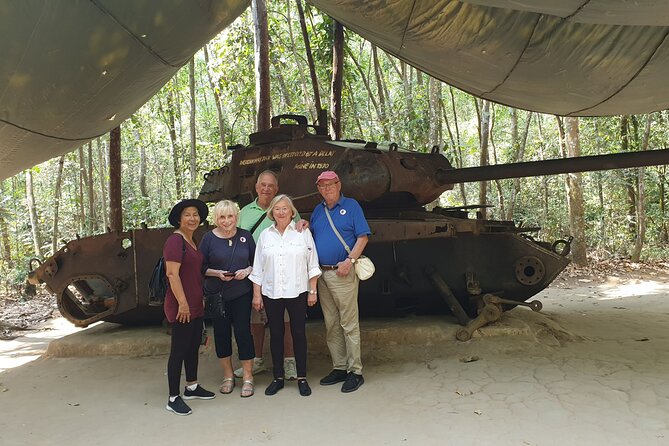
I’d book it if you want a guided day trip that balances heavy historical material with a hands-on local food experience. The private setup, pickup convenience near Rex Hotel, air-conditioned transport, and inclusion of the rice paper stop make it more than a simple drive-by.
I’d skip (or choose another option) if crawling in tight spaces sounds like your personal nightmare, or if you want a fully accessible, low-movement experience. Also, if weather is questionable on your travel dates, keep your schedule flexible since the tour depends on good conditions.
If you do book, pay attention to the physical-fit note and show up ready to follow your guide’s cues. With an expert like Hannah leading the way and the tour structured to connect the tunnel system to daily survival, this is the kind of excursion that turns “I saw tunnels” into “I understand how it worked.”
FAQ
How long is the Cu Chi Tunnels private tour?
The tour runs about 5 to 6 hours.
What’s included in the price?
The price includes an admission ticket, air-conditioned vehicle, bottled water, and all fees and taxes.
Is lunch included?
No, lunch is not included.
Where is the pickup and meeting point?
The tour starts at Rex Hotel, 141 Nguyễn Huệ, Quận 1, Ho Chi Minh City, and ends back at the meeting point.
Is this tour private?
Yes. It’s a private tour/activity, so only your group participates.
What if the weather is bad?
The experience requires good weather. If it’s canceled due to poor weather, you’ll be offered a different date or a full refund.