REVIEW · HO CHI MINH CITY
Explore Vietnamese Cuisine: Cooking Class from Ho Chi Minh City
Book on Viator →Operated by Western Asian Travel Service · Bookable on Viator
Fresh herbs, wet markets, and a chef who makes it fun. This private cooking class turns Ho Chi Minh City into a full day of Vietnamese food in the real order it happens: buy ingredients, harvest produce, cook, then eat. I love that it is hands-on and you learn a practical flavor method, not just how to follow steps. I also like the smooth flow—market to farm to kitchen—with hotel pickup and drop-off included. One thing to consider: it starts at 7:30 am, so it is an early day, and you’ll likely have more food than you can comfortably finish.
The market stop is a highlight for me because you see ingredients up close, from live seafood and meat to piles of herbs and fruit you can taste on the spot. You also get to try fresh fruits, jasmine tea, and see how everyday produce connects to what ends up on the plate. Another plus is the teacher style—chef Mi brings humor and patience, and guide Lin is known for clear English. The possible drawback is simple: if you have strict dietary needs, you should flag them at booking since the class can only adapt if they know early.
In This Review
- Key things you’ll notice in this cooking class
- Why a private market-to-farm class beats a basic cooking tour
- 7:30 am pickup and the ride to the market outside the city
- Wet market shopping: herbs, fruit, and live ingredients you can actually see
- Organic garden and farm harvest: learning nutrition from plants
- Meet your guide and chef, then cook four dishes hands-on
- Lunch is included, and you’ll actually taste what you learned
- Price and value: is $70 per person a good deal?
- Logistics that matter: group size, timing, and comfort
- Who this class suits best (and who might want a different plan)
- Should you book this Vietnamese cooking class from Ho Chi Minh City?
- FAQ
- What time does the cooking class start?
- How long is the tour?
- Is hotel pickup and drop-off included?
- What’s included in the price?
- Are alcoholic drinks included?
- How many people are in the tour?
- Quick note on canceling
Key things you’ll notice in this cooking class
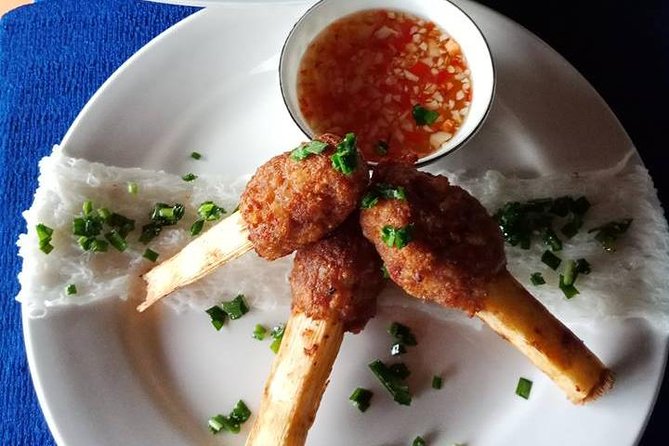
- 7:30 am start with included pickup to keep the day moving smoothly
- Wet market shopping for real ingredients, not supermarket stand-ins
- Farm garden harvest with nutrition talk about different plants
- Hands-on cooking of four dishes with a master chef
- Lunch included, plus certificate and recipes to take home
- Max 8 travelers for a more personal feel
Why a private market-to-farm class beats a basic cooking tour
This is not a “sit and watch” cooking show. The heart of the day is the food journey itself. You start by shopping in a local wet market where ingredients look, smell, and move like they do in daily life. Then you go to a garden/farm to harvest what you’ll cook. That order matters, because it teaches you how Vietnamese cooking thinks about freshness, balance, and texture.
You’ll also get a clear framework from the chef. The class focuses on flavor balance, including a yin-and-yang style approach mentioned in the lesson. Translation: you learn how to balance tastes and ingredients so dishes feel harmonious rather than heavy or one-note. That is the kind of skill that lasts after the day ends.
The private format helps too. With a max of 8 travelers, you get more attention during hands-on steps. You’re not guessing how long your chopping should be, or whether you’re doing it right. If your questions pop up mid-cook, you can usually get answers quickly.
You can also read our reviews of more city tours in Ho Chi Minh City


7:30 am pickup and the ride to the market outside the city

The day begins early—start time 7:30 am—and pickup is part of the deal. You’ll be collected by a local driver/guide and taken in an air-conditioned vehicle, which is a real comfort in Ho Chi Minh City’s heat.
Then you head out toward a local market. The timing matters here: going in the morning is when you’ll see the most variety in produce and protein. It’s also when vendors are actively working, so the atmosphere feels alive rather than staged.
One small consideration: because you’re leaving the city for the cooking school and farm area, you should plan your day with energy in mind. Wear shoes you can walk in, and keep your water bottle handy. This is one of those full-day activities where you’ll appreciate not having to think about transport.
Wet market shopping: herbs, fruit, and live ingredients you can actually see
The market portion is where the lesson becomes real. You’re not just shopping. You’re learning how Vietnamese cooks build meals.
You’ll see “many different varieties” of ingredients, including alive seafood or meat, plus stacks of fresh produce. That sounds intense if you’re not used to wet markets, but it’s also why the experience works. You understand what goes into the food you’ll later eat—and you learn how the market choices affect taste.
You also get to try fresh fruits from the market and sample fresh jasmine teas. That matters more than it sounds. Jasmine tea isn’t just a beverage in Vietnamese meals; it’s part of the sensory world around the cooking. Tasting it early helps you notice aroma and balance later in class.
Tip for you: don’t over-plan what you’ll order later that day. Your palate may reset after fruit and tea tasting. If you’re the type who likes to keep strict meal schedules, this tour will gently wreck that habit—in a good way.
Organic garden and farm harvest: learning nutrition from plants
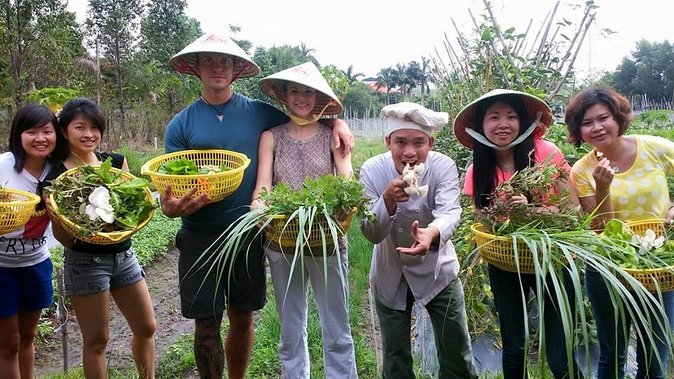
After the market, you head to the farm/garden. This stop is about source, not scenery. Yes, it’s a calm change from the city. But the real value is the nutrition lesson.
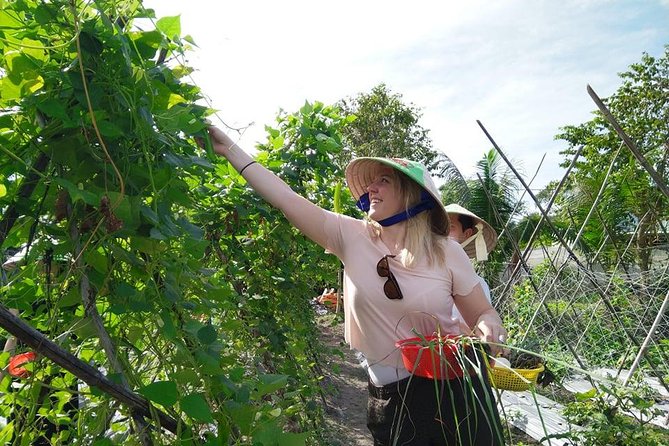
You’ll tour the organic farm and learn about nutrition from different plants—how ingredients contribute to the body and how “fresh” is more than a marketing word. Then you harvest fruits or pick produce from the garden. That hands-on moment is surprisingly motivating because you’re collecting what you’ll soon cook.
If you enjoy food science in a practical way, you’ll like this part. The chef’s approach ties ingredients to function: herbs, vegetables, and how they work with proteins. Instead of memorizing a recipe, you start thinking like a cook.
Possible drawback: it is a farm. That means outdoor time. Bring a hat if you run hot, and expect some walking on uneven ground. Nothing extreme is stated, but being outdoors for a morning-to-midday sequence is part of the design.
Meet your guide and chef, then cook four dishes hands-on
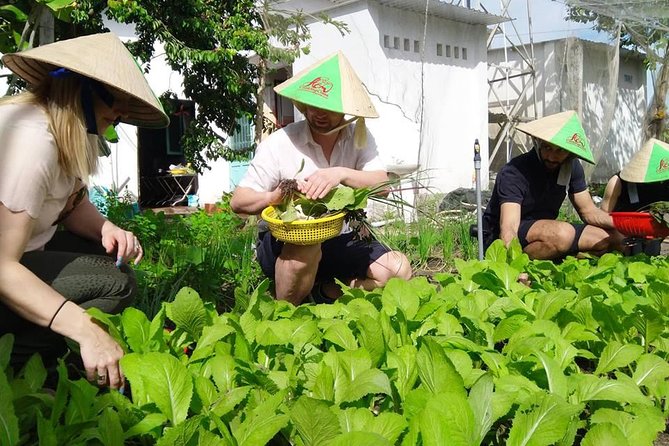
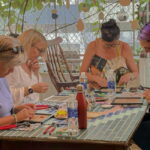
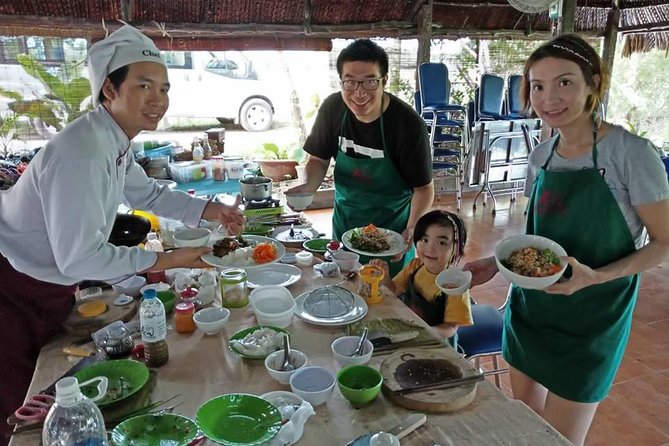
The kitchen portion is where you’ll feel the payoff. This is listed as 100% hands-on, and that matches the vibe of the experience: you don’t just assemble ingredients; you actively cook.
You’ll work with a professional chef who teaches both technique and balance. In the guide/chef stories you’ll find a strong emphasis on clear communication and a light, fun tone. Chef Mi is noted for being entertaining and patient, and guide Lin is praised for excellent English. The practical takeaway for you: you should feel comfortable asking questions, even if your cooking skills are basic.
You will learn great ways to make food balance, including yin-and-yang concepts. It shows up while cooking through how you combine flavors, adjust proportions, and think about the meal as a whole. If you’ve ever cooked something that tasted “almost right” but not finished, this kind of balancing lesson can fix that.
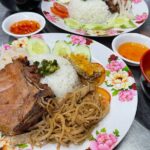
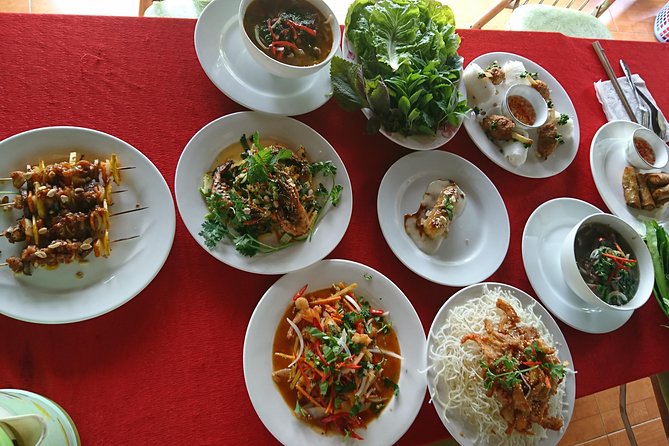
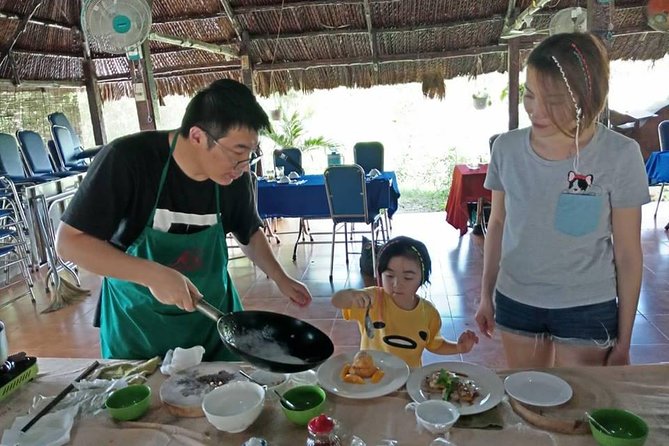
You’ll also cook four authentic dishes and sit down to eat them for lunch. Based on the class design, you should expect to do more than one person’s worth of effort. One of the most common compliments is that you end up preparing more food than you can realistically eat, which is a polite way of saying you’ll get full value in portion size.
Practical tip: pace yourself. If you jump too fast through steps, you can run into timing issues later while the rest of the group finishes prepping. Ask the chef for timing cues and follow their pace.
You can also read our reviews of more cooking classes in Ho Chi Minh City


Lunch is included, and you’ll actually taste what you learned
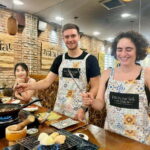
Lunch is not a separate add-on. It’s included, and it’s part of how the chef teaches. You sit down and enjoy what you cooked, which helps you connect technique to flavor right away.
Also, Vietnamese meals often rely on balance: salty, sweet, sour, and aromatic elements. Since the class emphasizes that balancing mindset, lunch becomes a mini lesson. You can compare your earlier decisions—like how you handled herbs, seasoning, or texture—to how the finished dishes taste.
If you’re curious about bringing the skill home, this is one of your best moments. After you eat, you remember the sensory details. Later, when you try recipes at home, that memory makes the instructions easier to follow.
You’ll also receive a certificate and recipes at the end. That’s not just a souvenir. A written recipe helps you repeat the dish without relying on memory, and the certificate gives the activity a sense of closure, like you finished a real course.
Price and value: is $70 per person a good deal?
At $70 per person, this class can feel like a splurge—until you count what’s included.
You’re getting:
- Private tour format with a small group size (max 8 travelers)
- Hotel pickup and drop-off
- Transport in an air-conditioned vehicle
- Market and farm activities
- A master chef class plus hands-on cooking
- Lunch
- A local driver/guide
- A certificate and recipes
In other words, you’re paying for the whole experience, not just the cooking. The market shopping and farm harvest are the big differentiators. Many cooking tours only start once you reach the kitchen. Here, you learn ingredient choices first, which boosts the value of everything you do after.
Is it perfect value for everyone? If you only want a quick food hit, there are cheaper ways to eat in the city. But if you want the skill behind the food, this is one of the more cost-effective ways to learn—because you leave with four dishes you know how to reproduce, plus guidance on balance.
One more value note: you’ll likely produce more food than you expect. That turns lunch into a generous meal, not a token bite.
Logistics that matter: group size, timing, and comfort
This tour runs about 7 hours 30 minutes. That’s a full day, so plan for a morning schedule and a slower evening afterward.
You’ll also want to know the tour is designed for up to 8 travelers. That small cap helps with attention and flow in both the market and kitchen.
Included comfort details also reduce friction. You get an air-conditioned vehicle and pickup/drop-off, so you’re not spending your vacation navigating half day trips. A mobile ticket is provided, which makes entry simpler.
The tour notes it is near public transportation. That matters only if you’re the type who sometimes prefers to meet somewhere else, but pickup/drop-off being included means you likely won’t need that flexibility.
Who this class suits best (and who might want a different plan)
This is ideal if you:
- Want a real Vietnamese cooking skill, not just photos and food tasting
- Enjoy markets and want to learn how ingredients are chosen
- Like structured learning with a chef, including flavor balance concepts
- Prefer a smaller group with space to ask questions
You might reconsider if:
- You dislike early mornings. The 7:30 am start is real.
- You have very specific dietary restrictions and haven’t told the operator ahead of time. The class says you should advise dietary requirements at booking, so do that early.
- You prefer lighter meals. Between cooking four dishes and eating lunch, you’ll end up with a lot of food.
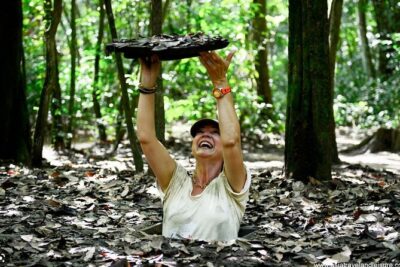
A fun planning tip if you’re building a Ho Chi Minh City day: the class timing works nicely with other nearby attractions. One useful idea is pairing it with the nearby Cu Chi Tunnels in the same day, since the driving can be reasonable when scheduled well. If you go that route, confirm timing so you don’t rush after a full cooking day.
Should you book this Vietnamese cooking class from Ho Chi Minh City?
If you’re choosing between “eat Vietnamese food” and “learn how to cook Vietnamese food,” I’d lean toward booking this one. It connects three parts of the food chain: market, farm, and kitchen. That’s rare for a day trip you can actually fit into your schedule.
I also like the way it teaches balance. Recipes are useful, but understanding why flavors work together is what makes you confident later. Add in hands-on cooking of four dishes, lunch included, and a certificate plus recipes, and you end up with a satisfying day that feels like more than a tour.
Book it if you want an active, instructive food day with a small group and guides who communicate clearly (English is specifically praised). Skip it if early starts and big portions don’t match your style.
FAQ
What time does the cooking class start?
The experience starts at 7:30 am.
How long is the tour?
The duration is about 7 hours 30 minutes.
Is hotel pickup and drop-off included?
Yes. Hotel pickup and drop-off are included.
What’s included in the price?
Lunch, all activities, a local driver/guide, hotel pickup and drop-off, a private tour, transport by private vehicle, and an air-conditioned vehicle are included.
Are alcoholic drinks included?
No. Alcoholic drinks are available to purchase, but they are not included.
How many people are in the tour?
The tour has a maximum of 8 travelers.
Quick note on canceling
You can cancel for a full refund up to 24 hours before the experience start time.