REVIEW · HO CHI MINH CITY
City Sightseeing Saigon Bus Tour
Book on Viator →Operated by City Sightseeing Ltd - USA and Middle East · Bookable on Viator
Two routes, one quick city fix. I love the hop-on hop-off freedom and the open-top views from the upper deck. One heads-up: the start can feel confusing at first, especially if your ticket doesn’t match what you see at the curb.
This is a practical way to get oriented in Ho Chi Minh City without spending all day in taxis. You get free Wi‑Fi on board and a free guidebook with maps, recommendations, timetables, and coupons, which helps you plan what to do once you actually get off.
You’ll also hear audio guide commentary in several languages, but it won’t win awards for storytelling. If you hate dry narration, treat the audio as background while you focus on the views—and make sure you’re on the right route and stop.
In This Review
- Key things to know before you ride
- Getting oriented fast from the open-top deck
- Red Route vs Blue Route: when each line makes the most sense
- The Red Route stops: landmarks worth hopping off for
- Saigon Opera House (Stop 1)
- Nguyen Hue Street (Stop 2)
- Nha Rong Wharf (Stop 3)
- Tran Hung Dao Statue (Stop 4)
- Ho Chi Minh Campaign Museum / Museum of Vietnamese History (Stop 5)
- War Remnants Museum (Stop 6)
- Pham Ngu Lao Street / Beer Street area (Stop 7)
- Ben Thanh Market (Stop 8)
- Independent Palace (Stop 9)
- Saigon Notre Dame Cathedral / Central Post Office (Stop 10)
- The Blue Route stops: markets, pagodas, and other local anchors
- Pham Ngu Lao Street (Stop 1 on the Blue Route)
- Ben Thanh Market (Stop 2 on the Blue Route)
- War Remnants Museum (Stop 3 on the Blue Route)
- Ho Thi Ky Flower Market (Stop 4)
- Phuoc An society’s premises (Stop 5)
- Ong Bon Pagoda (Stop 6)
- Binh Tay Market (Stop 7)
- Thien Hau Pagoda (Stop 8)
- Van Phat Pagoda (Stop 9)
- How to find your bus stop and avoid getting stuck at the start
- Time on the clock: how to plan a 1-day or 2-day ride
- Audio guide and guidebook: helpful tools, not magic
- Value for around $21: what you’re really paying for
- Who this tour fits best (and who should skip it)
- Should you book City Sightseeing Saigon?
- FAQ
- How long is the tour?
- How often do the buses run?
- Where do the Red and Blue routes start?
- Can I switch between routes during the day?
- What’s included in the ticket?
- Is entry to attractions included?
Key things to know before you ride
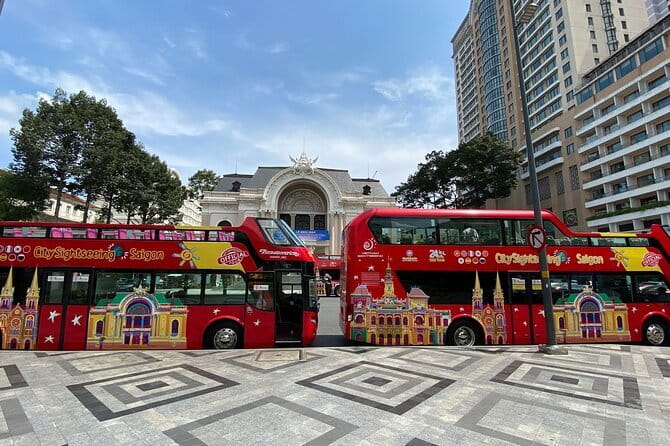
- Two routes cover the biggest hits: War Remnants Museum, Ben Thanh Market, Notre Dame Cathedral/Central Post Office, plus more.
- Your schedule is flexible: hop on, hop off, and ride again later the same day.
- Buses run often enough to keep momentum: about every 30 minutes on the Red Route and every 45 minutes on the Blue Route.
- You can switch routes at specific stops: Red stops 6, 7, and 8 line up with Blue stops 1, 2, and 3.
- Finding the start spot matters: the Red Route ticket exchange is at the Saigon Opera House side facing the Continental Hotel.
- Route confusion is real: both routes use buses that can look similar, so confirm the line before you step aboard.
Getting oriented fast from the open-top deck
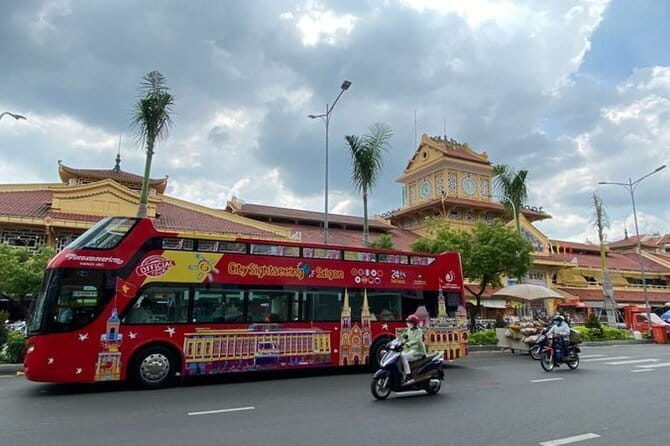
If you want an efficient first taste of Ho Chi Minh City, a hop-on hop-off bus makes sense. The bus experience is designed for exactly that: you ride for views and context, then hop off to explore, then get back on when you’re ready to move.
The big draw is the option to ride upstairs on the open deck. On a clear day, this is great for photos and for spotting landmark clusters as you pass. Also, there’s inside seating with air conditioning, which you’ll be glad for if the weather turns or the heat ramps up.
The audio guide comes in several languages, and that’s helpful when you don’t want to stare at a guidebook the whole time. Still, the commentary can feel a little dry—so I’d use it as a guide, not gospel. If you’re the kind of person who likes to figure things out on your own, pair the audio with the free guidebook maps and you’ll get more out of the day.
You can also read our reviews of more city tours in Ho Chi Minh City



Red Route vs Blue Route: when each line makes the most sense
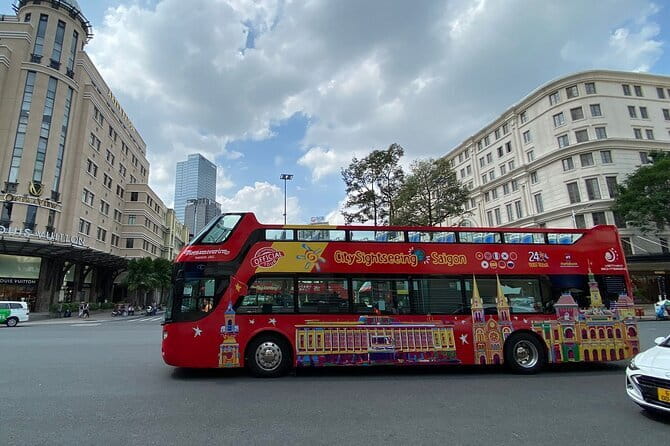
This tour runs two routes, which is the smartest part of the design. The Red Route is more focused on the core central landmarks, while the Blue Route fans out into a different set of neighborhoods and religious/market stops.
Red Route basics
- First departure: 9:00am
- Last departure: 4:00pm
- Tour duration: about 75 minutes
- Frequency: buses every 30 minutes
- Starting point (Stop 1): Saigon Opera House
- Ticket exchange counter: side of Saigon Opera House facing the Continental Hotel
So if you want the “classic city postcard” sights in one loop, this is your line.
Blue Route basics
- First departure: 9:00am
- Last departure: 3:45pm
- Tour duration: about 80 minutes
- Frequency: buses every 45 minutes
- Starting point: 187 Pham Ngu Lao Street (bus stop in front of the Liberty Hotel)
This route is a good choice if you’re spending time around Pham Ngu Lao and you also want market and pagoda stops without stitching together multiple separate rides.
Switching lines (how to combine both efficiently)
If you want to cover more in one day, you can switch. The guidance is to switch lines at:
- Red stop 6 → Blue stop 1
- Red stop 7 → Blue stop 2
- Red stop 8 → Blue stop 3
In plain terms: you can start on Red, then transfer onto Blue once you reach the War Remnants Museum / Pham Ngu Lao area / Ben Thanh corridor area depending on where you are on the loop.
The Red Route stops: landmarks worth hopping off for
Here’s what you’re looking at on the Red Route, stop by stop, and what each one is good for. You can treat this as your “shortlist” for when you decide to leave the bus.
Saigon Opera House (Stop 1)
This is the Red Route starting point, and it’s also a great first photo moment. If you want to calm your nerves before you tackle the rest of the day, start here and orient yourself with the street grid around Nguyen Hue.
Practical note: your ticket exchange counter is on the side of the Opera House facing the Continental Hotel. If you’re hunting for it later, don’t guess—walk to the correct side.
Nguyen Hue Street (Stop 2)
Nguyen Hue Street is the kind of central boulevard area where you can get a quick sense of the city’s rhythm. It’s an easy stop for a short walk, a snack break, or just people-watching from the sidewalk.



Nha Rong Wharf (Stop 3)
This is a waterfront-style stop. Even if you don’t have a specific plan, it’s a useful change of scenery, and it’s often the kind of place that helps you understand how the city grew around trade and travel routes.
Tran Hung Dao Statue (Stop 4)
This is a strong “checkpoint” stop. You can use it as a timing anchor—hop off briefly, take a couple of photos, then decide whether you want to keep walking or stay with the bus.
Ho Chi Minh Campaign Museum / Museum of Vietnamese History (Stop 5)
This is a culture-and-history stop. If you want museum time, this is one of your options on the Red Route.
One catch: entry to attractions is not included, so budget time (and money) if you choose to go in.
War Remnants Museum (Stop 6)
This is a top priority stop for many people because it’s one of the most well-known institutions in the city. It’s also the kind of place where it helps to arrive with a little time and a clear head.
You’ll be dropped near the museum, but remember: entry is not included. If you’re trying to “do it all,” plan your day around this stop, not around the bus schedule.
Pham Ngu Lao Street / Beer Street area (Stop 7)
This is the lively backpacker-and-street-life zone. It’s a great place to hop off if you want local street energy, casual food, or just a chance to reset and people-watch.
If you prefer quieter sightseeing, treat this as a short stop—then get back on the bus and move.
Ben Thanh Market (Stop 8)
Ben Thanh Market is one of the easiest places to spend time without overplanning. It’s a classic stop for snacks, souvenirs, and a look at daily shopping.
Tip: if you plan to shop, bring a loose budget for wandering. This is the kind of place where you might lose track of time if you’re not careful.
Independent Palace (Stop 9)
This stop is for a major historic site. If you like buildings you can walk through and understand, it’s a solid choice.
As with other attractions, entry is not included—so add a visit only if you have enough time to get in and out calmly.
Saigon Notre Dame Cathedral / Central Post Office (Stop 10)
This area is perfect for “two-for-one sightseeing.” The cathedral and the post office are both iconic, and you can do photos and a short walk without needing a long schedule.
If you like classic architecture, this stop is worth lingering at.
The Blue Route stops: markets, pagodas, and other local anchors

The Blue Route is where the tour broadens beyond the central parade of landmarks. It’s still sightseeing-friendly, but the vibe is more about neighborhoods and local places.
Pham Ngu Lao Street (Stop 1 on the Blue Route)
This is your Blue Route starting stop, in front of the Liberty Hotel area. It’s also a convenient entry point if you’re already spending time there and want a bus-led way to move farther out.
Ben Thanh Market (Stop 2 on the Blue Route)
You’ll hit Ben Thanh again on this route. That redundancy is useful: it gives you a second chance to shop or reposition without “missing” the market.
War Remnants Museum (Stop 3 on the Blue Route)
You can return to the War Remnants Museum corridor from the Blue Route side. If you didn’t have time on Red, or you want a different transfer timing, this is your second pathway.
Ho Thi Ky Flower Market (Stop 4)
This is a strong “color and texture” stop. Even if you don’t buy anything, markets like this can be a great break from landmark photos because you see what people are actually doing day-to-day.
Phuoc An society’s premises (Stop 5)
This is a cultural/religious-leaning stop by name, and it’s likely to be most interesting if you like to see how communities organize around shared spaces.
Ong Bon Pagoda (Stop 6)
Pagoda stops are often a slower pace by design. You can use this as a calm reset when you need a pause from street-level commotion.
Binh Tay Market (Stop 7)
This is a classic market stop with a different feel than Ben Thanh. If you want more variety in what you see and buy, it’s worth comparing the vibe between the two markets.
Thien Hau Pagoda (Stop 8)
Another religious site stop that tends to offer a different atmosphere than the commercial streets. It’s a good option if you want a quiet moment and some respectful sightseeing.
Van Phat Pagoda (Stop 9)
This keeps the Blue Route grounded in local places you don’t always see on the simplest city loops. Again: treat it as a chance to slow down and observe.
How to find your bus stop and avoid getting stuck at the start

Getting started is the one place where I’d be extra alert. Your experience will go smoother if you plan around two details:
1) Know which route you’re using. The buses for different routes can be easy to mix up because they’re not visually distinct in a way you can rely on. Before you climb aboard, check the route information so you don’t spend your first 20 minutes playing catch-up.
2) Use the ticket exchange and correct landmarks.
- Red Route ticket exchange is at the Saigon Opera House side facing the Continental Hotel.
- Blue Route starts at 187 Pham Ngu Lao Street, with the stop in front of the Liberty Hotel.
One practical tip that really helps: download the interactive map from the operator’s website before you arrive. It makes it far easier to match where you are on the street to the correct stop.
Also, mobile and printed vouchers are accepted. So you don’t need to stress about printing, as long as your voucher is ready on your phone.
Time on the clock: how to plan a 1-day or 2-day ride
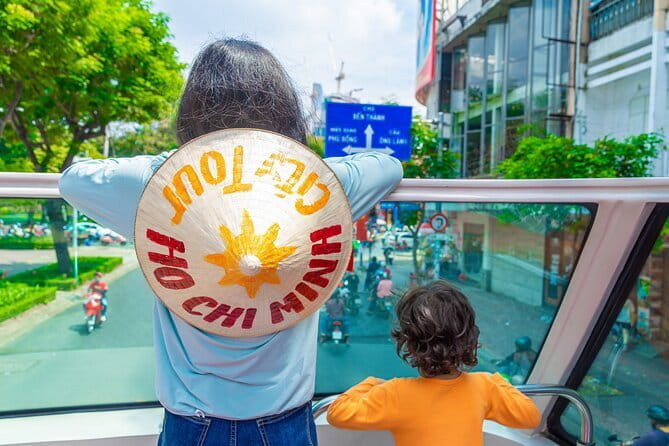
The bus runs often enough that you can build a flexible day around it, rather than treating it like a strict timed appointment.
Red Route timing
- ~75 minutes per full loop
- Every 30 minutes
- Last departure 4:00pm
Blue Route timing
- ~80 minutes per loop
- Every 45 minutes
- Last departure 3:45pm
If you have one day, my suggestion is to pick a “main backbone” route (usually Red), then transfer to Blue at the stop switch area so you don’t waste time repeating the same stretches. If you have two days, you can split your sightseeing: one day for the core central landmarks and another for market/pagoda stops plus a revisit to places you liked most.
This tour is also built for short stops. You don’t need a perfect itinerary; you just need the willingness to get off, walk 10 to 30 minutes, and see if a place holds your attention.
Audio guide and guidebook: helpful tools, not magic

The audio guide is available in multiple languages, which is a big plus if you want a guided baseline while you ride. But if you’re expecting dramatic storytelling, temper your expectations. The audio can feel a bit boring, and that’s why you should use it for key facts and then move on.
Here’s how to get more value out of it:
- Use the audio while you’re still on the bus for quick orientation.
- Then switch to the free guidebook maps and recommendations when you’re actually walking around.
- If you’re sensitive to heat, spend more time indoors with air-conditioning seating rather than staying upstairs for the entire ride.
One more practical touch: the guidebook includes timetables and coupons. That can help you reduce guesswork for other parts of the day.
Value for around $21: what you’re really paying for
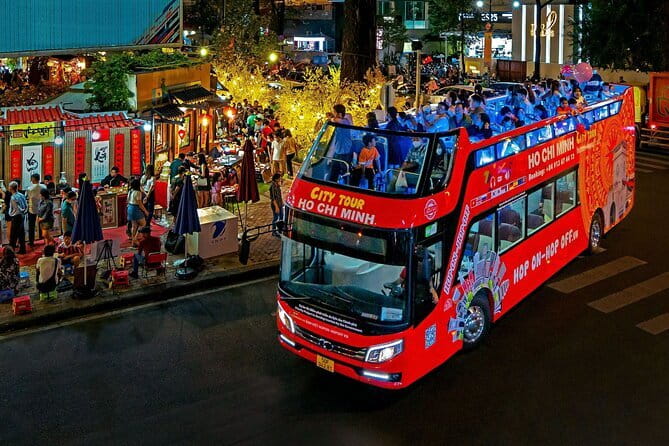
At about $21 per person, this tour is priced as an affordable city-orientation tool. The value comes from convenience and coverage, not from “everything is included.”
Here’s the balance:
- Included: hop-on hop-off bus access (1-day or 2-day), two routes, stops near major sights, free Wi‑Fi, free guidebook with maps/recommendations/timetables/coupons.
- Not included: hotel pickup/drop-off, food and drink, attraction entry fees, tips.
So ask yourself: do you want to buy separate transit or multiple rides to move around town efficiently? If the answer is yes, this bus can save time and reduce stress. If you already have a tight plan with taxis or rideshare and you know exactly where you’re going every hour, you might feel like the bus is more of a framework than a must.
But for first-timers and for anyone who likes options, $21 buys flexibility. It’s hard to beat a system that lets you get off at major sights and then adjust your route later.
Who this tour fits best (and who should skip it)
This is a strong match for:
- First-time visitors who want an easy way to see big highlights like Ben Thanh Market and the Notre Dame Cathedral/Central Post Office area.
- Travelers who like guided structure but still want choice.
- Anyone planning a museum day and using the bus to position themselves near major sites like the War Remnants Museum.
You might want to skip or use it selectively if:
- You hate slow, narrated sightseeing and prefer reading or self-guided routes only.
- You have very specific interests that are far apart; in that case, a custom plan might beat a big loop.
- You’re sensitive to the weather if you plan to stay upstairs on the open deck for long stretches—use the inside air-conditioning when needed.
Should you book City Sightseeing Saigon?
Book it if you want a low-stress way to get your bearings fast and check off major Ho Chi Minh City landmarks without overplanning. The Red Route is especially strong for first-time orientation, and the Blue Route helps you expand beyond the center into markets and pagoda stops.
I’d book with a simple plan in mind:
- Start with Red for central highlights.
- Transfer to Blue once you reach the Ben Thanh / War Remnants Museum / Pham Ngu Lao corridor area.
- Reserve extra time for any major attraction you care about, because entry isn’t included.
If you’re the kind of traveler who likes to wander, stop when something catches your eye, and keep your day flexible, this tour is a good use of your time—and it should make your next steps in the city much easier.
FAQ
How long is the tour?
The Red Route runs about 75 minutes, and the Blue Route runs about 80 minutes.
How often do the buses run?
On the Red Route, buses run about every 30 minutes. On the Blue Route, buses run about every 45 minutes.
Where do the Red and Blue routes start?
The Red Route starts at Saigon Opera House (Stop 1). The Blue Route starts at 187 Pham Ngu Lao Street, with the bus stop located in front of the Liberty Hotel.
Can I switch between routes during the day?
Yes. You’re advised to switch lines at Red Route Stops 6, 7, and 8, which correspond to Blue Route Stops 1, 2, and 3.
What’s included in the ticket?
Your ticket includes the hop-on hop-off bus tour (1-day or 2-day), stops near major sights, free Wi‑Fi, and a free guidebook with maps, recommendations, timetables, and coupons.
Is entry to attractions included?
No. Entry to attractions is not included, so you’ll need to pay separately if you want to go inside.