REVIEW · HO CHI MINH CITY
Half Day Ben Duoc Tunnels Tour Ho Chi Minh City
Book on Viator →Operated by The Sun Tourist · Bookable on Viator
Tunnels feel like history you can touch. On the Ben Duoc Tunnels tour, you’ll walk through a multi-level maze made for daily life, work, and survival during the Vietnam War. I especially loved the clear context from the English-speaking guide and the way the site balances underground features with surface memorials.
Two parts really stuck with me. The first is getting a sense of how people actually lived down there, from living quarters to a medical chamber and weapon storage. The second is the open-air museum and Ben Duoc Memorial Temple, where names of tens of thousands of martyrs are carved into stone tablets.
One thing to think about: you’re going into tight underground spaces with narrow passages and hidden entrances/exits. If you’re not comfortable with enclosed or low-ceiling areas, you’ll want to go in with realistic expectations.
In This Review
- Key highlights
- Tunnels feel like history you can touch
- From District 1 pickup to the tunnel grounds
- Underground rooms, traps, and the Hoang Cam kitchen
- Open-air museum time: aircraft, tanks, bombs, and weapons
- Ben Duoc Memorial Temple and the liberated-zone reconstruction
- Guide energy is the difference-maker
- Shooting gun add-on and other costs to plan for
- Price and value: what you’re really paying for
- Weather and comfort: the small things that matter
- Should you book this Ben Duoc tunnel tour?
- FAQ
- How long is the Ben Duoc Tunnels tour?
- What time does the tour start and where does it begin?
- Does the price include admission and transportation?
- Is a shooting gun included in the tour price?
- What’s the group size limit?
- Do I get a mobile ticket?
- What if the weather is bad?
- Are there refunds if I cancel?
Key highlights
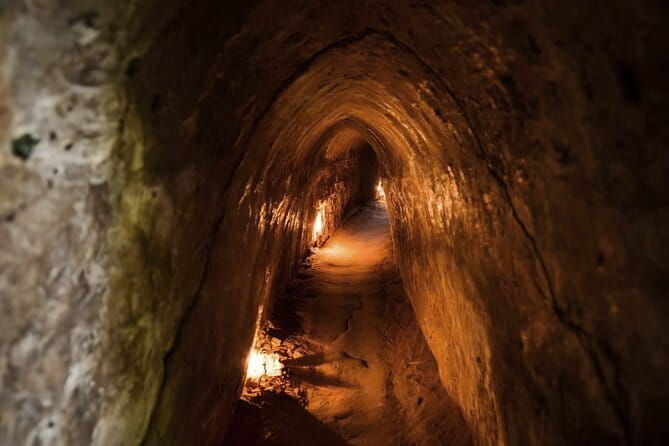
- Underground survival layout: living quarters, working areas, meeting rooms, a medical chamber, weapon storage, plus ventilation holes
- Hoang Cam kitchen: a smoke-disguising cooking technique that explains how daily tasks were hidden
- Traps and escape routes: wartime traps, hidden entrances, and hidden exits that show the tunnels were built to resist discovery
- Open-air museum: aircraft, tanks, bombs, and other weapons displayed outdoors
- Ben Duoc Memorial Temple: stone tablets listing tens of thousands of martyrs
- Recreated wartime daily life: a reconstructed liberated zone that helps you picture what life looked like
Tunnels feel like history you can touch
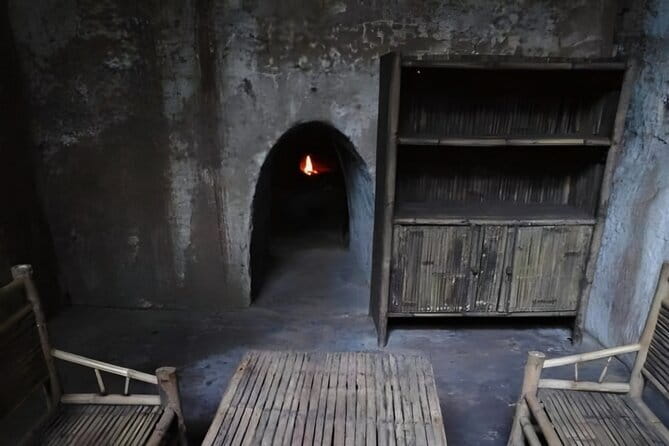
This tour is sold as a half-day, but plan on a full 7–8 hours of actual sightseeing. That’s the right call, because once you’re out in the tunnel area, you’ll spend time underground and then shift to the memorial and outdoor exhibits.
What makes this experience different from the usual history stop is the mix of spaces. You’re not only looking at tunnels as engineering. You’re also seeing how the network supported routines: cooking, meetings, medical care, and storage. The result is less like reading a textbook and more like following a story through rooms built to keep people functioning.
You can also read our reviews of more city tours in Ho Chi Minh City

From District 1 pickup to the tunnel grounds
Most tours like this start with a long ride, and this one is no exception. You begin at 8:00 AM with pickup from centrally located hotels in District 1, using an air-conditioned minivan. The meet point listed for the experience is at 203 Đề Thám, Phường Phạm Ngũ Lão, Quận 1.
On the road, your guide sets the stage—war context, what these tunnels were for, and some local cultural background. That matters because when you step into the underground spaces, you’ll understand why each feature exists, not just that it exists.
You’re also in good shape for a small group. The maximum group size is 12 travelers, which generally helps keep the tour moving and makes it easier to ask questions.
Underground rooms, traps, and the Hoang Cam kitchen
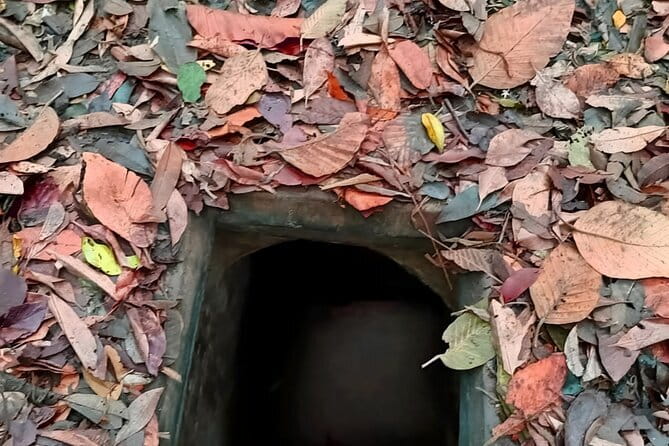
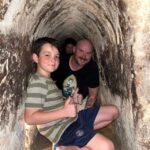
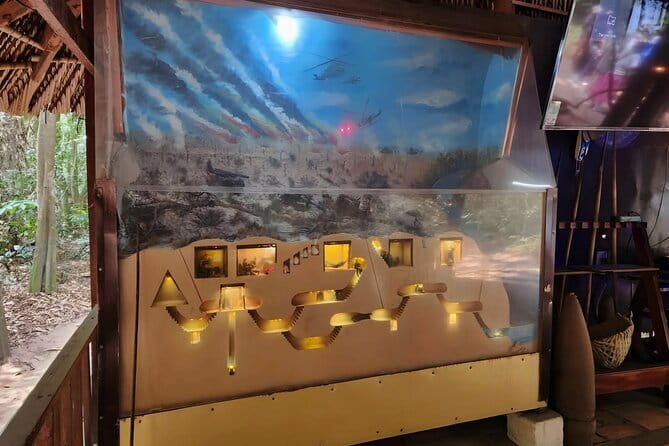
The heart of this tour is the multi-level tunnel system. You’ll see narrow passageways, hidden entrances and exits, and underground chambers designed for real wartime needs.
Here’s what stands out most when you’re inside:
- Daily-life spaces: living quarters and working areas that connect the tunnel network to human routine
- Plan-and-meet areas: meeting rooms that show how coordination happened underground
- Medical and storage: a medical chamber and weapon storage, which underscores the tunnels weren’t only hiding places
- Air management: ventilation holes that are part practical engineering, part survival strategy
Then there’s the detail that makes the place feel specific: the Hoang Cam kitchen, described as a smoke-disguising cooking technique. Even if you only grasp the basic idea, it helps you picture the challenge: eating and doing ordinary tasks while trying not to give away your position.
You’ll also encounter wartime traps and other underground constructions. The point isn’t to turn the tunnels into a spooky maze. It’s to show how the network was built to reduce risk and slow down attempts to find or enter the system.
Practical note: underground portions involve tight movement. Wear shoes you’re confident in for uneven, confined spaces. If you have any mobility limits or strong claustrophobia, this is the time to be honest with yourself.
Open-air museum time: aircraft, tanks, bombs, and weapons
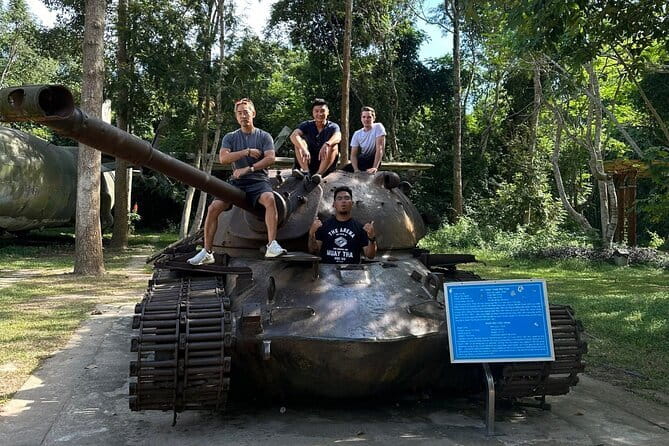
After the underground segment, you shift outdoors. The site includes an open-air museum with displays like aircraft, tanks, bombs, and various weapons.
This part works well because it gives your brain a different reference point. Underground details can be hard to visualize until you see the scale of what was being used on the surface. Outdoors, it becomes easier to connect the tunnel system to the larger military picture your guide has been framing since the drive.
Expect some walking here. It’s not just a quick glance at a couple of objects. You’ll likely spend enough time to read labels and absorb the overall layout.
Ben Duoc Memorial Temple and the liberated-zone reconstruction
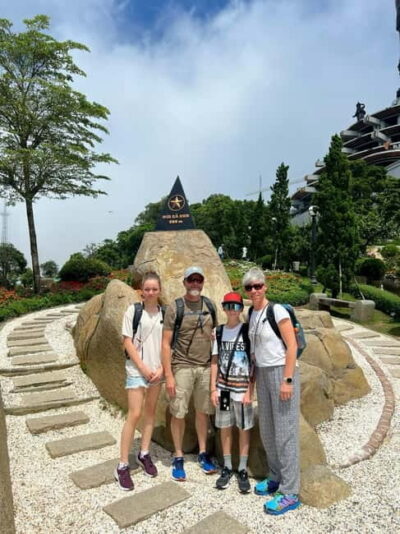
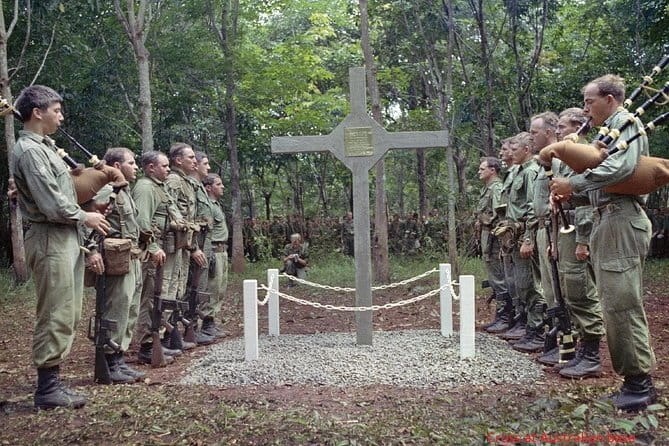
The emotional center of the tour is Ben Duoc Memorial Temple. This is where stone tablets engrave the names of tens of thousands of martyrs. Even without being overly dramatic, the sheer number of names makes the scale hit harder than any single story.
After that, you’ll visit the reconstructed liberated zone, which recreates wartime settings and daily life during the war. I like this section because it’s not only memorial. It’s also educational in a practical way: it helps you imagine where people went through ordinary routines, even while everything around them was dangerous.
If you’re the kind of person who remembers best through scenes rather than dates, this part will land.
Guide energy is the difference-maker

A lot of the value in tours like this comes from the guide’s ability to connect dots. This one has that edge. The reviews you’ll find for this experience repeatedly praise guides who are energetic and strong on Vietnam War context.
Names that come up in guidance include Thang, Thanh, Khang, Minh, Mark, and James. Regardless of which guide you get, the recurring theme is straightforward: you’ll get answers to questions, and the explanations stay practical, not overly scripted.
For you, that means less time wondering what you’re looking at and more time understanding why it matters. It also helps if you’re traveling with teens or someone who did museums already but wants a “where does this connect to real life” angle. A story-driven tunnel tour pairs well with a museum day because you’re comparing evidence in different formats.
Shooting gun add-on and other costs to plan for
The tour price is $29.00 per person, and that includes key basics like entrance fees and bottled water. Still, there’s a common add-on: the shooting gun experience.
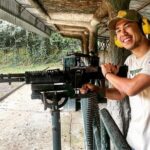
Shooting gun is not included, and it’s listed at 60,000 VND per bullet. If you want to try it, budget separately. If you don’t, skip it. Either way, it won’t affect the core story of the tunnels and memorial areas.
Tips are also not included. That’s true of many tours, but it’s worth remembering so you don’t get surprised at the end of the day.
Price and value: what you’re really paying for

On paper, $29 can look like a bargain for a 7–8 hour day. In practice, the value comes from what’s included:
- Air-conditioned vehicle for the long ride
- Hotel pickup and drop-off (central District 1)
- Entrance fee
- Bottled water
- A friendly, English-speaking guide
- Mobile ticket
If you tried to assemble the trip on your own, you’d still face transport and entry costs, plus the time cost of figuring out how everything connects. Here, the guide gives you that “why” while you’re standing in the rooms, which is usually the part that’s hardest to replicate independently.
What you’re not paying for is the optional shooting gun and the tip. Everything else is structured.
Weather and comfort: the small things that matter
This experience requires good weather. That’s important because the day includes outdoor museum displays and open-air areas around the memorial. If weather turns, the tour may be offered on another date or refunded.
Inside the tunnels, comfort is mostly about basic physical fit: the passages can be narrow, and the spaces can feel enclosed. Bring a realistic mindset and plan to move slowly.
Also, the tour allows service animals, and it’s listed as being near public transportation—useful if you’re not starting from a pickup point.
Should you book this Ben Duoc tunnel tour?
Yes, if you want a guided day that mixes underground survival design with surface memorial meaning. This is the kind of tour that helps you connect what you’ve heard about the Vietnam War to actual rooms, systems, and human choices.
Book it if:
- you like guided explanations and want context right where you’re looking
- you want the full arc: tunnels, museum items, memorial temple, and the recreated wartime zone
- you’re traveling with teens and want something more than a quick stop
Think twice if:
- you’re uncomfortable with tight, enclosed underground spaces
- you prefer lighter walking and fully open-air sightseeing
If you’re curious, this is one of those days where the guide makes the difference. Strong history facts help, but the real win is standing in places built for living and hiding at the same time—and understanding what those choices cost.
FAQ
How long is the Ben Duoc Tunnels tour?
The tour runs about 7 to 8 hours.
What time does the tour start and where does it begin?
It starts at 8:00 AM. Pickup is offered from centrally located hotels in Ho Chi Minh City, specifically in District 1, and the meeting point listed is 203 Đề Thám, Phường Phạm Ngũ Lão, Quận 1.
Does the price include admission and transportation?
Yes. The package includes entrance fee, bottled water, and an air-conditioned vehicle with hotel pickup and drop-off within central District 1.
Is a shooting gun included in the tour price?
No. The shooting gun is not included and is listed at 60,000 VND per bullet.
What’s the group size limit?
The tour has a maximum of 12 travelers.
Do I get a mobile ticket?
Yes. A mobile ticket is included.
What if the weather is bad?
This experience requires good weather. If it’s canceled due to poor weather, you’ll be offered a different date or a full refund.
Are there refunds if I cancel?
Free cancellation is available up to 24 hours in advance for a full refund. If you cancel less than 24 hours before the start time, the amount paid is not refunded.