REVIEW · HO CHI MINH CITY
4H – SAIGON-CHO LON CITY TOUR – HOP ON HOP OFF – CHINATOWN
Book on GetYourGuide →Operated by ANH VIET HOP ON - HOP OFF VIET NAM · Bookable on GetYourGuide
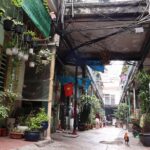
Chinatown in Ho Chi Minh City feels like a time machine. This Saigon–Cho Lon hop-on hop-off bus tour is an easy way to see the Chinese-influenced side of town while you listen to multilingual audio on the move. I like that it combines open-top sightseeing with practical route information, and I also like the onboard extras like free Wi-Fi and helpful materials. The main thing to consider is timing: you need to be careful with the hop-on hop-off window, and there can be schedule hiccups.
For 90 minutes you ride, listen, and orient yourself, then you get the option to hop back on during the valid period. You’ll pass major Cho Lon landmarks and shopping areas, including Binh Tay Market, Kim Bien Market, and An Dong Market, plus temples and old-quarter streets like Thien Hau Temple and Quan De Temple. One drawback to plan around: entrance fees aren’t included, so some of the best stops may still cost extra if you want to go inside.
If you’re short on time but want more than a quick drive-by, this is a strong fit. It’s also wheelchair accessible, and you’ll have a map plus on-board audio in many languages, including English, Vietnamese, Chinese, French, Japanese, German, Korean, Russian, and Spanish. Just remember that the bus route is only the start, not the full experience, since food and site entry are on your own.
In This Review
- Key highlights at a glance
- Price and value: $19 for bus time plus audio help
- Where to meet at Ben Thanh’s west gate (and what to look for)
- Riding open-top double-decker: the good parts and the realistic parts
- Audio guide in many languages: how to use it well
- Cho Lon’s Chinatown mix: temples, streets, and the look of everyday life
- The market payoff: Binh Tay, Kim Bien, and An Dong
- Timing tricks: the 4-hour window and the last hop-off reality
- Onboard rules that affect comfort and planning
- Weather and comfort: hats, raincoats, and staying photo-ready
- Service reliability: what to plan for when timing matters
- Who this tour is best for
- Should you book the Saigon–Cho Lon hop-on hop-off Chinatown bus?
- FAQ
- How long is the tour?
- What are the bus operating hours?
- What does the 4-hour ticket validity mean?
- Where is the meeting point?
- What languages are available on the audio guide?
- Is Wi-Fi available on board?
- Are entry tickets and food included?
Key highlights at a glance
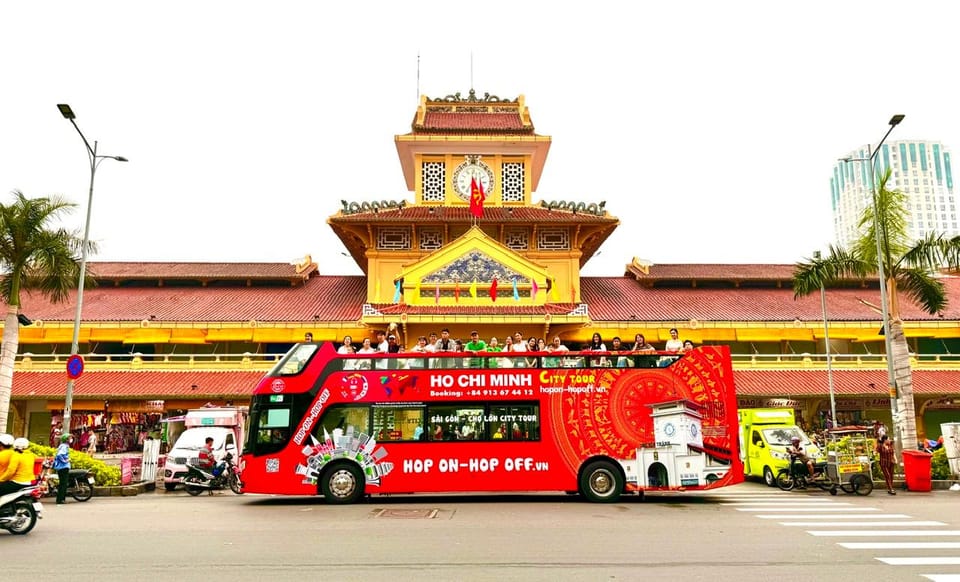
- Open-top double-decker views over Saigon as you move between Cho Lon sights
- Multilingual audio guide (English, Vietnamese, Chinese, French, Japanese, German, Korean, Russian, Spanish)
- 4-hour validity ticket that lets you hop on and off during the permitted window
- Free Wi-Fi and onboard map to help you navigate on the ground
- Cho Lon temples and decoration streets like Thien Hau Temple and Oriental Medicine Street
- Wholesale market stops including Binh Tay Market, Kim Bien Market, and An Dong Market
Price and value: $19 for bus time plus audio help
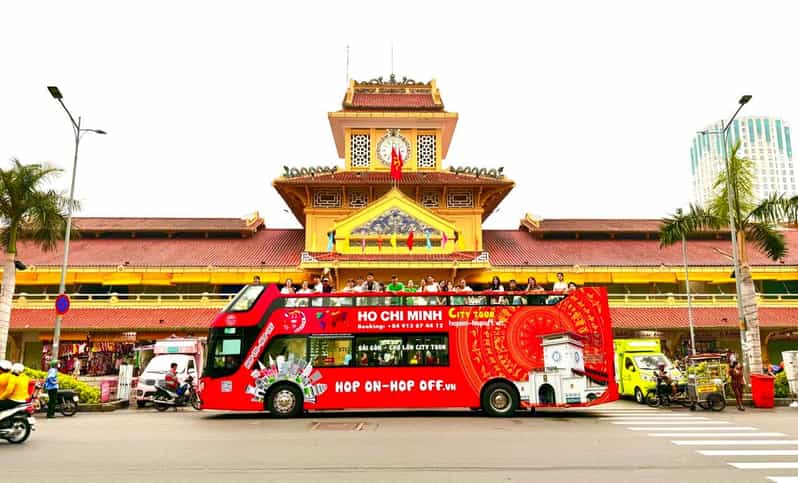
At about $19 per person, you’re paying for a guided-style city experience without the fuss of tickets to every single stop. The value comes from three things working together: you get the bus (scenic ride), you get context (audio narration), and you get flexibility (hop-on hop-off within the validity window).
Here’s how that plays out for your day. The ride itself is listed at 90 minutes, but your ticket gives you 4-hour validity starting with the first boarding window (operating from 8:00 AM to 3:30 PM). That means you can walk a bit, pause for photos, and still have time to continue with the route later in that same general timeframe.
What’s not included matters for budgeting. Entry tickets aren’t covered, and food isn’t included either. So if you’re the type who wants to go into temples and museums, plan extra cash. If you mostly want street-level atmosphere, exterior views, and audio-driven context, this price feels more complete.
You can also read our reviews of more city tours in Ho Chi Minh City



Where to meet at Ben Thanh’s west gate (and what to look for)
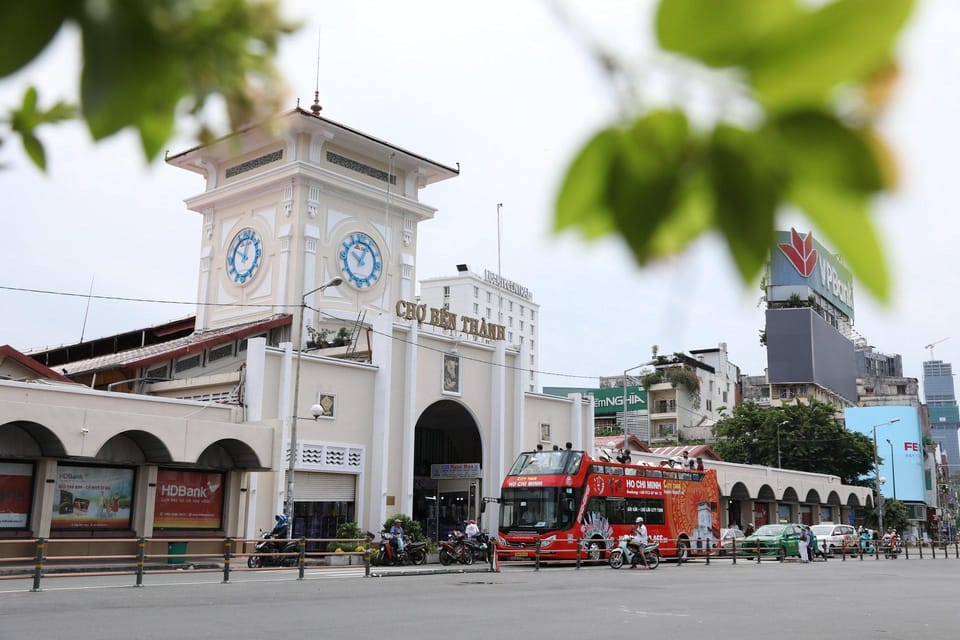
You’ll meet at No. 23 Phan Chu Trinh St., Dist. 1, at the West Gate of Ben Thanh Market. The operator notes that you can find staff in red T-shirts at the Anh Viet Hop On Hop Off counter at that location.
Two practical tips help here:
- Arrive a little early so you’re not hunting for the counter as the bus pulls up.
- Watch for the possibility that the bus is already parked there at the meeting point.
If your plan is to start right at the beginning of the morning flow, this location is also handy because Ben Thanh is central for grabbing a quick snack afterward or resetting before you head to District 5–style Cho Lon areas.
Riding open-top double-decker: the good parts and the realistic parts
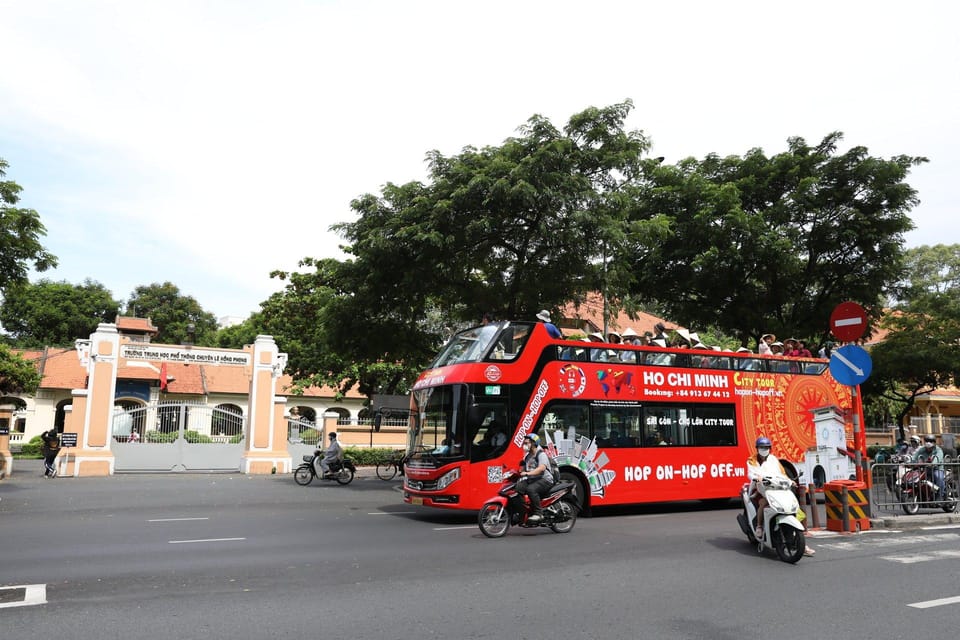
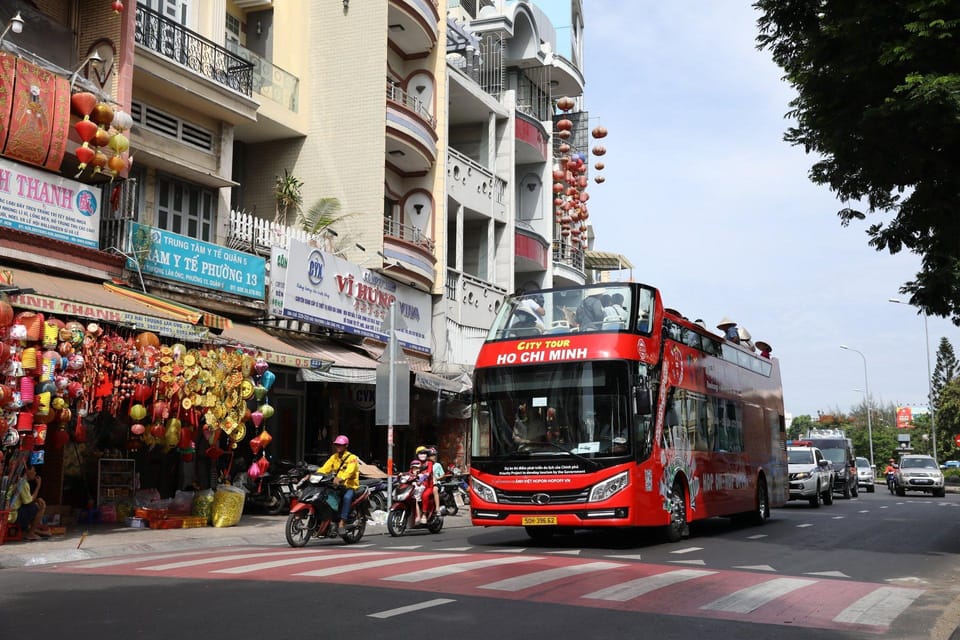
This is an open-top double-decker style bus, which is exactly what you want for a neighborhood like Cho Lon. You’ll get broad views as you travel and keep your photos from feeling cramped. The bus also includes free water refills using a large supplied container, plus a conical hat and raincoat depending on the weather.
Onboard convenience is solid for a value tour:
- Free Wi-Fi
- Multilingual audio guide with multiple language options
- A city map so you’re not guessing where you are when you hop off
A realistic consideration: if your goal is to spend a lot of time inside specific sites, the bus ride format is only part of the day. You’ll likely spend your extra time on the walkable area around key stops, then return to the bus for the next segment.
Audio guide in many languages: how to use it well
The audio guide is available in a wide list of languages, including English, Vietnamese, Chinese, French, Japanese, German, Korean, Russian, and Spanish. That range is useful if you’re traveling with someone who prefers a different language, or if you want Chinese or Vietnamese context while still understanding the big points in English.
To get the most out of it, use a simple rhythm:
- Listen while the bus moves between stops.
- When you hop off, look up at your surroundings first, then replay the idea you just heard through your memory (even if you’re only catching parts).
The goal isn’t to catch every detail. It’s to understand what you’re seeing: why a temple exists in that exact area, how decoration streets got their names, and what kinds of buildings you’re looking at when Chinese and Vietnamese influences overlap.
Cho Lon’s Chinatown mix: temples, streets, and the look of everyday life
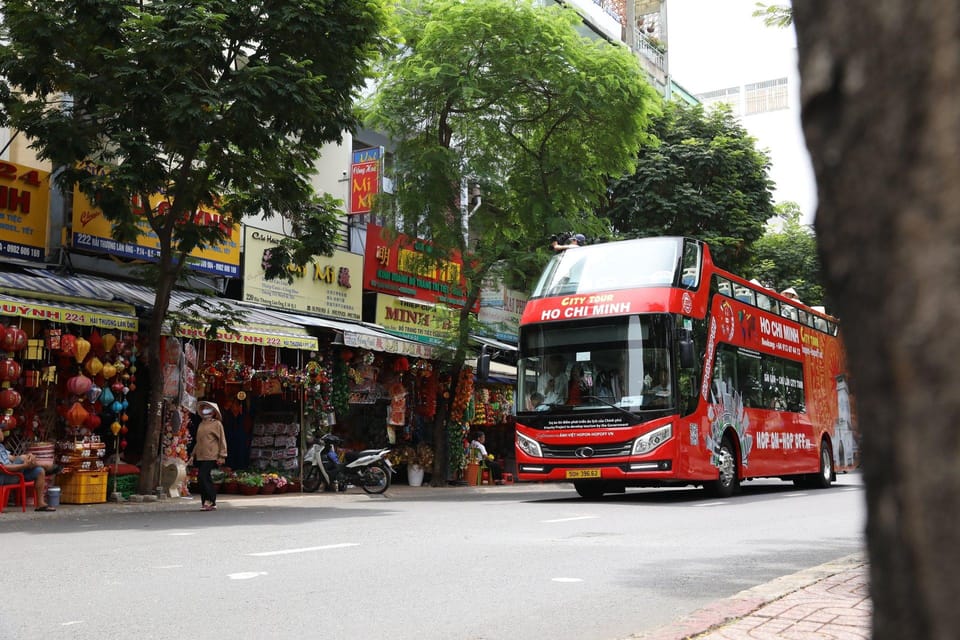
This tour’s heart is the Cho Lon area, a commercial hub with older architecture and strong Chinese-Vietnamese presence. Instead of treating Chinatown as one landmark, the route spreads you through multiple kinds of stops: temples, decoration streets, and alley-level streets where the city still feels built for foot traffic.
You’ll pass or visit standout stops such as:
- Thien Hau Temple
- Quan De Temple
- Hai Thuong Lan Ong Decoration Street
- Hao Si Phuong Alley
- Oriental Medicine Street
- Plus additional historical sites, pagodas, shrines, churches, and ancient-quarter-style streets along the route
What makes these stops practical is that they cover different textures of the neighborhood. Temples give you religious and architectural cues. Decoration streets help you spot the visual storytelling in storefronts and façades. And “street” stops like alleys let you experience the neighborhood at walking speed rather than through a single tourist viewpoint.
If you’re picturing a Chinatown that looks like one single style, you’ll likely be surprised—in a good way. This area shows how Chinese community culture took root here, then blended with local Vietnamese urban life over time.



The market payoff: Binh Tay, Kim Bien, and An Dong
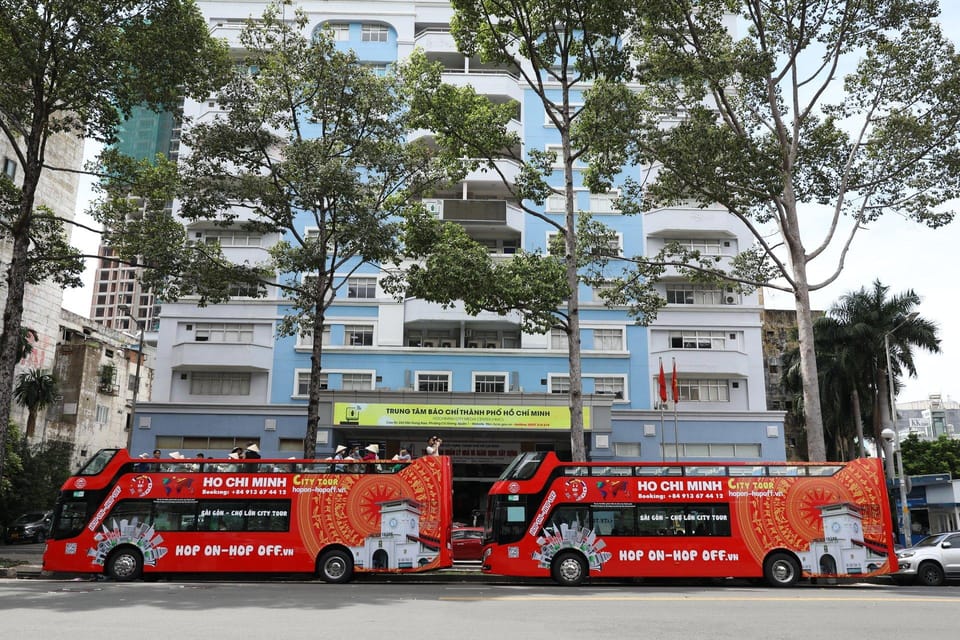
Cho Lon isn’t just about temples. It’s also shopping territory, and this route leans directly into that.
You’ll have chances to enjoy wholesale market areas including:
- Binh Tay Market
- Kim Bien Market
- An Dong Market
Here’s how I’d frame the market experience so you get value without getting overwhelmed:
- Think of markets as places to observe. Even if you don’t plan to buy much, you’ll learn how people move through aisles and what’s sold around the neighborhood.
- If you do buy, decide ahead of time whether you want souvenirs, practical goods, or just a quick browse. The longer you wander without a plan, the easier it is to lose your bus timing.
The best approach for this kind of hop-on hop-off tour is to use markets as a stop where you spend a chunk of your hop-off time, then return to the bus with your next segment in mind.
Timing tricks: the 4-hour window and the last hop-off reality
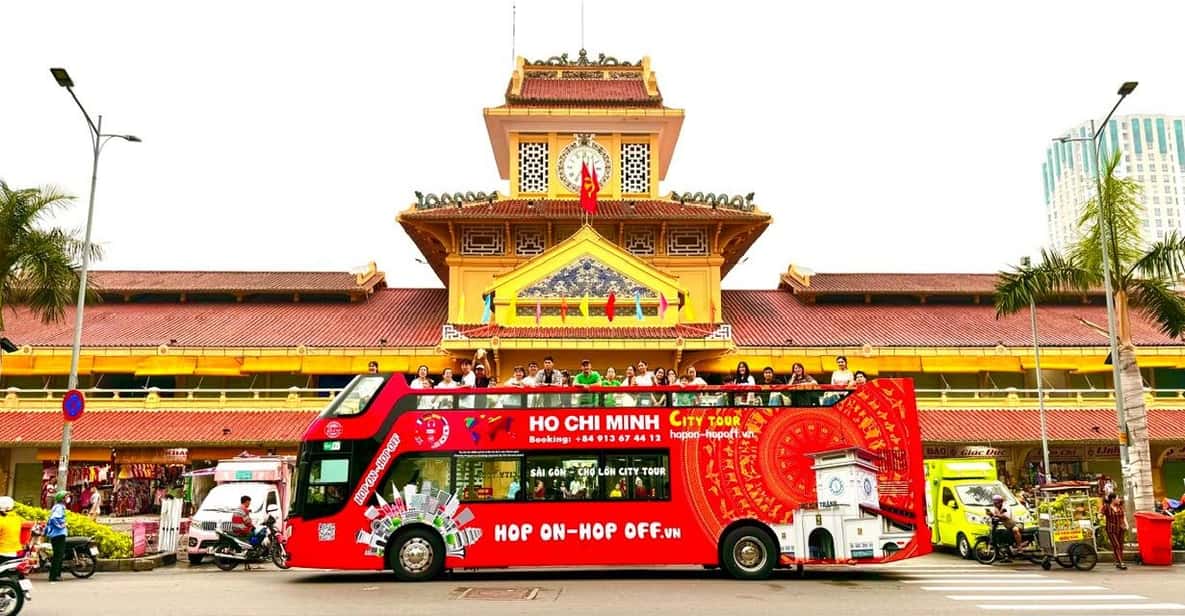
The biggest logistical detail here is the 4-hour validity of your bus ticket, tied to operating hours. The bus runs from 8:00 AM to 3:30 PM, with departures every 30 minutes.
After that: once the time runs past the hop-on hop-off period, buses run without stopping, so you lose the flexible part. The operator’s guidance is clear:
- Pay attention to your start time so you can use your full 4 hours until 4:00 PM.
- Passengers should depart their 4-hour trip no later than 12 pm to keep the schedule workable.
Put simply: if you start too late, you may find you can’t hop off when you want, even if the bus is still running.
A simple strategy I’d use if I were trying to enjoy everything:
- Start earlier rather than later.
- Build one “long” hop-off block (often markets) and keep the other hop-off moments shorter for photos and temple exterior viewing.
Onboard rules that affect comfort and planning
These are the kinds of restrictions that don’t ruin a day, but they can catch you off guard if you’re traveling light or with extras.
Not allowed on board includes:
- Oversize luggage
- Bikes
- Alcohol and drugs
- Chewing gum
- Feeding animals
- Alcoholic drinks
- Smoking
- Pets
If you’re traveling with a lot of shopping bags from earlier stops, try to keep them manageable and within what you’d consider normal carry size. If you’re coming from a day out in the heat, you’ll also want to bring your own water bottle so you can refill it from the supplied water container.
Weather and comfort: hats, raincoats, and staying photo-ready
This tour anticipates weather changes. The operator provides raincoats on rainy days and conical hats on sunny days, plus water refills and paper cups for use.
You can make it even easier on yourself by packing:
- Sunglasses and sunscreen (if it’s bright)
- A small umbrella or light layer if rain is possible
- A reusable bottle for water refills
Because the bus is open-top, the air and light are part of the experience. That’s great for photos, but it also means you should be ready for sun or drizzle.
Service reliability: what to plan for when timing matters
The rating on this experience is below average, and that’s mostly a sign that timing can be inconsistent. There’s at least one report of a late departure and a mid-route stop, which is the kind of thing that can affect a tight schedule.
So here’s the balanced way I’d handle it:
- If your day has strict commitments after the tour, give yourself a buffer.
- Keep your hop-off plans flexible. If the bus is delayed, you want to be able to adjust your market visit without stress.
This is not a reason to avoid the tour entirely. It’s just a reason to travel with a little patience, especially if you’re starting from the Ben Thanh area at a busy time.
Who this tour is best for
This works especially well if:
- You want a first-orientation feeling for Cho Lon without buying lots of separate tickets.
- You enjoy audio-guided city context, especially in multiple languages.
- You want both temples and markets in one guided loop.
- Your group has different language preferences and you want everyone to follow along.
It’s less perfect if:
- You only care about one or two specific sites and you’re willing to handle directions and tickets yourself.
- You have an extremely tight timetable and can’t absorb possible delays.
Should you book the Saigon–Cho Lon hop-on hop-off Chinatown bus?
If you want an efficient way to see how Chinese and Vietnamese heritage show up in the Cho Lon area, I think this is worth considering. The combination of open-top views, multilingual audio, and the ability to hop near places like Thien Hau Temple, Quan De Temple, and major markets makes it a solid value for a short stay.
Just book it with eyes open. Do your best to start early, plan for extra time if you’re going inside sites, and keep a small buffer in case the ride runs behind schedule.
FAQ
How long is the tour?
The experience duration is listed as 90 minutes, and your ticket also includes 4-hour validity for hop on hop off use.
What are the bus operating hours?
The buses operate from 8:00 AM to 3:30 PM, departing every 30 minutes.
What does the 4-hour ticket validity mean?
Your hop-on hop-off ticket is valid for 4 hours. The guidance says buses stop accepting hop on after 4:00 PM, so you need to start your 4-hour trip early enough.
Where is the meeting point?
Meet at No. 23 Phan Chu Trinh St., Dist. 1, at the West Gate of Ben Thanh Market. Staff are at the Anh Viet Hop On Hop Off counter in red T-shirts.
What languages are available on the audio guide?
The audio guide includes English, Vietnamese, Chinese, French, Japanese, German, Korean, Russian, and Spanish.
Is Wi-Fi available on board?
Yes, free Wi-Fi is available on board.
Are entry tickets and food included?
No. Entry tickets to sites and food are not included.