REVIEW · HO CHI MINH CITY
Half Day Cu Chi tunnel Morning Daily
Book on Viator →Operated by LVP TRAVEL · Bookable on Viator
A place from the Vietnam War, still underground today. This half-day trip to the Cu Chi Tunnels gives you a guided look at how the Viet Cong built and used an underground combat network, complete with documentary films and a real explanation of daily life underground. I especially like the door-to-door hotel pickup that keeps the morning stress low, and I like the hands-on-style stops like the rice paper workshop and the food tasting (cassava/tapioca and tea). One thing to keep in mind: it’s a non-refundable outing and it depends on weather, so plan for flexibility if the schedule changes.
In my opinion, the tour hits a sweet spot for first-timers: enough time to understand the story, but not so long that you lose the rest of the day. Your guide can make or break a history tour, and this one shines with clear, friendly guidance—people have specifically praised Dan Tran (Danny) and the help from Jenny coordinating from LVP Travel.
If you want the underground experience without arranging transport on your own, this is a practical way to do it. If you hate crowds or prefer a very silent, self-paced museum moment, you may want to consider alternatives.
In This Review
- Key things I’d watch for before you go
- Why this half-day Cu Chi experience feels worth your morning
- Getting there: the real value is the door-to-door convenience
- The first stop: films, living spaces, and the “how did they do this?” moment
- Tunnel exploration: 200 kilometers of network, explained without overwhelming you
- Rice paper workshop and the food tasting: what freedom fighters ate
- Optional AK47/M16/M60/M30 shooting: fun for some, skip for others
- Price and value: what $38.47 buys you (and why it can be a good deal)
- Guides matter: Dan Tran (Danny) and the LVP Travel coordination touch
- When the schedule goes off: weather and refunds in plain terms
- Who this tour suits best (and who should think twice)
- Should you book this Cu Chi Tunnels half-day tour?
- FAQ
- What time does the Cu Chi Tunnels morning tour start?
- How long is the tour?
- Do you get hotel pickup and drop-off?
- What’s included in the ticket price?
- Is lunch included?
- Are drinks included?
- Can I use a mobile ticket?
- Is there an extra cost for shooting?
- FAQ
- Is the tour refundable?
- What happens if the weather is bad?
- How big are the groups?
- Is the tour suitable for most people?
Key things I’d watch for before you go
- Hotel pickup and drop-off from Saigon keeps the trip easy and saves time.
- Documentary films set context before you see tunnels, trap features, and workshop areas.
- Living areas plus field hospitals and factories help you picture daily operations, not just combat.
- Trap doors and homemade weapons explanations add realism to what you’re seeing.
- Food tasting (cassava/tapioca and tea) turns history into something you can actually taste.
- Optional gun range shooting is available for a small extra fee, if that’s your thing.
Why this half-day Cu Chi experience feels worth your morning
Cu Chi Tunnels are one of those places where you can’t really “just look.” The site works best when you have a guide explaining what you’re seeing and why it mattered. On this tour, the structure is built around that: you’re guided through the complex layout, and you get repeated story context via short documentary films.
What makes the tour feel efficient is the pacing. You start with the drive out of Ho Chi Minh City (about 60 km, often around 1–1.5 hours), then you get orientation right away. Instead of spending your first hour confused in the tunnel area, you’re given a picture of how an underground town functioned—kitchens, bedrooms, storage, weapons production, and field hospitals.
You also get the part many people remember later: the mix of history and practical details. It’s not just dates and slogans. It’s the mechanisms—trap doors, dangerous traps in the maze-like passages, and the idea of how movement was controlled underground.
You can also read our reviews of more tours and experiences in Ho Chi Minh City
Getting there: the real value is the door-to-door convenience
The biggest practical win here is that you’re not left to figure out transport. The tour includes hotel pickup and drop-off, and that matters in Ho Chi Minh City, where commuting can eat up your day.
The drive to Cu Chi takes you northwest, toward the Cambodian border area. While you’re on the road, you’re still part of the tour experience because your guide gives you an overview introduction before you reach the tunnels. That means you arrive ready to recognize what you’re seeing rather than just being herded from one sign to another.
The tour also runs with a morning start time of 8:00 am and lasts about 5 hours total. That timing is ideal if you want an organized history outing and then a free afternoon to explore the city on your own.
One small consideration: it’s best to plan for a long-ish day for your legs even if it’s called a half-day. The site involves walking between areas and getting to spots inside the tunnel section.
The first stop: films, living spaces, and the “how did they do this?” moment
Your morning begins with pickup, then the transfer to Cu Chi. Once you arrive, you watch a documentary film to set the stage. That film acts like a preview: it helps you understand why tunnels were built, how the network operated, and how fierce the war became in this region.
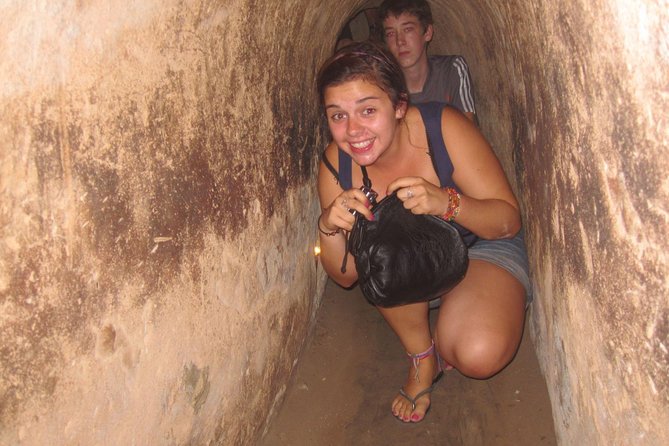
After that, you move into guided exploration of the special constructed living areas. This is where the tour does something smart for first-timers: it doesn’t focus only on the dramatic pieces. You’ll see areas connected to everyday needs—kitchens, bedrooms/storage, weapons factories, and field hospitals (as part of the explanation of what people needed to survive and keep fighting).
There’s also an underground-town feel to the layout as you learn how different sections were designed. The guide points out constructed spaces so you can understand that this wasn’t a single tunnel tube. It was a network.
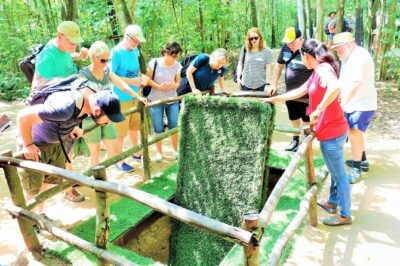
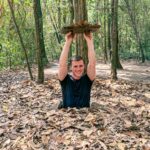
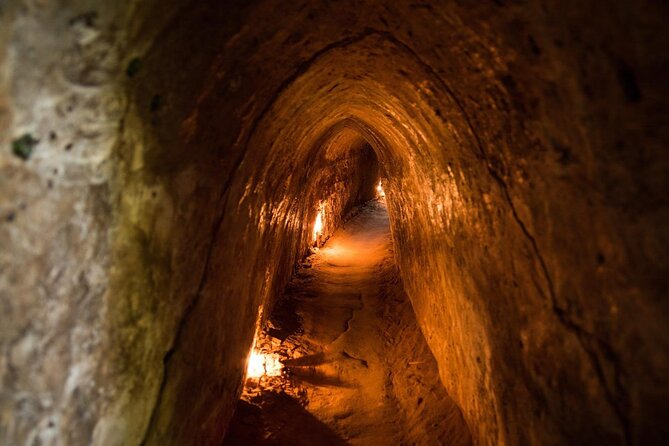
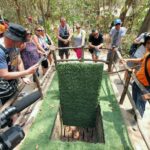
You’ll also learn about hidden access points and safety hazards. You get shown trap doors and dangerous traps within the maze-like tunnels, and you’re guided through how these systems worked. Even if you don’t fully picture every detail, it gives you the right level of respect for how hard the living and fighting conditions were.
Tunnel exploration: 200 kilometers of network, explained without overwhelming you
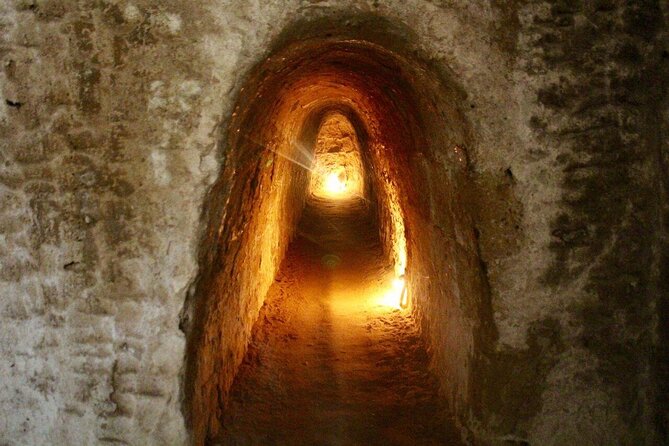
The Cu Chi system is described as having about 125 miles (around 200 kilometers) of subterranean passages and rooms. That’s a huge scale, and without guidance it would be easy to feel lost.
This is why the guide’s role matters. You get an overview introduction and then you explore a section of the network, with the guide guiding you through trap doors and areas such as storage facilities and weapons production spaces. You’re not asked to map it yourself. Instead, you learn how it functioned as an operational system.
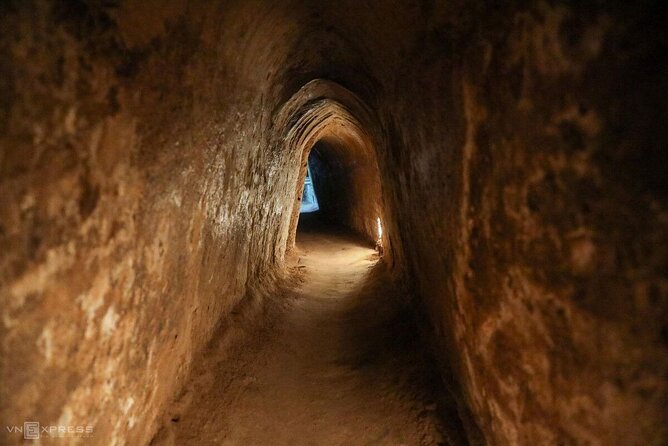
You’ll also climb inside to see key sections. That gives you a physical sense of constraints—tight spaces, the feeling of being underground, and the reality that movement was part of the strategy. If you’re sensitive to enclosed areas, consider whether you’re comfortable with confined interiors. The tour doesn’t give a separate “easy alternate route,” so you’ll want to be honest with yourself.
The tour includes another documentary film during the visit. That can feel repetitive if you prefer nonstop action, but it’s actually useful. It resets your focus after you’ve seen the first set of features, then you continue learning with a clearer mental picture.
Rice paper workshop and the food tasting: what freedom fighters ate
One of the most memorable parts is the stop tied to food. The tour includes a rice paper workshop, plus a tasting.
You’ll taste tapioca and tea—often described as guerrilla food—and the overall tour experience also highlights cassava and tea as part of what kept freedom fighters going during the war. The point isn’t that it’s gourmet. It’s that it was accessible, practical, and part of survival under pressure.
For me, this section is valuable because it gives you a different angle on history. War stories can turn into big concepts, but food is human and immediate. When you taste tapioca/cassava and drink tea, the explanations about underground living make more sense. It’s harder to treat the tunnels like a distant monument when you’re experiencing a small piece of daily life from the past.
You’ll also have bottled water provided, plus coffee and/or tea included as drinks. Drinks beyond that aren’t included.

Optional AK47/M16/M60/M30 shooting: fun for some, skip for others
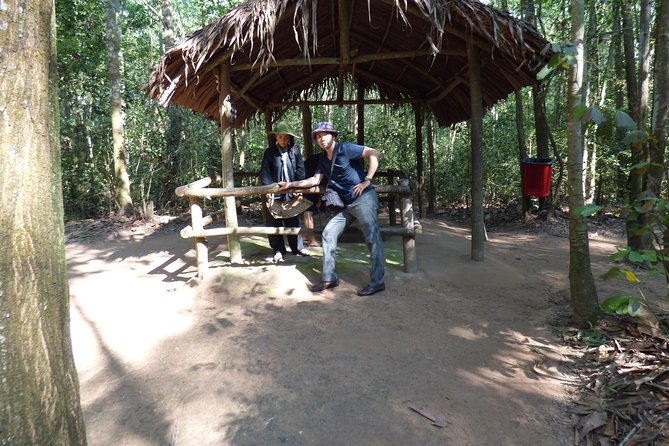
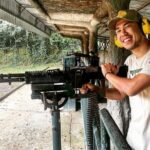
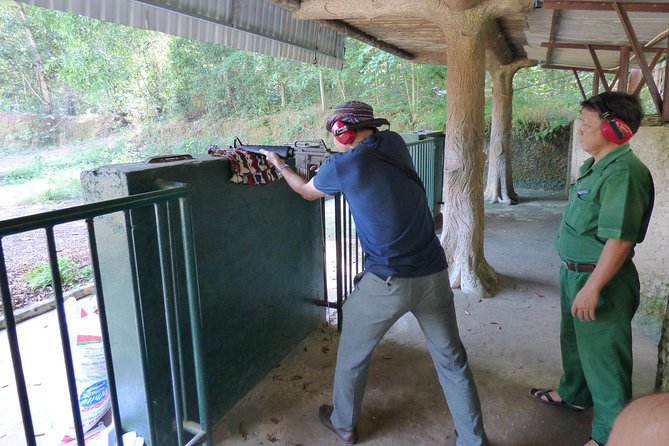
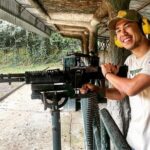
There’s an optional shooting experience available during the visit. You can try shooting AK47, M16, M60, and M30-style firearms, with a surcharge of $2 per bullet line (listed as 1 line has 10 bullets).
If you’re curious, it can add a hands-on layer—though it’s also the most “modern entertainment” part of the day. I’d treat it as optional rather than a must-do. If you’re primarily there for history and the underground network, you’ll still get plenty even without it.
If you do choose it, set expectations: it’s extra cost on top of your tour price, and it can change the feel of the time you have at the site.
Price and value: what $38.47 buys you (and why it can be a good deal)
At $38.47 per person, this tour is priced like a bargain, mostly because several “hidden cost” pieces are included.
You get:
- hotel pickup and drop-off (door-to-door transfers)
- an experienced driver/guide and a professional guide
- admission ticket included
- bottled water
- food tasting (tea + tapioca/cassava)
- coffee and/or tea
- mobile ticket
Lunch isn’t included, and drinks aren’t included beyond what’s listed. Still, when you add up admission + transport + guided explanation, the total often makes sense—especially if you don’t want to arrange a self-guided trip with uncertain timing.
Also, the group size is capped at 30 travelers. That won’t feel like a private tour, but it helps keep the experience moving without feeling chaotic.
One more practical detail: people tend to book this about a few weeks ahead on average. If your dates are fixed, it’s smart to reserve early.
Guides matter: Dan Tran (Danny) and the LVP Travel coordination touch

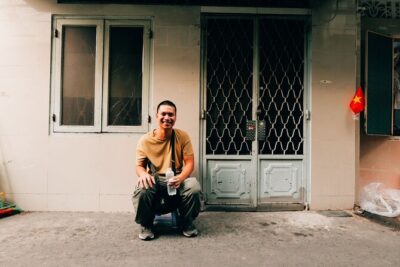
The standout from the feedback I’m seeing is the guide quality. Dan Tran, nicknamed Danny, comes up repeatedly with praise for explanations, clear communication, and a calm, humble style. People also mention that Danny didn’t stop at the tunnel site—offering restaurant and shopping suggestions that help you make the most of the rest of your day in Ho Chi Minh City.
There’s also a note about Jenny coordinating—useful if you like having a point person who keeps things smooth before you go and during your day.
This matters because Cu Chi can be physically confusing. When the guide is good, you leave with names, functions, and a sense of what each area means.
When the schedule goes off: weather and refunds in plain terms
This experience requires good weather. If it’s canceled due to poor weather, you’ll be offered a different date or a full refund.
It’s also non-refundable and can’t be changed for any reason. So if your plans are fragile, keep that in mind and try not to book it as the single “only option” for your trip.
Who this tour suits best (and who should think twice)
This tour is a great fit if you:
- want a guided history experience without arranging transport
- like structured pacing (films, then guided exploration, then food)
- prefer a morning activity that leaves your afternoon free
- want door-to-door logistics in Saigon
It may not be for you if you:
- strongly dislike guided groups or frequent stops
- hate any enclosed/underground element and don’t think you’ll be comfortable climbing inside sections
- need a tour you can freely reschedule last-minute (it’s non-refundable)
Most people can participate, but the best match depends on how you personally handle confined spaces.
Should you book this Cu Chi Tunnels half-day tour?
I’d book it if you want real context and you care about value. For the price, you get pickup, admission, guided explanation, tunnel time, and food tasting, all wrapped into a morning schedule that doesn’t swallow your entire day.
Skip the optional shooting if you’re there for history and not the range-style activity. Otherwise, it’s fine to treat it like a bonus add-on.
If you’re the type who learns best with a guide explaining what you’re seeing—especially when you’re surrounded by traps, trap doors, and underground passages—this is a smart way to handle Cu Chi without second-guessing yourself.
If you go, go with the right mindset: you’re not just looking at tunnels. You’re learning how a wartime system worked when people had to live and fight underground.
FAQ
What time does the Cu Chi Tunnels morning tour start?
The start time is 8:00 am.
How long is the tour?
The duration is about 5 hours (approx.).
Do you get hotel pickup and drop-off?
Yes. Door-to-door round-trip transfers from Saigon are included, with hotel pickup and drop-off.
What’s included in the ticket price?
Included are bottled water, food tasting, coffee and/or tea, driver/guide services, a professional guide, and hotel pickup and drop-off. Admission is included as well.
Is lunch included?
No. Lunch is not included.
Are drinks included?
Bottled water and coffee and/or tea are included, but drinks are listed as not included.
Can I use a mobile ticket?
Yes. A mobile ticket is provided.
Is there an extra cost for shooting?
Yes. Optional shooting is available with a surcharge of $2 per bullet line (10 bullets per line).
FAQ
Is the tour refundable?
It’s non-refundable and cannot be changed for any reason.
What happens if the weather is bad?
If it’s canceled due to poor weather, you’ll be offered a different date or a full refund.
How big are the groups?
The maximum group size is 30 travelers.
Is the tour suitable for most people?
Most travelers can participate.